The Story
Plant Bio
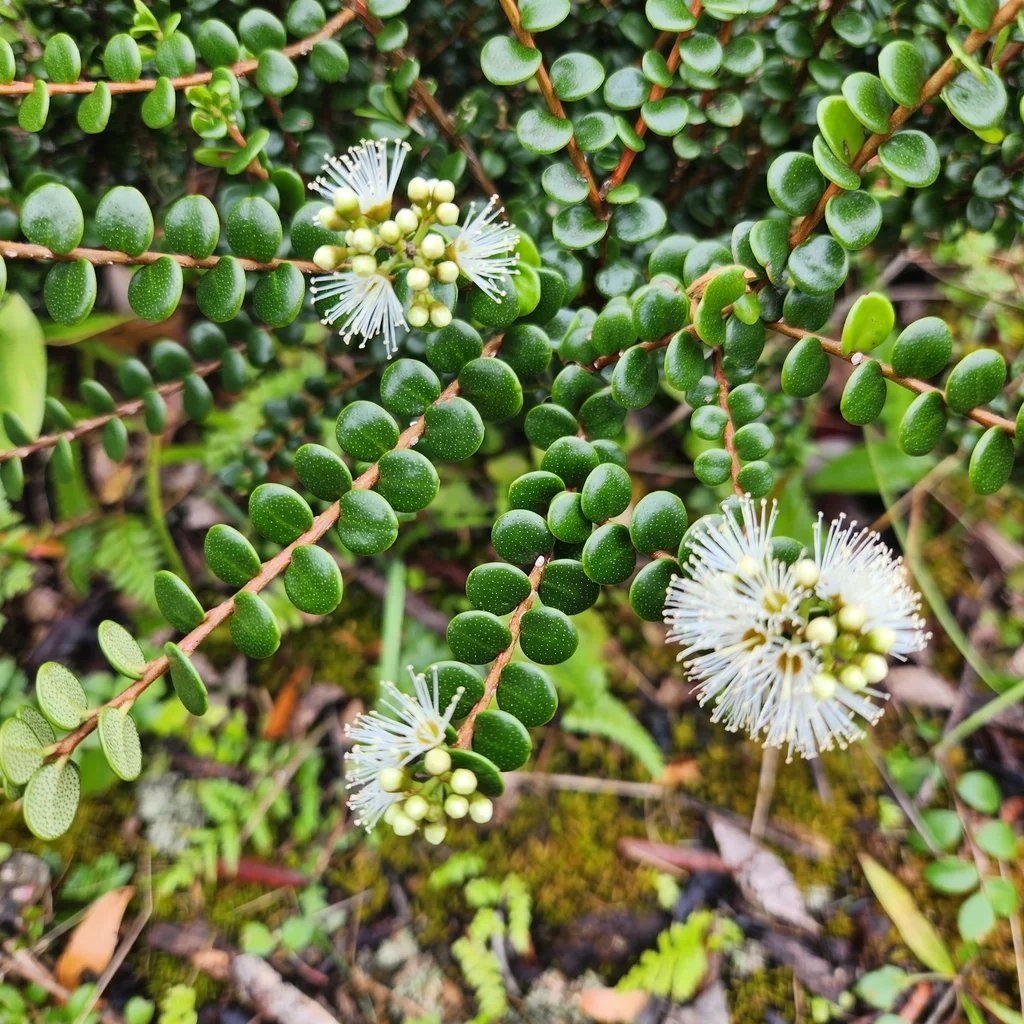
Metrosideros perforata is a woody, evergreen climbing vine native to New Zealand, capable of ascending tall structures using fine clasping roots or developing into a dense shrub when grown without support. Small, leathery, dark green leaves with gland-dotted undersides line the stems, which produce fluffy terminal clusters of white flowers featuring long stamens from late spring into summer.
This species is distinguished by its tiny, rounded foliage marked with oil glands visible as translucent specks on the pale undersides. When provided with vertical support, aerial roots attach directly to surfaces to build a heavy green canopy covered in nectar-rich flower heads.
Uses & Benefits:
Essentials
At a Glance
Plant Type
Vine
Height
787"
Width
315"
Light
Full Sun, Partial Sun
Zones
9, 10
Water
Moderate
Humidity
High
Lifespan
Perennial
Native To
New Zealand
Toxicity
Non-toxic
Bloom period
Late spring – Summer
In flower about 4 months of the year
Planting
How to Grow
- Select a planting site in full sun to partial shade with humus-rich, sharply draining soil.
- Provide a sturdy trellis, wall, or support frame for young vines to attach via aerial rootlets.
- Water regularly during the first growing season to keep soil consistently moist without waterlogging.
- Apply a slow-release general fertilizer in early spring to support foliage growth.
- Tip-prune light growth directly after the summer bloom cycle finishes.
Pro Tip
Prune lightly immediately after flowering; cutting back hard into old leafless wood prevents dormant buds from resprouting.
Keep It Thriving
Care Guide
Do
- Do plant in loose, humus-rich soil with excellent drainage
- Do prune lightly right after flowering concludes
- Do provide shelter from severe winter freezes when young
Don't
- Don't cut hard into old, bare, leafless wood
- Don't allow the root zone to sit in waterlogged soil
- Don't let young plants dry out completely during establishment
Seasonal Care Calendar
| Task | Jan | Feb | Mar | Apr | May | Jun | Jul | Aug | Sep | Oct | Nov | Dec |
|---|---|---|---|---|---|---|---|---|---|---|---|---|
| Fertilize | ||||||||||||
| Pest Check | ||||||||||||
| Prune | ||||||||||||
| Winter Prep |
Watch Out For
Pests & Diseases
Common Pests
Common Diseases
In the Garden
Landscape Uses & Companions
Landscape Uses
Companion Plants
Multiply
Propagation Methods
Good to Know
Common Questions
White Rātā questions
What zones can White Rātā grow in?
White Rātā is hardy in USDA Zones 9–10: in that range it survives winter in the ground. Colder than Zone 9, grow it in a container you can move to shelter for the winter, or as an annual.
When does White Rātā bloom?
White Rātā typically blooms from late spring to late summer. Exact timing shifts a week or two with your zone — Sow's bloom calendar maps it to your garden.
Does White Rātā need full sun?
White Rātā does best in full sun to part shade. In hot climates, afternoon shade keeps blooms fresher longer.
Is White Rātā drought tolerant?
Yes — once established (usually after the first full season), White Rātā handles dry spells with minimal watering. Water deeply its first year to build the root system that makes that possible.
More Metrosideros to compare
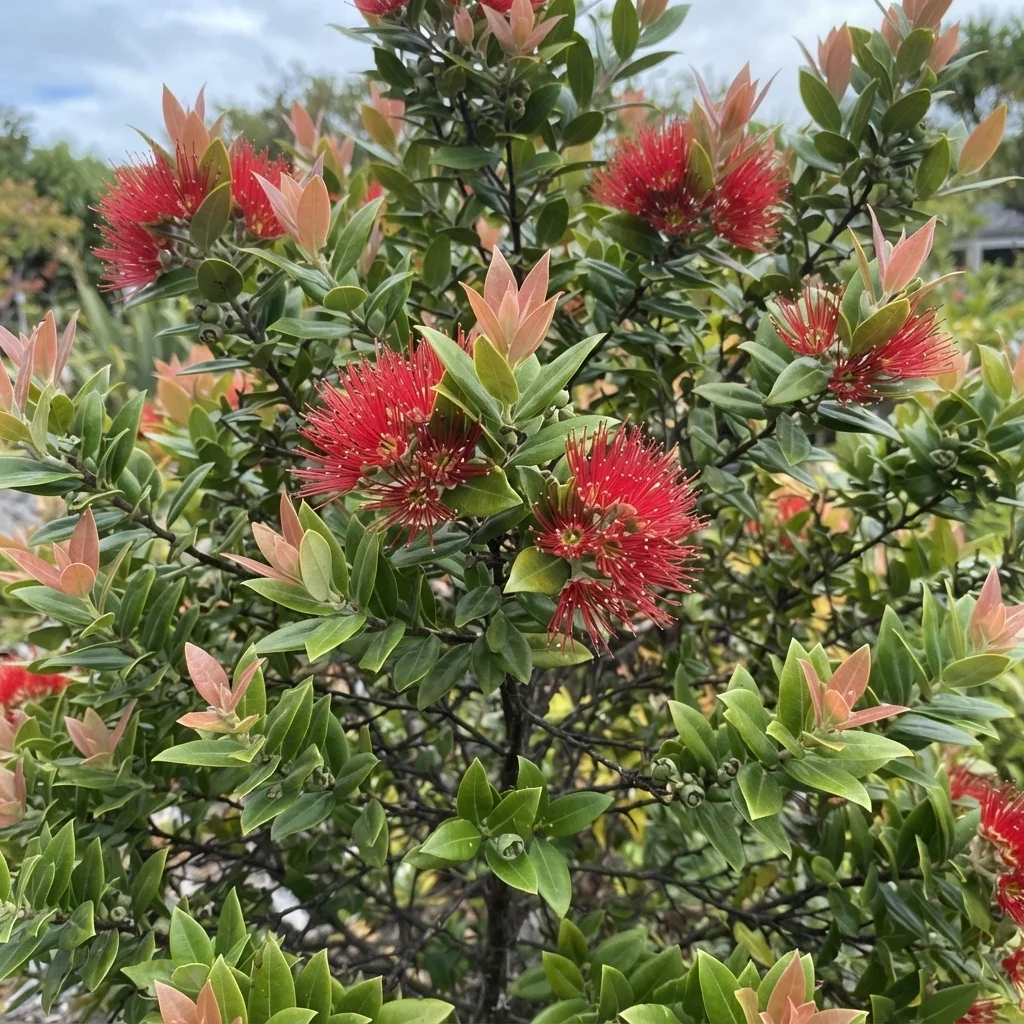
Southern Rata
Metrosideros umbellata
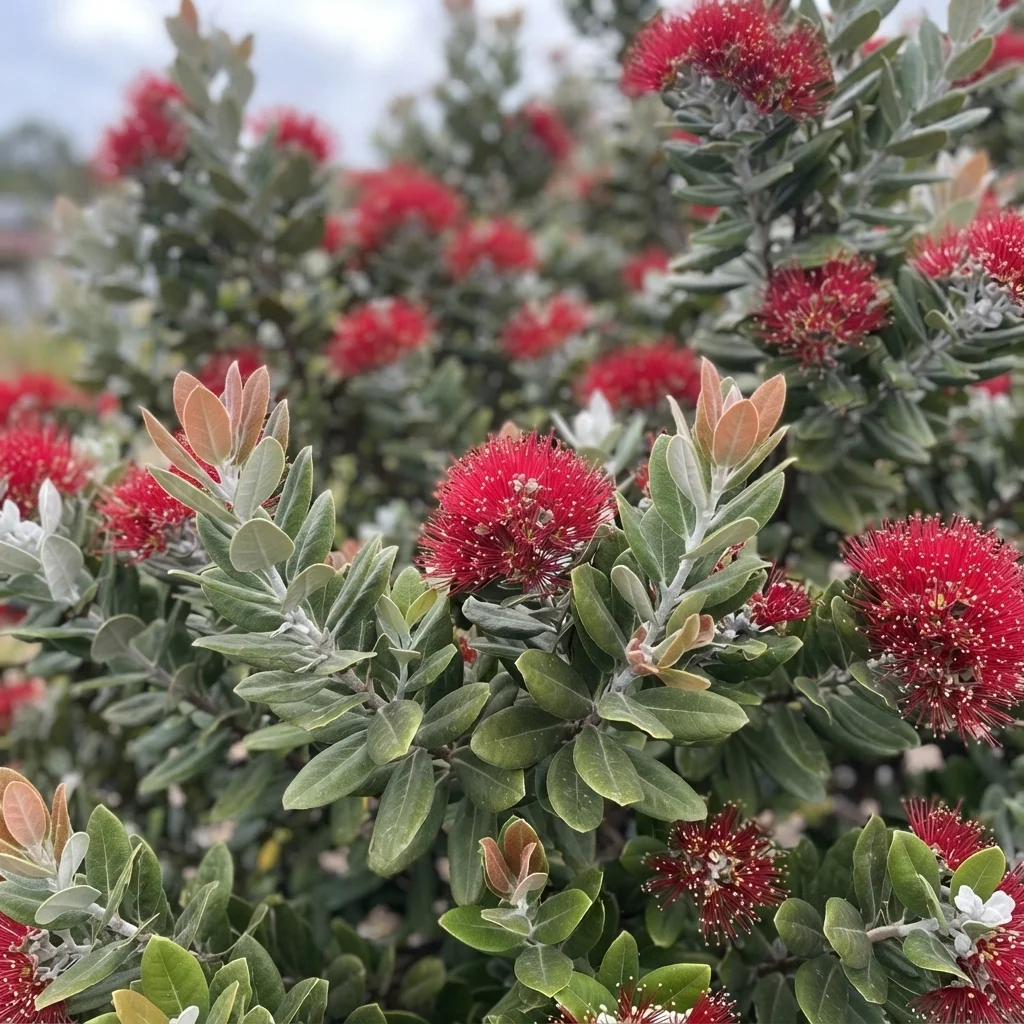
New Zealand Christmas Tree
Metrosideros excelsa
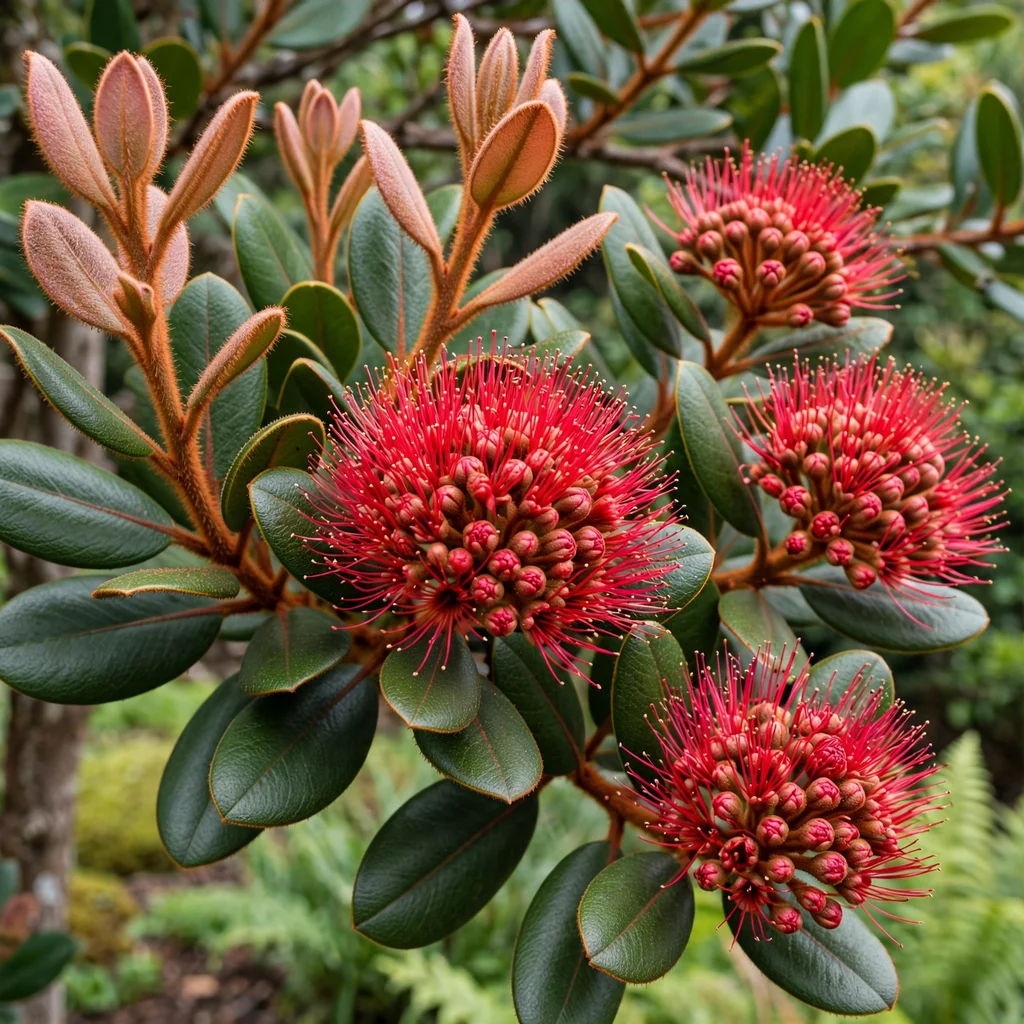
Northern Rātā
Metrosideros robusta
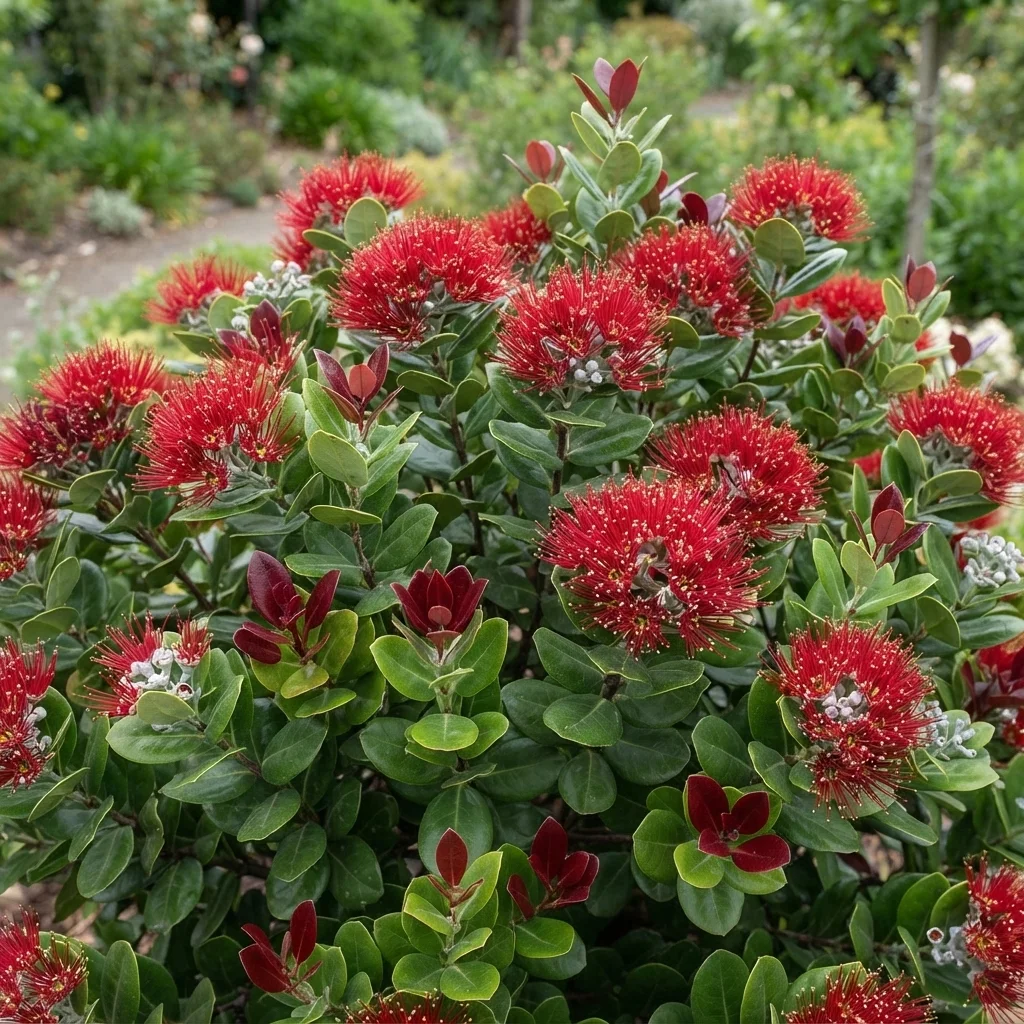
New Zealand Christmas Bush
Metrosideros collina 'Fiji Fire'
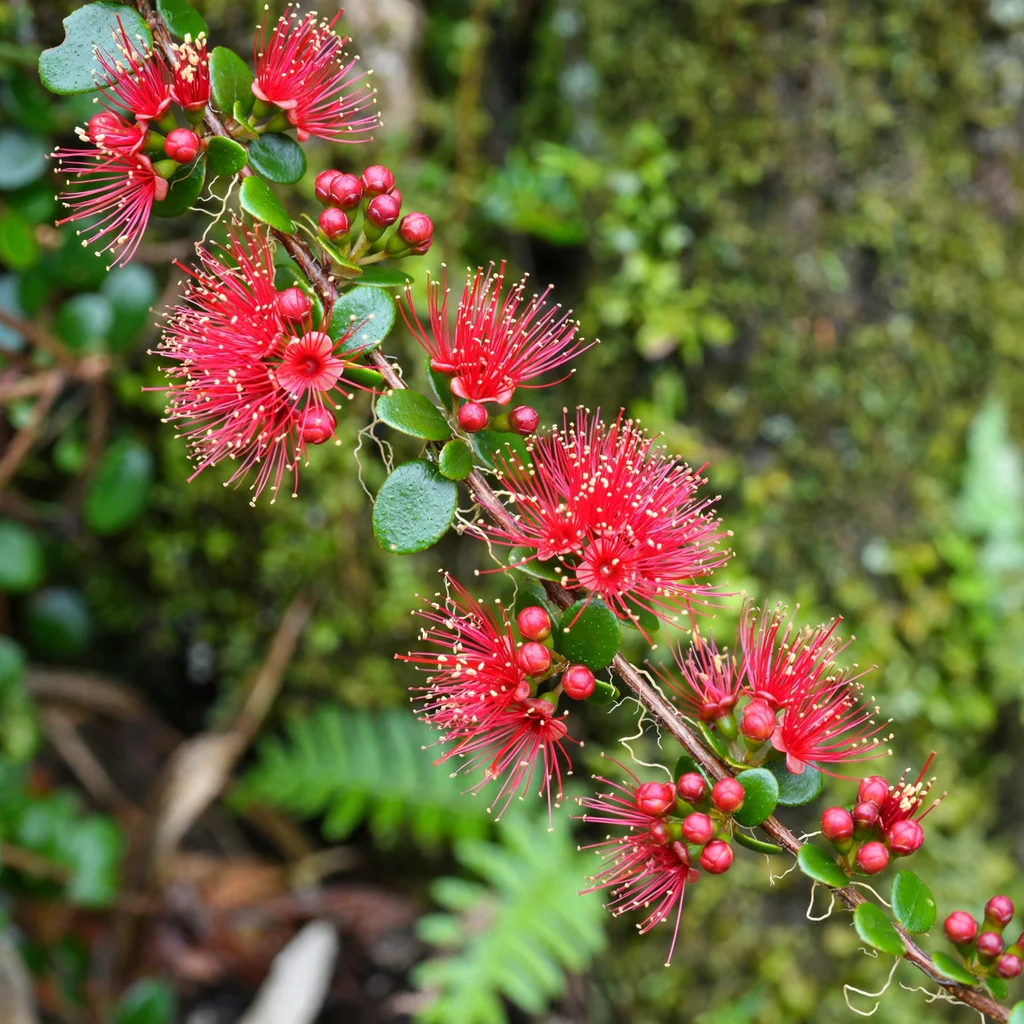
Carmine Rata
Metrosideros carminea
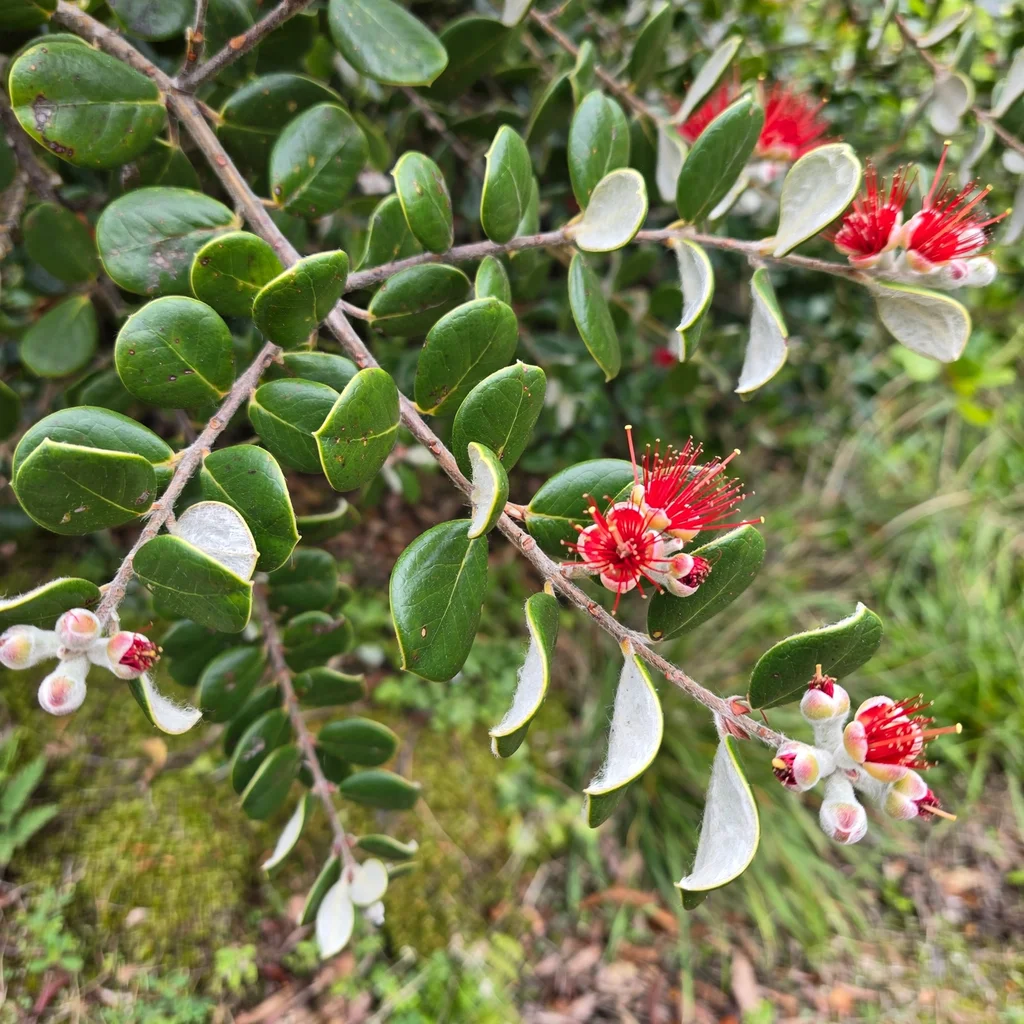
Kermadec Pohutukawa
Metrosideros kermadecensis
Keep exploring
Explore the genus
Hardy in your zone?
Grow White Rātā with confidence
See it in a design of your actual yard, get zone-matched care reminders, and track it season by season in your garden journal.