The Story
Plant Bio
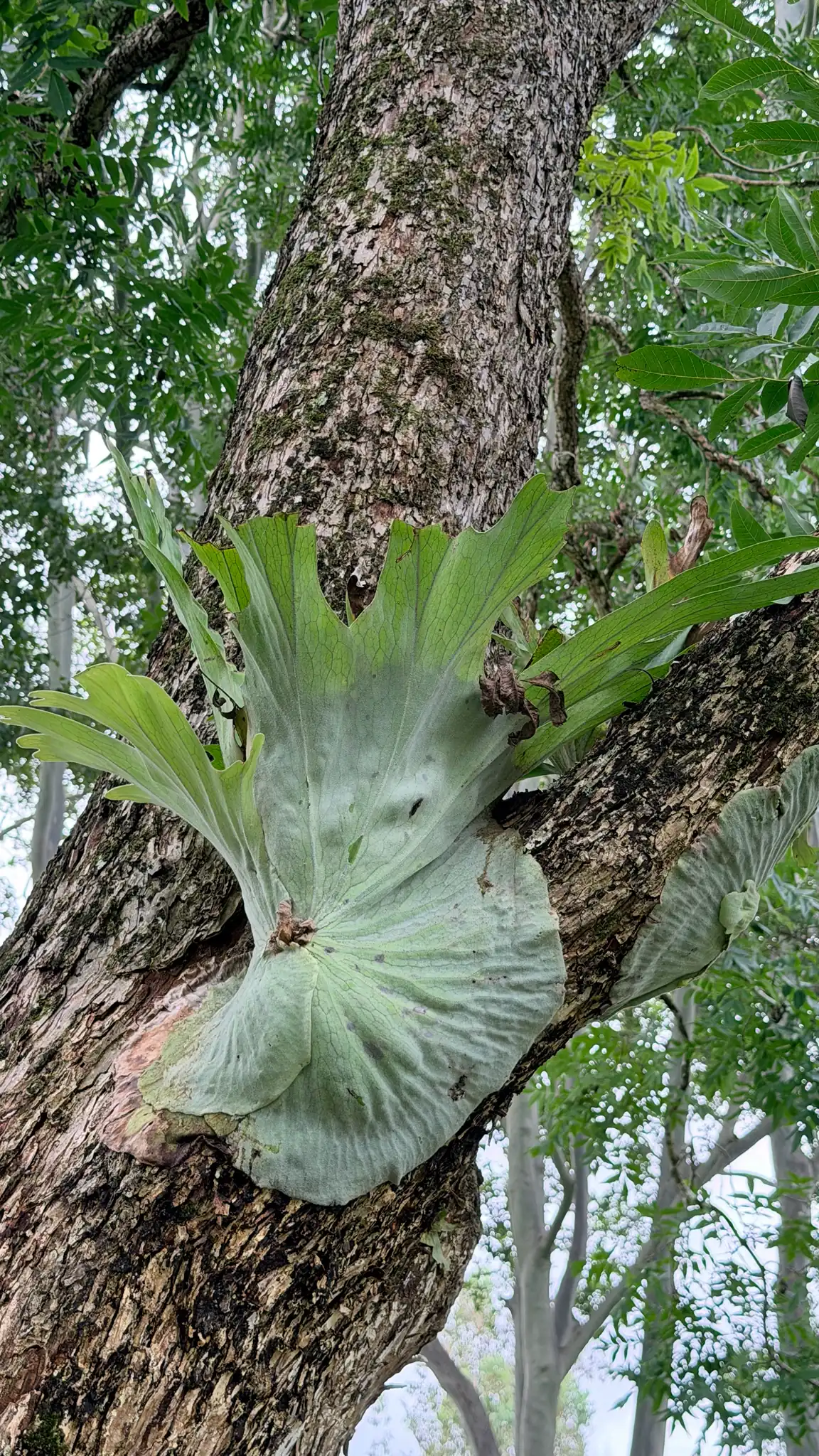
Platycerium superbum, commonly known as giant staghorn fern, is a large epiphytic fern that grows suspended on trees or mounting boards rather than in terrestrial soil. Its foliage is strongly dimorphic, featuring broad, upright shield fronds that form a bowl-like humus basket alongside long, pendulous fertile fronds that branch repeatedly like antlers.
Unlike multi-bud staghorn species that form clumping offsets, Platycerium superbum produces a single growth point with a solitary, massive spore patch situated in the main fork of its fertile fronds. Its pale green young foliage is densely coated with soft, whitish-green stellate hairs.
Uses & Benefits:
Essentials
At a Glance
Plant Type
Fern
Height
79"
Width
39"
Light
Partial Sun, Shade
Zones
10
Water
Moderate
Humidity
High (50–70%+)
Lifespan
Perennial
Native To
Australia
Toxicity
Non-toxic
Planting
How to Grow
- Mount the fern on a rot-resistant wooden board or in a wire basket lined with coarse sphagnum moss and shredded bark.
- Position the mount in a location receiving bright, filtered light or indirect sun, avoiding harsh direct rays.
- Water by soaking the entire mounting board or root core in water for 10 to 15 minutes whenever the media dries out.
- Apply a balanced liquid fertilizer diluted to half-strength directly to the nest frond core once a month during spring and summer.
Pro Tip
Never trim off brown or dry shield fronds; these papery outer layers form the structural core that collects nutrients and protects the central root mass.
Keep It Thriving
Care Guide
Do
- Mount on wood planks or in coarse epiphytic bark mixtures.
- Soak the root core thoroughly and allow it to dry slightly between waterings.
- Protect from freezing temperatures by keeping ambient temperatures above 35°F (2°C).
- Keep the central growth bud oriented upwards when mounting.
Don't
- Never cut away brown, paper-like shield fronds from the base.
- Never attempt to divide the plant, as it grows from a single non-pupping bud.
- Do not overwater or leave the core dripping wet during cold winter months.
- Do not plant in standard terrestrial garden soil.
Seasonal Care Calendar
| Task | Jan | Feb | Mar | Apr | May | Jun | Jul | Aug | Sep | Oct | Nov | Dec |
|---|---|---|---|---|---|---|---|---|---|---|---|---|
| Fertilize | ||||||||||||
| Pest Check | ||||||||||||
| Prune | ||||||||||||
| Winter Prep |
Watch Out For
Pests & Diseases
Common Pests
Common Diseases
In the Garden
Landscape Uses & Companions
Landscape Uses
Companion Plants
Multiply
Propagation Methods
Good to Know
Common Questions
Staghorn Fern questions
What zones can Staghorn Fern grow in?
Staghorn Fern is hardy in USDA Zone 10: in that range it survives winter in the ground. Colder than Zone 10, grow it in a container you can move to shelter for the winter, or as an annual.
Is Staghorn Fern deer resistant?
Yes — Staghorn Fern is rated deer-resistant. Deer typically pass it over, though extreme hunger can override any plant's defenses.
Does Staghorn Fern need full sun?
Staghorn Fern does best in part shade.
Is Staghorn Fern drought tolerant?
Yes — once established (usually after the first full season), Staghorn Fern handles dry spells with minimal watering. Water deeply its first year to build the root system that makes that possible.
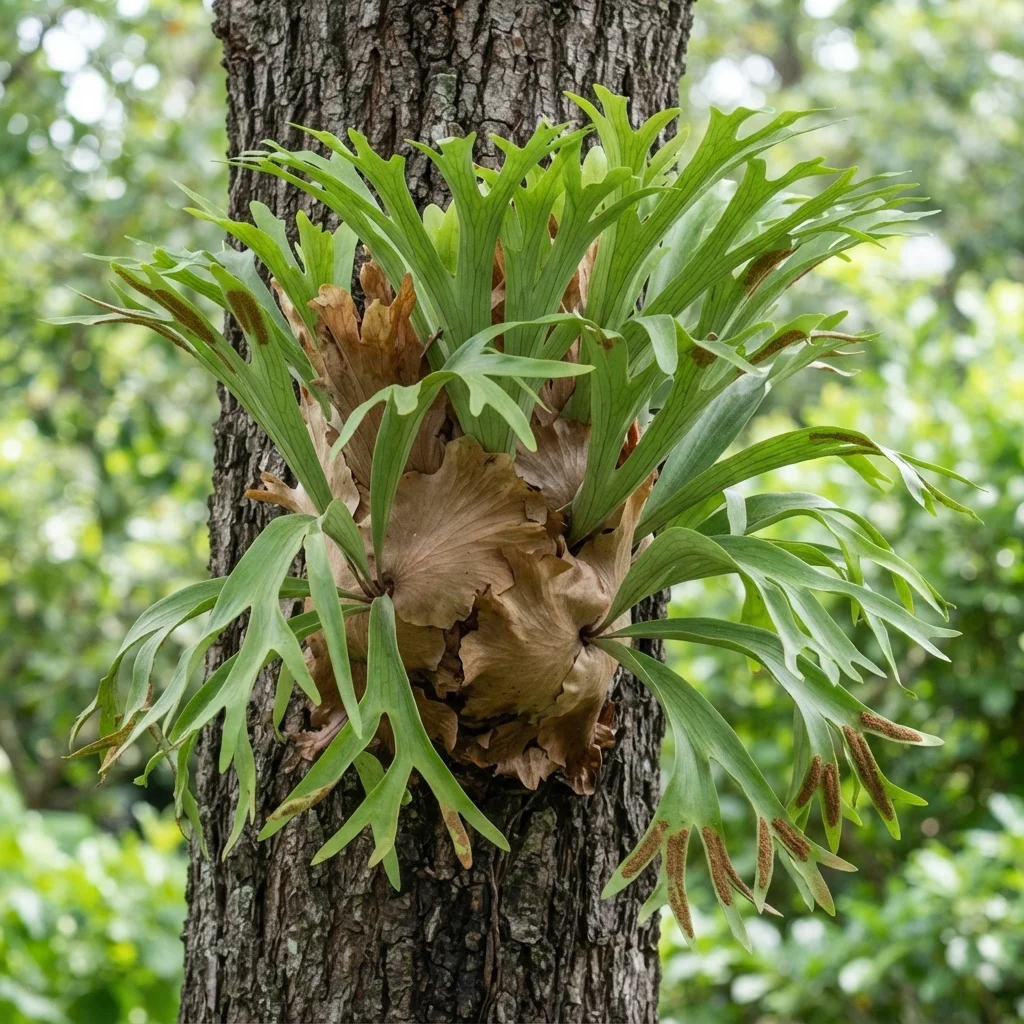
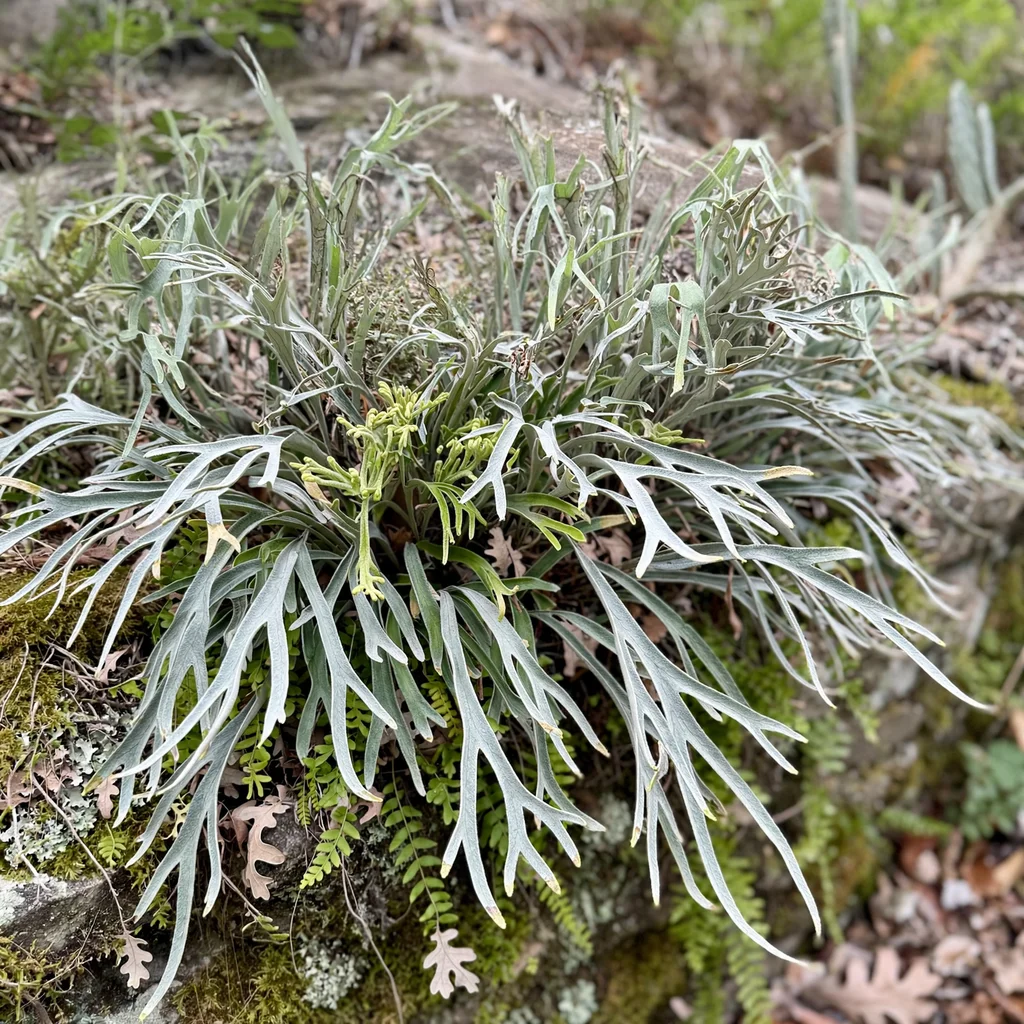
More Platycerium to compare
Keep exploring
Explore the genus
Hardy in your zone?
Grow Staghorn Fern with confidence
See it in a design of your actual yard, get zone-matched care reminders, and track it season by season in your garden journal.