The Story
Plant Bio
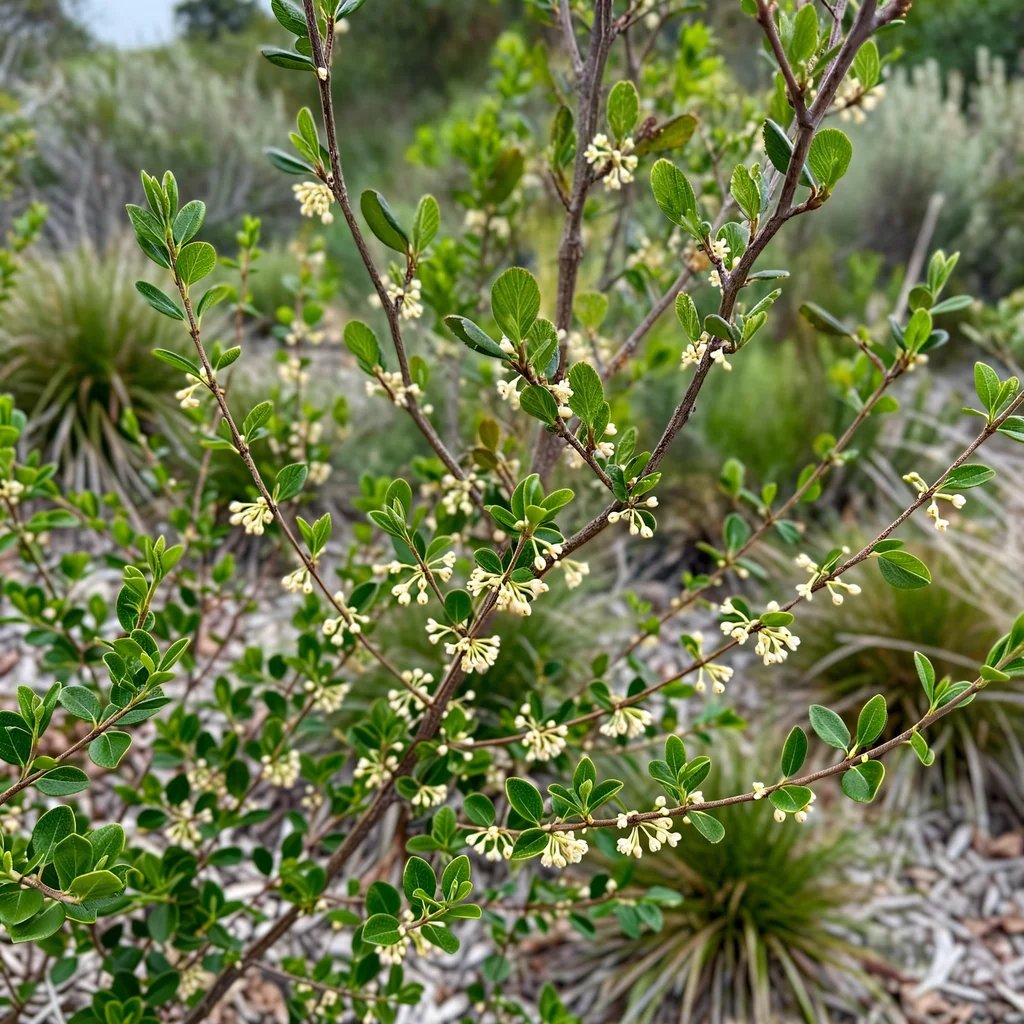
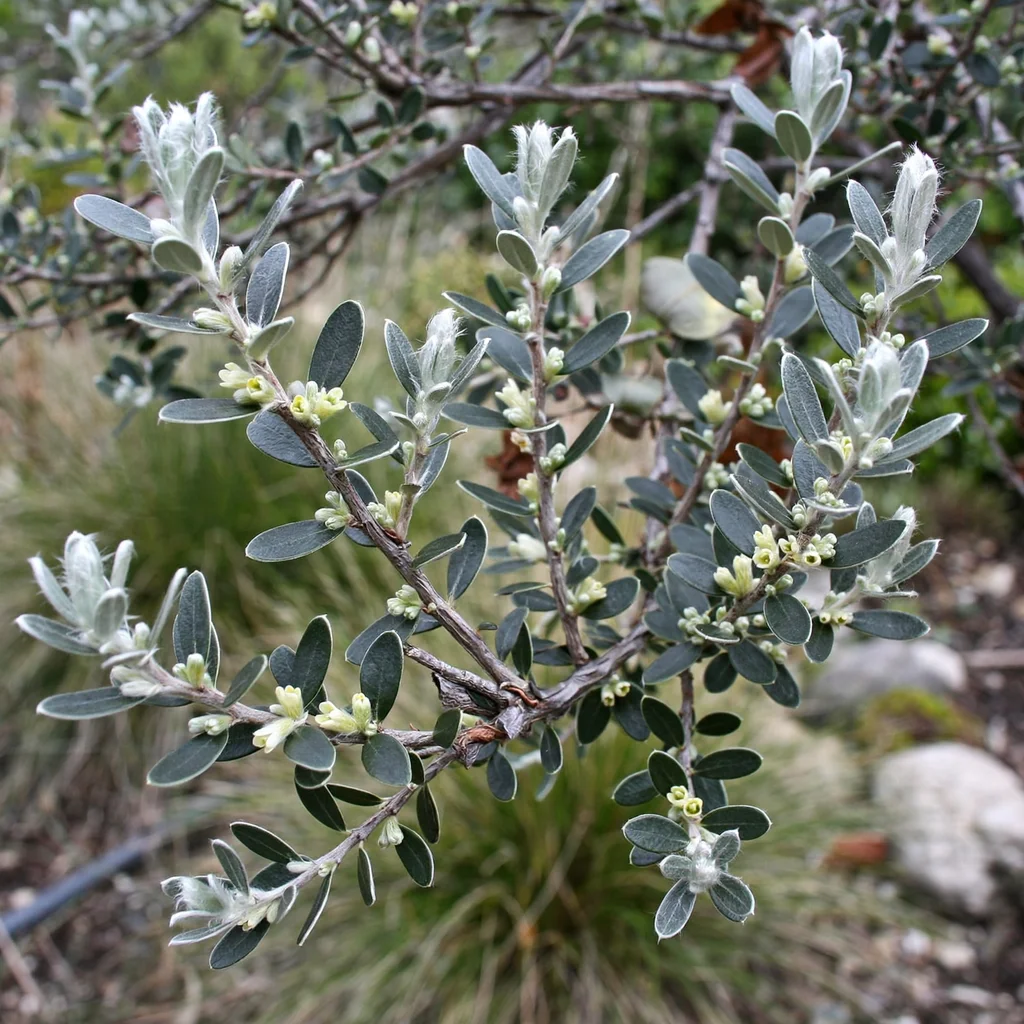
Cercocarpus minutiflorus, the San Diego mountain mahogany, is an evergreen shrub to small tree reaching 6 to 16 feet tall and 8 to 12 feet wide, with many upright-spreading stems clothed in small birch-like leaves. The spring flowers are small creamy tubes with no show; pollination is by wind, and each flower matures into a single seed tipped with a 1- to 3-inch silky tail that shines silver in summer light.
It is distinguished by small one-half- to 1-inch glossy leaves that hold emerald green through winter and spring, then darken and curl inward to conserve water in the dry season. It grows fast to about 8 feet and then slows markedly, forming a dense mounded crown valued for evergreen cover and back-lit seed plumes rather than flower color.
Uses & Benefits:
Essentials
At a Glance
Plant Type
Shrub
Height
192"
Width
144"
Light
Full Sun, Partial Sun
Zones
8, 9, 10
Water
Low
Humidity
Unknown
Lifespan
Long-lived woody shrub
Native To
Southern California and northern Baja California
Toxicity
May be toxic to livestock
Bloom period
Spring – Late spring
In flower about 3 months of the year
Planting
How to Grow
- Set in full sun to part shade with room for an 8- to 12-foot mounded crown.
- Plant into fast- to medium-draining scrub soil, keeping the root crown slightly high and clear of mulch.
- Water deeply at planting, then taper to low to very low water once roots establish.
- Leave summer seed tails on the plant and prune lightly only to shape or limb up a small tree form.
Pro Tip
Once established, limit summer water to once a month at most; wet summer soil invites Phytophthora root rot faster than drought stresses the crown.
Keep It Thriving
Care Guide
Do
- Provide sharp drainage and air flow around the crown.
- Water deeply but infrequently, no more than once or twice a month in summer once established.
- Use as evergreen hedge, bank cover, or bird garden structure.
Don't
- Do not summer-water heavily or plant where water pools.
- Do not cut back into old leafless wood expecting fast regrowth.
- Do not buy or feed for flowers; foliage and seed plumes are the display.
Seasonal Care Calendar
| Task | Jan | Feb | Mar | Apr | May | Jun | Jul | Aug | Sep | Oct | Nov | Dec |
|---|---|---|---|---|---|---|---|---|---|---|---|---|
| Mulch | ||||||||||||
| Pest Check | ||||||||||||
| Plant | ||||||||||||
| Prune |
Watch Out For
Pests & Diseases
Common Pests
Common Diseases
In the Garden
Landscape Uses & Companions
Landscape Uses
Good to Know
Common Questions
San Diego Mountain Mahogany questions
What zones can San Diego Mountain Mahogany grow in?
San Diego Mountain Mahogany is hardy in USDA Zones 8–10: in that range it survives winter in the ground. Colder than Zone 8, grow it in a container you can move to shelter for the winter.
Is San Diego Mountain Mahogany deer resistant?
Not reliably. Deer may browse San Diego Mountain Mahogany, especially tender spring growth — plan on repellents or fencing where pressure is high.
When does San Diego Mountain Mahogany bloom?
San Diego Mountain Mahogany typically blooms in spring. Exact timing shifts a week or two with your zone — Sow's bloom calendar maps it to your garden.
Does San Diego Mountain Mahogany need full sun?
San Diego Mountain Mahogany does best in full sun to part shade. In hot climates, afternoon shade keeps blooms fresher longer.
Is San Diego Mountain Mahogany drought tolerant?
Yes — once established (usually after the first full season), San Diego Mountain Mahogany handles dry spells with minimal watering. Water deeply its first year to build the root system that makes that possible.
More Cercocarpus to compare
Keep exploring
Explore the genus
Hardy in your zone?
Grow San Diego Mountain Mahogany with confidence
See it in a design of your actual yard, get zone-matched care reminders, and track it season by season in your garden journal.