The Story
Plant Bio
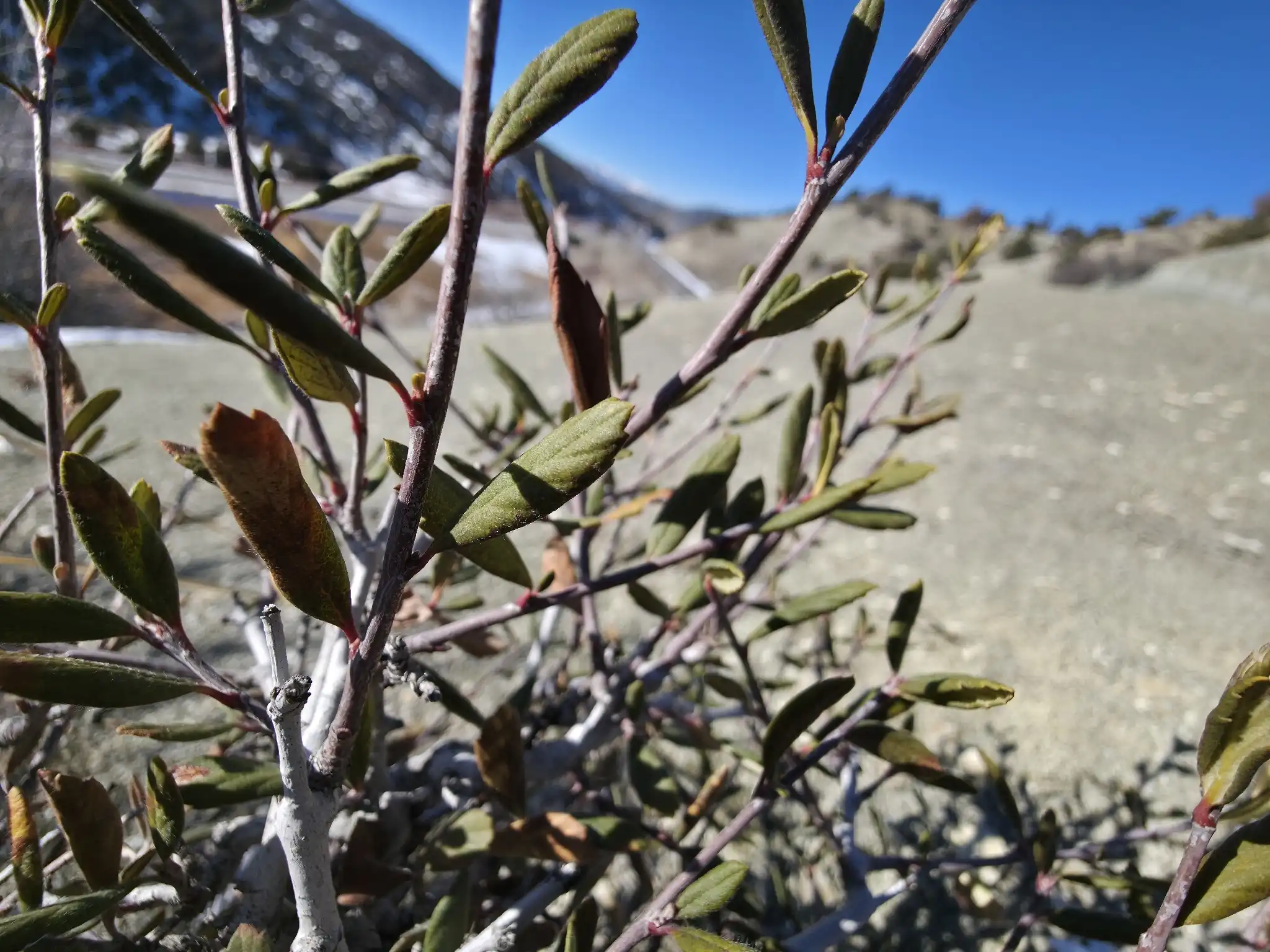
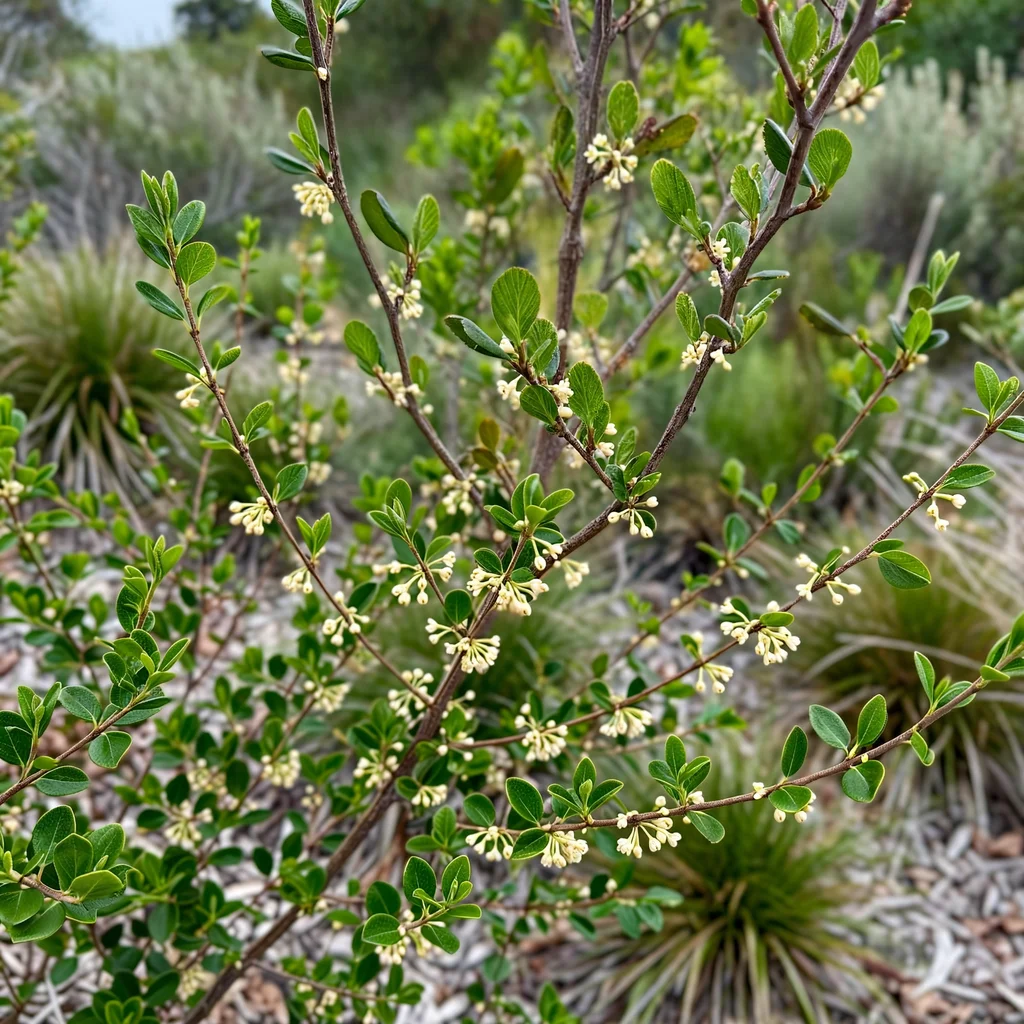
Cercocarpus ledifolius is a densely branched evergreen shrub or small tree from the arid rocky slopes of western North America, forming a rounded to umbrella-shaped crown of stiff, twisting branches. The narrow leathery leaves cluster on short spur shoots, dark green above and white-hairy beneath, with the margins rolled tightly under.
It is distinguished from other mountain mahoganies by its half-inch to one-inch elliptic leaves that emerge pubescent and mature resinous and evergreen on reddish hairy twigs. The small greenish-yellow trumpet flowers mature into hairy achenes tipped with a twisted silvery tail one and a half to two inches long that shines in backlight.
Uses & Benefits:
Essentials
At a Glance
Plant Type
Shrub
Height
177"
Width
177"
Light
Full Sun, Partial Sun
Zones
4, 5, 6, 7, 8
Water
Low
Humidity
Low
Lifespan
Very long-lived
Native To
Western North America
Toxicity
Unknown
Bloom period
Spring – Summer
In flower about 6 months of the year
Marketplace
Where to Buy
Shipping costs Year-round shipping Free shipping
Planting
How to Grow
- Plant in full sun in lean, rocky, fast-draining soil with pH 6 to 8.
- Set the root ball level with the soil and backfill with native soil, not rich compost.
- Water deeply at planting, then taper off; established plants need little to no supplemental water.
- Mulch with gravel, not bark, keeping mulch away from the trunk.
- Leave unpruned except to remove dead wood or suckers in summer.
Pro Tip
Plant it lean and dry in fast-draining rocky soil and leave it alone; overwatering and rich clay kill more plants than cold ever will.
Keep It Thriving
Care Guide
Do
- Plant in full sun with sharp drainage
- Water sparingly once established
- Leave the silvery seed plumes for birds and winter structure
Don't
- Do not plant in clay or low wet spots
- Do not overwater or apply heavy fertilizer
- Do not shear or cut back into old bare wood
Seasonal Care Calendar
| Task | Jan | Feb | Mar | Apr | May | Jun | Jul | Aug | Sep | Oct | Nov | Dec |
|---|---|---|---|---|---|---|---|---|---|---|---|---|
| Mulch | ||||||||||||
| Pest Check | ||||||||||||
| Plant | ||||||||||||
| Propagate | ||||||||||||
| Prune |
Watch Out For
Pests & Diseases
Common Pests
Common Diseases
In the Garden
Landscape Uses & Companions
Landscape Uses
Multiply
Propagation Methods
Good to Know
Common Questions
Curl-Leaf Mountain Mahogany questions
What zones can Curl-Leaf Mountain Mahogany grow in?
Curl-Leaf Mountain Mahogany is hardy in USDA Zones 4–8: in that range it survives winter in the ground. Warmer than Zone 8, winter isn't the problem: it prefers colder winters, and summer heat can shorten its life.
Is Curl-Leaf Mountain Mahogany deer resistant?
Not reliably. Deer may browse Curl-Leaf Mountain Mahogany, especially tender spring growth — plan on repellents or fencing where pressure is high.
When does Curl-Leaf Mountain Mahogany bloom?
Curl-Leaf Mountain Mahogany typically blooms from spring to summer. Exact timing shifts a week or two with your zone — Sow's bloom calendar maps it to your garden.
Does Curl-Leaf Mountain Mahogany need full sun?
Curl-Leaf Mountain Mahogany does best in full sun to part shade. In hot climates, afternoon shade keeps blooms fresher longer.
Is Curl-Leaf Mountain Mahogany drought tolerant?
Yes — once established (usually after the first full season), Curl-Leaf Mountain Mahogany handles dry spells with minimal watering. Water deeply its first year to build the root system that makes that possible.
More Cercocarpus to compare
Keep exploring
Explore the genus
Hardy in your zone?
Grow Curl-Leaf Mountain Mahogany with confidence
See it in a design of your actual yard, get zone-matched care reminders, and track it season by season in your garden journal.