The Story
Plant Bio
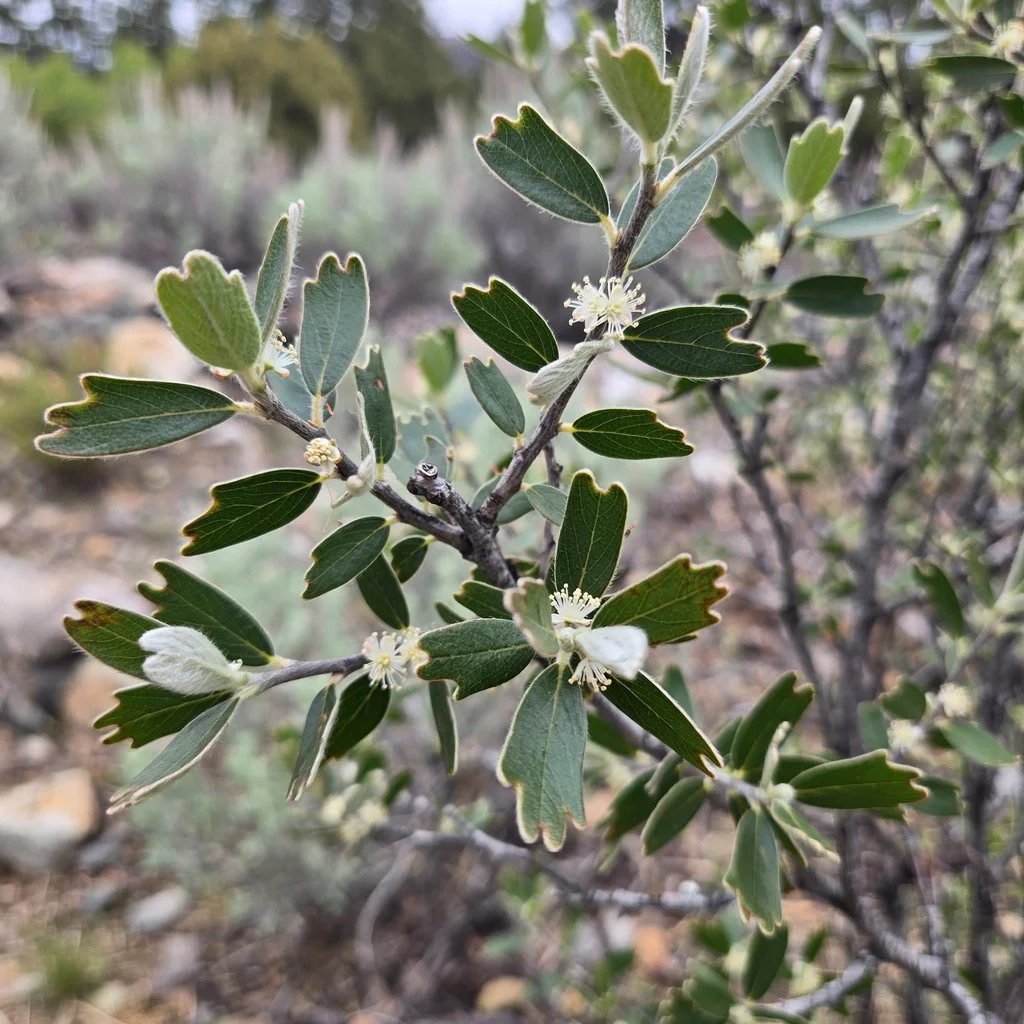
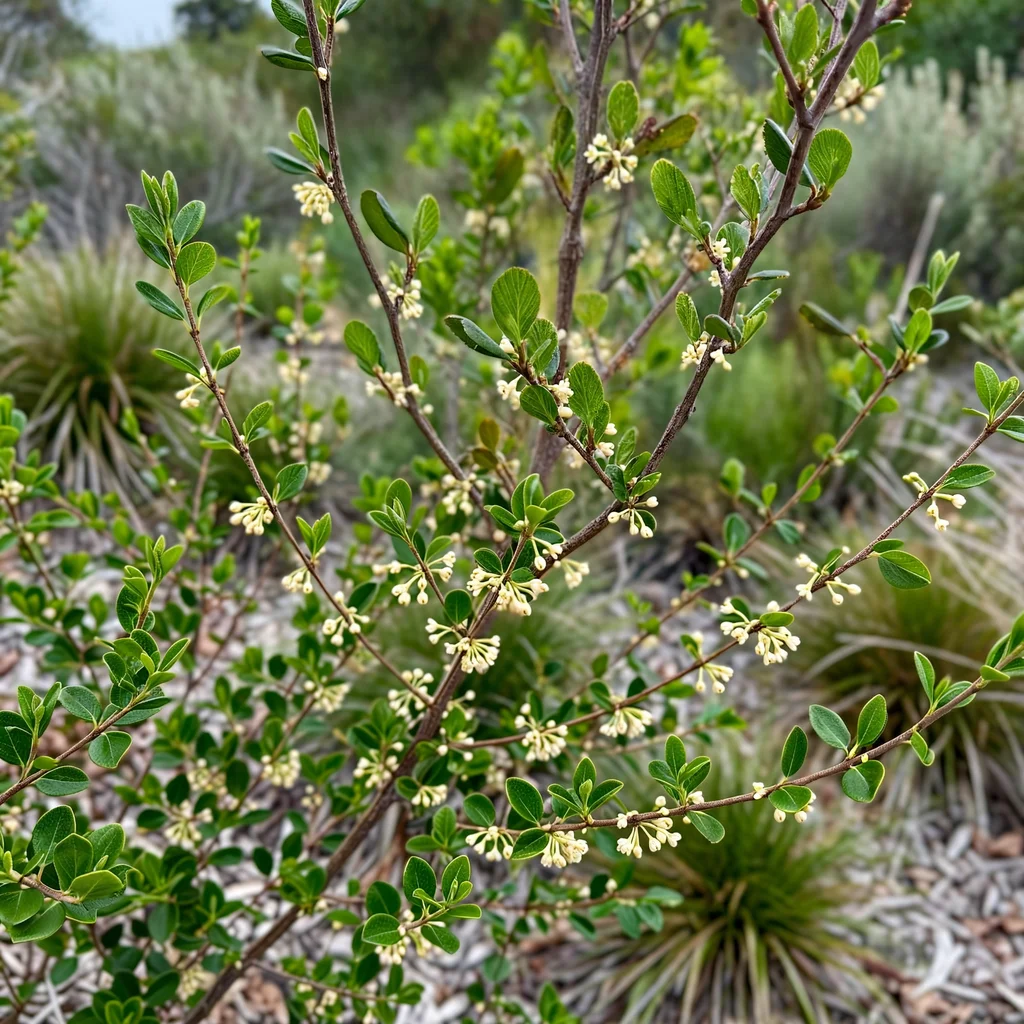
Cercocarpus montanus is a deciduous to almost-evergreen shrub or small tree of the rose family, reaching 8 to 12 feet in gardens and to 20 feet in the wild with upright to spreading vase-like branching and hard wood under mahogany-red bark. Leaves are small, toothed and variable, dark green above and pale and fuzzy beneath, with insignificant apetalous white to whitish-yellow flowers borne singly or in twos and threes from old wood.
It is grown for its feathery silvery-white plumed nutlets that follow the spring bloom and persist from summer into fall, catching backlight long after the flowers are gone. Foliage turns russet in fall and is fragrant when crushed, and plants fix nitrogen and hold on dry shallow rocky ground where little else establishes.
Uses & Benefits:
Essentials
At a Glance
Plant Type
Shrub
Height
120"
Width
72"
Light
Full Sun, Partial Sun
Zones
4, 5, 6, 7, 8, 9, 10
Water
Low
Humidity
Low
Lifespan
Long-lived woody shrub
Native To
Western USA to northern Mexico
Toxicity
Unknown
Bloom period
Spring – Early summer
In flower about 4 months of the year
Planting
How to Grow
- Choose a full-sun spot with very well-drained sandy or rocky soil and room for a 4 to 8 foot wide shrub.
- Plant at nursery depth or slightly high, backfilling with lean native soil and no rich amendment.
- Water in once, then water sparingly only through the first summer to establish.
- Fence young plants from deer and do not fertilize or overwater once rooted.
Pro Tip
Plant it high in very well-drained lean rocky soil and then keep it dry; overwatering kills faster than drought, and fence young plants until established because deer hold browsed plants to 3 to 8 feet.
Keep It Thriving
Care Guide
Do
- Give full sun and sharp drainage with air around the crown.
- Protect young plants from deer browsing with fencing.
- Leave the silver plumes to ripen for ornamental effect and self-sowing.
Don't
- Do not overwater or plant in heavy wet soil.
- Do not cut hard into old bare wood or shear routinely.
- Do not expect it to thrive in humid eastern summer conditions.
Seasonal Care Calendar
| Task | Jan | Feb | Mar | Apr | May | Jun | Jul | Aug | Sep | Oct | Nov | Dec |
|---|---|---|---|---|---|---|---|---|---|---|---|---|
| Mulch | ||||||||||||
| Pest Check | ||||||||||||
| Plant | ||||||||||||
| Propagate | ||||||||||||
| Prune |
Watch Out For
Pests & Diseases
Common Pests
Common Diseases
In the Garden
Landscape Uses & Companions
Landscape Uses
Multiply
Propagation Methods
Good to Know
Common Questions
Mountain Mahogany questions
What zones can Mountain Mahogany grow in?
Mountain Mahogany is hardy in USDA Zones 4–10: in that range it survives winter in the ground.
Is Mountain Mahogany deer resistant?
Not reliably. Deer may browse Mountain Mahogany, especially tender spring growth — plan on repellents or fencing where pressure is high.
When does Mountain Mahogany bloom?
Mountain Mahogany typically blooms from early spring to early summer. Exact timing shifts a week or two with your zone — Sow's bloom calendar maps it to your garden.
Does Mountain Mahogany need full sun?
Mountain Mahogany does best in full sun to part shade. In hot climates, afternoon shade keeps blooms fresher longer.
Is Mountain Mahogany drought tolerant?
Yes — once established (usually after the first full season), Mountain Mahogany handles dry spells with minimal watering. Water deeply its first year to build the root system that makes that possible.
More Cercocarpus to compare
Keep exploring
Explore the genus
Grow Mountain Mahogany with confidence
See it in a design of your actual yard, get zone-matched care reminders, and track it season by season in your garden journal.