The Story
Plant Bio
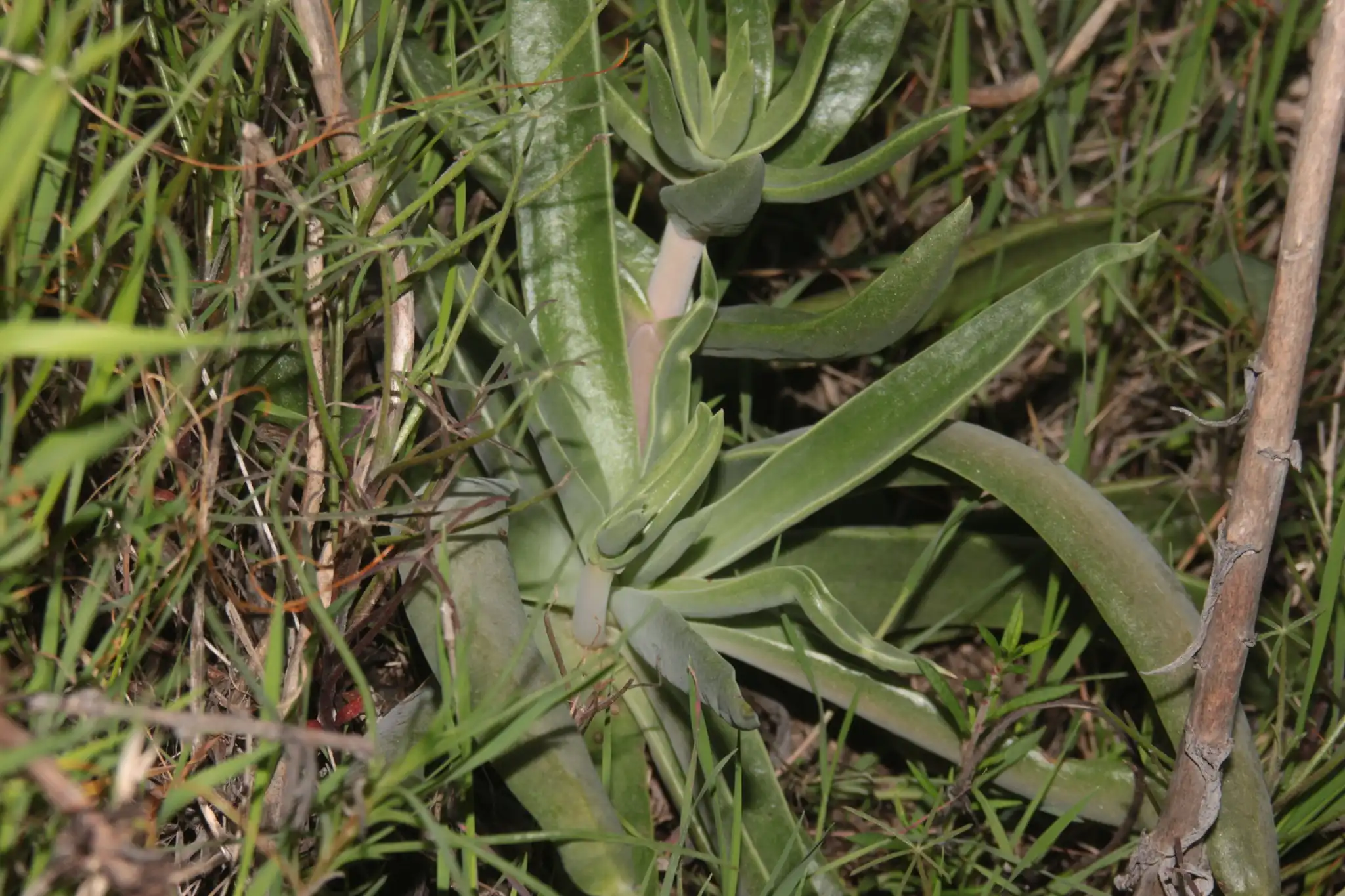
Dudleya lanceolata, commonly known as lanceleaf liveforever, is an evergreen succulent perennial native to rocky slopes, cliffs, and chaparral across California and Baja California. It forms basal rosettes of fleshy, lance-shaped leaves that produce erect, branching sprays of tubular red, orange, or yellow flowers from spring into early summer.
Foliage coloration transitions between pale blue-green and purplish tones, often dusted with a chalky, powdery coating on younger leaves. Mature plants form dense clumping colonies over time via a branching caudex and undergo natural summer dormancy in dry conditions.
Uses & Benefits:
Essentials
At a Glance
Plant Type
Cactus Succulent
Height
24"
Width
20"
Light
Full Sun, Partial Sun
Zones
8, 9, 10
Water
Low
Humidity
Low
Lifespan
Perennial
Native To
California, Baja California
Toxicity
Non-toxic
Bloom period
Spring – Early summer
In flower about 4 months of the year
Planting
How to Grow
- Select a planting site in full sun or light afternoon shade with sharply draining, mineral-rich soil.
- Dig a shallow hole and tilt the plant slightly so rainwater drains off the central rosette crown.
- Backfill with a mix of coarse sand, pumice, and native soil, pressing gently to secure the roots.
- Water thoroughly at planting to settle the soil, then withhold irrigation until new growth appears.
- Avoid overhead watering during warm summer months to prevent soil-borne pathogens.
Pro Tip
Plant at a slight angle on a sloped rockery so water drains away from the crown, and withhold supplemental irrigation entirely during warm summer months.
Keep It Thriving
Care Guide
Do
- Provide gritty, fast-draining soil mixes rich in sand or crushed rock.
- Allow the soil to dry completely between light waterings during active growth.
- Position in full sun near the coast or light shade in hot inland climates.
Don't
- Do not water directly into the leaf rosette during hot summer weather.
- Do not apply heavy organic fertilizers, which promote soft rot-susceptible growth.
- Do not cut into live green stems or unleafed woody tissues during maintenance.
Seasonal Care Calendar
| Task | Jan | Feb | Mar | Apr | May | Jun | Jul | Aug | Sep | Oct | Nov | Dec |
|---|---|---|---|---|---|---|---|---|---|---|---|---|
| Fertilize | ||||||||||||
| Pest Check | ||||||||||||
| Propagate | ||||||||||||
| Prune | ||||||||||||
| Winter Prep |
Watch Out For
Pests & Diseases
Common Pests
Common Diseases
In the Garden
Landscape Uses & Companions
Landscape Uses
Multiply
Propagation Methods
Good to Know
Common Questions
Lanceleaf Liveforever questions
What zones can Lanceleaf Liveforever grow in?
Lanceleaf Liveforever is hardy in USDA Zones 8–10: in that range it survives winter in the ground. Colder than Zone 8, grow it in a container you can move to shelter for the winter, or as an annual.
Is Lanceleaf Liveforever deer resistant?
Not reliably. Deer may browse Lanceleaf Liveforever, especially tender spring growth — plan on repellents or fencing where pressure is high.
When does Lanceleaf Liveforever bloom?
Lanceleaf Liveforever typically blooms from early spring to early summer. Exact timing shifts a week or two with your zone — Sow's bloom calendar maps it to your garden.
Does Lanceleaf Liveforever need full sun?
Lanceleaf Liveforever does best in full sun to part shade. In hot climates, afternoon shade keeps blooms fresher longer.
Is Lanceleaf Liveforever drought tolerant?
Yes — once established (usually after the first full season), Lanceleaf Liveforever handles dry spells with minimal watering. Water deeply its first year to build the root system that makes that possible.
More Dudleya to compare
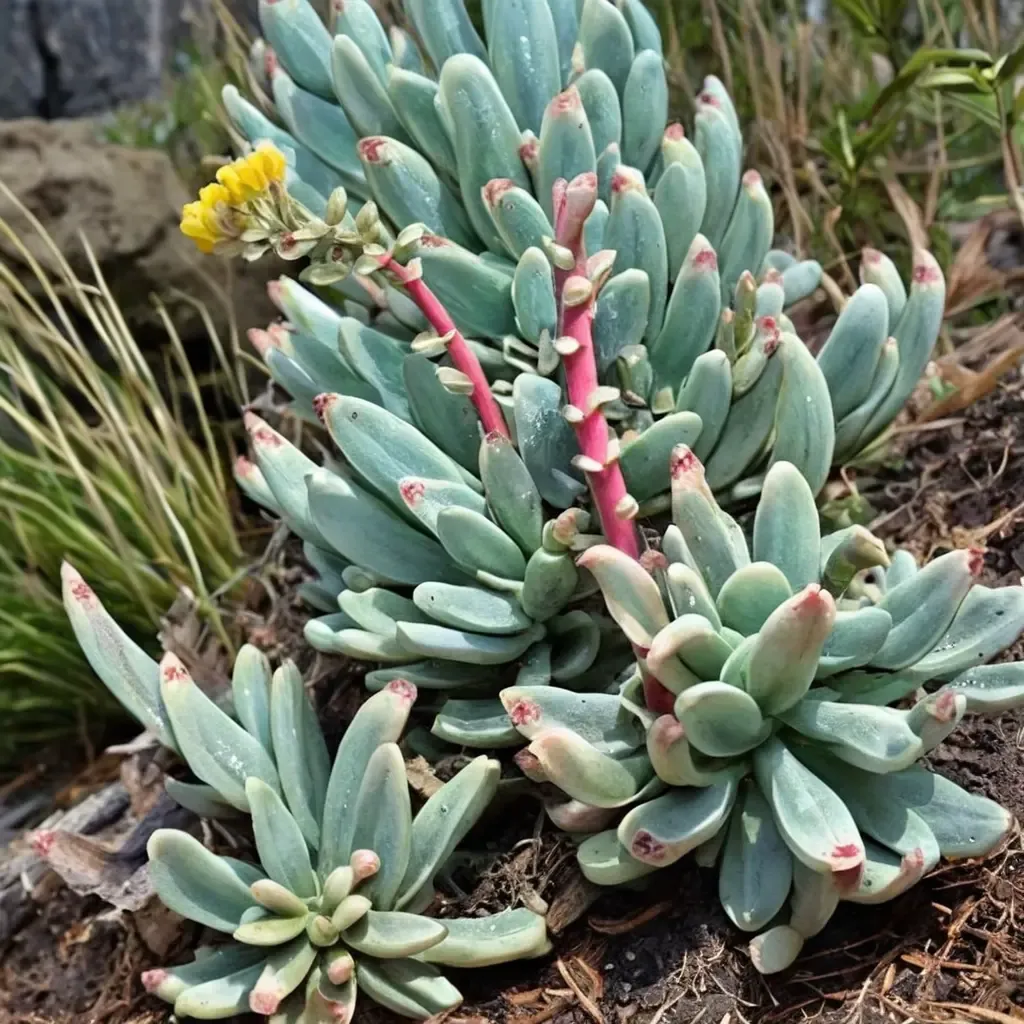
Sea Lettuce
Dudleya caespitosa
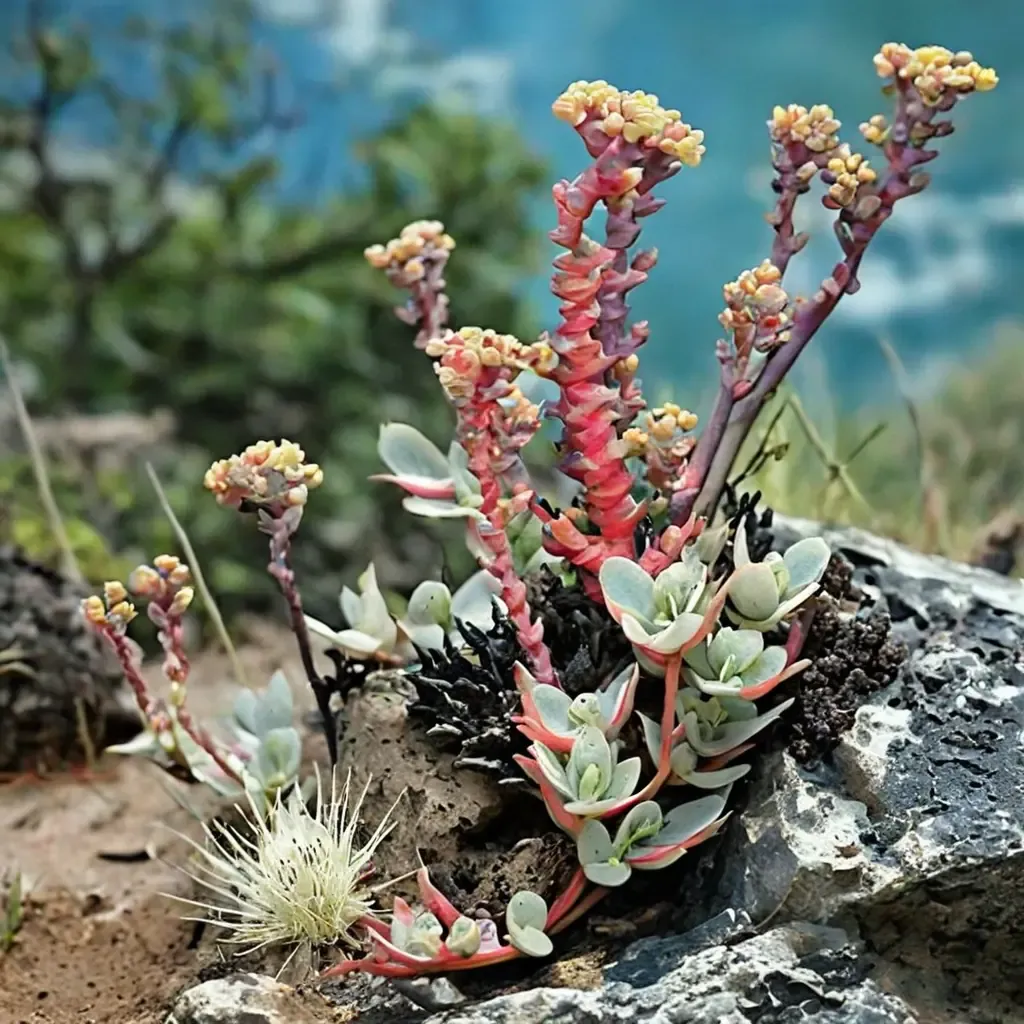
Powdery Liveforever
Dudleya farinosa
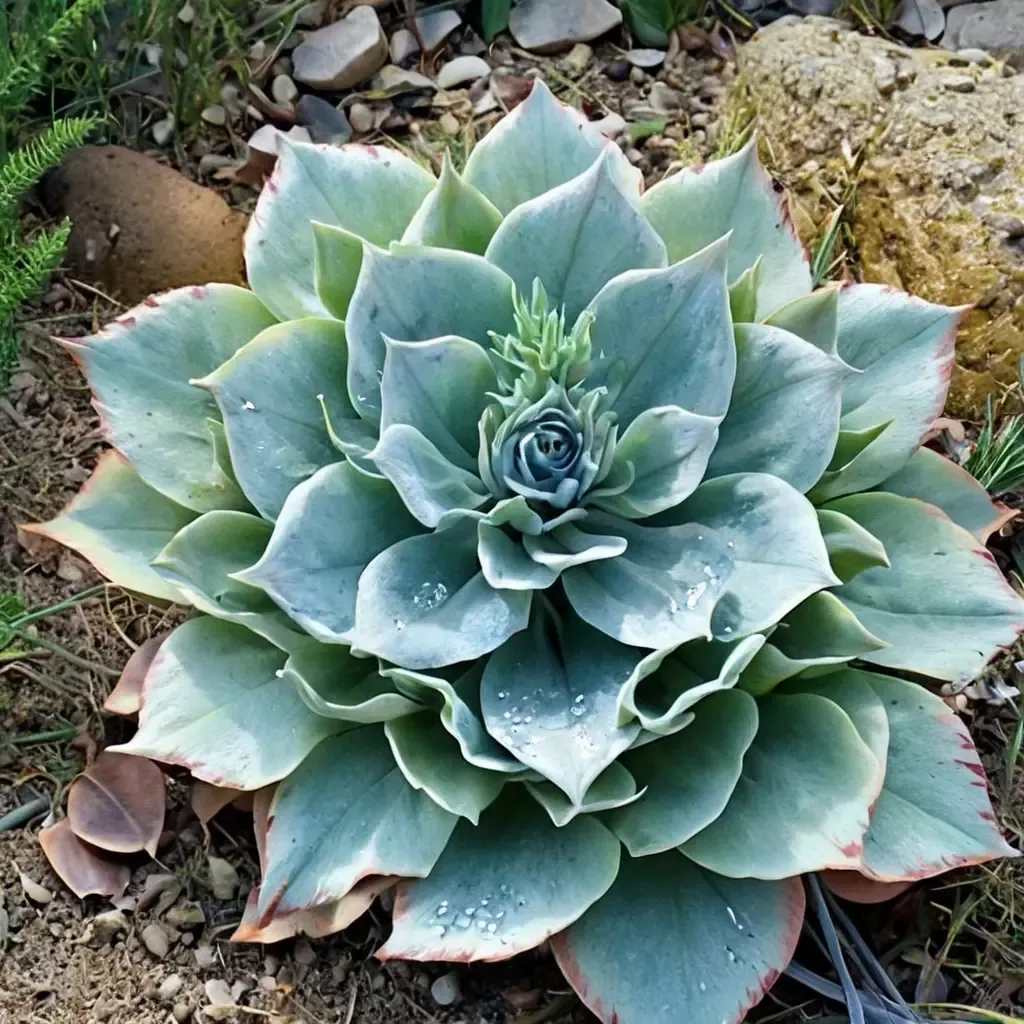
Chalk Dudleya
Dudleya pulverulenta
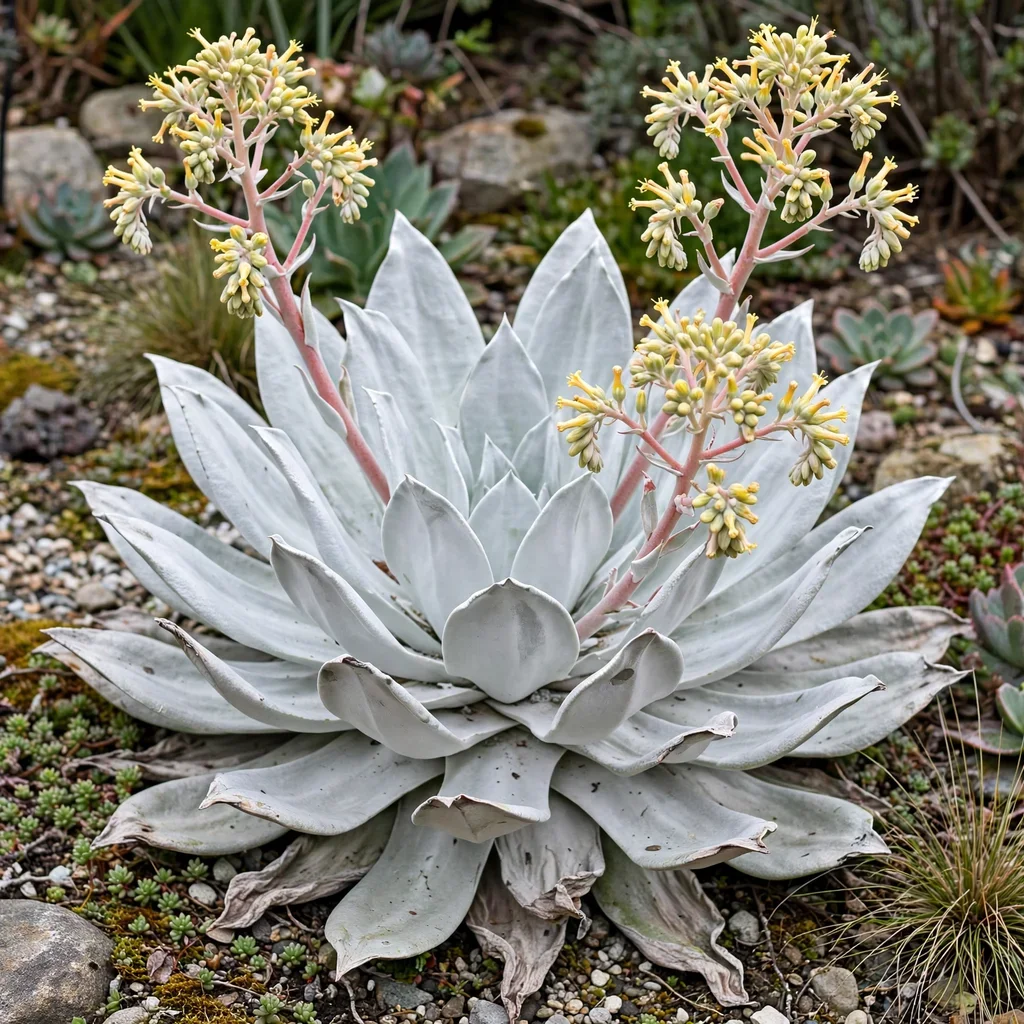
Giant Chalk Dudleya
Dudleya brittonii 'Giant Chalk Dudleya'
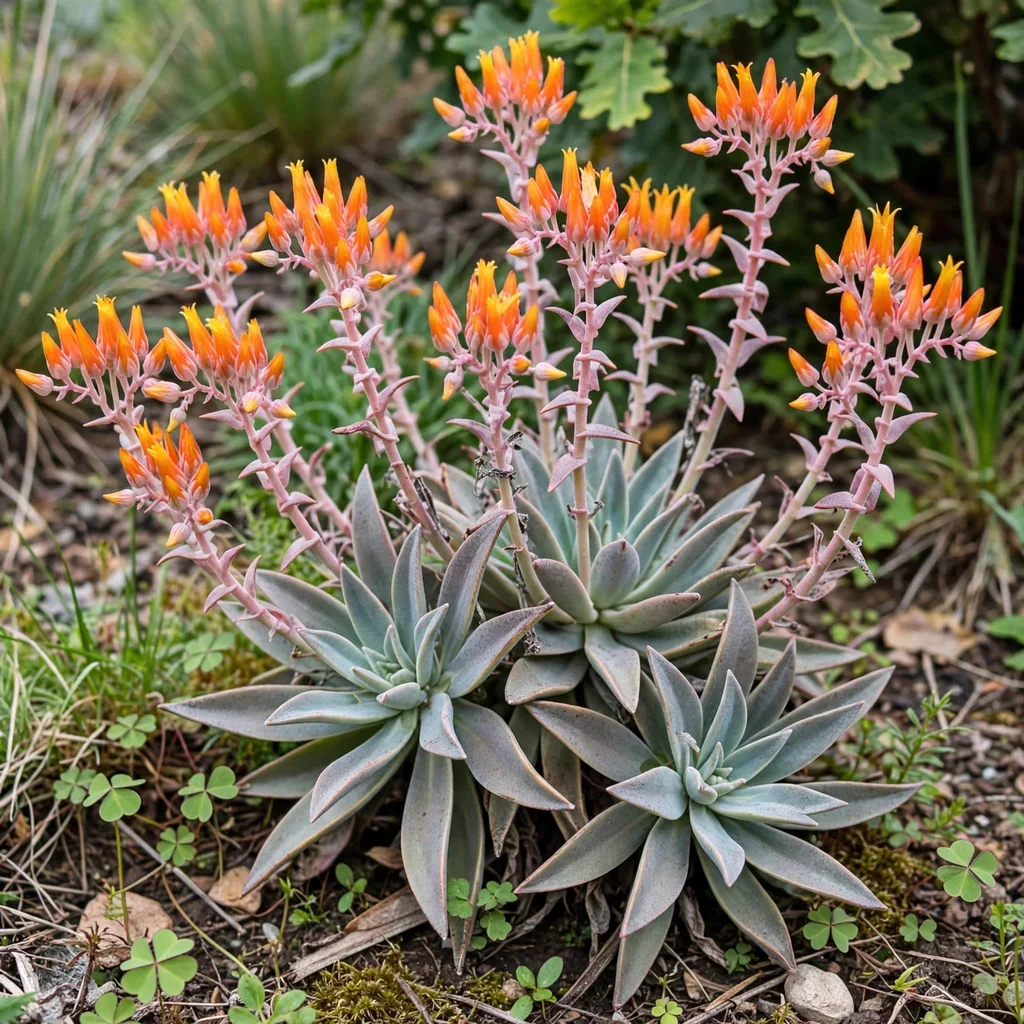
Canyon Liveforever
Dudleya cymosa 'Orange Form'
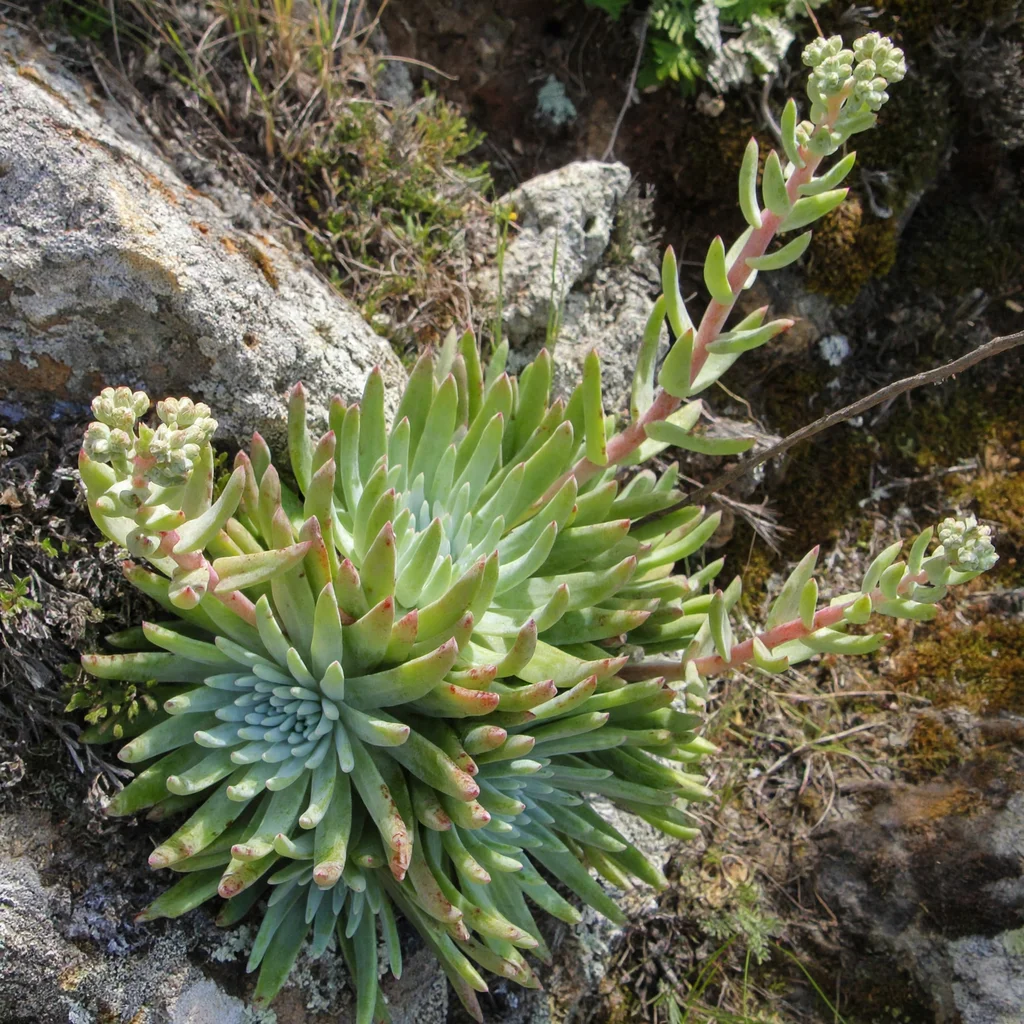
Bright Green Dudleya
Dudleya virens
Keep exploring
Explore the genus
Hardy in your zone?
Grow Lanceleaf Liveforever with confidence
See it in a design of your actual yard, get zone-matched care reminders, and track it season by season in your garden journal.