
The Story
Plant Bio
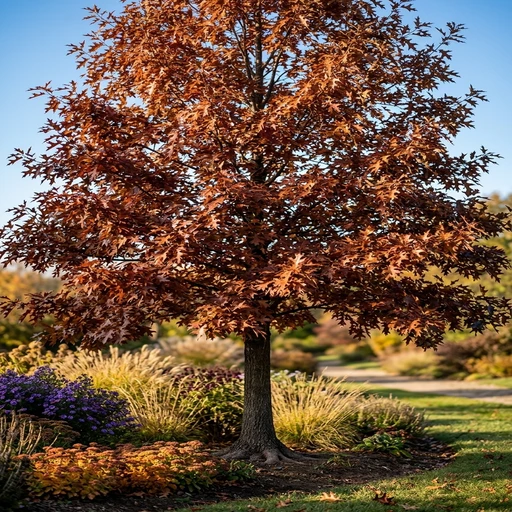
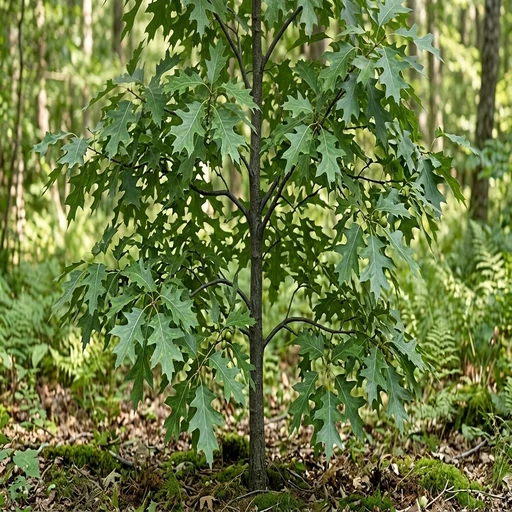
Quercus x comptoniae, the Compton oak, is a large deciduous to semi-evergreen hybrid oak reaching 60 to 80 feet in cultivation, with a spreading crown of contorted arching branches and furrowed gray bark. The thick leathery dark green leaves are egg-shaped to oblanceolate with sharply toothed rolled-under margins, lobed or entire even on the same tree, coloring yellow to red in fall.
It is the natural cross of overcup oak and southern live oak, more upright than live oak and more spreading than overcup, with strong structure and intermediate foliage. Seedlings vary widely in leaf shape and winter leaf retention, so no two seed-grown trees hold or shed foliage alike.
Uses & Benefits:
Essentials
At a Glance
Plant Type
Tree
Height
960"
Width
960"
Light
Full Sun
Zones
6, 7, 8, 9
Water
Moderate - tolerates moist to dry once established
Humidity
Tolerant of southeastern humidity
Lifespan
Long-lived tree, 80+ years
Native To
Southeastern USA, VA to TX
Toxicity
Unknown for this hybrid; oaks contain tannins harmful to livestock in quantity
Bloom period
Late winter – Spring
In flower about 4 months of the year
Planting
How to Grow
- Plant in full sun in acidic sandy loam that stays moist to dry; give it room for a 60-foot-plus crown away from structures.
- Dig a hole as deep as the root ball and twice as wide, set the root flare at grade, and water deeply at planting.
- Mulch 2 to 3 inches deep in a wide ring, keeping mulch off the trunk, and water through the first two summers.
- Structural-prune only when young and dormant to keep a central leader; feed rarely once established.
Pro Tip
Expect wide variation from acorns; buy a cloned selection if you want predictable form and winter leaf retention.
Keep It Thriving
Care Guide
Do
- Plant in full sun with room for a broad spreading crown.
- Mulch widely and water deeply during establishment.
- Prune young trees in dormancy to build strong branch structure.
Don't
- Do not over-prune mature trees or cut into large limbs in leaf.
- Do not expect seed-grown trees to match a live oak or overcup oak form.
- Do not plant where winter cold falls below zone 6 for long periods.
Seasonal Care Calendar
| Task | Jan | Feb | Mar | Apr | May | Jun | Jul | Aug | Sep | Oct | Nov | Dec |
|---|---|---|---|---|---|---|---|---|---|---|---|---|
| Mulch | ||||||||||||
| Pest Check | ||||||||||||
| Plant | ||||||||||||
| Prune |
Watch Out For
Pests & Diseases
Common Pests
Common Diseases
In the Garden
Landscape Uses & Companions
Landscape Uses
Multiply
Propagation Methods
Good to Know
Common Questions
Compton Oak questions
What zones can Compton Oak grow in?
Compton Oak is hardy in USDA Zones 6–9: in that range it survives winter in the ground. Colder than Zone 6, winters are too cold for it to survive outdoors. Warmer than Zone 9, winter isn't the problem: it prefers colder winters, and summer heat can shorten its life.
When does Compton Oak bloom?
Compton Oak typically blooms from late winter to late spring. Exact timing shifts a week or two with your zone — Sow's bloom calendar maps it to your garden.
Does Compton Oak need full sun?
Compton Oak does best in full sun (6+ hours).
Is Compton Oak drought tolerant?
Yes — once established (usually after the first full season), Compton Oak handles dry spells with minimal watering. Water deeply its first year to build the root system that makes that possible.
More Quercus to compare
Keep exploring
Explore the genus
Hardy in your zone?
Grow Compton Oak with confidence
See it in a design of your actual yard, get zone-matched care reminders, and track it season by season in your garden journal.