The Story
Plant Bio
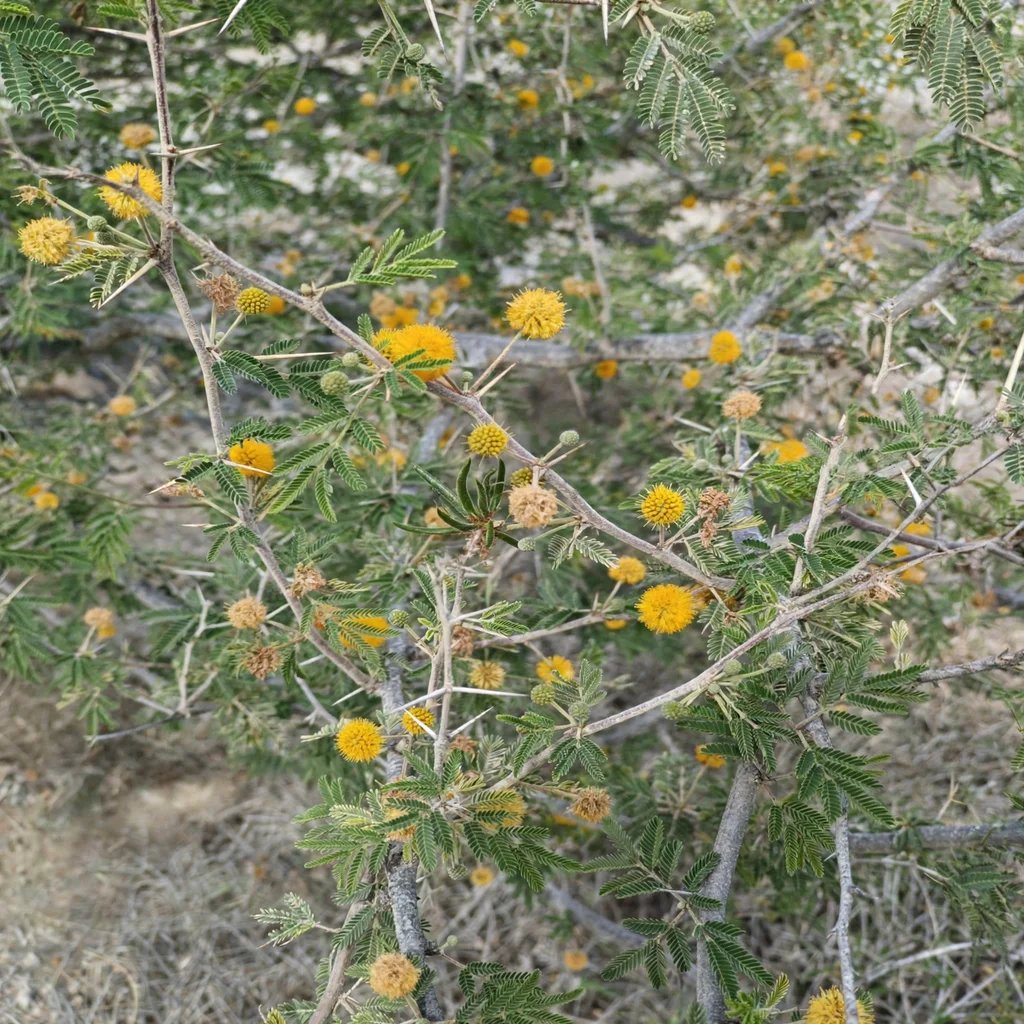
Vachellia farnesiana is a thorny, nitrogen-fixing legume shrub to small tree with much-branched, zigzag stems and finely divided bipinnate leaves. Axillary stalked heads of deep yellow, sweetly fragrant puffball flowers about an inch across open in quantity and ripen into tough curved brown pods 2 to 3 inches long.
This Florida pineland variety stays 3 to 6 feet tall and as wide in cultivation, reaching 10 to 12 feet at most, with stout paired stipular spines one-half to 1 inch long and green to gray-green foliage on limestone. It holds to pine rocklands, marl prairies and coastal berms on sharp-draining calcareous soil, remaining compact where the upright sweet acacia grows to 15 feet.
Uses & Benefits:
Essentials
At a Glance
Plant Type
Shrub
Height
72"
Width
72"
Light
Full Sun
Zones
9, 10
Water
Low
Humidity
Low
Lifespan
Long-lived
Native To
Southern Florida
Toxicity
Unknown
Bloom period
Fall – Spring
In flower about 9 months of the year
Planting
How to Grow
- Set in full sun with at least 6 hours of direct sun and open air movement.
- Plant high in sand, loam or clay-limestone that drains fast; keep the crown clear of mulch.
- Water deeply at planting and through the first dry season, then taper to rainfall.
- Feed little or not at all; excess fertilizer and irrigation produce weak open growth.
Pro Tip
Plant in full sun on sharp limestone drainage and leave it dry between waterings; shape lightly after flowering, as cutting back into old leafless wood stalls regrowth.
Keep It Thriving
Care Guide
Do
- Do give sharp drainage and a dry interval between waterings.
- Do wear heavy gloves and eye protection when handling spiny branches.
- Do leave spent heads and pods for seed and insects if form allows.
Don't
- Do not plant in low ground that stays wet; roots rot quickly.
- Do not shear hard or over-prune into bare old stems.
- Do not irrigate on a lawn schedule once established.
Seasonal Care Calendar
| Task | Jan | Feb | Mar | Apr | May | Jun | Jul | Aug | Sep | Oct | Nov | Dec |
|---|---|---|---|---|---|---|---|---|---|---|---|---|
| Mulch | ||||||||||||
| Pest Check | ||||||||||||
| Plant | ||||||||||||
| Prune |
Watch Out For
Pests & Diseases
Common Pests
Common Diseases
In the Garden
Landscape Uses & Companions
Landscape Uses
Multiply
Propagation Methods
Good to Know
Common Questions
Pineland Acacia questions
What zones can Pineland Acacia grow in?
Pineland Acacia is hardy in USDA Zones 9–10: in that range it survives winter in the ground. Colder than Zone 9, grow it in a container you can move to shelter for the winter.
When does Pineland Acacia bloom?
Pineland Acacia typically blooms from fall to spring. Exact timing shifts a week or two with your zone — Sow's bloom calendar maps it to your garden.
Does Pineland Acacia need full sun?
Pineland Acacia does best in full sun (6+ hours).
Is Pineland Acacia drought tolerant?
Yes — once established (usually after the first full season), Pineland Acacia handles dry spells with minimal watering. Water deeply its first year to build the root system that makes that possible.
More Vachellia to compare
Keep exploring
Explore the genus
Hardy in your zone?
Grow Pineland Acacia with confidence
See it in a design of your actual yard, get zone-matched care reminders, and track it season by season in your garden journal.