The Story
Plant Bio
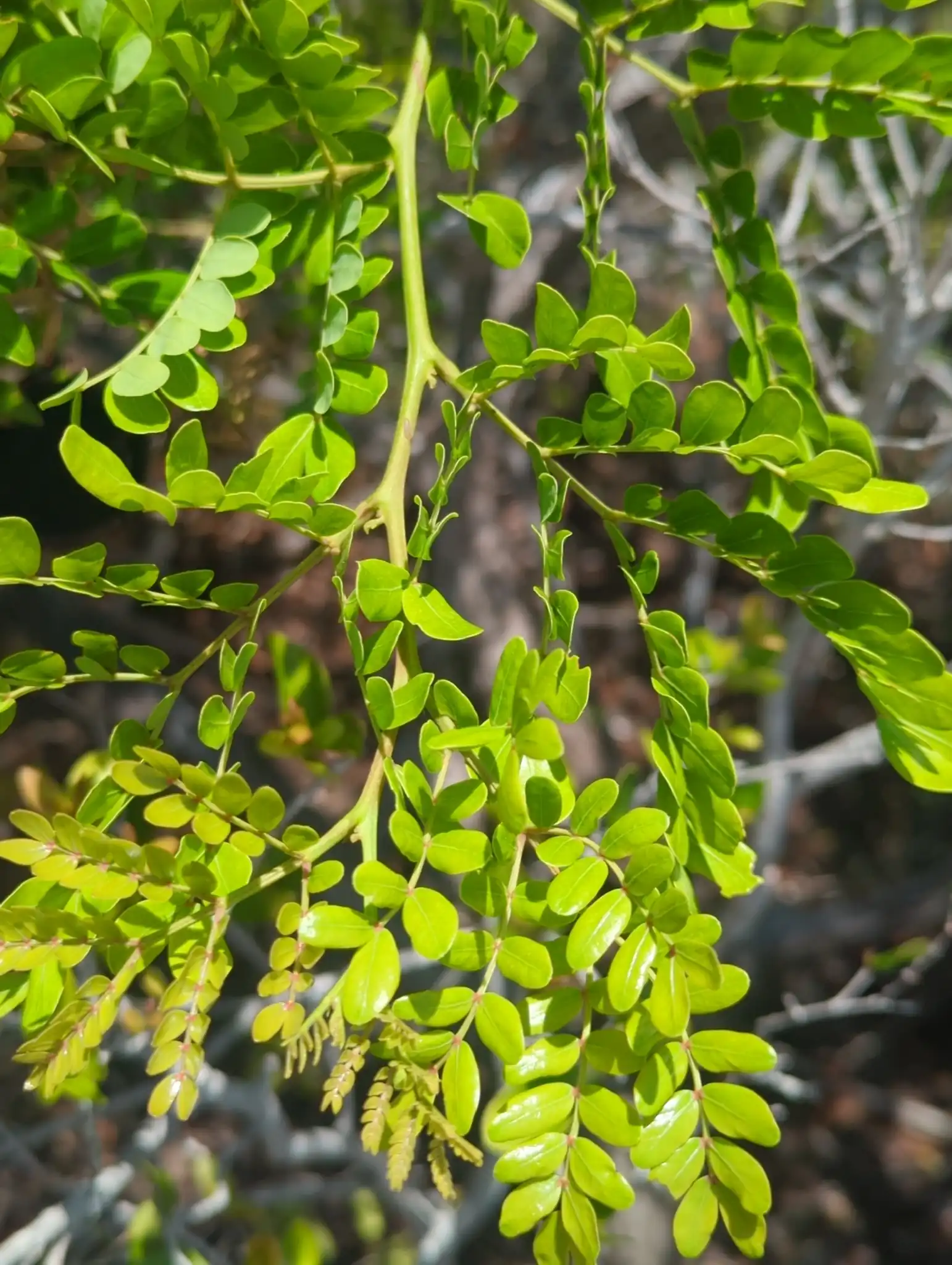
Vachellia choriophylla is an evergreen thornless tree from southern Florida and the northern Caribbean, reaching eight to twelve feet in gardens and over thirty feet in the wild with an open multi-stemmed crown. The alternate leaves are twice-divided with one to three pairs of pinnae carrying dark green oblong leaflets, and the winter to early-summer flowers are fragrant yellow balls borne singly or in clusters of two to thirteen.
Unlike other acacias it bears no true thorns, only minute stipular points, and holds dark green foliage year-round. The flower heads are six to eight millimeters across with showy stamens, followed by flattened legumes to four inches long filled with white pulp that birds eat.
Uses & Benefits:
Essentials
At a Glance
Plant Type
Tree
Height
144"
Width
120"
Light
Full Sun
Zones
10
Water
Low
Humidity
Unknown
Lifespan
Long-lived tree
Native To
South Florida, Bahamas, Cuba, Turks and Caicos
Toxicity
Unknown
Bloom period
Winter – Early summer
In flower about 7 months of the year
Planting
How to Grow
- Choose a full-sun position on well-drained sandy or limestone soil with twenty feet clear of buildings and associates.
- Plant container stock at the same depth it grew in the pot, firming sandy soil around the root ball.
- Water deeply at planting and through the first dry season to establish a deep root system.
- Withhold supplemental water once established and keep mulch pulled back from the trunks.
- Leave the open multi-trunk form unpruned except to remove dead wood after flowering.
Pro Tip
Site it twenty feet clear of associates in full sun on well-drained limestone and withhold supplemental water once established; this rare native resents over-maintenance.
Keep It Thriving
Care Guide
Do
- Do plant in full sun with sharp drainage.
- Do protect the endangered wild origin by buying nursery-propagated stock.
- Do leave fallen pods for birds if you want wildlife value.
Don't
- Do not plant in heavy clay or ground that stays wet.
- Do not subject it to long-term salt flooding.
- Do not shear or over-prune the open crown.
Seasonal Care Calendar
| Task | Jan | Feb | Mar | Apr | May | Jun | Jul | Aug | Sep | Oct | Nov | Dec |
|---|---|---|---|---|---|---|---|---|---|---|---|---|
| Mulch | ||||||||||||
| Pest Check | ||||||||||||
| Plant | ||||||||||||
| Prune |
Watch Out For
Pests & Diseases
Common Pests
Common Diseases
In the Garden
Landscape Uses & Companions
Landscape Uses
Companion Plants
Multiply
Propagation Methods
Good to Know
Common Questions
Cinnecord questions
What zones can Cinnecord grow in?
Cinnecord is hardy in USDA Zone 10: in that range it survives winter in the ground. Colder than Zone 10, winters are too cold for it to survive outdoors.
When does Cinnecord bloom?
Cinnecord typically blooms from early winter to early summer. Exact timing shifts a week or two with your zone — Sow's bloom calendar maps it to your garden.
Does Cinnecord need full sun?
Cinnecord does best in full sun (6+ hours).
Is Cinnecord drought tolerant?
Yes — once established (usually after the first full season), Cinnecord handles dry spells with minimal watering. Water deeply its first year to build the root system that makes that possible.
More Vachellia to compare
Keep exploring
Explore the genus
Hardy in your zone?
Grow Cinnecord with confidence
See it in a design of your actual yard, get zone-matched care reminders, and track it season by season in your garden journal.