
The Story
Plant Bio
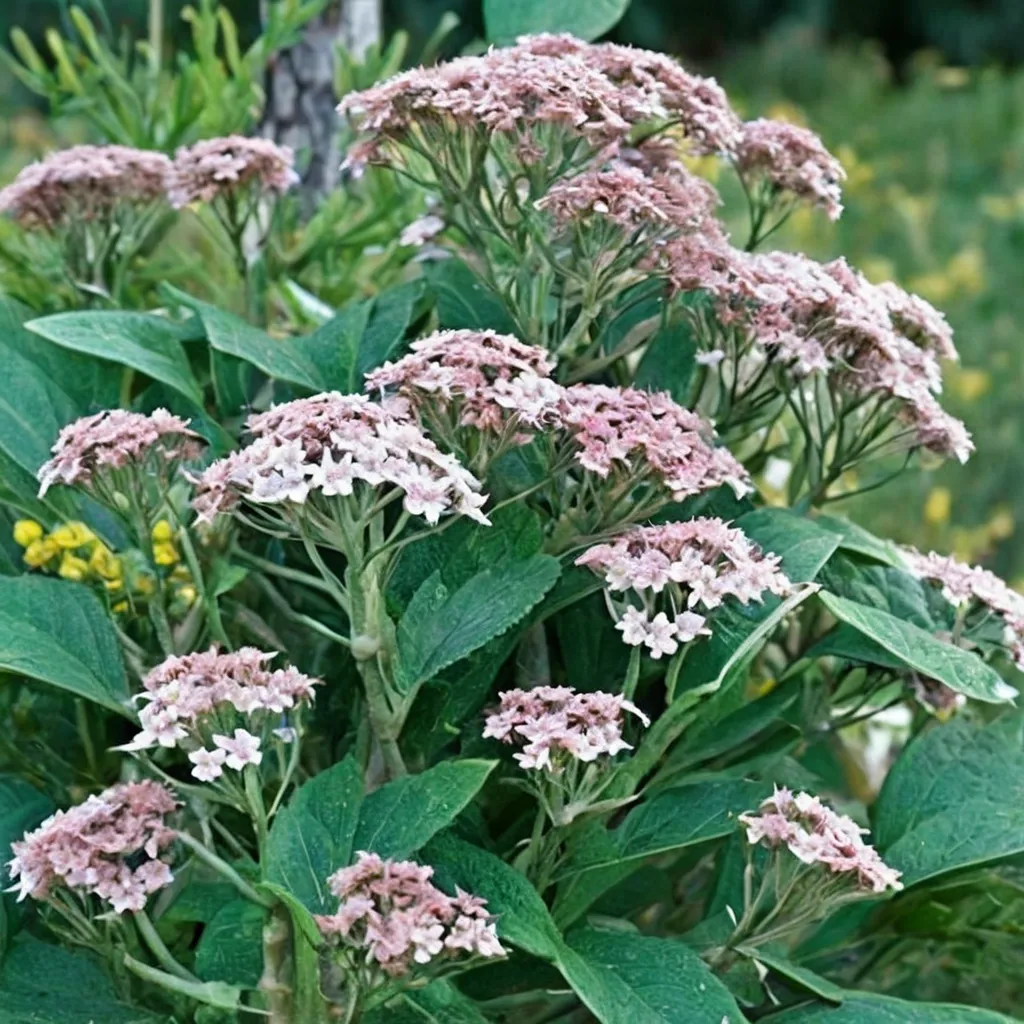
Ageratina jucunda is a deciduous herbaceous perennial with a woody base, reaching two to three feet tall and wide in cultivation. Stems carry opposite triangular to lance-shaped leaves with coarsely toothed margins on short stalks, ending in branched clusters of small white heads.
It is a southeastern endemic found only from southeastern Georgia to Florida, growing in sandhills, dry pinelands and hammocks where tuberous roots resprout after fire. It is separated from semaphore thoroughwort by thin, sharply serrate to incised leaves on short petioles rather than thick, almost succulent blades.
Uses & Benefits:
Essentials
At a Glance
Plant Type
Perennial
Height
30"
Width
30"
Light
Full Sun, Partial Sun, Shade
Zones
8, 9, 10
Water
Moderate
Humidity
Tolerant
Lifespan
Perennial
Native To
Southeastern USA
Toxicity
Possibly harmful if ingested
Bloom period
Late summer – Winter
In flower about 7 months of the year
Planting
How to Grow
- Set plants in full sun to filtered shade in moist, well-drained sand or loam.
- Space 24 to 36 inches apart to allow airflow through the clump.
- Water to settle the roots, then water during dry spells the first season.
- Leave fall bloom to set seed for pollinators and cut back in late winter.
Pro Tip
Leave the fall seed heads standing until late winter, then cut last year's stems to the woody base before spring growth starts.
Keep It Thriving
Care Guide
Do
- Grow in well-drained soil and do not over-fertilize this wildflower.
- Give afternoon shade under pines where summers are hot.
- Leave stems through fall and winter for insects and seed.
Don't
- Do not plant where children or pets chew plants, as ingestion may cause harm.
- Do not cut into the low woody base beyond dead tops.
- Do not overwater or hold waterlogged soil around the crown.
Seasonal Care Calendar
| Task | Jan | Feb | Mar | Apr | May | Jun | Jul | Aug | Sep | Oct | Nov | Dec |
|---|---|---|---|---|---|---|---|---|---|---|---|---|
| Mulch | ||||||||||||
| Plant | ||||||||||||
| Propagate | ||||||||||||
| Prune |
Watch Out For
Pests & Diseases
Common Pests
Common Diseases
In the Garden
Landscape Uses & Companions
Landscape Uses
Multiply
Propagation Methods
Good to Know
Common Questions
Hammock Snakeroot questions
What zones can Hammock Snakeroot grow in?
Hammock Snakeroot is hardy in USDA Zones 8–10: in that range it survives winter in the ground. Colder than Zone 8, grow it in a container you can move to shelter for the winter, or as an annual.
When does Hammock Snakeroot bloom?
Hammock Snakeroot typically blooms from late summer to late winter. Exact timing shifts a week or two with your zone — Sow's bloom calendar maps it to your garden.
Does Hammock Snakeroot need full sun?
Hammock Snakeroot does best in full sun to part shade. In hot climates, afternoon shade keeps blooms fresher longer.
Is Hammock Snakeroot drought tolerant?
Yes — once established (usually after the first full season), Hammock Snakeroot handles dry spells with minimal watering. Water deeply its first year to build the root system that makes that possible.
More Ageratina to compare
Keep exploring
Explore the genus
Hardy in your zone?
Grow Hammock Snakeroot with confidence
See it in a design of your actual yard, get zone-matched care reminders, and track it season by season in your garden journal.