The Story
Plant Bio
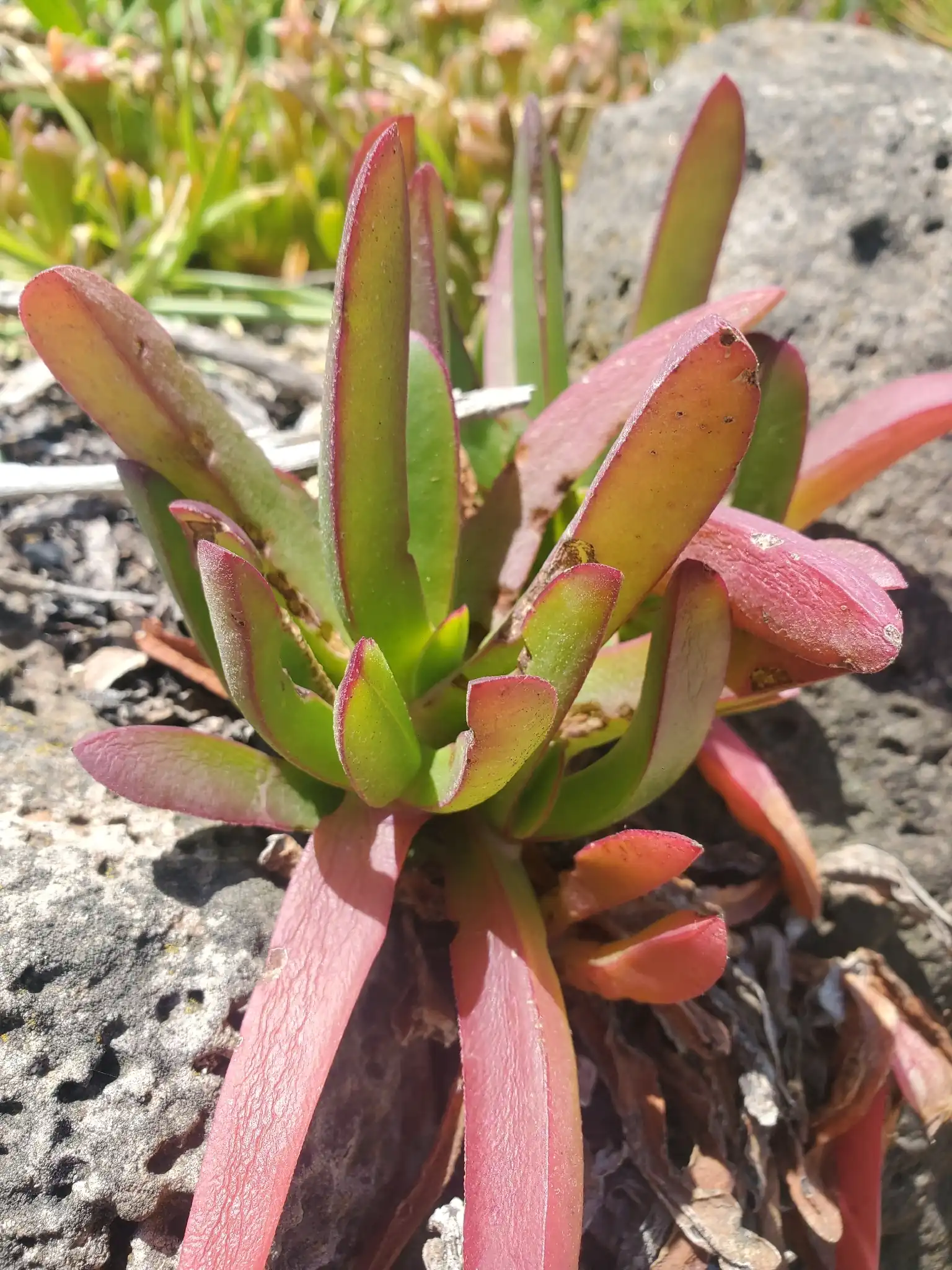
Carpobrotus rossii is a prostrate, succulent perennial groundcover native to coastal southern Australia that forms thick spreading mats up to ten feet wide. Trailing stems root at the nodes as they advance across sandy ground, bearing succulent, three-angled leaves and daisy-like magenta-pink flowers from spring through summer.
The succulent leaves store saline moisture, allowing stems to stabilize loose soil while withstanding direct sea spray and prolonged drought. Both the salty foliage and red fig-like fruits are edible.
Uses & Benefits:
Essentials
At a Glance
Plant Type
Groundcover
Height
8"
Width
118"
Light
Full Sun, Partial Sun
Zones
8, 9, 10
Water
Low
Humidity
Low
Lifespan
Perennial
Native To
Southern Australia
Toxicity
Non-toxic
Bloom period
Spring – Summer
In flower about 6 months of the year
Planting
How to Grow
- Select a planting site in direct, full sun with rapid water drainage, such as a sandy bank or elevated bed.
- Amend heavy or compacted soils with coarse sand and fine gravel rather than organic compost to ensure drainage.
- Space individual plants 3 to 4 feet apart to allow room for trailing stems to root and spread.
- Water thoroughly at planting, then restrict irrigation to periods of extended summer dry spells once established.
Pro Tip
Plant in sharp, sandy soil under direct sun and never prune into old woody growth, as bare stems lack dormant buds and will die back.
Keep It Thriving
Care Guide
Do
- Provide intense sun exposure to ensure robust growth and maximum flower production.
- Ensure soil drains immediately after rain or irrigation to protect the root system.
- Trim green tip growth lightly if necessary to control horizontal spread.
Don't
- Do not add rich organic amendments or moisture-retentive mulches around the stem crowns.
- Do not cut back into old, leafless woody stems when trimming.
- Do not overwater during cool winter months when growth slows.
Seasonal Care Calendar
| Task | Jan | Feb | Mar | Apr | May | Jun | Jul | Aug | Sep | Oct | Nov | Dec |
|---|---|---|---|---|---|---|---|---|---|---|---|---|
| Pest Check | ||||||||||||
| Plant | ||||||||||||
| Prune | ||||||||||||
| Winter Prep |
Watch Out For
Pests & Diseases
Common Pests
Common Diseases
In the Garden
Landscape Uses & Companions
Landscape Uses
Multiply
Propagation Methods
Good to Know
Common Questions
Karkalla questions
What zones can Karkalla grow in?
Karkalla is hardy in USDA Zones 8–10: in that range it survives winter in the ground. Colder than Zone 8, grow it in a container you can move to shelter for the winter, or as an annual.
Is Karkalla deer resistant?
Yes — Karkalla is rated deer-resistant. Deer typically pass it over, though extreme hunger can override any plant's defenses.
When does Karkalla bloom?
Karkalla typically blooms from spring to summer. Exact timing shifts a week or two with your zone — Sow's bloom calendar maps it to your garden.
Does Karkalla need full sun?
Karkalla does best in full sun to part shade. In hot climates, afternoon shade keeps blooms fresher longer.
Is Karkalla drought tolerant?
Yes — once established (usually after the first full season), Karkalla handles dry spells with minimal watering. Water deeply its first year to build the root system that makes that possible.
More Carpobrotus to compare
Keep exploring
Explore the genus
Hardy in your zone?
Grow Karkalla with confidence
See it in a design of your actual yard, get zone-matched care reminders, and track it season by season in your garden journal.