The Story
Plant Bio
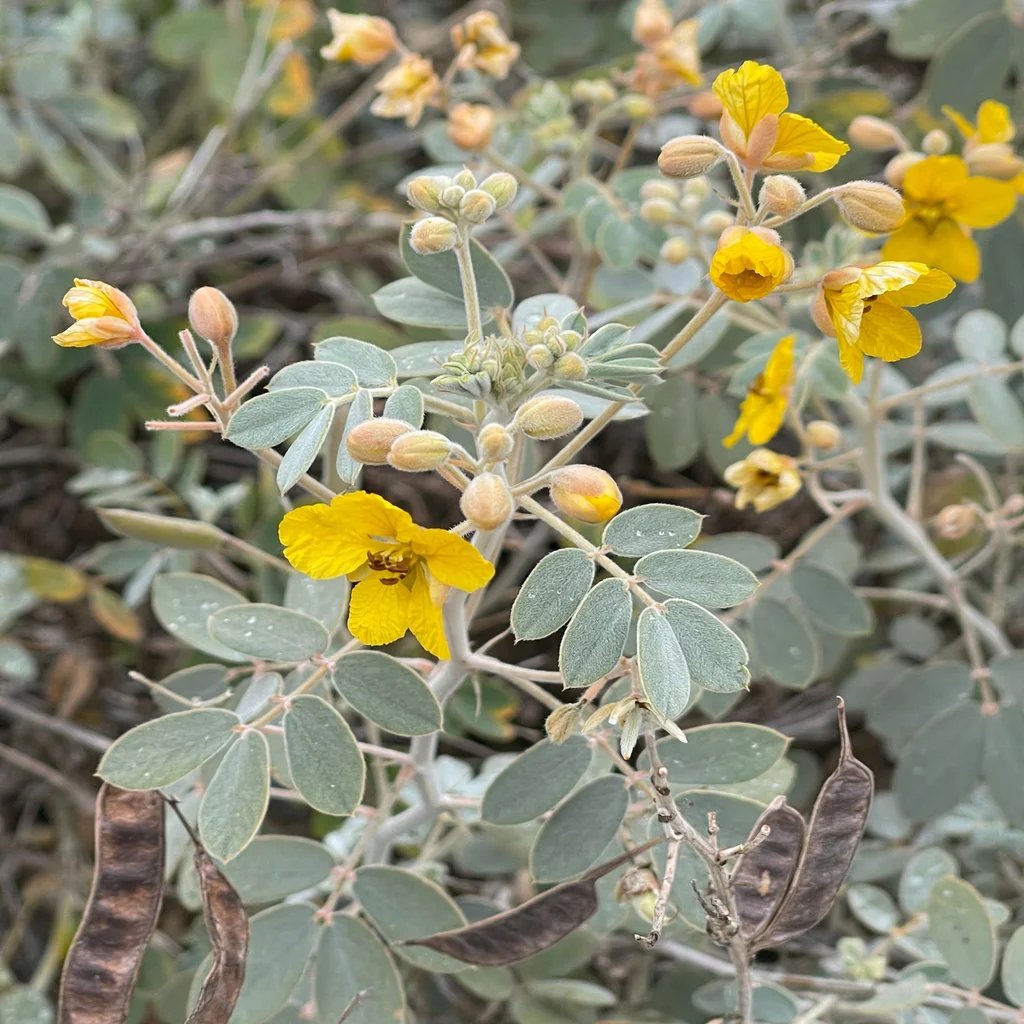
Senna artemisioides is an evergreen Australian shrub with pinnate leaves and short racemes of pea-like yellow flowers followed by flat oblong pods. In cultivation it forms a rounded woody shrub that holds its foliage year-round where winters stay mild.
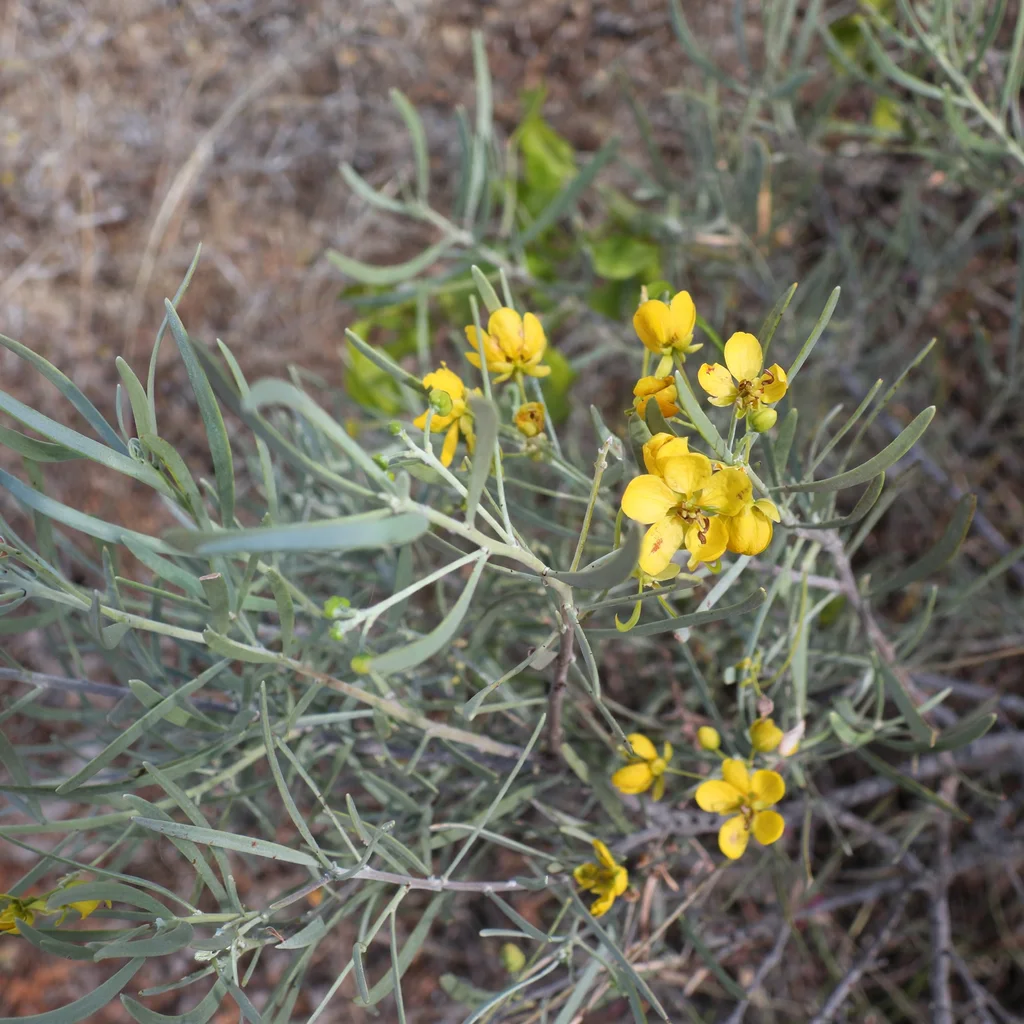
Sold as Senna nemophila, this form is the threadleaf selection with very narrow bright green to gray-green leaflets about one inch long that give the canopy a feathery, airy texture. It grows fast to six to eight feet tall and wide and blooms with lightly scented buttercup-yellow flowers at the branch ends from late winter into spring.
Uses & Benefits:
Essentials
At a Glance
Plant Type
Shrub
Height
84"
Width
84"
Light
Full Sun
Zones
8, 9, 10
Water
Very low
Humidity
Low
Lifespan
Long-lived shrub
Native To
Australia
Toxicity
Toxic if ingested - ornamental only, do not eat
Bloom period
Late winter – Spring
In flower about 4 months of the year
Planting
How to Grow
- Plant in full sun with plenty of heat in sharply drained sandy or loamy soil, spacing 6 to 8 feet apart.
- Water deeply at planting, then taper to infrequent deep soakings, letting soil dry between waterings once established.
- Feed once a year in spring with a light application of fertilizer; excess water and fertilizer cause pale growth.
- Tip-prune after spring bloom and remove seed pods to keep the crown compact; avoid shearing.
Pro Tip
Prune lightly after flowering and pick off the seed pods; shearing or cutting back into old bare wood leaves open stubs that fill in slowly.
Keep It Thriving
Care Guide
Do
- Give full sun and heat with sharp drainage
- Water deeply but infrequently once established
- Feed once yearly only
Don't
- Do not overwater or keep soil constantly moist
- Do not shear into old leafless wood
- Do not eat any part; grow as ornamental only
Seasonal Care Calendar
| Task | Jan | Feb | Mar | Apr | May | Jun | Jul | Aug | Sep | Oct | Nov | Dec |
|---|---|---|---|---|---|---|---|---|---|---|---|---|
| Fertilize | ||||||||||||
| Pest Check | ||||||||||||
| Plant | ||||||||||||
| Propagate | ||||||||||||
| Prune |
Watch Out For
Pests & Diseases
Common Pests
Common Diseases
In the Garden
Landscape Uses & Companions
Landscape Uses
Companion Plants
Multiply
Propagation Methods
Good to Know
Common Questions
Desert Cassia questions
What zones can Desert Cassia grow in?
Desert Cassia is hardy in USDA Zones 8–10: in that range it survives winter in the ground. Colder than Zone 8, grow it in a container you can move to shelter for the winter.
Is Desert Cassia deer resistant?
Yes — Desert Cassia is rated deer-resistant. Deer typically pass it over, though extreme hunger can override any plant's defenses.
When does Desert Cassia bloom?
Desert Cassia typically blooms from late winter to late spring. Exact timing shifts a week or two with your zone — Sow's bloom calendar maps it to your garden.
Does Desert Cassia need full sun?
Desert Cassia does best in full sun (6+ hours).
Is Desert Cassia drought tolerant?
Yes — once established (usually after the first full season), Desert Cassia handles dry spells with minimal watering. Water deeply its first year to build the root system that makes that possible.
More Senna to compare
Keep exploring
Explore the genus
Hardy in your zone?
Grow Desert Cassia with confidence
See it in a design of your actual yard, get zone-matched care reminders, and track it season by season in your garden journal.