The Story
Plant Bio
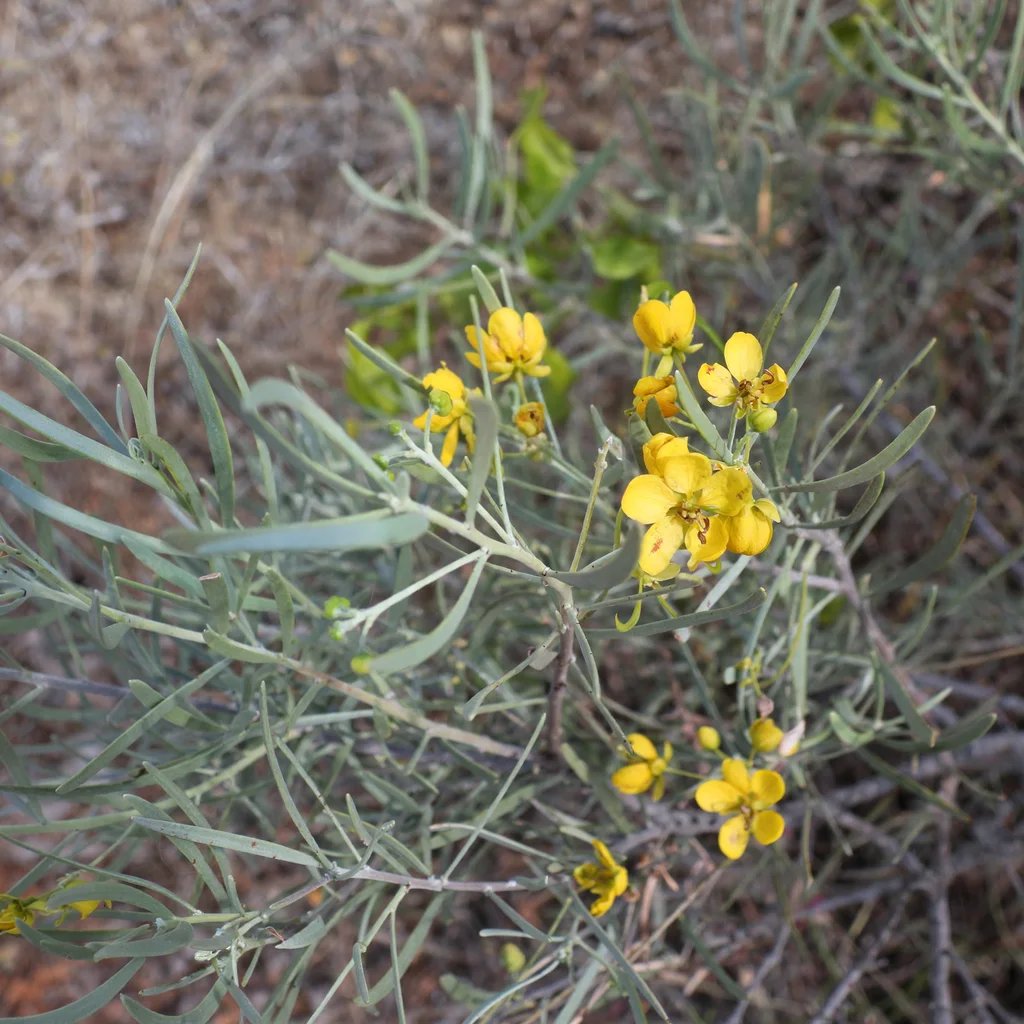
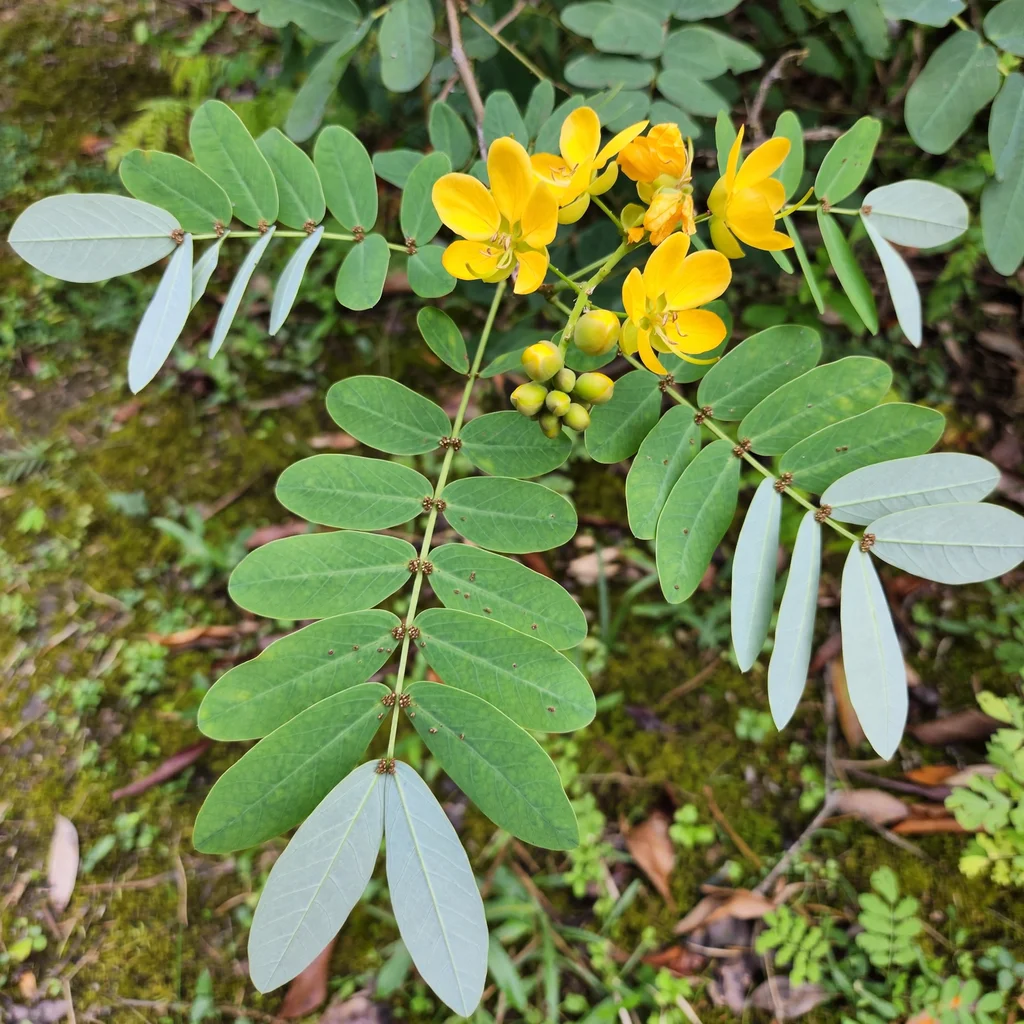
Senna phyllodinea is a fast-growing evergreen shrub from arid inland Australia, reaching 4 to 6 feet tall and wide with an open rounded crown of limber branches. The leaves are reduced to flattened silver-gray phyllodes, sickle-shaped and 2 to 3 inches long, that carry photosynthesis in place of leaflets and shimmer in sun.
Unlike feathery cassia, this species carries broad flat silver phyllodes often notched into two lobes at the tip, never fine pinnate leaflets. In late winter into spring it covers the branch ends with branched clusters of three-quarter-inch sulfur-yellow pea flowers, followed by flat papery brown pods that dangle for months.
Uses & Benefits:
Essentials
At a Glance
Plant Type
Shrub
Height
72"
Width
72"
Light
Full Sun, Partial Sun
Zones
9, 10
Water
Low
Humidity
Unknown
Lifespan
Long-lived shrub
Native To
Australia
Toxicity
Unknown
Bloom period
Late winter – Fall
In flower about 10 months of the year
Planting
How to Grow
- Plant in full sun in sharply drained rocky or sandy soil with room for a 6-foot crown
- Dig a hole no deeper than the container and twice as wide, set the crown level and backfill with native soil
- Water deeply once to settle, then mulch thinly with gravel keeping mulch off the stems
- Water sparingly once established; soak only when soil is dry several inches down
Pro Tip
Prune lightly after flowering and leave it open; shearing or overwatering produces leggy chlorotic growth that never recovers its form.
Keep It Thriving
Care Guide
Do
- Plant in full sun with sharp drainage and room for air movement
- Prune lightly after the spring bloom to keep an open rounded shape
- Water deeply but infrequently once established
Don't
- Do not overwater or fertilize heavily; wet rich soil turns growth leggy and yellow
- Do not shear or cut hard into leafless old wood
- Do not plant in heavy clay or in a lawn that stays wet
Seasonal Care Calendar
| Task | Jan | Feb | Mar | Apr | May | Jun | Jul | Aug | Sep | Oct | Nov | Dec |
|---|---|---|---|---|---|---|---|---|---|---|---|---|
| Pest Check | ||||||||||||
| Plant | ||||||||||||
| Prune | ||||||||||||
| Winter Prep |
Watch Out For
Pests & Diseases
Common Pests
Common Diseases
In the Garden
Landscape Uses & Companions
Landscape Uses
Multiply
Propagation Methods
Good to Know
Common Questions
Silver Leaf Cassia questions
What zones can Silver Leaf Cassia grow in?
Silver Leaf Cassia is hardy in USDA Zones 9–10: in that range it survives winter in the ground. Colder than Zone 9, grow it in a container you can move to shelter for the winter.
When does Silver Leaf Cassia bloom?
Silver Leaf Cassia typically blooms in late winter. Exact timing shifts a week or two with your zone — Sow's bloom calendar maps it to your garden.
Does Silver Leaf Cassia need full sun?
Silver Leaf Cassia does best in full sun to part shade. In hot climates, afternoon shade keeps blooms fresher longer.
Is Silver Leaf Cassia drought tolerant?
Yes — once established (usually after the first full season), Silver Leaf Cassia handles dry spells with minimal watering. Water deeply its first year to build the root system that makes that possible.
More Senna to compare
Keep exploring
Explore the genus
Hardy in your zone?
Grow Silver Leaf Cassia with confidence
See it in a design of your actual yard, get zone-matched care reminders, and track it season by season in your garden journal.