The Story
Plant Bio
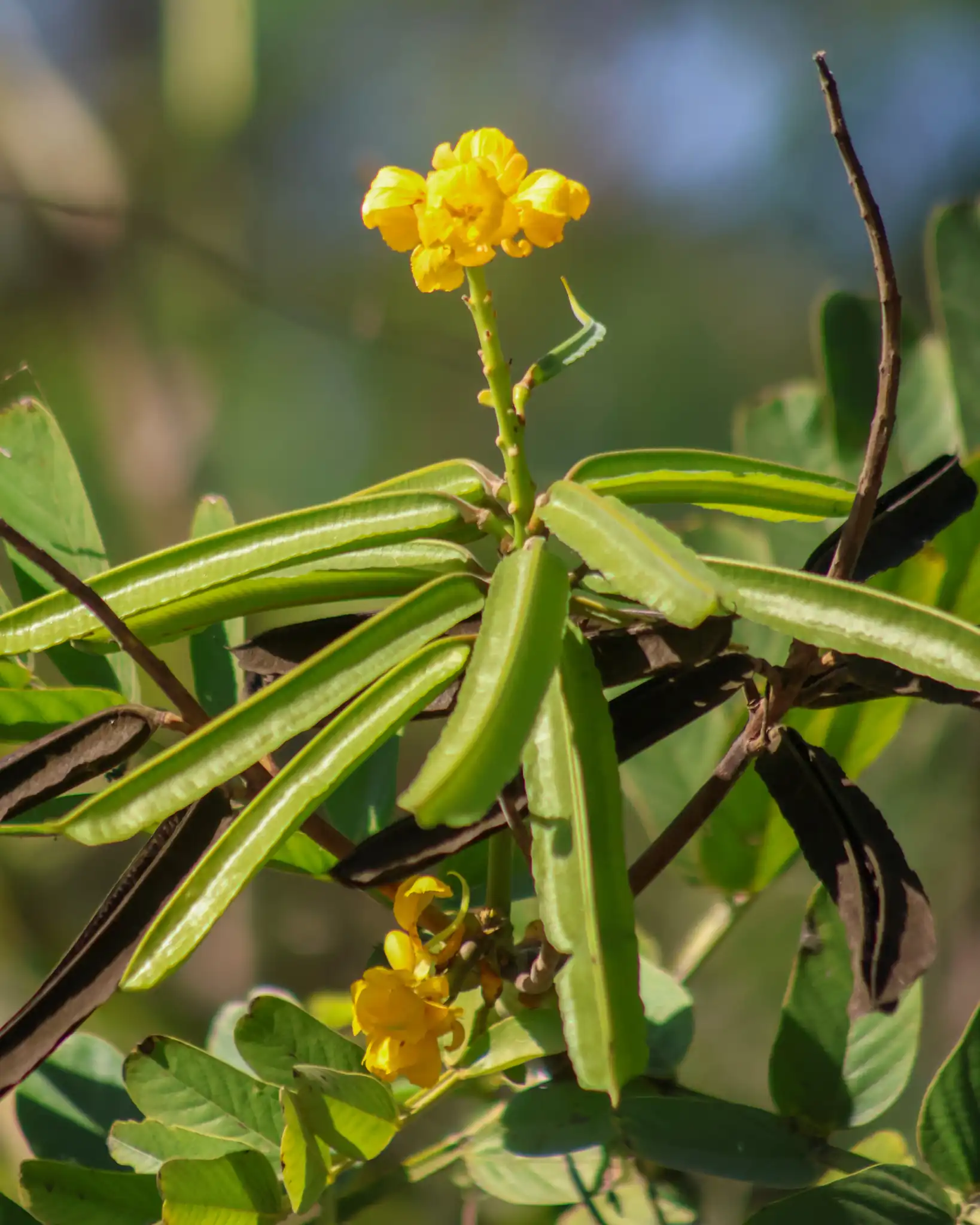
Senna alata is a coarse erect evergreen shrub from tropical America that reaches eight to ten feet in a frost-free season, with pinnate leaves 20 to 31 inches long made of eight to fourteen pairs of leaflets largest toward the tip. The flowers are bright yellow petals about one inch across with orange-yellow sepals, carried in long erect terminal racemes held above the leaves.
Unlike shrubby sennas with axillary flowers, it holds buds and open blooms in stiff upright candlesticks that open from the base upward. It is frost-tender and fast from scarified seed, flowering the first summer even where winter kills it to the ground.
Uses & Benefits:
Essentials
At a Glance
Plant Type
Shrub
Height
120"
Width
72"
Light
Full Sun
Zones
8, 9, 10
Water
Low to moderate
Humidity
Unknown
Lifespan
Perennial in zones 9-11, annual elsewhere
Native To
Tropical America, Mexico to South America
Toxicity
Poisonous if ingested
Bloom period
Summer – Fall
In flower about 6 months of the year
Planting
How to Grow
- Plant in full sun after all frost in well-draining soil.
- Water seed and transplants until sprouted and established, then water in dry spells and mulch to hold moisture.
- Prune lightly for shape where it overwinters; remove spent racemes before pods ripen where self-seeding is a risk.
- Pull and compost frost-killed plants and start fresh scarified seed each spring in cold zones.
Pro Tip
In Florida cut racemes before pods ripen to stop self-seeding; elsewhere grow it as a warm-season annual and compost the plant after hard frost.
Keep It Thriving
Care Guide
Do
- Give full sun and well-draining soil.
- Water to establish, then mulch for dry spells.
- Remove seed pods where escape is a risk.
Don't
- Do not try to overwinter outdoors below zone 9.
- Do not ingest leaves, pods or seed; all parts are poisonous.
- Do not confuse it with Senna didymobotrya or Senna pendula.
Seasonal Care Calendar
| Task | Jan | Feb | Mar | Apr | May | Jun | Jul | Aug | Sep | Oct | Nov | Dec |
|---|---|---|---|---|---|---|---|---|---|---|---|---|
| Mulch | ||||||||||||
| Pest Check | ||||||||||||
| Plant | ||||||||||||
| Propagate | ||||||||||||
| Prune |
Watch Out For
Pests & Diseases
Common Pests
In the Garden
Landscape Uses & Companions
Landscape Uses
Multiply
Propagation Methods
Good to Know
Common Questions
Candle Bush questions
What zones can Candle Bush grow in?
Candle Bush is hardy in USDA Zones 8–10: in that range it survives winter in the ground. Colder than Zone 8, grow it in a container you can move to shelter for the winter.
When does Candle Bush bloom?
Candle Bush typically blooms from summer to fall. Exact timing shifts a week or two with your zone — Sow's bloom calendar maps it to your garden.
Does Candle Bush need full sun?
Candle Bush does best in full sun (6+ hours).
Is Candle Bush drought tolerant?
Yes — once established (usually after the first full season), Candle Bush handles dry spells with minimal watering. Water deeply its first year to build the root system that makes that possible.
More Senna to compare
Keep exploring
Explore the genus
Hardy in your zone?
Grow Candle Bush with confidence
See it in a design of your actual yard, get zone-matched care reminders, and track it season by season in your garden journal.