The Story
Plant Bio
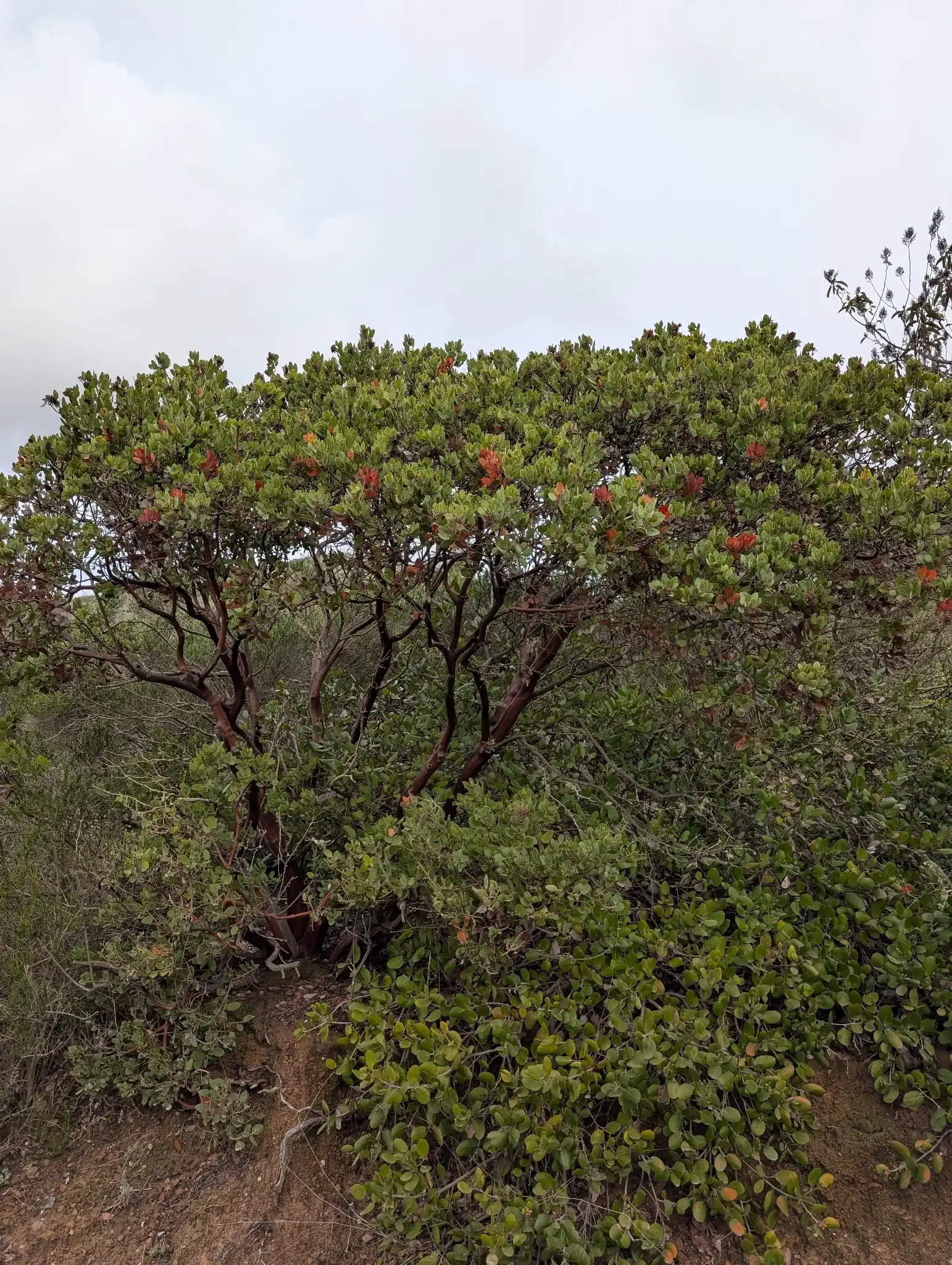
Arctostaphylos catalinae is an upright evergreen shrub or small tree native to California's Channel Islands, featuring smooth red bark and light blue-green bristly foliage. In late winter through spring, it produces open branching clusters of white to light pink urn-shaped flowers followed by small fruits.
Unlike many manzanitas that resprout from a thick basal burl after fires, this species lacks a burl and regenerates purely from seed. Its young stems and broad elliptic leaves are covered in fine, stiff bristles that distinguish its texture from mainland species.
Uses & Benefits:
Essentials
At a Glance
Plant Type
Shrub
Height
197"
Width
217"
Light
Full Sun, Partial Sun
Zones
8, 9, 10
Water
Low
Humidity
Low
Lifespan
Perennial
Native To
California (Channel Islands)
Toxicity
Non-toxic (bristles may cause mild skin irritation)
Bloom period
Winter – Spring
In flower about 6 months of the year
Planting
How to Grow
- Plant in full sun to light coastal shade in grittier, fast-draining soil where water will not pool.
- Water moderately during the first growing season to establish roots, letting soil dry out between soakings.
- Cease summer irrigation once established, relying on natural rainfall in Mediterranean climates.
- Prune out fungal-damaged branches promptly, sterilizing tool blades with isopropyl alcohol between cuts.
Pro Tip
Never cut into old leafless wood when pruning, as it lacks latent buds and will fail to regenerate; trim shoots back only to an active lateral node.
Keep It Thriving
Care Guide
Do
- Provide sharp drainage using sandy, rocky, or gritty mineral soil.
- Disinfect pruning tools with rubbing alcohol before trimming branches.
- Give full sun along the coast or afternoon shade in hot inland sites.
Don't
- Do not overwater during summer, which invites fatal root rot.
- Do not shear mechanically or cut back into old leafless wood.
- Do not apply heavy high-phosphorus fertilizers to lean native soil.
Seasonal Care Calendar
| Task | Jan | Feb | Mar | Apr | May | Jun | Jul | Aug | Sep | Oct | Nov | Dec |
|---|---|---|---|---|---|---|---|---|---|---|---|---|
| Fertilize | ||||||||||||
| Pest Check | ||||||||||||
| Prune | ||||||||||||
| Winter Prep |
Watch Out For
Pests & Diseases
Common Pests
Common Diseases
In the Garden
Landscape Uses & Companions
Landscape Uses
Companion Plants
Multiply
Propagation Methods
Good to Know
Common Questions
Santa Catalina Island Manzanita questions
What zones can Santa Catalina Island Manzanita grow in?
Santa Catalina Island Manzanita is hardy in USDA Zones 8–10: in that range it survives winter in the ground. Colder than Zone 8, grow it in a container you can move to shelter for the winter.
Is Santa Catalina Island Manzanita deer resistant?
Not reliably. Deer may browse Santa Catalina Island Manzanita, especially tender spring growth — plan on repellents or fencing where pressure is high.
When does Santa Catalina Island Manzanita bloom?
Santa Catalina Island Manzanita typically blooms from winter to spring. Exact timing shifts a week or two with your zone — Sow's bloom calendar maps it to your garden.
Does Santa Catalina Island Manzanita need full sun?
Santa Catalina Island Manzanita does best in full sun to part shade. In hot climates, afternoon shade keeps blooms fresher longer.
Is Santa Catalina Island Manzanita drought tolerant?
Yes — once established (usually after the first full season), Santa Catalina Island Manzanita handles dry spells with minimal watering. Water deeply its first year to build the root system that makes that possible.
More Arctostaphylos to compare
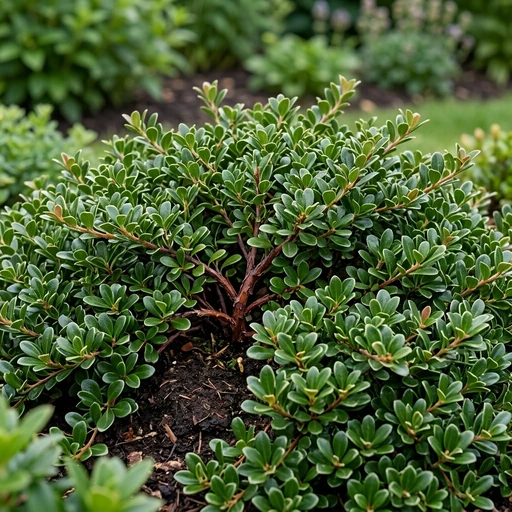
Massachusetts Common Bearberry
Arctostaphylos uva-ursi 'Massachusetts'
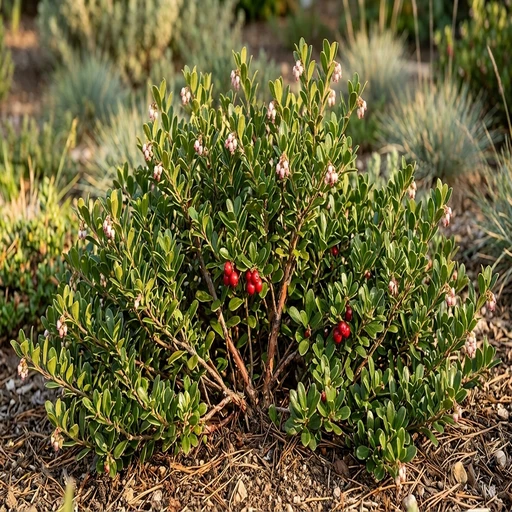
Bearberry
Arctostaphylos uva-ursi
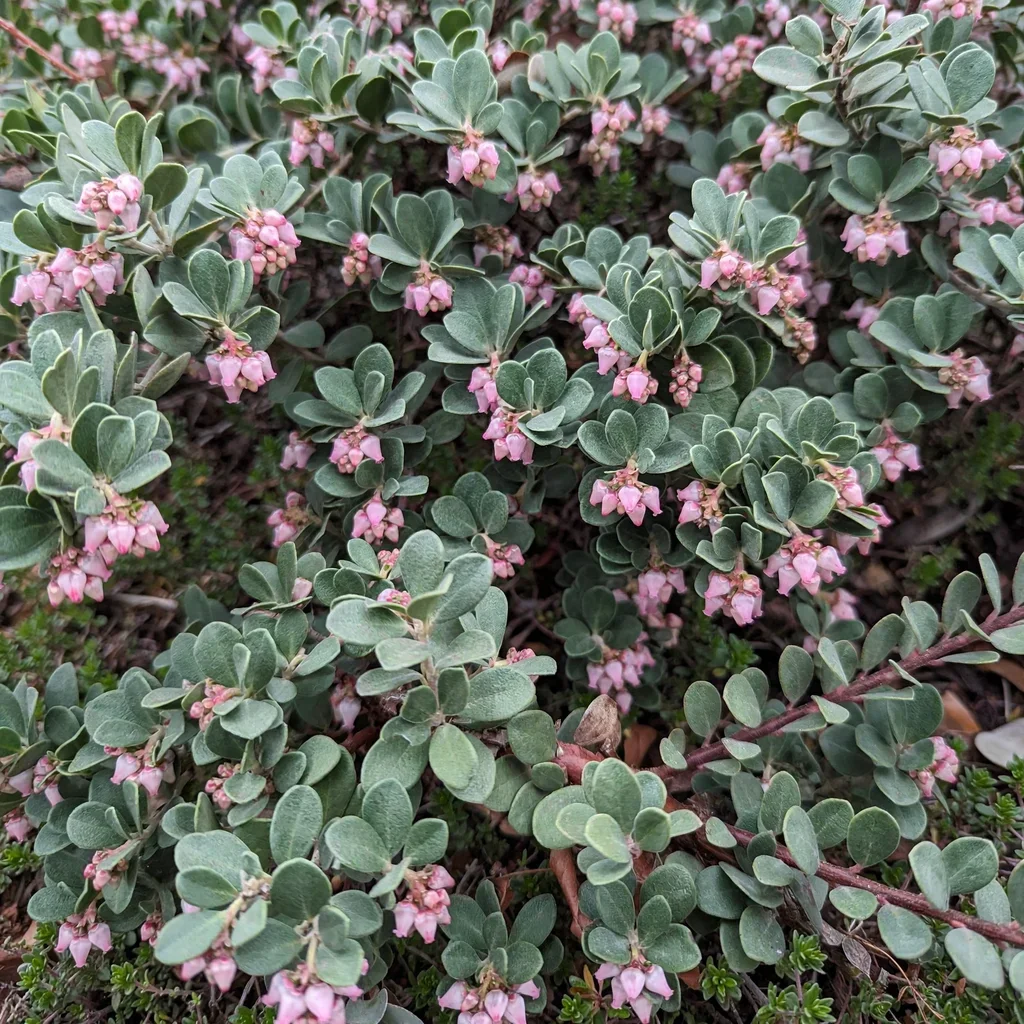
Ron Clendenen Manzanita
Arctostaphylos x media 'Ron Clendenen'
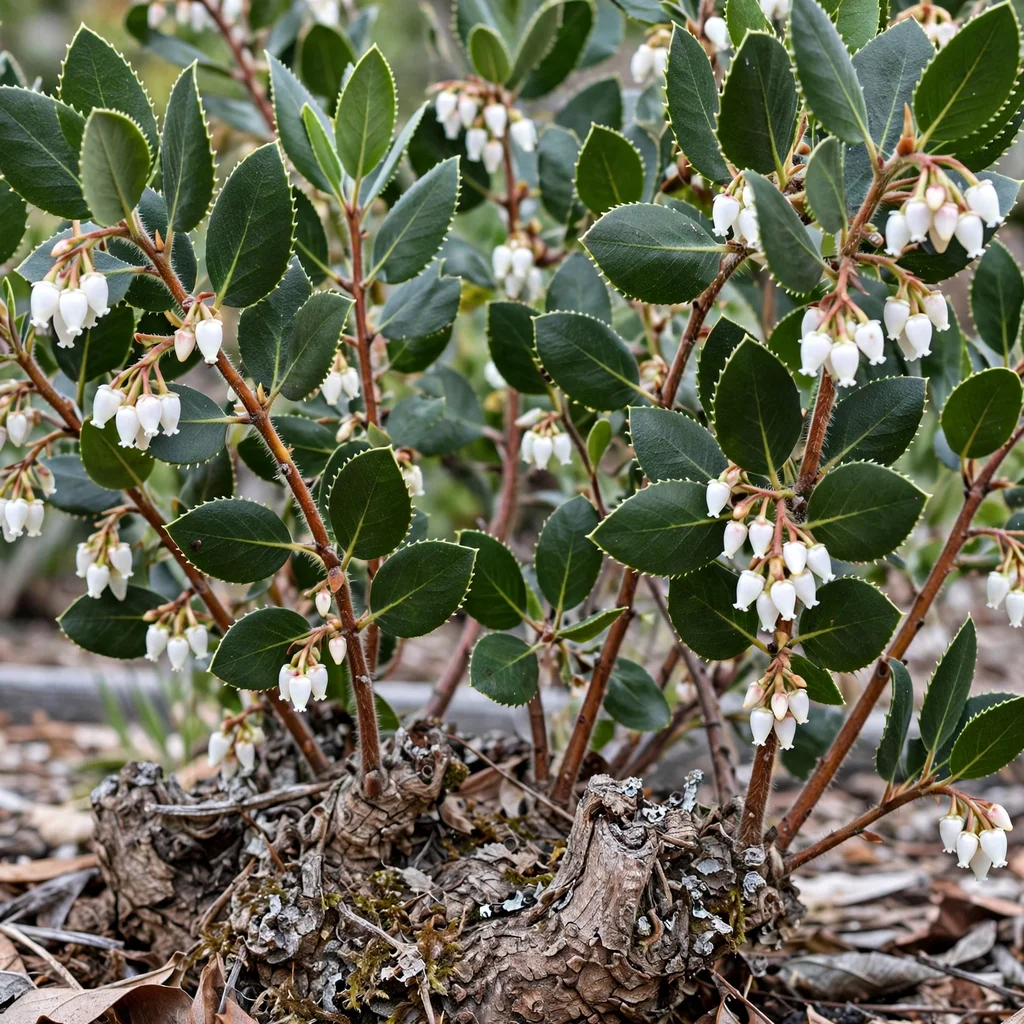
Brittleleaf Manzanita
Arctostaphylos crustacea
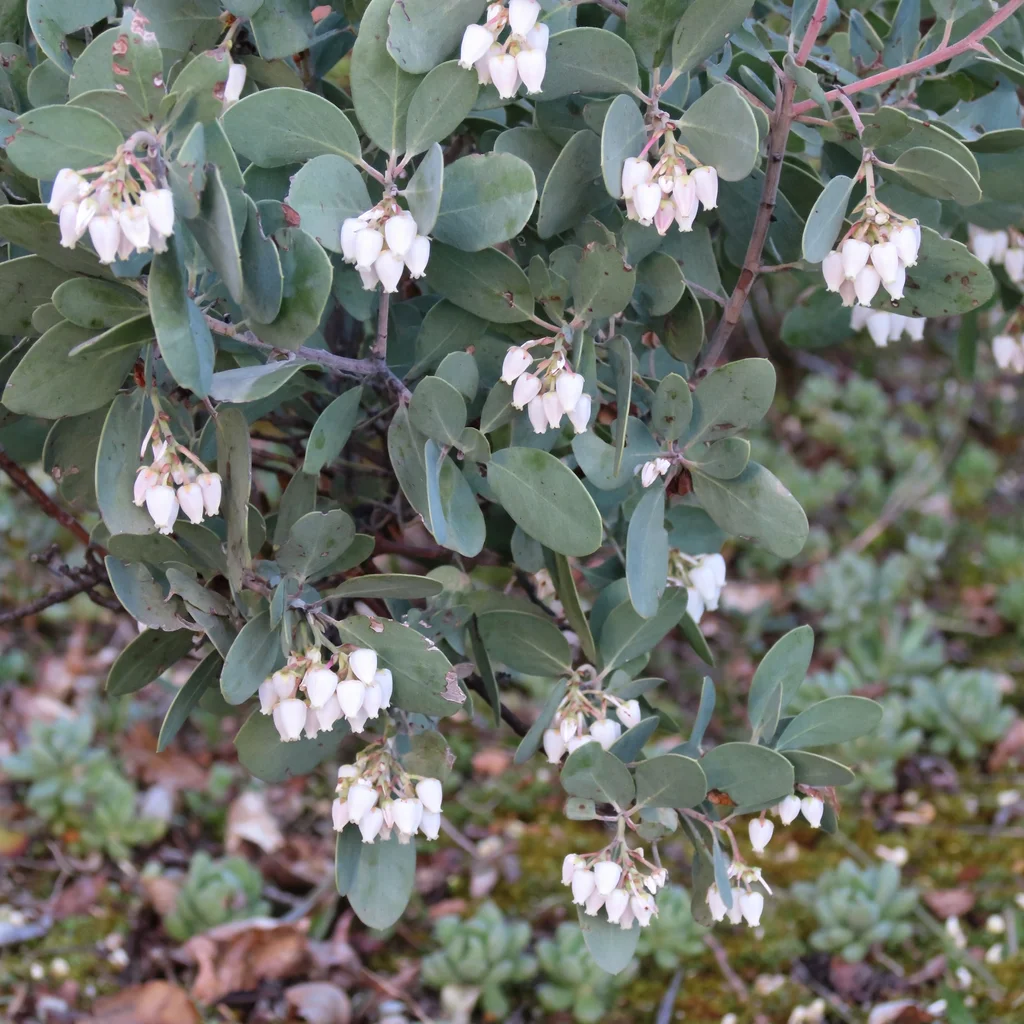
Common Manzanita
Arctostaphylos manzanita
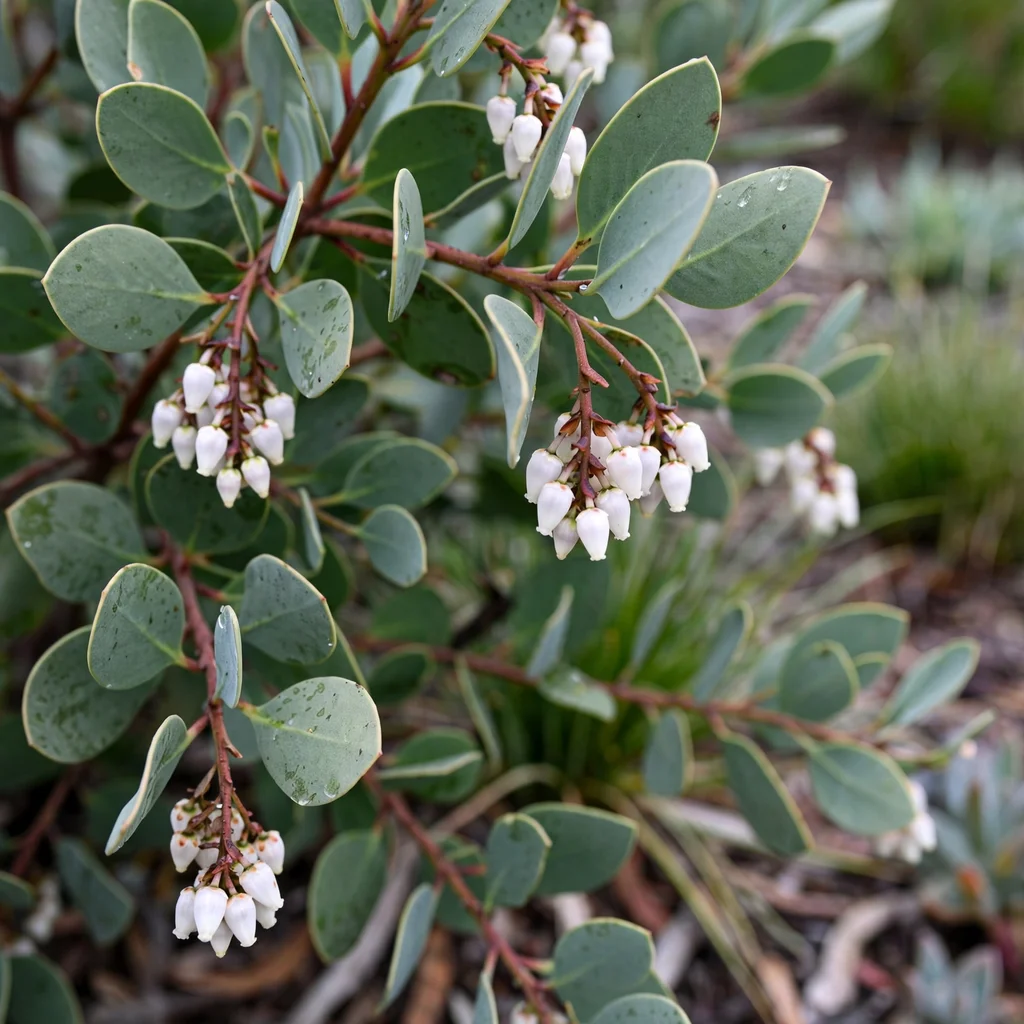
Rainbow Manzanita
Arctostaphylos rainbowensis
Keep exploring
Explore the genus
Hardy in your zone?
Grow Santa Catalina Island Manzanita with confidence
See it in a design of your actual yard, get zone-matched care reminders, and track it season by season in your garden journal.