The Story
Plant Bio
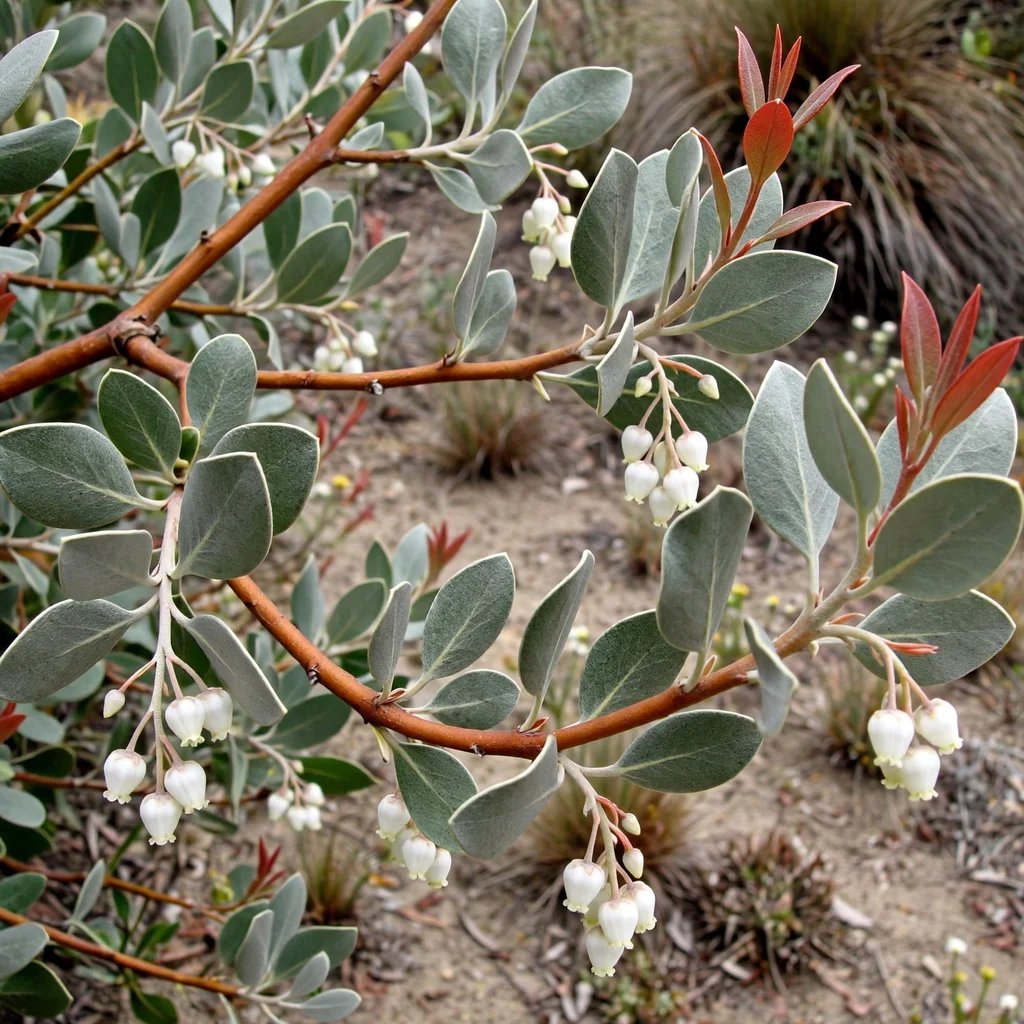
Arctostaphylos wellsii is an evergreen Californian shrub reaching three to seven feet tall and about seven feet wide, with smooth cinnamon-red bark and stiff gray-green leaves. The winter display is branched racemes of small white urn-shaped bells at the shoot tips that set to hard red-brown fruits.
This is the San Luis Obispo County endemic from chaparral, closed-cone pine forest and coastal scrub on sandy ground with hardpan, recognized by gray foliage and coppery-red new growth. Most California lists now file it under Arctostaphylos pilosula, so it is sold as Santa Margarita or La Panza manzanita.
Uses & Benefits:
Essentials
At a Glance
Plant Type
Shrub
Height
84"
Width
84"
Light
Full Sun, Partial Sun
Zones
9, 10
Water
Very low
Humidity
Unknown
Lifespan
Long-lived woody shrub
Native To
San Luis Obispo County, California
Toxicity
Unknown
Bloom period
Winter – Spring
In flower about 6 months of the year
Planting
How to Grow
- Plant in fall in full sun to partial shade with 6 or more hours of sun.
- Set high in sandy, rocky, fast-draining soil with pH 6.0-7.0, clear of irrigated beds.
- Water deeply every 4-7 days through the first summer, then taper to monthly.
- Once established keep completely summer-dry with excellent drainage and air circulation.
- Mulch thinly to suppress weeds and prune lightly after flowering to show the branching structure.
Pro Tip
Once established, withhold all summer water; warm wet soil rots the roots and this is how most plants are killed.
Keep It Thriving
Care Guide
Do
- Plant in full sun to partial shade in fast-draining sandy or rocky soil
- Water the first summer every 4-7 days, then taper off to wean the plant
- Keep a thin mulch clear of the stem to suppress weeds
- Give open spacing and air circulation away from lawn irrigation
Don't
- Never irrigate in summer once established
- Do not plant in heavy wet soil or next to thirsty plants
- Do not cut back into leafless old wood
Seasonal Care Calendar
| Task | Jan | Feb | Mar | Apr | May | Jun | Jul | Aug | Sep | Oct | Nov | Dec |
|---|---|---|---|---|---|---|---|---|---|---|---|---|
| Mulch | ||||||||||||
| Pest Check | ||||||||||||
| Plant | ||||||||||||
| Prune |
Watch Out For
Pests & Diseases
Common Pests
Common Diseases
In the Garden
Landscape Uses & Companions
Landscape Uses
Multiply
Propagation Methods
Good to Know
Common Questions
Wells' Manzanita questions
What zones can Wells' Manzanita grow in?
Wells' Manzanita is hardy in USDA Zones 9–10: in that range it survives winter in the ground. Colder than Zone 9, grow it in a container you can move to shelter for the winter.
Is Wells' Manzanita deer resistant?
Not reliably. Deer may browse Wells' Manzanita, especially tender spring growth — plan on repellents or fencing where pressure is high.
When does Wells' Manzanita bloom?
Wells' Manzanita typically blooms from winter to spring. Exact timing shifts a week or two with your zone — Sow's bloom calendar maps it to your garden.
Does Wells' Manzanita need full sun?
Wells' Manzanita does best in full sun to part shade. In hot climates, afternoon shade keeps blooms fresher longer.
Is Wells' Manzanita drought tolerant?
Yes — once established (usually after the first full season), Wells' Manzanita handles dry spells with minimal watering. Water deeply its first year to build the root system that makes that possible.
More Arctostaphylos to compare
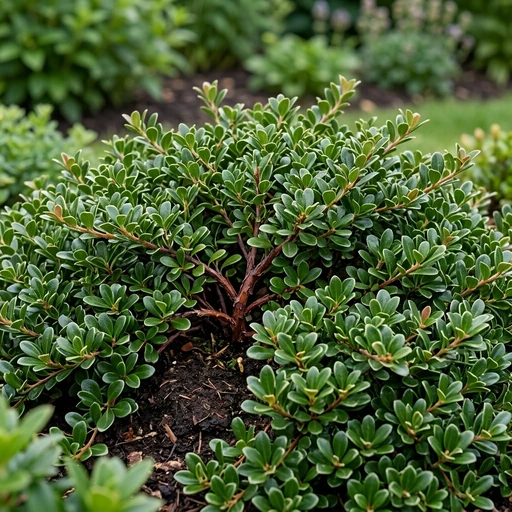
Massachusetts Common Bearberry
Arctostaphylos uva-ursi 'Massachusetts'
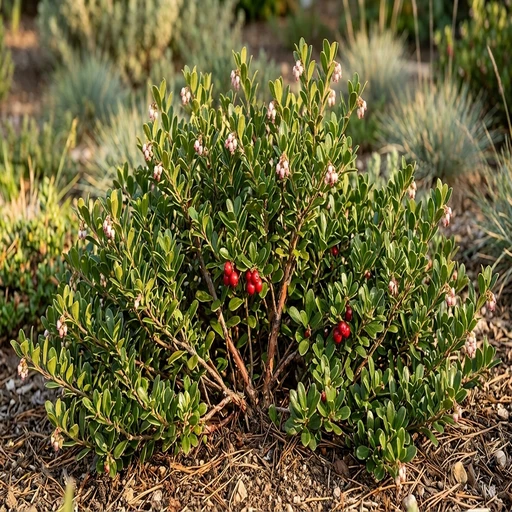
Bearberry
Arctostaphylos uva-ursi
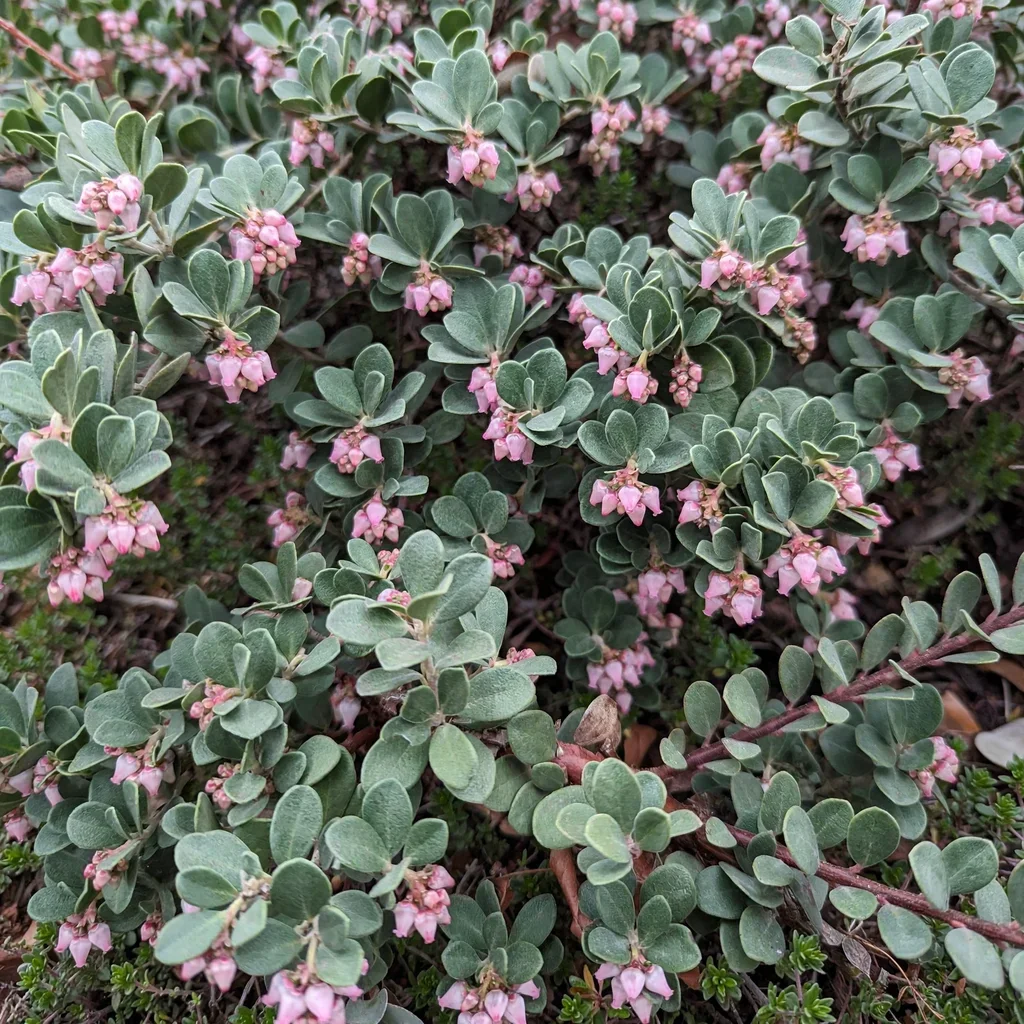
Ron Clendenen Manzanita
Arctostaphylos x media 'Ron Clendenen'
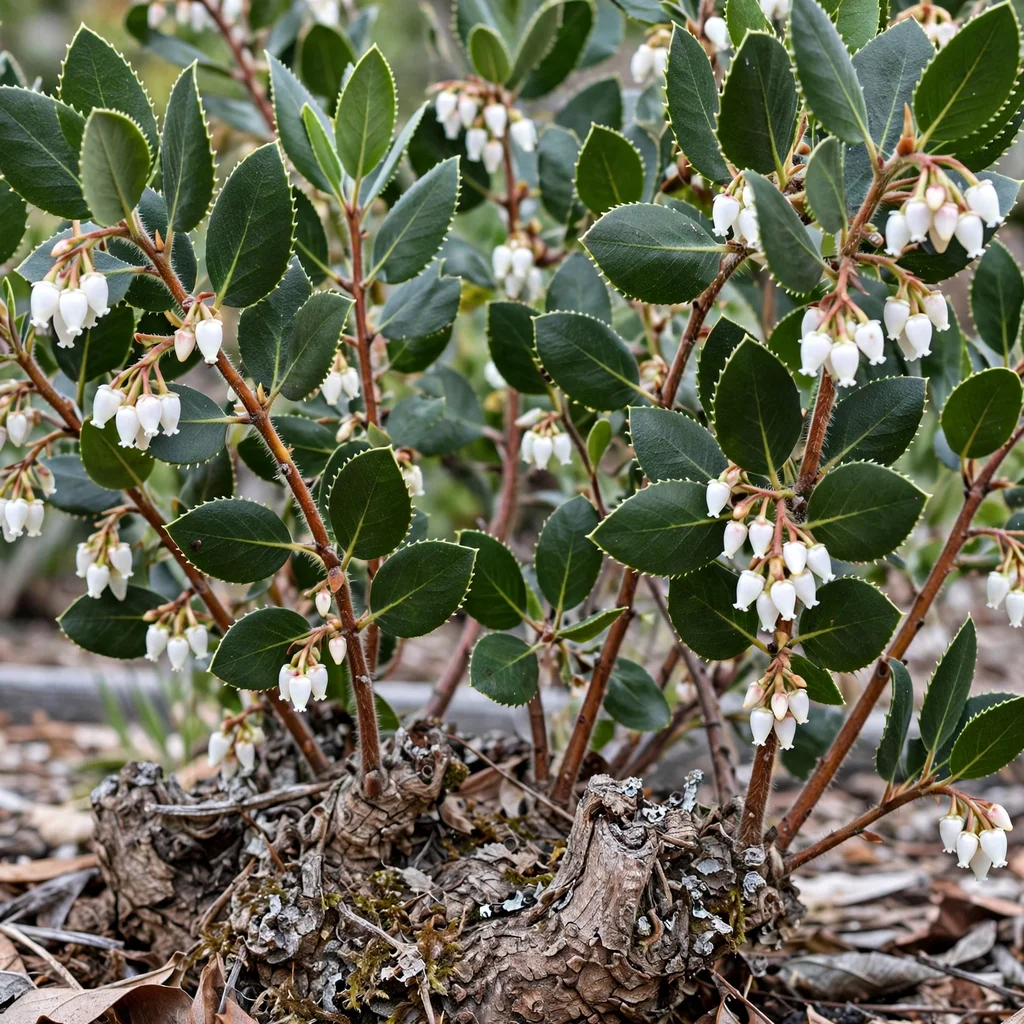
Brittleleaf Manzanita
Arctostaphylos crustacea
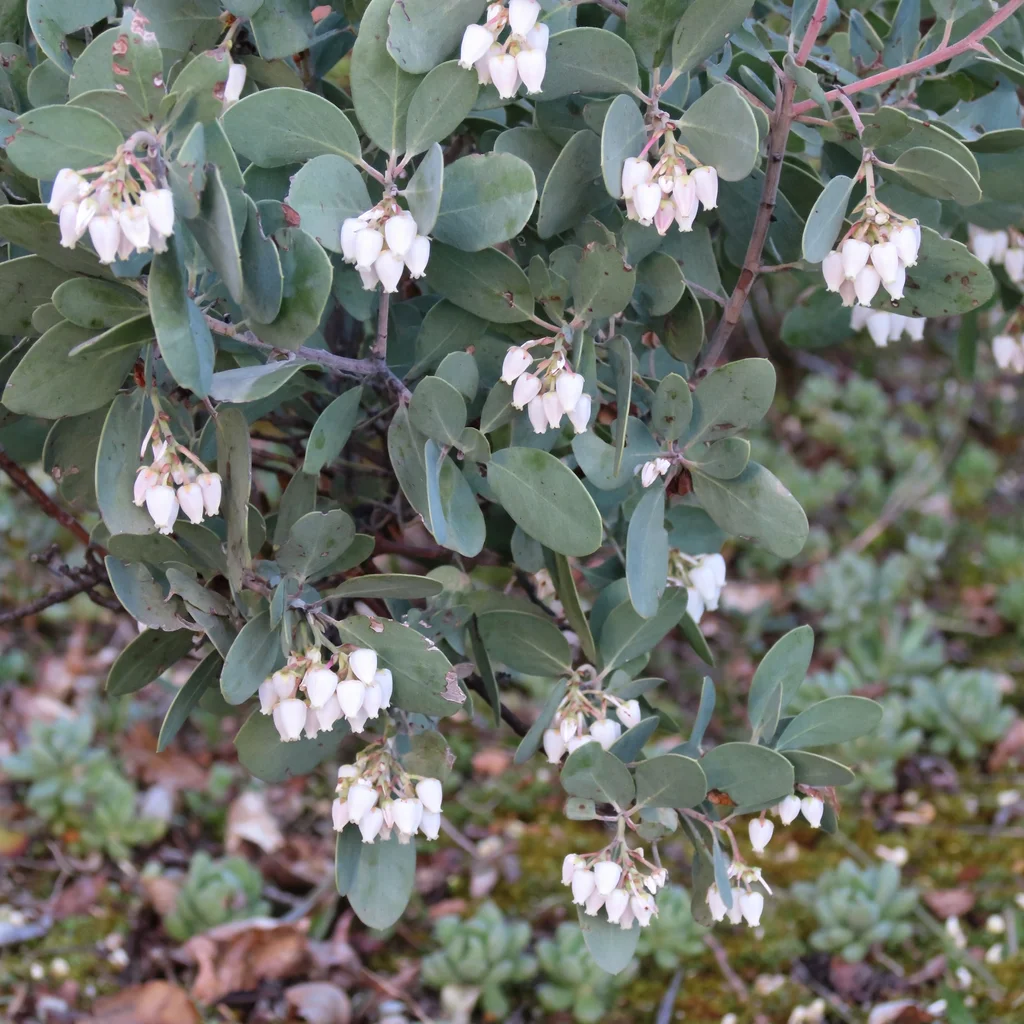
Common Manzanita
Arctostaphylos manzanita
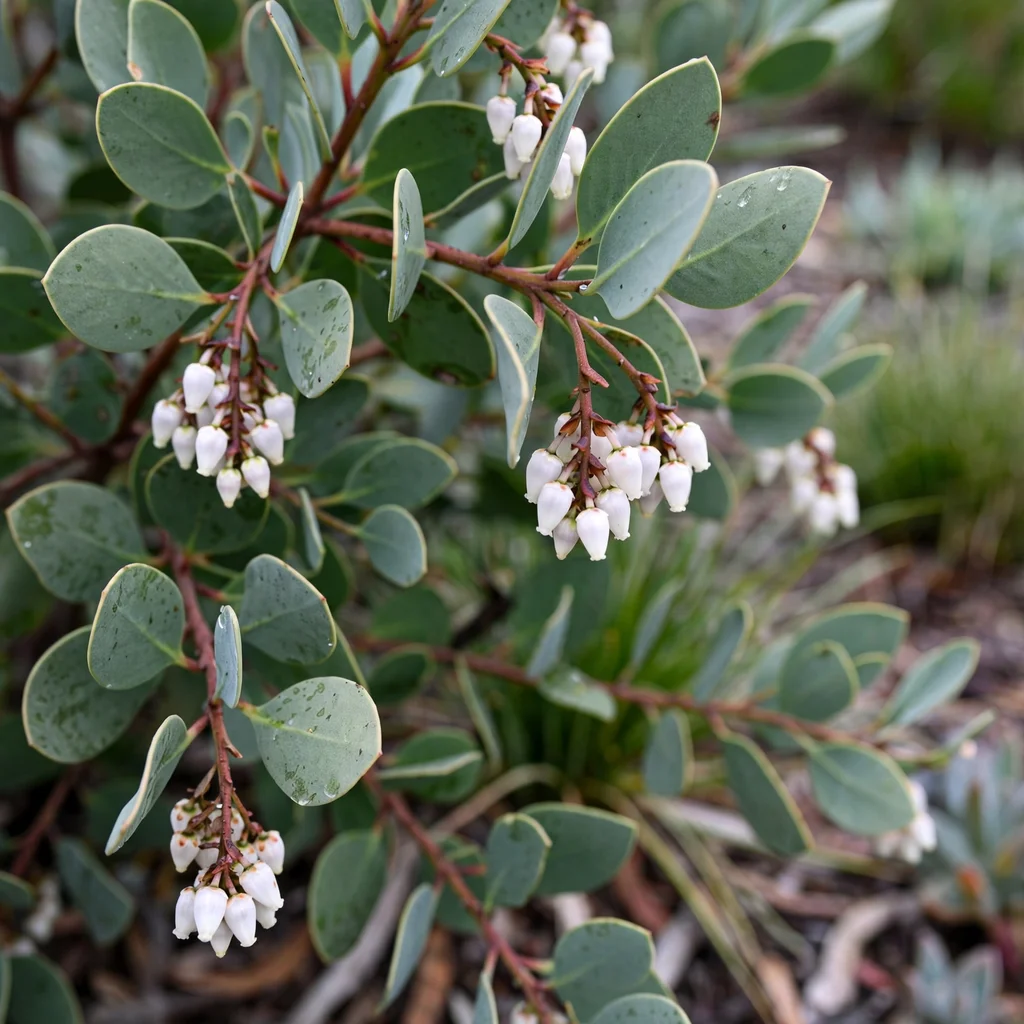
Rainbow Manzanita
Arctostaphylos rainbowensis
Keep exploring
Explore the genus
Hardy in your zone?
Grow Wells' Manzanita with confidence
See it in a design of your actual yard, get zone-matched care reminders, and track it season by season in your garden journal.