The Story
Plant Bio
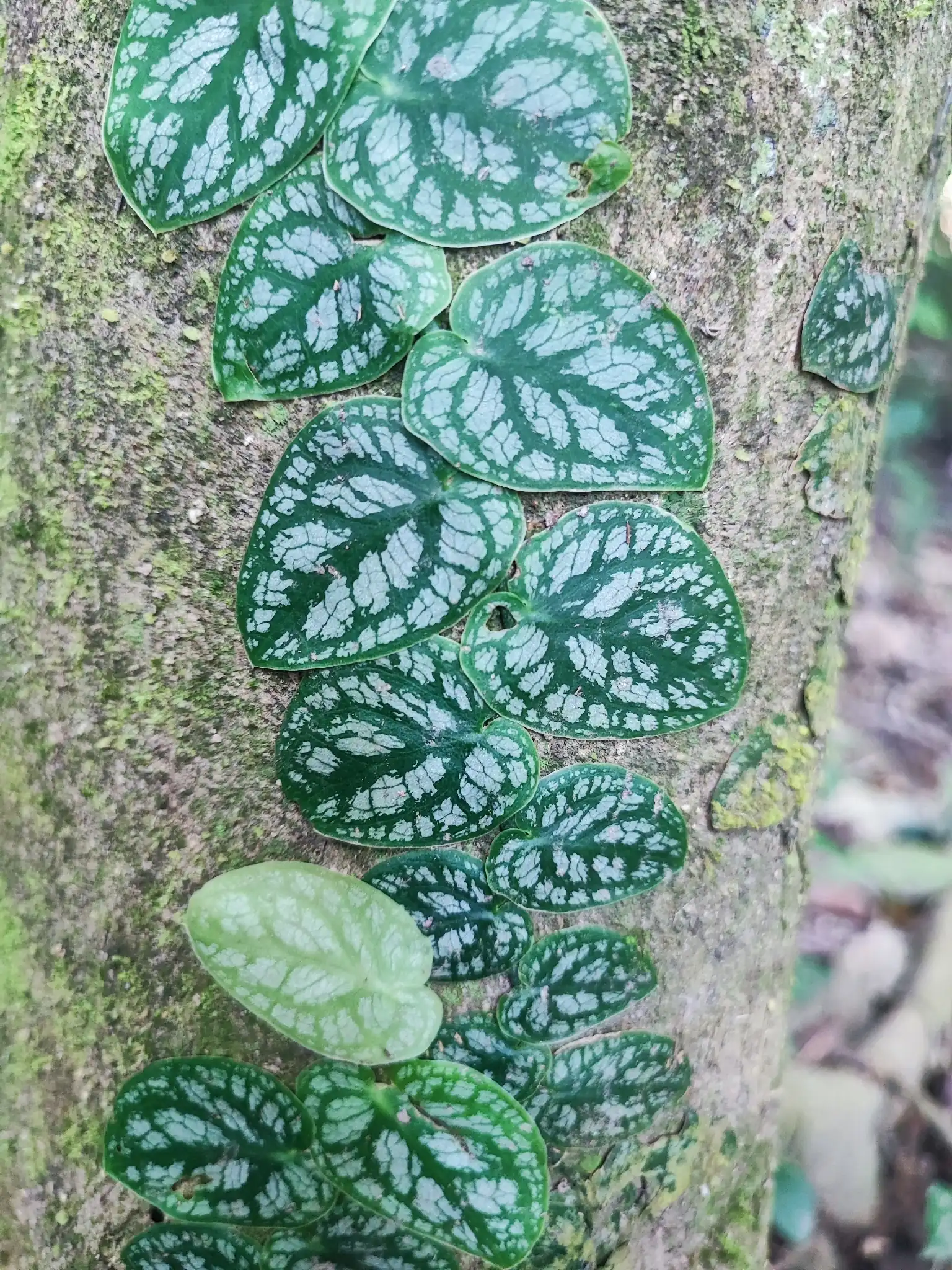
Monstera dubia is an evergreen climbing hemiepiphyte from tropical forests of southeast Mexico through Central America to South America and Trinidad, shingling flat against tree trunks by aerial roots. Indoors it climbs 6 to 8 feet on a support, with small heart-shaped juvenile leaves held tight to the bark and much larger fenestrated adult leaves only high on mature, well-supported stems.
Juvenile leaves stay 2 to 3 inches long, silvery light green with dark green veining, overlapping flat like shingles and never splitting while appressed to a board. Once the stem climbs past 4 to 6 feet with warmth, high humidity and bright indirect light, it produces large dark green adult leaves with Monstera fenestrations.
Uses & Benefits:
Essentials
At a Glance
Plant Type
Vine
Height
96"
Width
18"
Light
Partial Sun, Shade
Zones
9, 10
Water
Evenly moist
Humidity
High - 50-70%+
Lifespan
Long-lived perennial vine
Native To
Mexico to tropical South America and Trinidad
Toxicity
Toxic if ingested
Bloom period
Spring – Summer
In flower about 6 months of the year
Planting
How to Grow
- Pot in an organic-rich, well-drained houseplant mix in a pot with drainage, setting a moss pole or cedar board at planting.
- Place in bright indirect light from a north or east window at 65 to 85F, keeping it above 64F and out of hot direct sun.
- Water when the top quarter to half of the mix dries, about every 5 to 7 days in growth and every 7 to 14 days in winter, emptying the saucer.
- Hold humidity at 50 to 70 percent or higher with a humidifier and feed monthly with balanced liquid fertilizer in spring and summer.
- Pin juveniles flat to the support until aerial roots grip, then let the vine climb to mature without trailing.
Pro Tip
Give it a tall board or moss pole to climb and do not cut it back to trail; it holds juvenile shingles for years until it climbs high with humidity and bright indirect light.
Keep It Thriving
Care Guide
Do
- Provide a tall moss pole or board and let it climb to mature.
- Keep mix evenly moist with excellent drainage and empty the saucer.
- Maintain high humidity and bright indirect light.
Don't
- Do not place in hot direct sun; leaves burn and wash out.
- Do not keep soil soggy or let the pot sit in water.
- Do not expect adult splits on a trailing or repeatedly cut plant.
Seasonal Care Calendar
| Task | Jan | Feb | Mar | Apr | May | Jun | Jul | Aug | Sep | Oct | Nov | Dec |
|---|---|---|---|---|---|---|---|---|---|---|---|---|
| Fertilize | ||||||||||||
| Pest Check | ||||||||||||
| Propagate | ||||||||||||
| Prune | ||||||||||||
| Winter Prep |
Watch Out For
Pests & Diseases
Common Pests
Common Diseases
In the Garden
Landscape Uses & Companions
Landscape Uses
Multiply
Propagation Methods
Good to Know
Common Questions
Shingle Plant questions
What zones can Shingle Plant grow in?
Shingle Plant is hardy in USDA Zones 9–10: in that range it survives winter in the ground. Colder than Zone 9, grow it in a container you can move to shelter for the winter, or as an annual.
When does Shingle Plant bloom?
Shingle Plant typically blooms from spring to summer. Exact timing shifts a week or two with your zone — Sow's bloom calendar maps it to your garden.
Does Shingle Plant need full sun?
Shingle Plant does best in part shade.
More Monstera to compare
Keep exploring
Explore the genus
Hardy in your zone?
Grow Shingle Plant with confidence
See it in a design of your actual yard, get zone-matched care reminders, and track it season by season in your garden journal.