The Story
Plant Bio
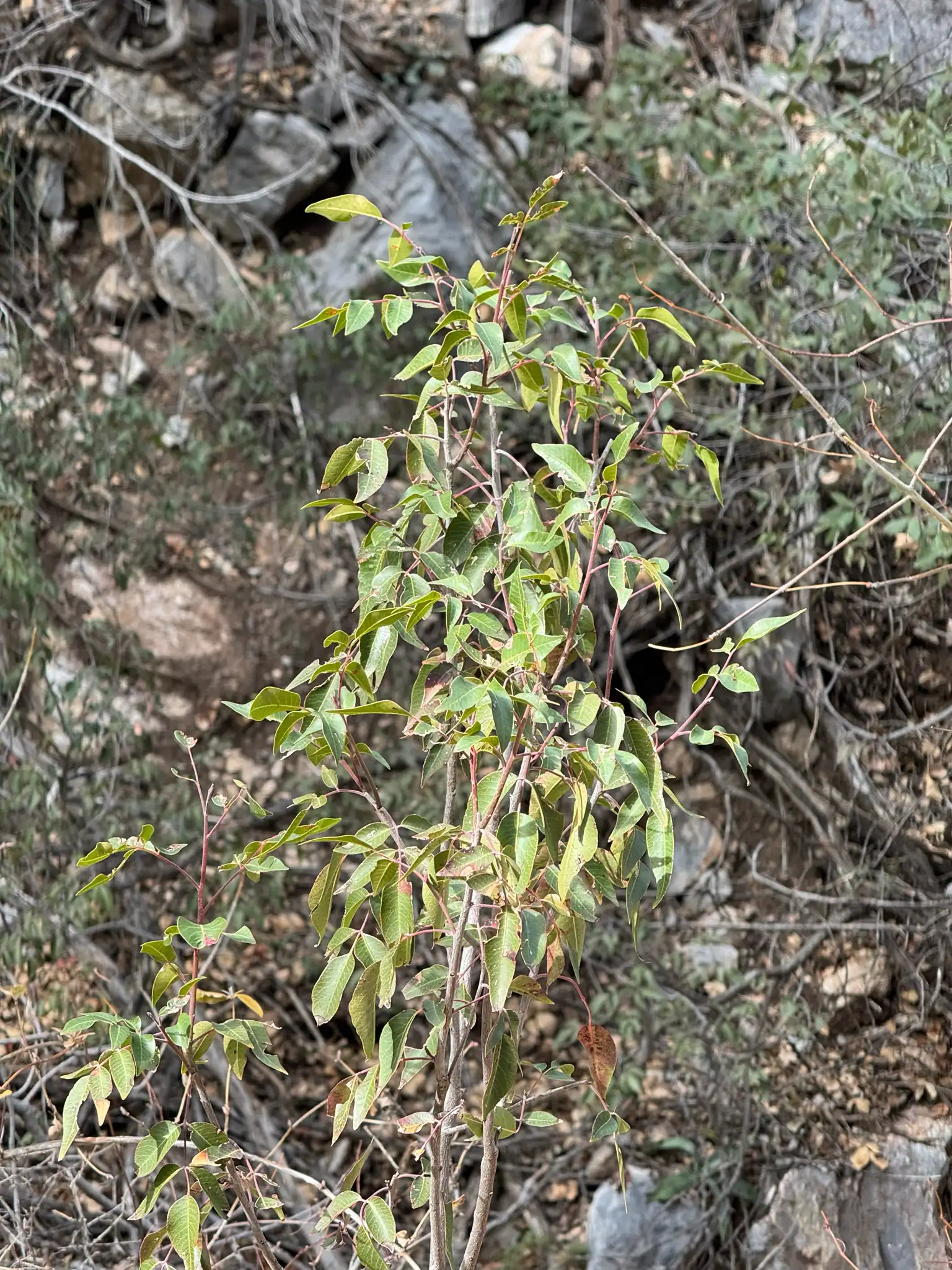
Rhus virens is a dense, spreading semi-evergreen shrub reaching 8 to 12 feet tall and wider across, with alternate pinnate leaves of five to nine thick, glossy leaflets. Male and female flowers grow on separate plants in small white clusters at the branch tips, with only the females forming clusters of fuzzy red berries in fall.
Unlike deciduous sumacs, it holds green foliage through winter and then sheds and replaces the whole canopy within a week in spring, with new leaves flushed pink and cold-touched leaves turning maroon. It blooms heaviest in late summer and fall after rains, a nectar gap when few desert shrubs flower, and it is not poison-sumac, which carries white fruit and causes severe dermatitis.
Uses & Benefits:
Essentials
At a Glance
Plant Type
Shrub
Height
120"
Width
144"
Light
Full Sun, Partial Sun
Zones
7, 8, 9, 10
Water
Low
Humidity
Low, prefers dry air
Lifespan
Long-lived shrub
Native To
Texas, Arizona, New Mexico and Mexico
Toxicity
Sap may irritate skin; fruit toxic if ingested
Bloom period
Summer – Fall
In flower about 6 months of the year
Planting
How to Grow
- Dig a hole no deeper than the root ball and twice as wide in rocky or sandy, sharply drained soil in full sun.
- Set the plant high with the crown slightly above grade and backfill with native soil, firming to remove air pockets.
- Water deeply at planting, then water sparingly through the first summer and taper to natural rainfall.
- Spread 2 inches of gravel mulch, keeping it clear of the stems, and hand-weed within 4 feet of the trunk.
- Leave unpruned except to remove dead or broken wood in late winter before new growth starts.
Pro Tip
Buy a named female if you want berries; male plants never fruit and the sexes are indistinguishable without flowers.
Keep It Thriving
Care Guide
Do
- Plant in full sun with sharp drainage and rocky, sandy or limestone soil.
- Water to establish, then keep dry; mature plants need no supplemental fertilizer.
- Allow room to spread wider than tall and select a female plant for berries.
Don't
- Do not plant in wet clay, low spots, or irrigated turf where roots stay damp.
- Do not fertilize or overwater; rich wet soil leads to root rot and weak growth.
- Do not shear into a formal hedge or cut back hard each year; shape lightly only in late winter.
Seasonal Care Calendar
| Task | Jan | Feb | Mar | Apr | May | Jun | Jul | Aug | Sep | Oct | Nov | Dec |
|---|---|---|---|---|---|---|---|---|---|---|---|---|
| Mulch | ||||||||||||
| Pest Check | ||||||||||||
| Plant | ||||||||||||
| Propagate | ||||||||||||
| Prune |
Watch Out For
Pests & Diseases
Common Pests
Common Diseases
In the Garden
Landscape Uses & Companions
Landscape Uses
Multiply
Propagation Methods
Good to Know
Common Questions
Evergreen Sumac questions
What zones can Evergreen Sumac grow in?
Evergreen Sumac is hardy in USDA Zones 7–10: in that range it survives winter in the ground. Colder than Zone 7, grow it in a container you can move to shelter for the winter.
Is Evergreen Sumac deer resistant?
Not reliably. Deer may browse Evergreen Sumac, especially tender spring growth — plan on repellents or fencing where pressure is high.
When does Evergreen Sumac bloom?
Evergreen Sumac typically blooms from summer to fall. Exact timing shifts a week or two with your zone — Sow's bloom calendar maps it to your garden.
Does Evergreen Sumac need full sun?
Evergreen Sumac does best in full sun to part shade. In hot climates, afternoon shade keeps blooms fresher longer.
Is Evergreen Sumac drought tolerant?
Yes — once established (usually after the first full season), Evergreen Sumac handles dry spells with minimal watering. Water deeply its first year to build the root system that makes that possible.
More Rhus to compare
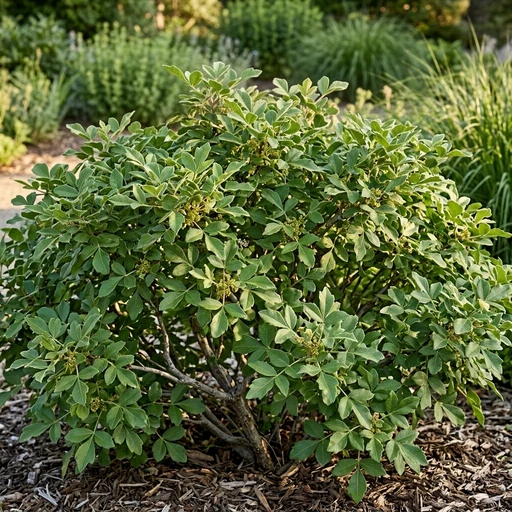
Gro-Low Fragrant Sumac
Rhus aromatica 'Gro-Low'
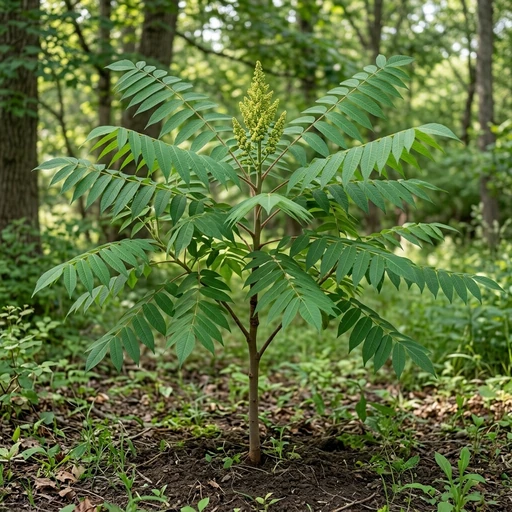
Smooth Sumac
Rhus glabra
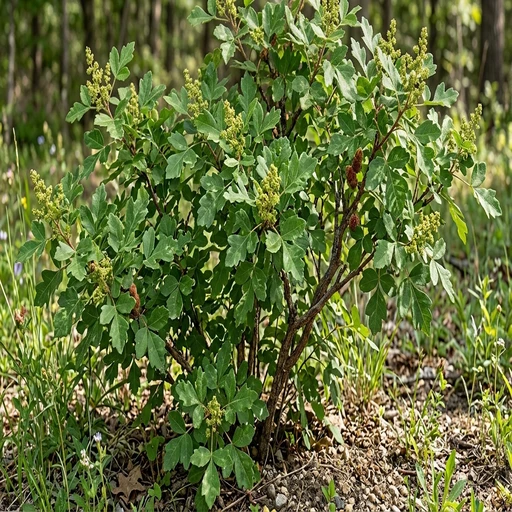
Fragrant Sumac
Rhus aromatica
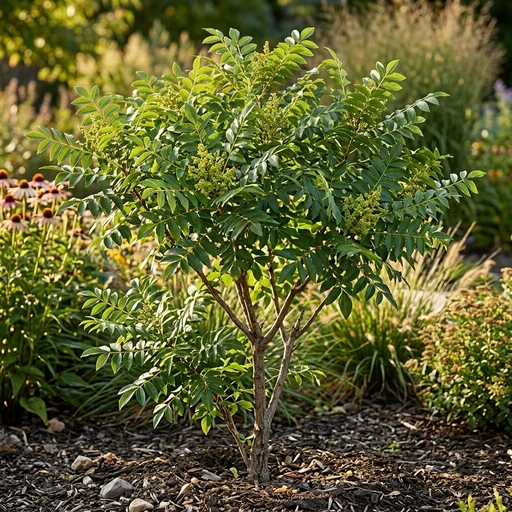
Shining Sumac
Rhus copallinum
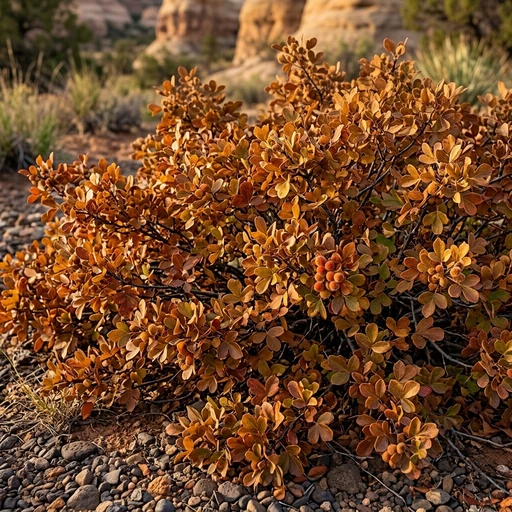
Autumn Amber Prostrate Three-leaf Sumac
Rhus trilobata 'Autumn Amber'
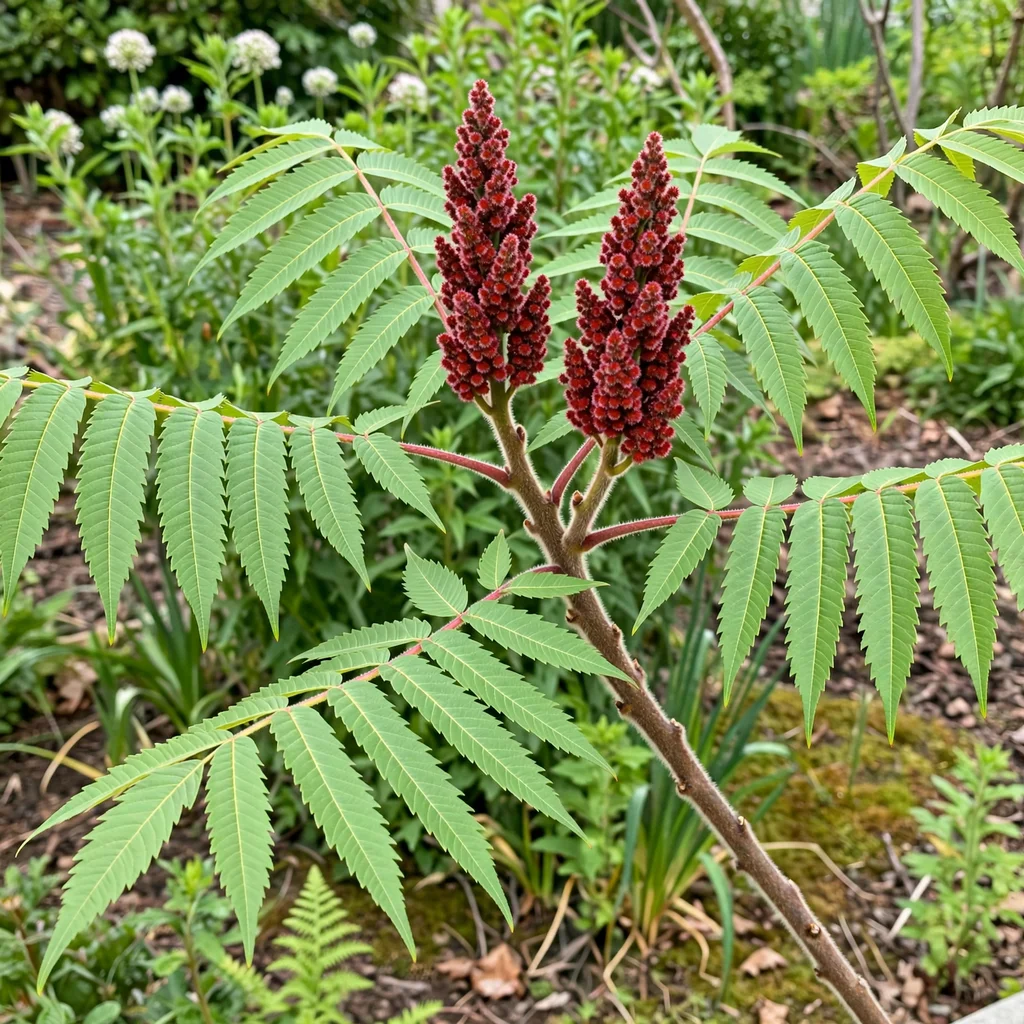
Staghorn Sumac
Rhus typhina
Keep exploring
Explore the genus
Hardy in your zone?
Grow Evergreen Sumac with confidence
See it in a design of your actual yard, get zone-matched care reminders, and track it season by season in your garden journal.