The Story
Plant Bio
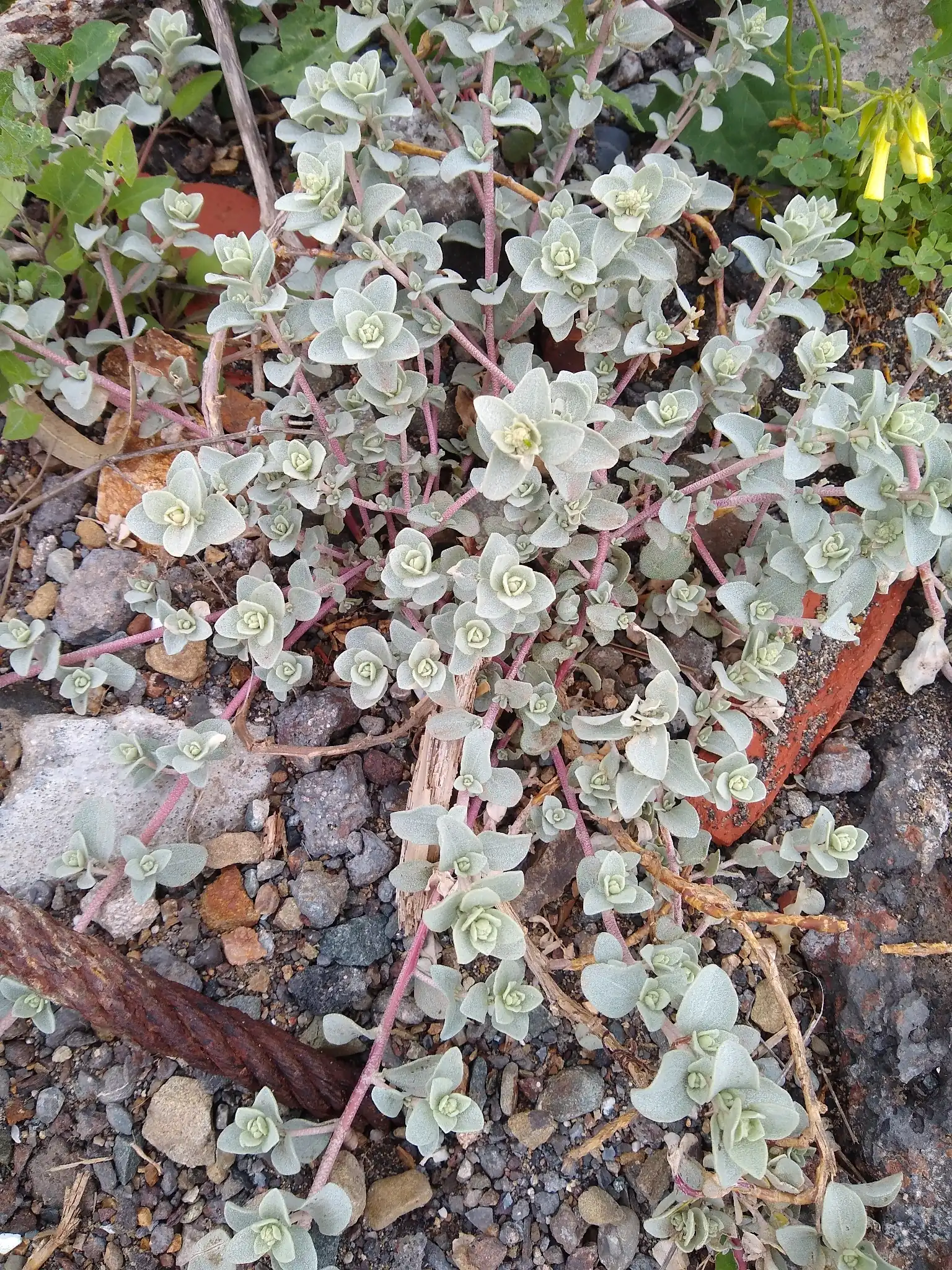
Atriplex leucophylla, commonly known as beach saltbush, is a sprawling, low-growing perennial groundcover native to the coastal dunes and strands of California and Baja California. Its trailing stems extend outward to form broad mats, covered in oval, succulent leaves with a scaly, silvery-white surface.
Equipped with specialized salt glands, the foliage actively secretes excess salt onto leaf surfaces, allowing it to withstand direct ocean spray and high soil salinity. Small, petal-less greenish-yellow flowers bloom from spring to fall, followed by spongy bracts that aid in coastal sand stabilization.
Uses & Benefits:
Essentials
At a Glance
Plant Type
Groundcover
Height
12"
Width
118"
Light
Full Sun
Zones
9, 10
Water
Low
Humidity
Low
Lifespan
Perennial
Native To
North America (California, Baja California)
Toxicity
Non-toxic (accumulates foliage salt)
Bloom period
Spring – Fall
In flower about 9 months of the year
Planting
How to Grow
- Select a site in full sun with sharp, pure sandy or gravelly soil.
- Dig a planting hole the depth of the root ball and twice as wide without adding compost or organic amendments.
- Position the plant so the root crown sits slightly above surrounding soil to prevent moisture accumulation.
- Water thoroughly at planting to settle the sand, then keep moisture minimal once roots establish.
Pro Tip
Never prune hard into old, leafless woody stems, as old wood lacks adventitious buds and will fail to regenerate.
Keep It Thriving
Care Guide
Do
- Plant in pure sand or fast-draining gritty mixes.
- Provide full sun to maintain dense growth and leaf color.
- Tip-pruning light soft shoots encourages lateral branching.
Don't
- Do not apply heavy fertilizers or high-nitrogen feeding.
- Do not plant in clay, silt, or poorly drained soils.
- Do not overwater once established.
Seasonal Care Calendar
| Task | Jan | Feb | Mar | Apr | May | Jun | Jul | Aug | Sep | Oct | Nov | Dec |
|---|---|---|---|---|---|---|---|---|---|---|---|---|
| Pest Check | ||||||||||||
| Plant | ||||||||||||
| Propagate | ||||||||||||
| Prune |
Watch Out For
Pests & Diseases
Common Pests
Common Diseases
In the Garden
Landscape Uses & Companions
Landscape Uses
Companion Plants
Multiply
Propagation Methods
Good to Know
Common Questions
Beach Saltbush questions
What zones can Beach Saltbush grow in?
Beach Saltbush is hardy in USDA Zones 9–10: in that range it survives winter in the ground. Colder than Zone 9, grow it in a container you can move to shelter for the winter, or as an annual.
Is Beach Saltbush deer resistant?
Not reliably. Deer may browse Beach Saltbush, especially tender spring growth — plan on repellents or fencing where pressure is high.
When does Beach Saltbush bloom?
Beach Saltbush typically blooms from spring to fall. Exact timing shifts a week or two with your zone — Sow's bloom calendar maps it to your garden.
Does Beach Saltbush need full sun?
Beach Saltbush does best in full sun (6+ hours).
Is Beach Saltbush drought tolerant?
Yes — once established (usually after the first full season), Beach Saltbush handles dry spells with minimal watering. Water deeply its first year to build the root system that makes that possible.
More Atriplex to compare
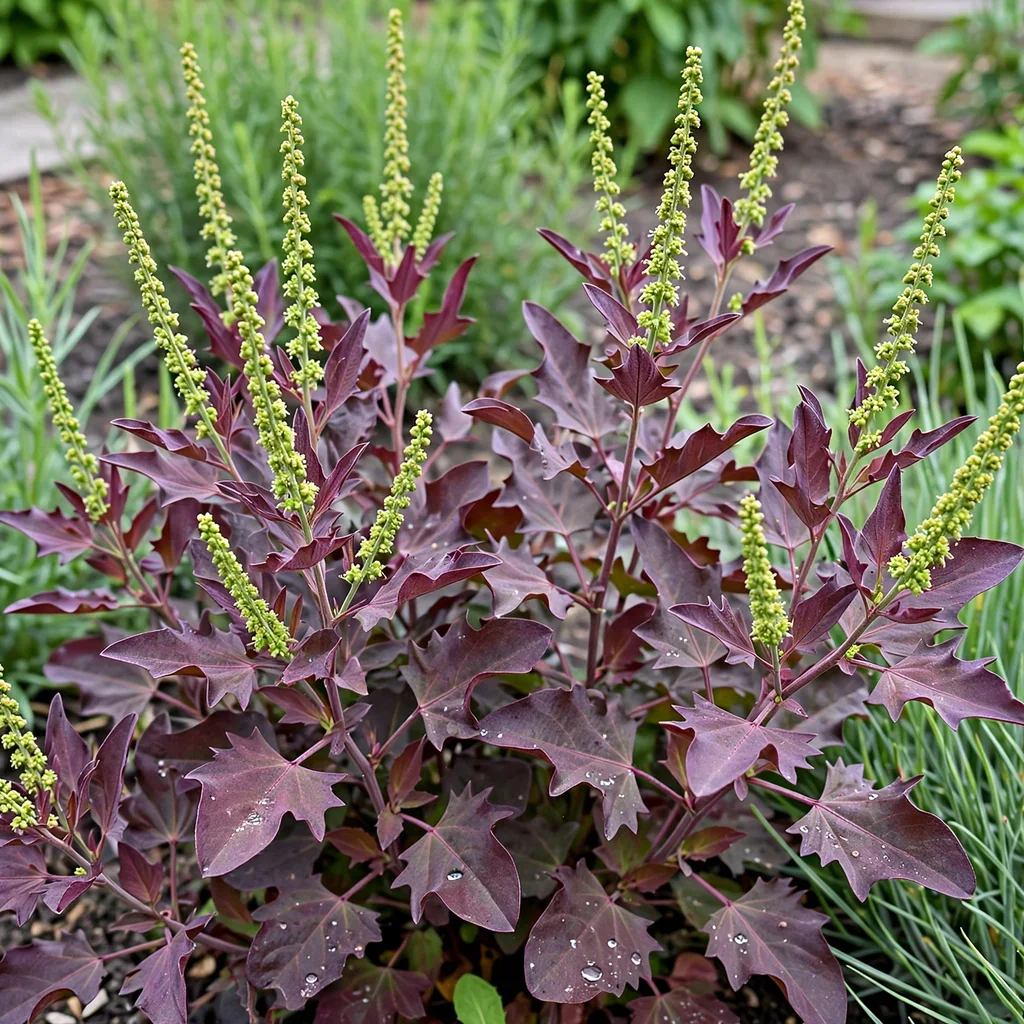
Garden Orach
Atriplex hortensis
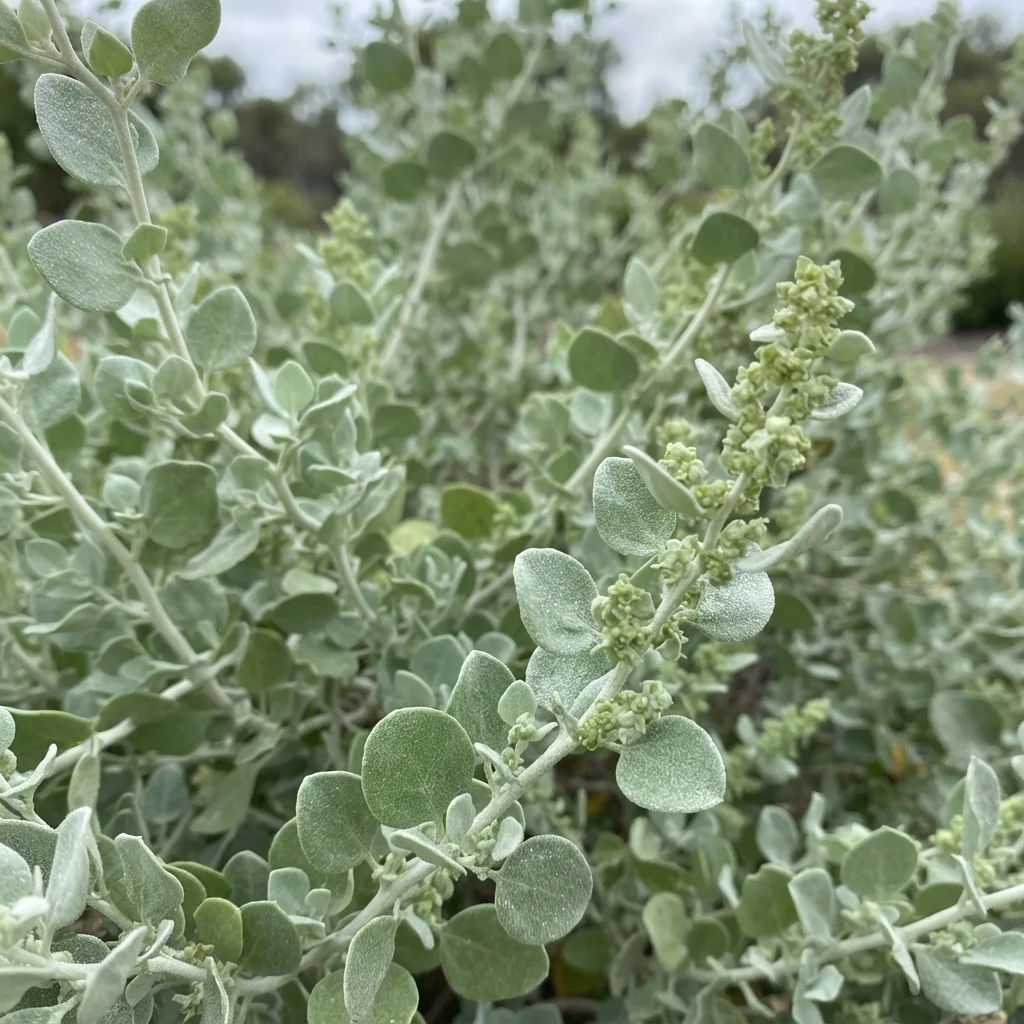
Old Man Saltbush
Atriplex nummularia
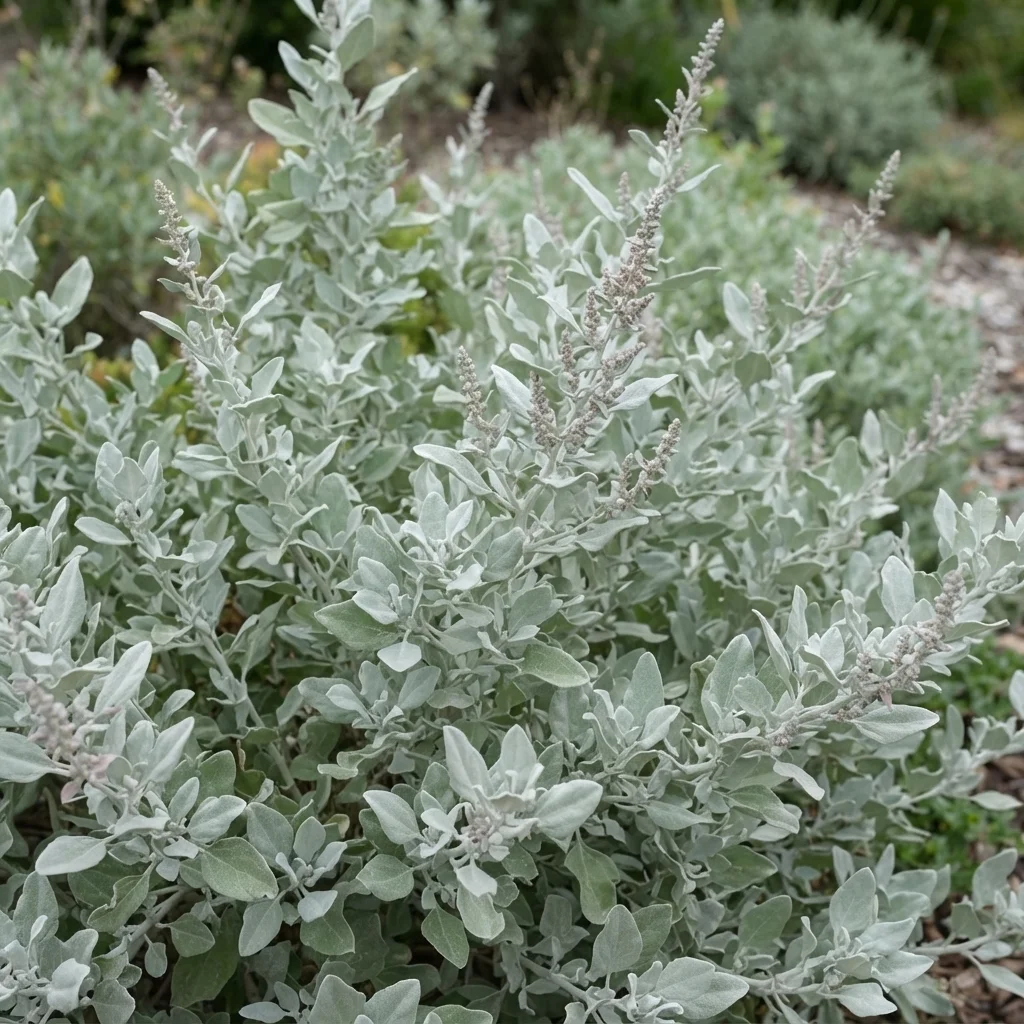
Grey Saltbush
Atriplex cinerea
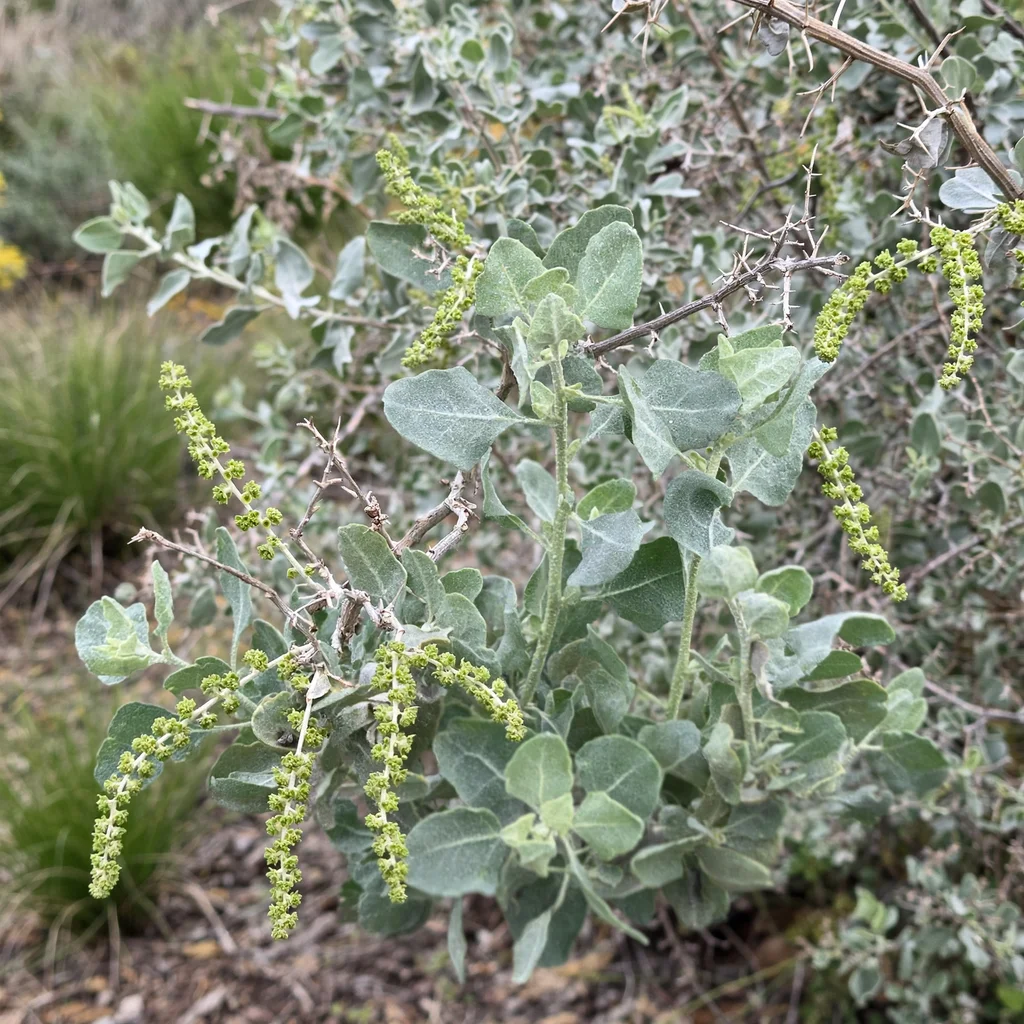
Big Saltbush
Atriplex lentiformis
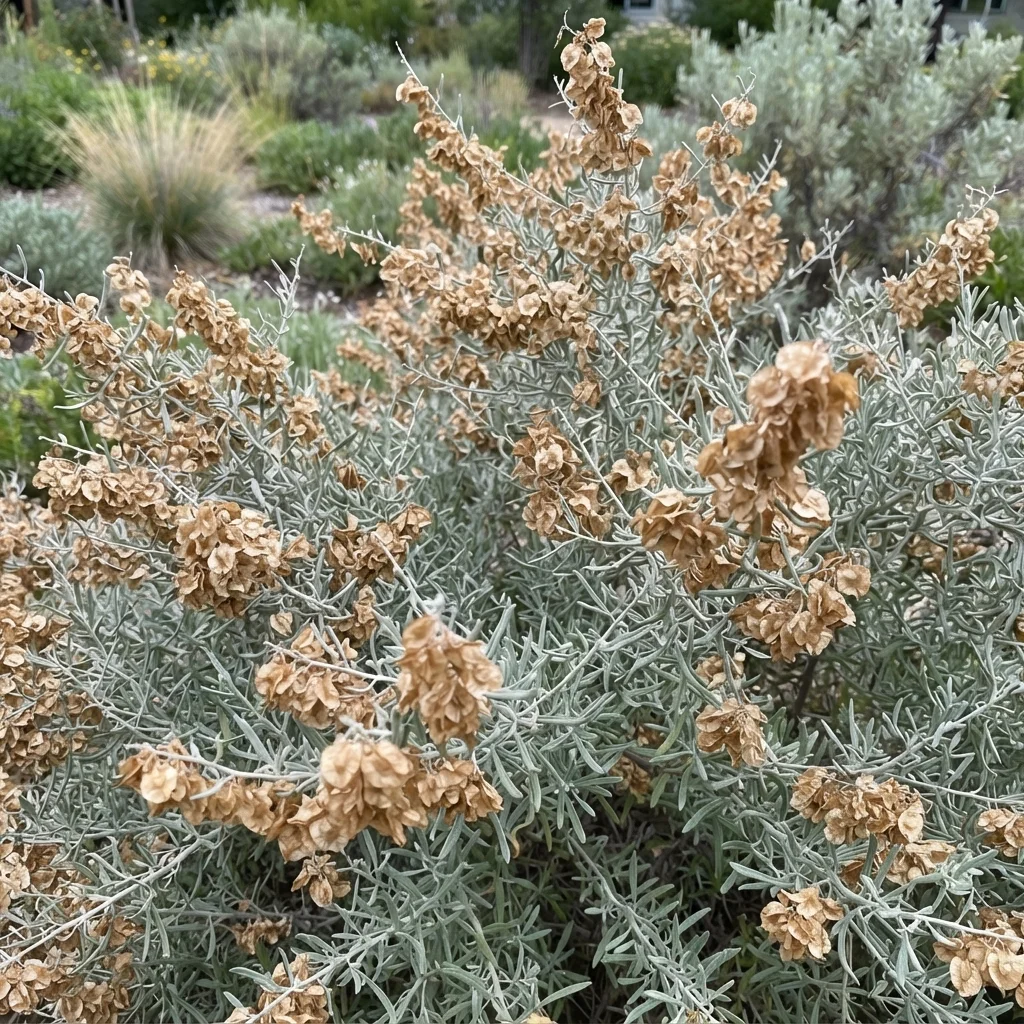
Fourwing Saltbush
Atriplex canescens
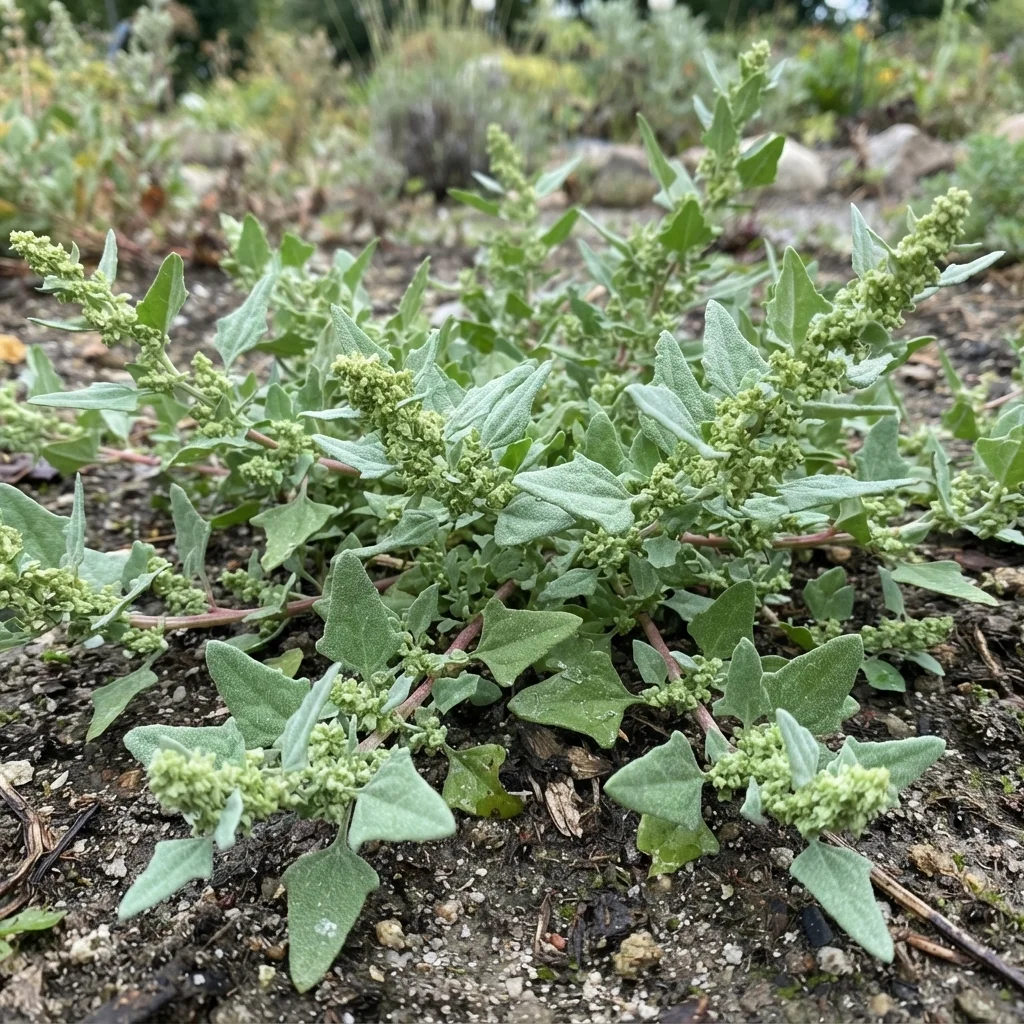
Spearscale
Atriplex prostrata
Keep exploring
Explore the genus
Hardy in your zone?
Grow Beach Saltbush with confidence
See it in a design of your actual yard, get zone-matched care reminders, and track it season by season in your garden journal.