The Story
Plant Bio
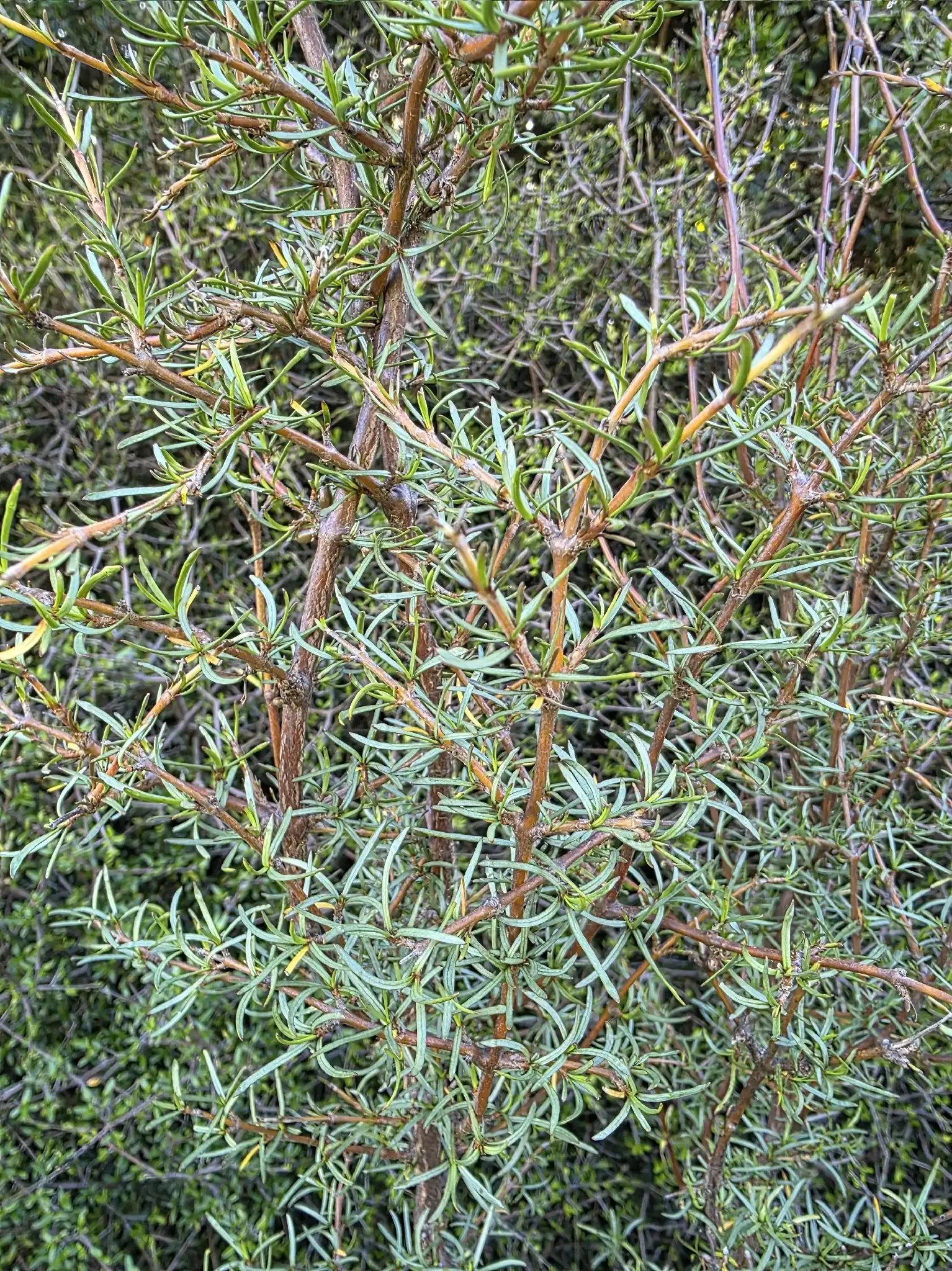
Coprosma rugosa is an erect, dense evergreen shrub native to New Zealand, growing up to ten feet tall with a stiff, highly branched twiggy habit. Its tiny, linear leaves feature a characteristic wrinkled surface, while mature stems turn a distinct orange toward their bases.
The species is strictly dioecious, requiring separate male and female plants grown near one another for the female specimens to produce translucent pale blue berries. Wind pollinates the inconspicuous white to yellow winter flowers, which lack petals and sweet nectar entirely.
Uses & Benefits:
Essentials
At a Glance
Plant Type
Shrub
Height
118"
Width
79"
Light
Full Sun, Partial Sun
Zones
8, 9, 10
Water
Low to moderate
Humidity
Moderate to high
Lifespan
Perennial
Native To
New Zealand
Toxicity
Non-toxic
Bloom period
Late winter – Spring
In flower about 4 months of the year
Planting
How to Grow
- Choose a site in full sun to partial shade with light, fast-draining loamy or sandy soil.
- Plant container-grown stock at the same soil level as in the pot, firming the earth gently around the root ball.
- Water deeply during the first growing season to establish an extensive root system, then reduce watering frequency once established.
- Prune lightly in early spring to maintain a dense form, taking care not to cut into leafless hardwood.
Pro Tip
Always prune into young leafy stems; cutting back hard into old bare wood prevents new shoots from breaking.
Keep It Thriving
Care Guide
Do
- Plant in well-drained loamy or sandy soil.
- Grow male and female plants together if fruit is desired.
- Prune lightly in early spring to maintain shape.
Don't
- Do not cut back into old, leafless wood.
- Do not allow soil to remain waterlogged or poorly drained.
- Do not over-fertilize with heavy applications of nitrogen.
Seasonal Care Calendar
| Task | Jan | Feb | Mar | Apr | May | Jun | Jul | Aug | Sep | Oct | Nov | Dec |
|---|---|---|---|---|---|---|---|---|---|---|---|---|
| Fertilize | ||||||||||||
| Mulch | ||||||||||||
| Pest Check | ||||||||||||
| Prune |
Watch Out For
Pests & Diseases
Common Pests
Common Diseases
In the Garden
Landscape Uses & Companions
Landscape Uses
Companion Plants
Multiply
Propagation Methods
Good to Know
Common Questions
Needle-Leaved Mountain Coprosma questions
What zones can Needle-Leaved Mountain Coprosma grow in?
Needle-Leaved Mountain Coprosma is hardy in USDA Zones 8–10: in that range it survives winter in the ground. Colder than Zone 8, grow it in a container you can move to shelter for the winter.
When does Needle-Leaved Mountain Coprosma bloom?
Needle-Leaved Mountain Coprosma typically blooms from late winter to late spring. Exact timing shifts a week or two with your zone — Sow's bloom calendar maps it to your garden.
Does Needle-Leaved Mountain Coprosma need full sun?
Needle-Leaved Mountain Coprosma does best in full sun to part shade. In hot climates, afternoon shade keeps blooms fresher longer.
Is Needle-Leaved Mountain Coprosma drought tolerant?
Yes — once established (usually after the first full season), Needle-Leaved Mountain Coprosma handles dry spells with minimal watering. Water deeply its first year to build the root system that makes that possible.
More Coprosma to compare
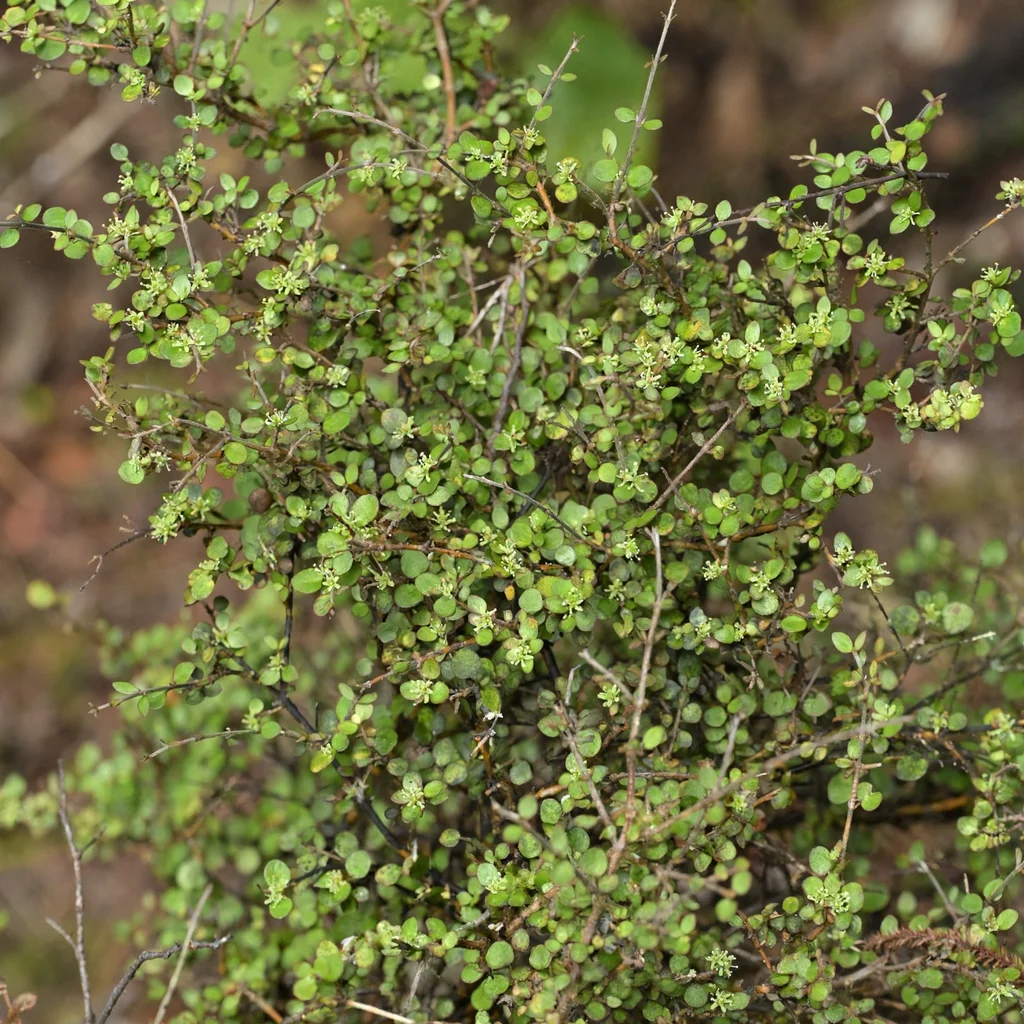
Twiggy Coprosma
Coprosma rhamnoides
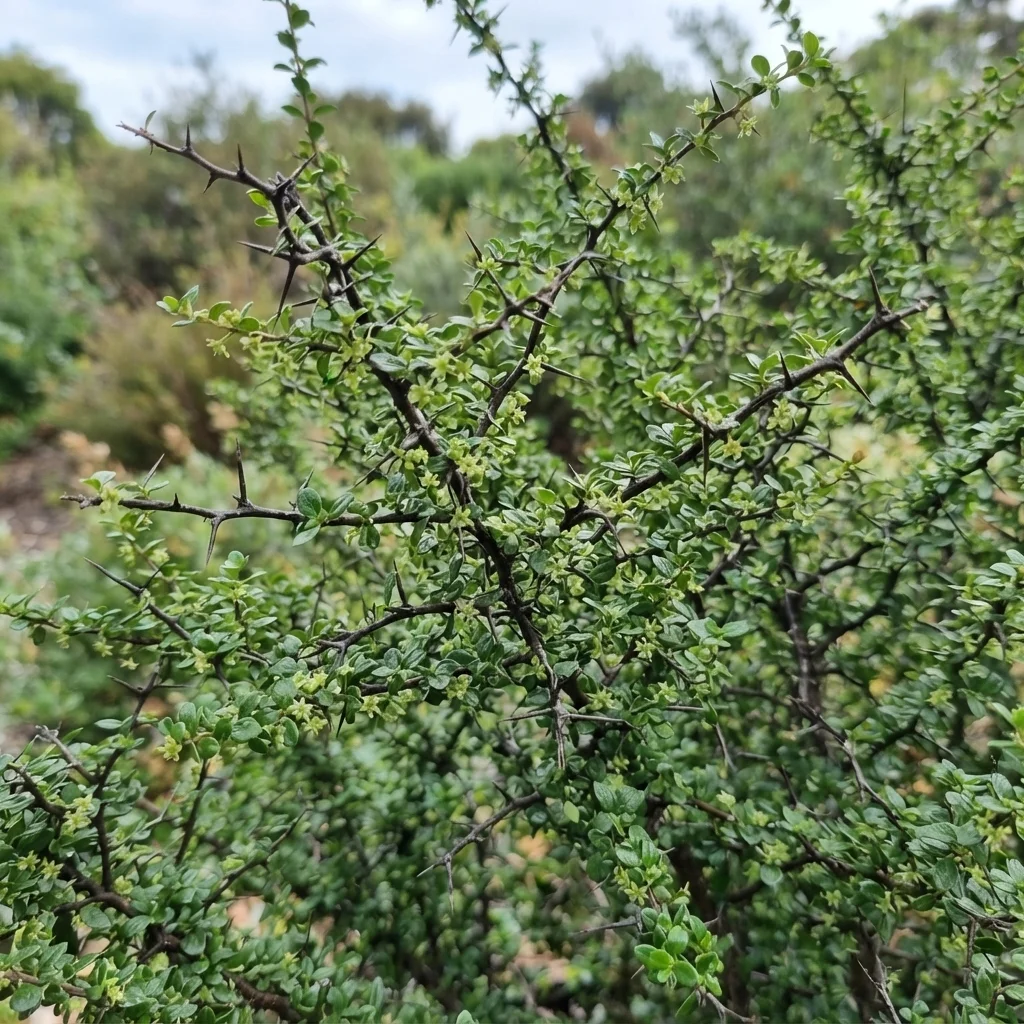
Prickly Currant-bush
Coprosma quadrifida
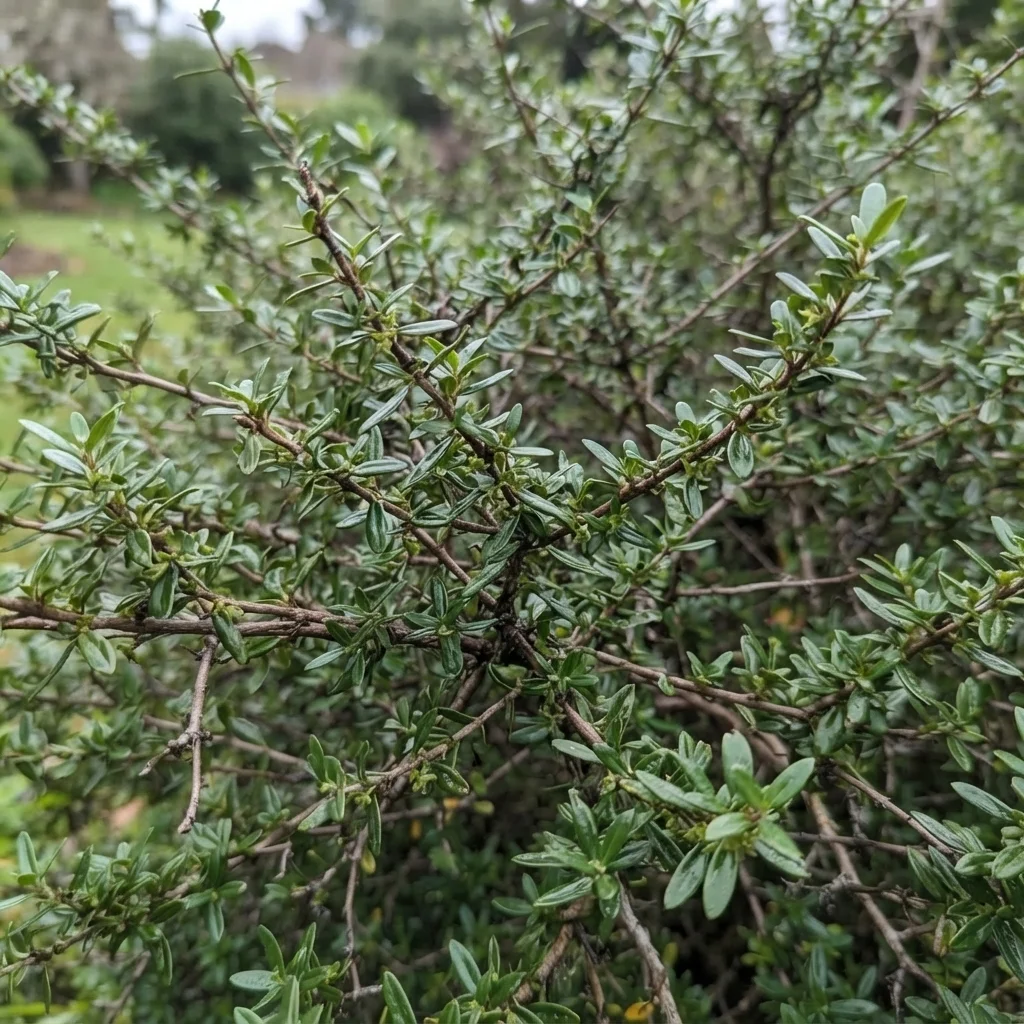
Mingimingi
Coprosma propinqua
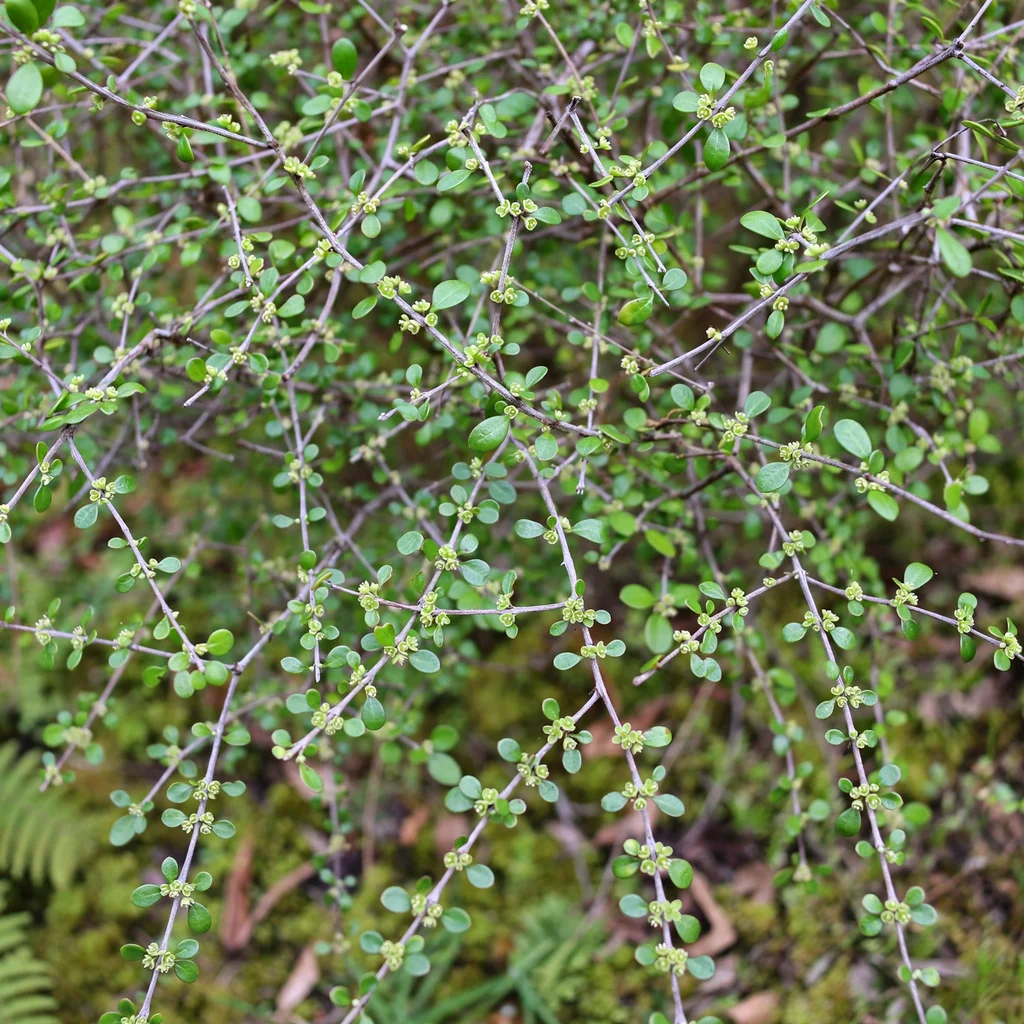
Green Coprosma
Coprosma virescens
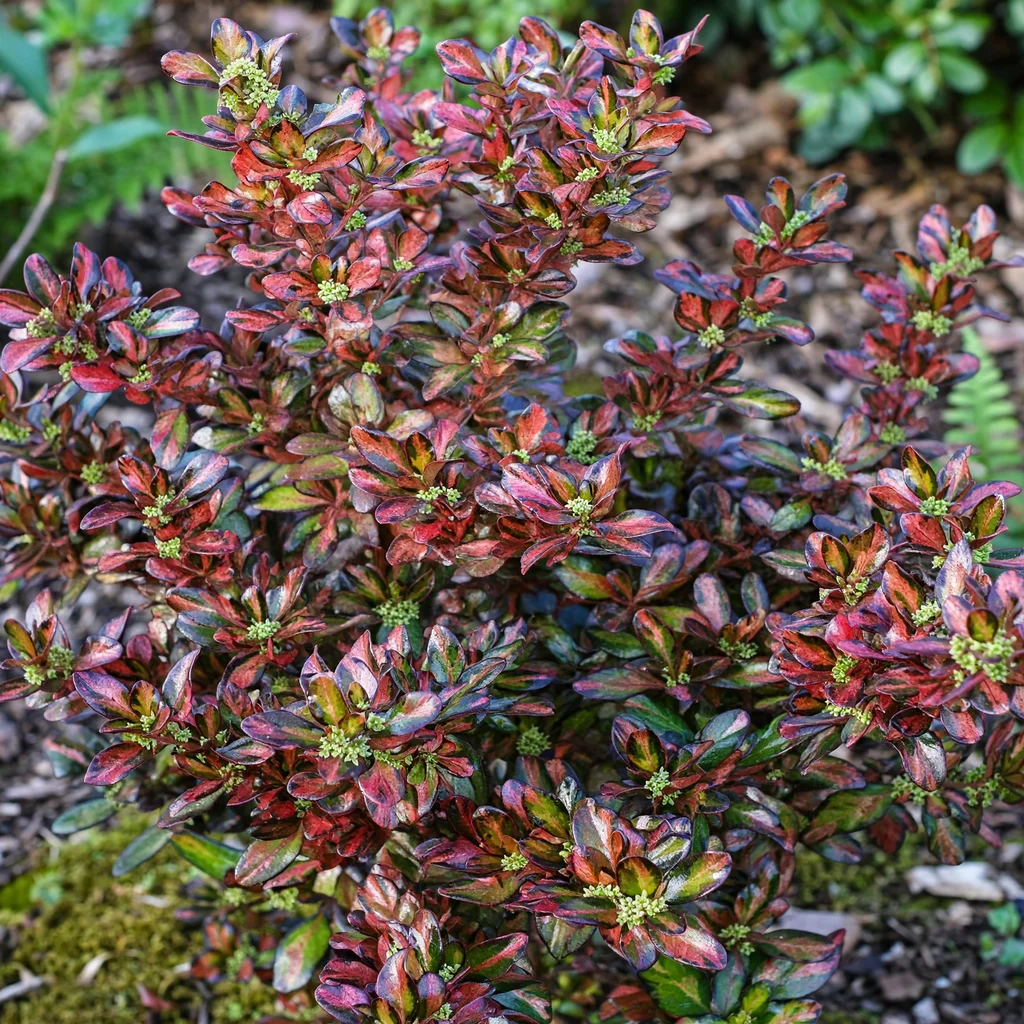
Evening Glow Mirror Plant
Coprosma repens 'Evening Glow'
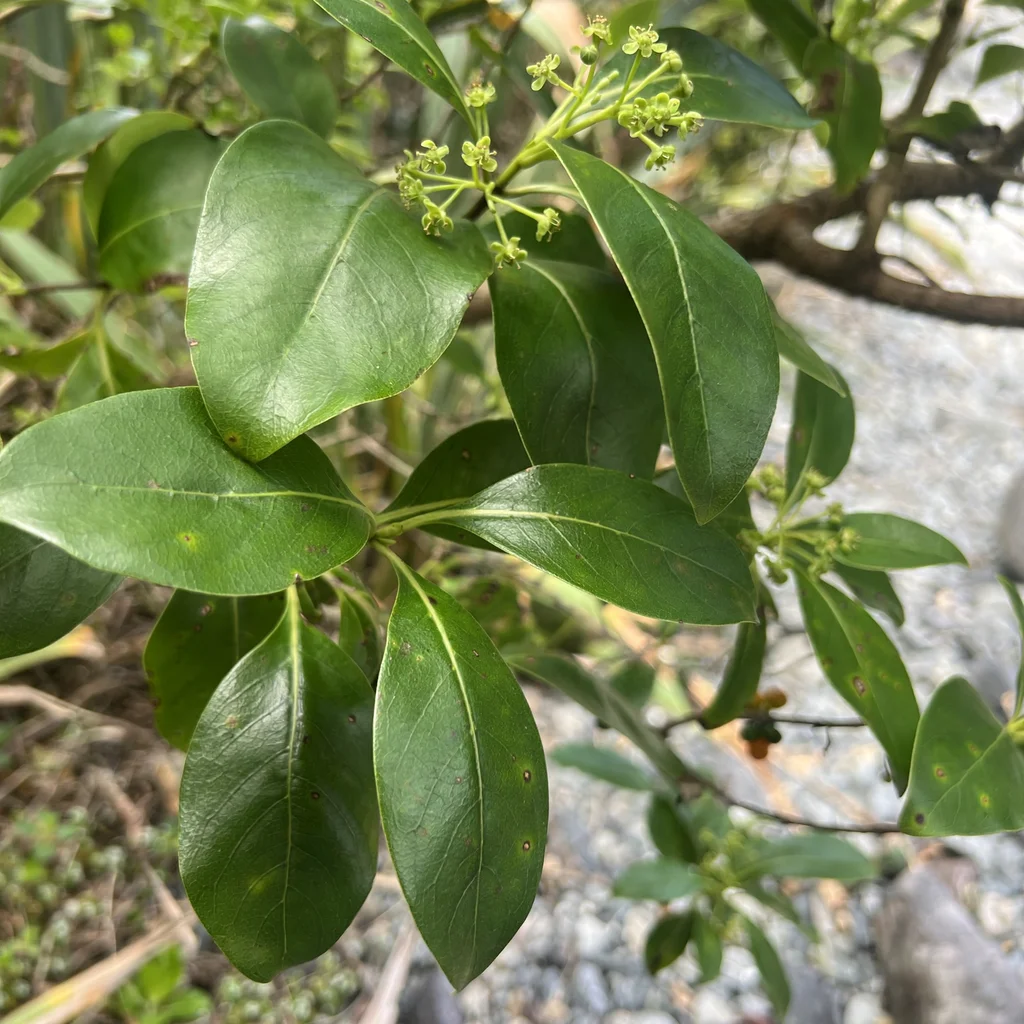
Large-Seeded Coprosma
Coprosma macrocarpa
Keep exploring
Explore the genus
Hardy in your zone?
Grow Needle-Leaved Mountain Coprosma with confidence
See it in a design of your actual yard, get zone-matched care reminders, and track it season by season in your garden journal.