The Story
Plant Bio
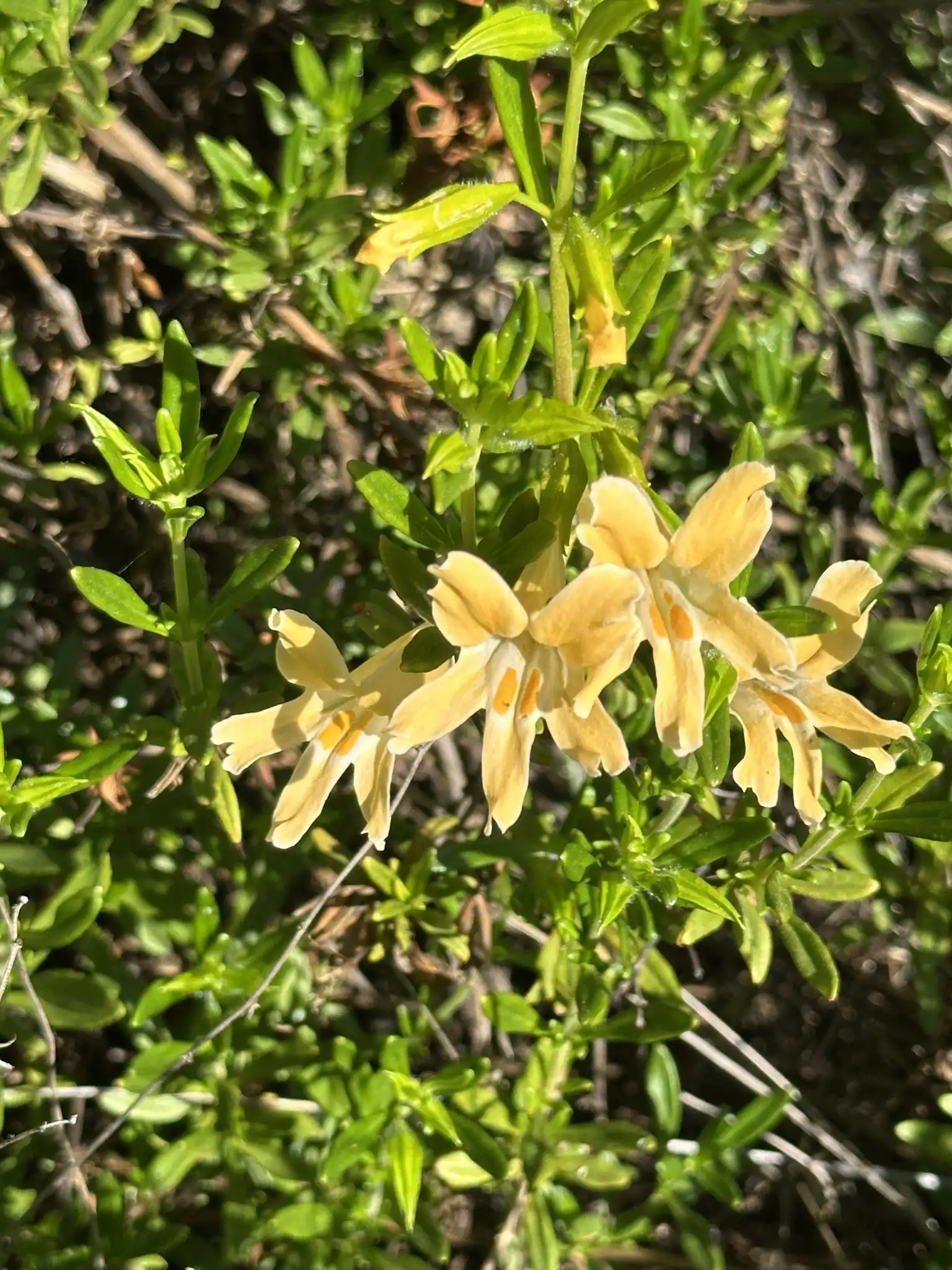
Diplacus linearis, commonly known as Monterey monkeyflower, is a woody-based subshrub native to exposed hillsides and coastal rock outcrops in central and southern California. It forms an upright to sprawling framework up to four feet high, clad in narrow foliage that secretes a sticky resin to conserve moisture during warm months.
This species is distinguished by its tubular, two-lipped flowers in yellow-orange shades that bloom heavily from spring into summer. Its narrow leaves with rolled margins and strict affinity for lean, dry mineral soils set it apart from broader-leaved chaparral species.
Uses & Benefits:
Essentials
At a Glance
Plant Type
Shrub
Height
48"
Width
36"
Light
Full Sun, Partial Sun
Zones
8, 9, 10
Water
Low
Humidity
Low
Lifespan
Perennial
Native To
California, United States
Toxicity
Non-toxic
Bloom period
Spring – Summer
In flower about 6 months of the year
Planting
How to Grow
- Select a planting site in full sun to partial shade featuring coarse sand or lean, mineral soil with sharp drainage.
- Dig a shallow hole set slightly wider than the root ball, keeping the root crown raised half an inch above the native grade.
- Water lightly at planting to settle the soil, then taper irrigation once new leaf growth confirms root establishment.
- Trim shoot tips lightly after the initial flowering flush to maintain canopy density and prevent stem flopping.
Pro Tip
Prune stems lightly right after the spring bloom, cutting just above active leaf buds; never cut back into bare, leafless wood as it cannot regenerate.
Keep It Thriving
Care Guide
Do
- Provide sharp sub-surface drainage around the root system.
- Prune lightly into green leafy stem growth immediately after flowering.
- Plant in lean mineral soil low in organic nutrients.
Don't
- Do not cut back into bare, leafless old wood.
- Do not irrigate established plants during hot summer months.
- Do not amend planting holes with heavy compost or moisture-retentive loam.
Seasonal Care Calendar
| Task | Jan | Feb | Mar | Apr | May | Jun | Jul | Aug | Sep | Oct | Nov | Dec |
|---|---|---|---|---|---|---|---|---|---|---|---|---|
| Pest Check | ||||||||||||
| Plant | ||||||||||||
| Prune | ||||||||||||
| Winter Prep |
Watch Out For
Pests & Diseases
Common Pests
Common Diseases
In the Garden
Landscape Uses & Companions
Landscape Uses
Multiply
Propagation Methods
Good to Know
Common Questions
Monterey Monkeyflower questions
What zones can Monterey Monkeyflower grow in?
Monterey Monkeyflower is hardy in USDA Zones 8–10: in that range it survives winter in the ground. Colder than Zone 8, grow it in a container you can move to shelter for the winter.
Is Monterey Monkeyflower deer resistant?
Not reliably. Deer may browse Monterey Monkeyflower, especially tender spring growth — plan on repellents or fencing where pressure is high.
When does Monterey Monkeyflower bloom?
Monterey Monkeyflower typically blooms from spring to summer. Exact timing shifts a week or two with your zone — Sow's bloom calendar maps it to your garden.
Does Monterey Monkeyflower need full sun?
Monterey Monkeyflower does best in full sun to part shade. In hot climates, afternoon shade keeps blooms fresher longer.
Is Monterey Monkeyflower drought tolerant?
Yes — once established (usually after the first full season), Monterey Monkeyflower handles dry spells with minimal watering. Water deeply its first year to build the root system that makes that possible.
More Diplacus to compare
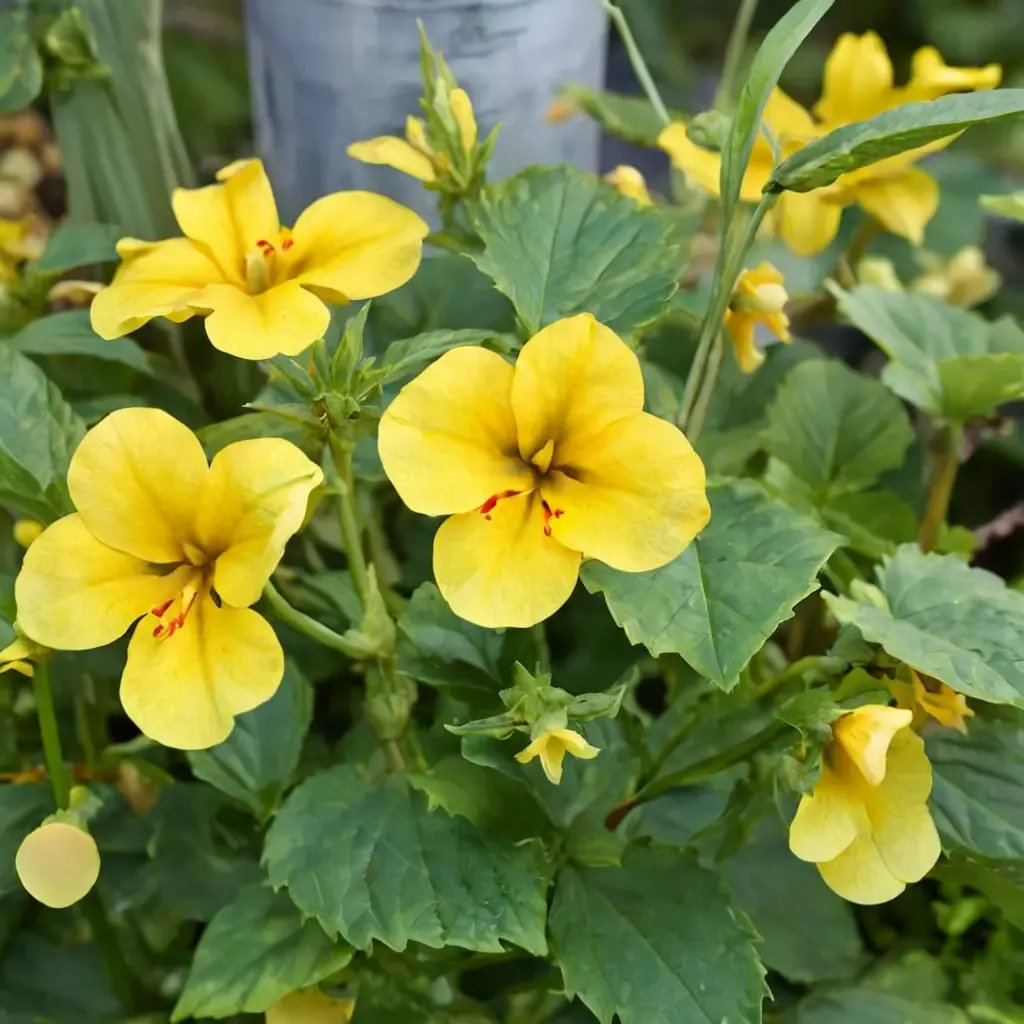
Pamela Monkey Flower
Diplacus aurantiacus 'Pamela'
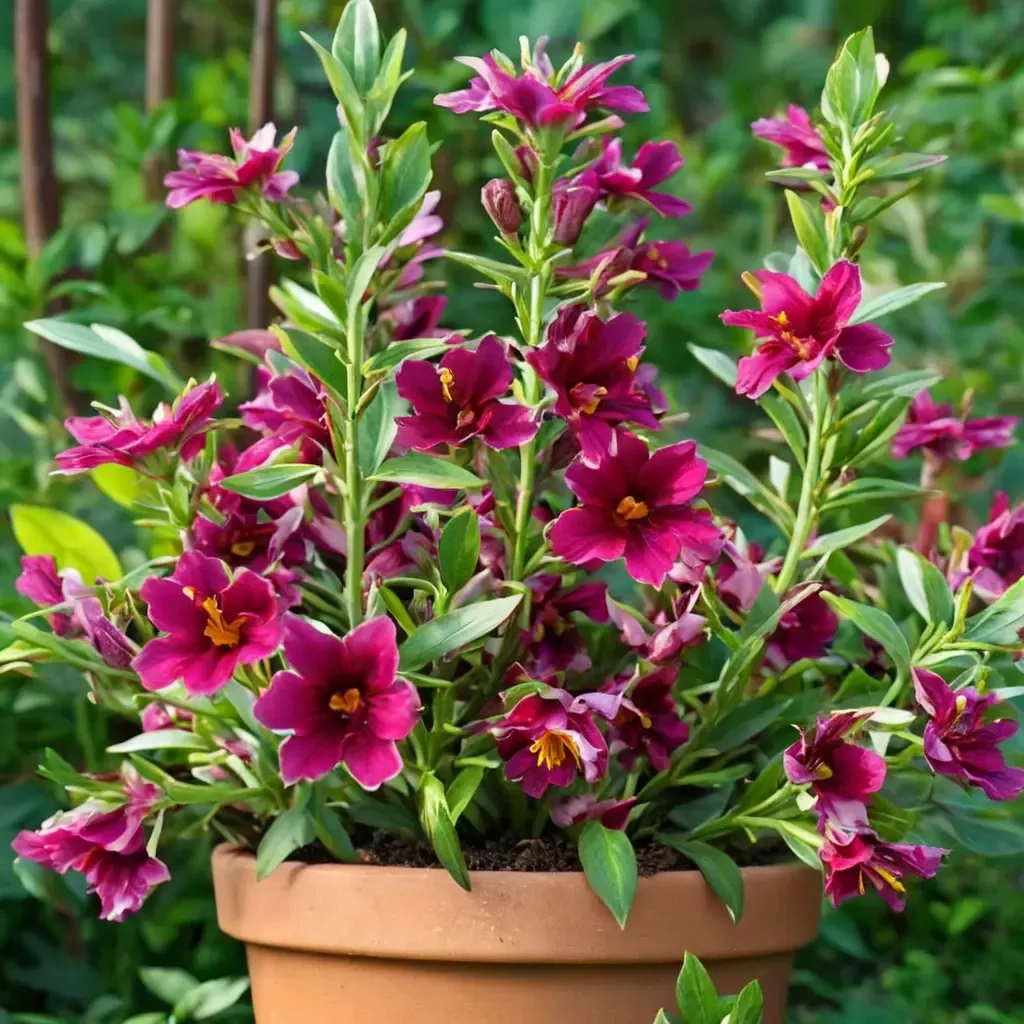
Jelly Bean Betabel Monkey Flower
Diplacus x hybrida 'Jelly Bean Betabel'
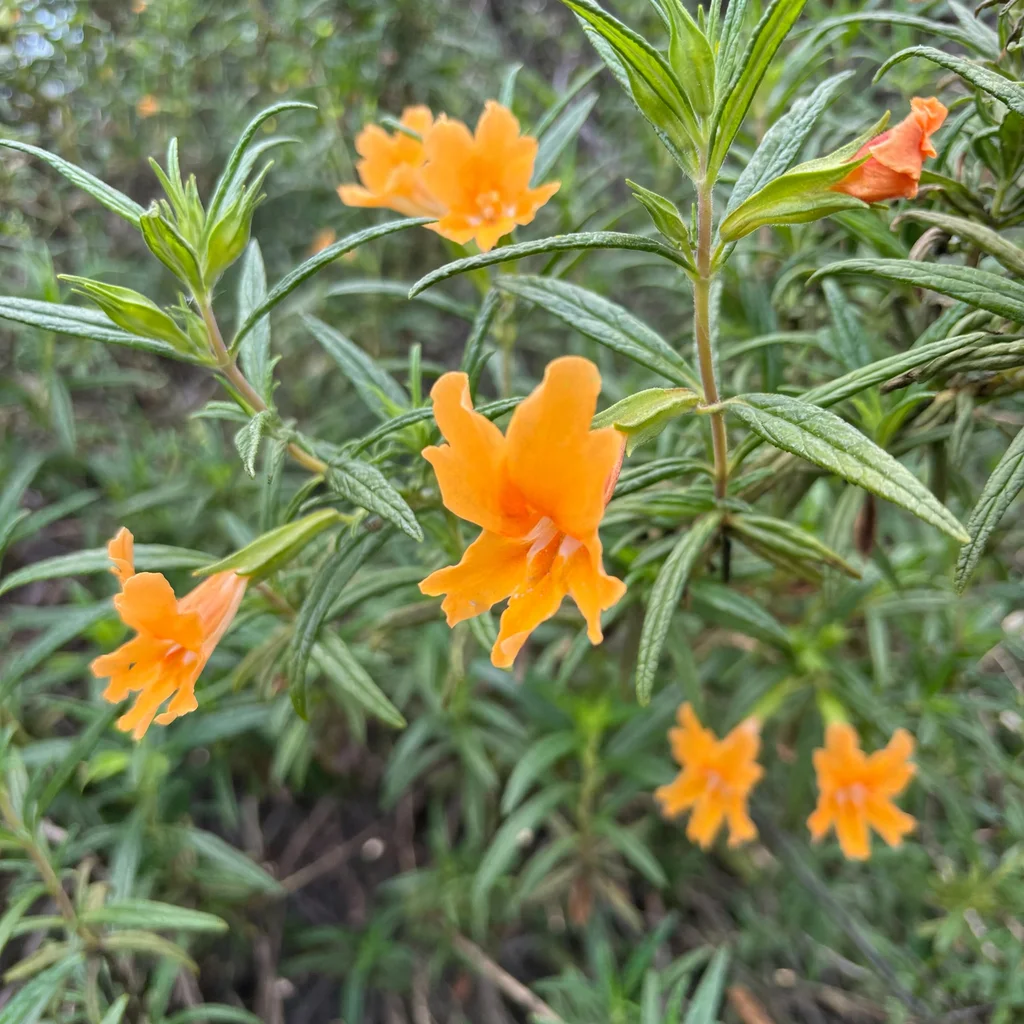
Southern Bush Monkeyflower
Diplacus longiflorus
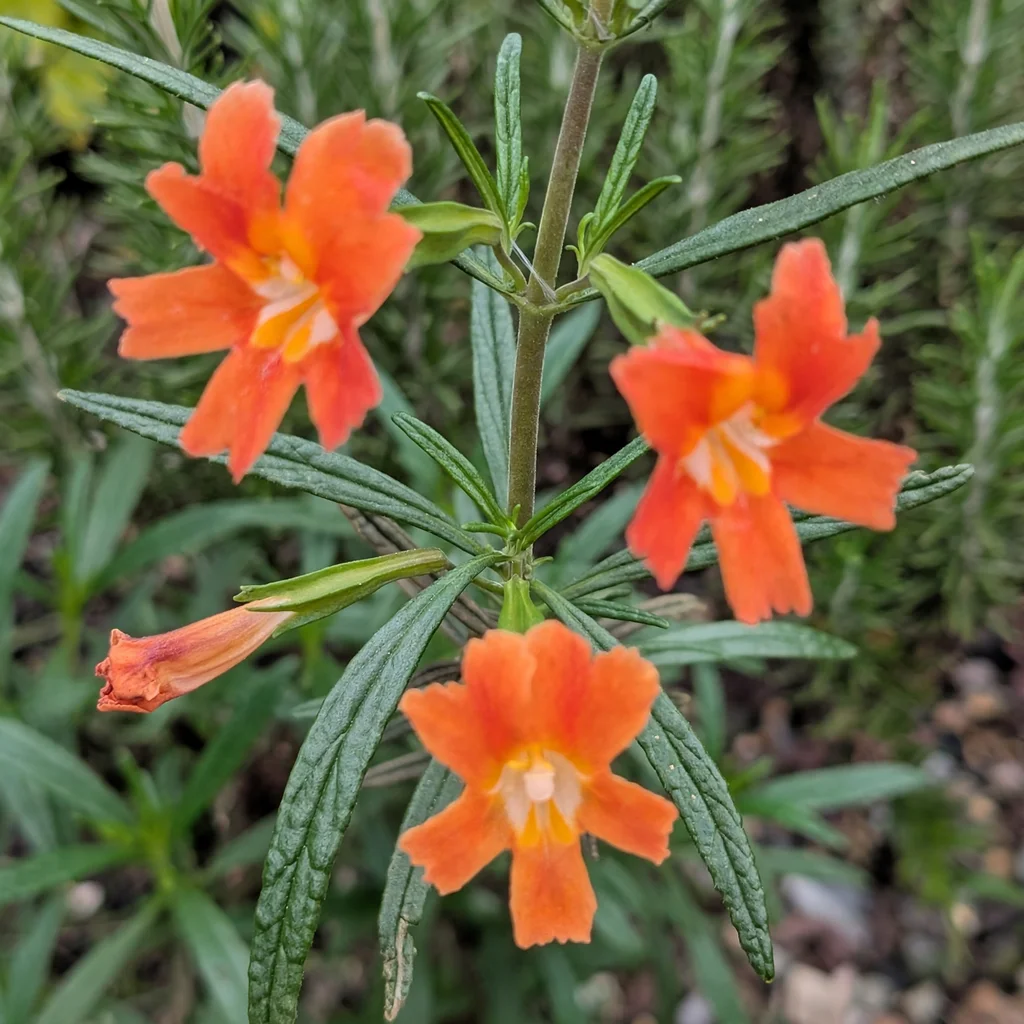
Orange Bush Monkeyflower
Diplacus x australis
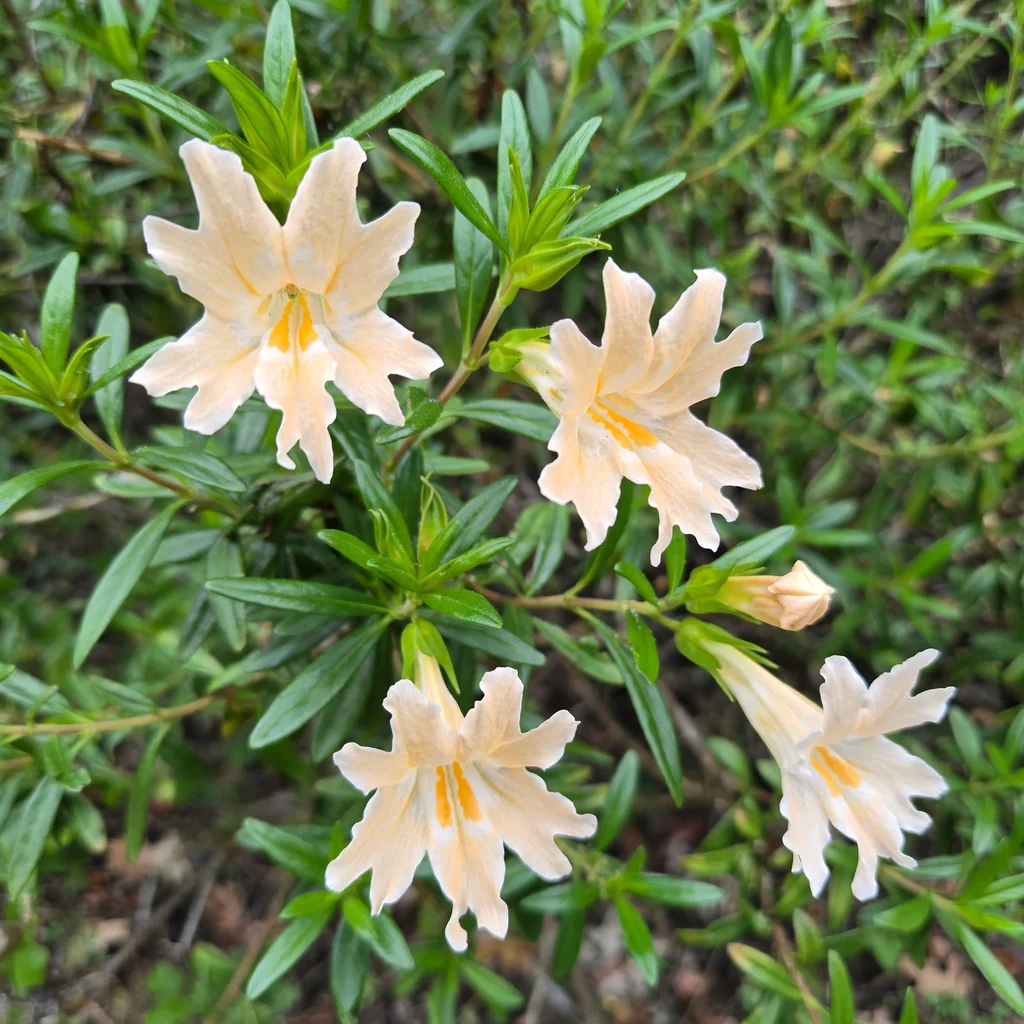
Large-Flowered Bush Monkeyflower
Diplacus grandiflorus
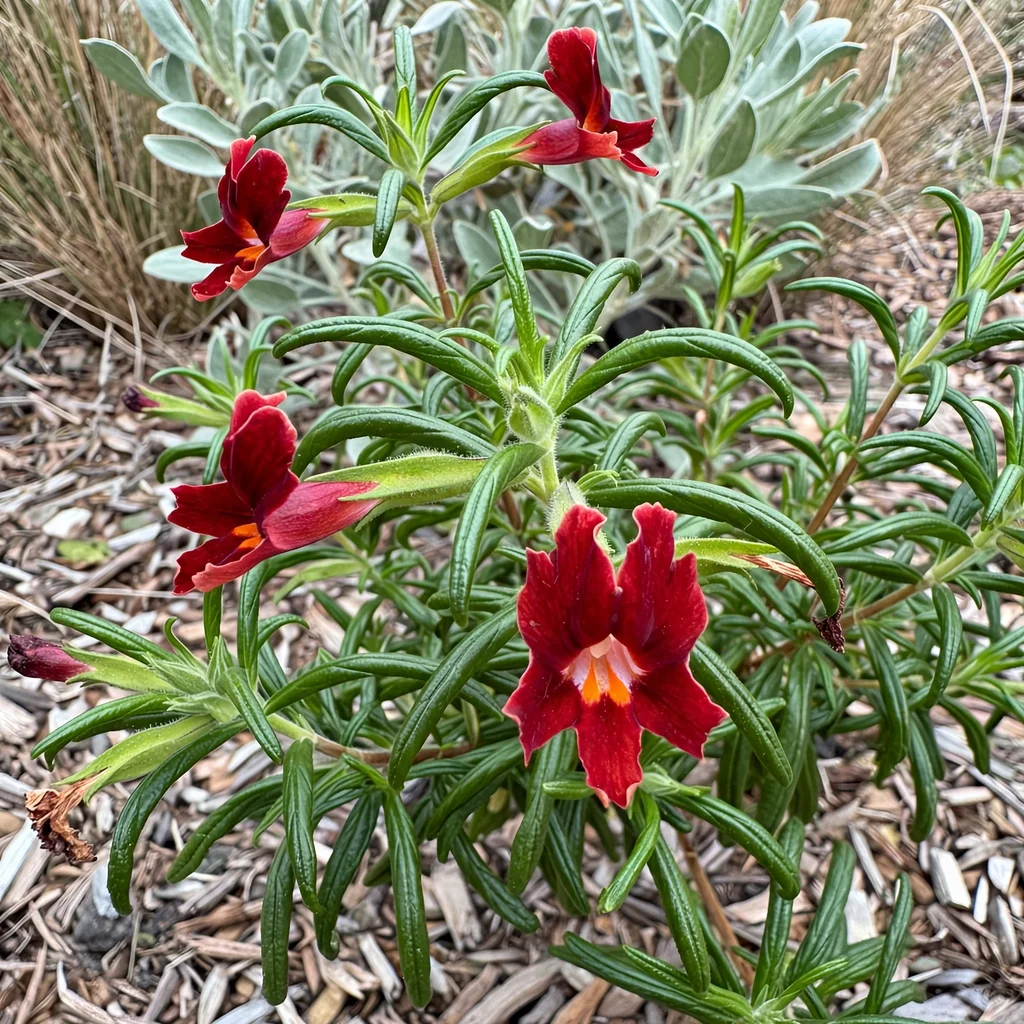
Santa Susana Bush Monkeyflower
Diplacus rutilus
Keep exploring
Explore the genus
Hardy in your zone?
Grow Monterey Monkeyflower with confidence
See it in a design of your actual yard, get zone-matched care reminders, and track it season by season in your garden journal.