The Story
Plant Bio
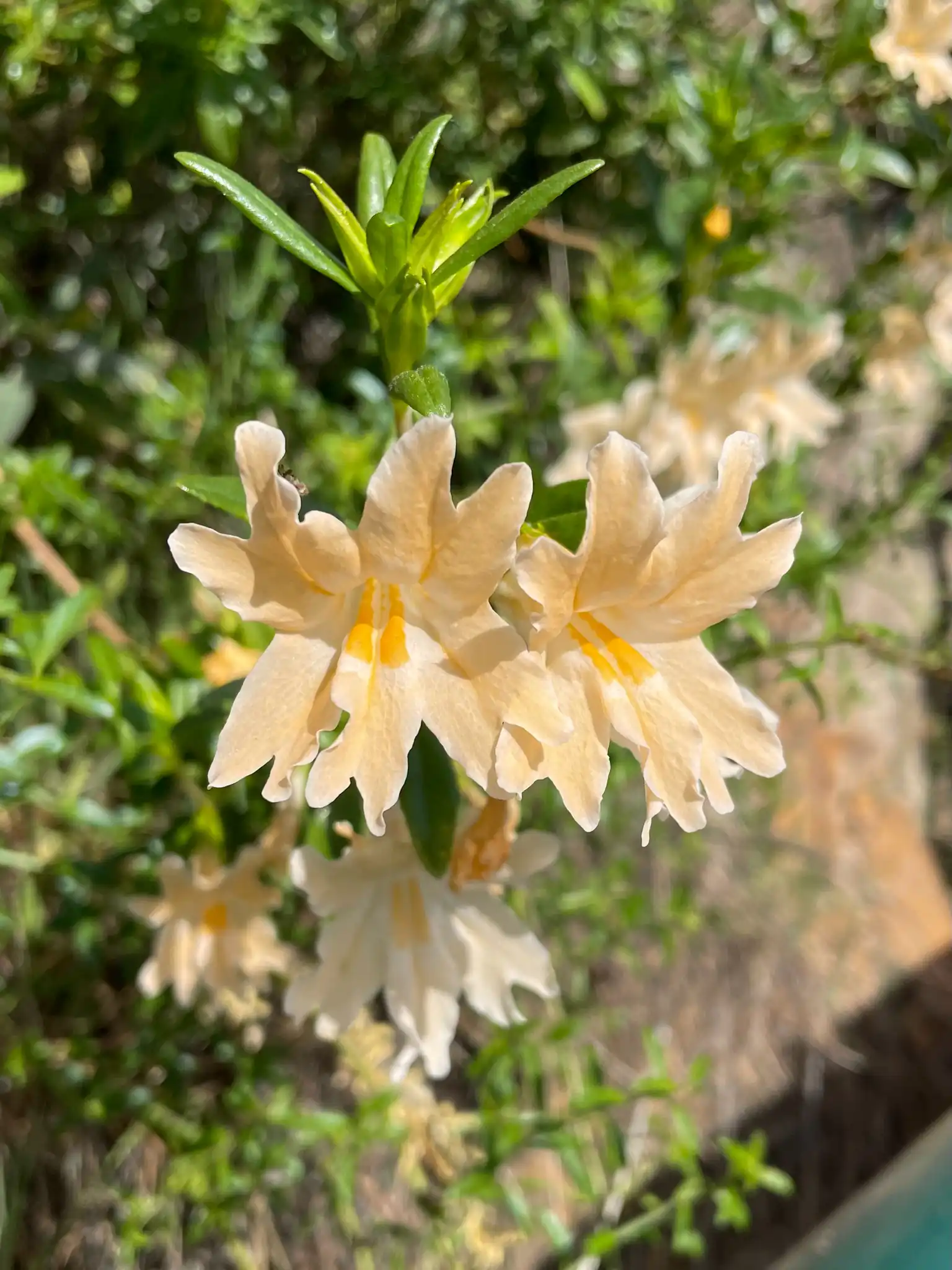
Diplacus grandiflorus is a low evergreen to semi-evergreen subshrub forming a bushy, spreading mound 16 to 28 inches tall and about 2 feet wide, with brittle older wood. The leaves are glossy green and lance-shaped, sticky-resinous to the touch and curling inward on hot days.
It is distinguished by its unusually large azalea-like flowers, about 2 inches across, with deeply notched petals in white to apricot-peach and creamy yellow, each marked with orange-yellow in the throat. Flowers are borne singly in the leaf axils on tubular throats from spring to summer.
Uses & Benefits:
Essentials
At a Glance
Plant Type
Shrub
Height
28"
Width
24"
Light
Full Sun, Partial Sun
Zones
9, 10
Water
Low
Humidity
Unknown
Lifespan
Perennial
Native To
California
Toxicity
Unknown
Bloom period
Spring – Summer
In flower about 6 months of the year
Planting
How to Grow
- Plant in full sun to part shade, giving afternoon shade inland, in sandy or rocky loam that drains sharply.
- Set the crown level with the soil, backfill with lean soil, and water in to settle roots.
- Water sparingly until established, then keep water low; never leave the crown wet.
- Reshape lightly after flowering and remove leggy stems, without cutting into old leafless wood.
Pro Tip
Give it lean, rocky, sharply drained soil and withhold summer water once established; soggy roots kill it faster than drought, and light reshaping beats hard shearing.
Keep It Thriving
Care Guide
Do
- Give very sharp drainage with sand or gravel in the planting mix
- Provide full sun on the coast and part shade in hot inland gardens
- Reshape lightly after flowering to keep the mound dense
Don't
- Do not overwater or set plants in heavy clay that stays wet
- Do not shear hard into old brittle leafless wood
- Do not plant in deep shade or hot reflected sun
Seasonal Care Calendar
| Task | Jan | Feb | Mar | Apr | May | Jun | Jul | Aug | Sep | Oct | Nov | Dec |
|---|---|---|---|---|---|---|---|---|---|---|---|---|
| Mulch | ||||||||||||
| Pest Check | ||||||||||||
| Plant | ||||||||||||
| Propagate | ||||||||||||
| Prune |
Watch Out For
Pests & Diseases
Common Pests
Common Diseases
In the Garden
Landscape Uses & Companions
Landscape Uses
Companion Plants
Multiply
Propagation Methods
Good to Know
Common Questions
Large-Flowered Bush Monkeyflower questions
What zones can Large-Flowered Bush Monkeyflower grow in?
Large-Flowered Bush Monkeyflower is hardy in USDA Zones 9–10: in that range it survives winter in the ground. Colder than Zone 9, grow it in a container you can move to shelter for the winter.
Is Large-Flowered Bush Monkeyflower deer resistant?
Yes — Large-Flowered Bush Monkeyflower is rated deer-resistant. Deer typically pass it over, though extreme hunger can override any plant's defenses.
When does Large-Flowered Bush Monkeyflower bloom?
Large-Flowered Bush Monkeyflower typically blooms from spring to summer. Exact timing shifts a week or two with your zone — Sow's bloom calendar maps it to your garden.
Does Large-Flowered Bush Monkeyflower need full sun?
Large-Flowered Bush Monkeyflower does best in full sun to part shade. In hot climates, afternoon shade keeps blooms fresher longer.
Is Large-Flowered Bush Monkeyflower drought tolerant?
Yes — once established (usually after the first full season), Large-Flowered Bush Monkeyflower handles dry spells with minimal watering. Water deeply its first year to build the root system that makes that possible.
More Diplacus to compare
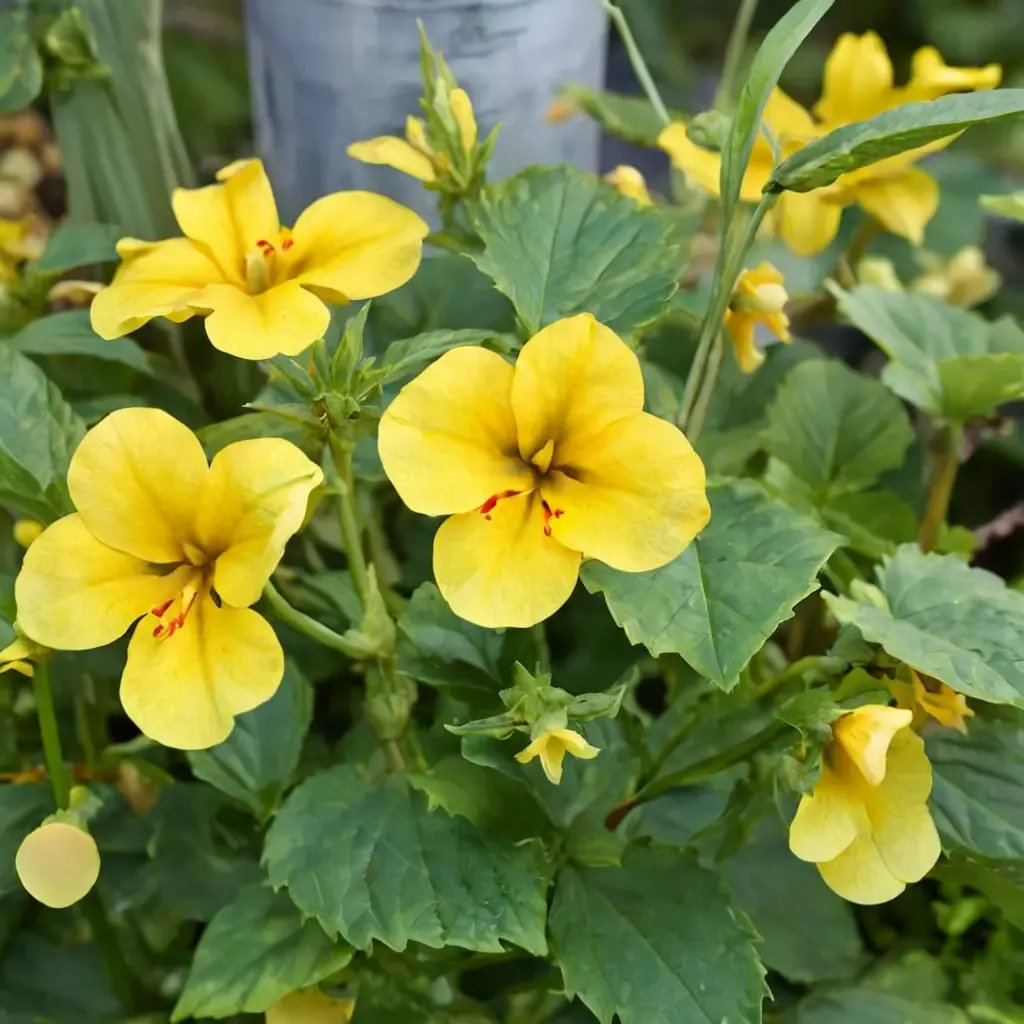
Pamela Monkey Flower
Diplacus aurantiacus 'Pamela'
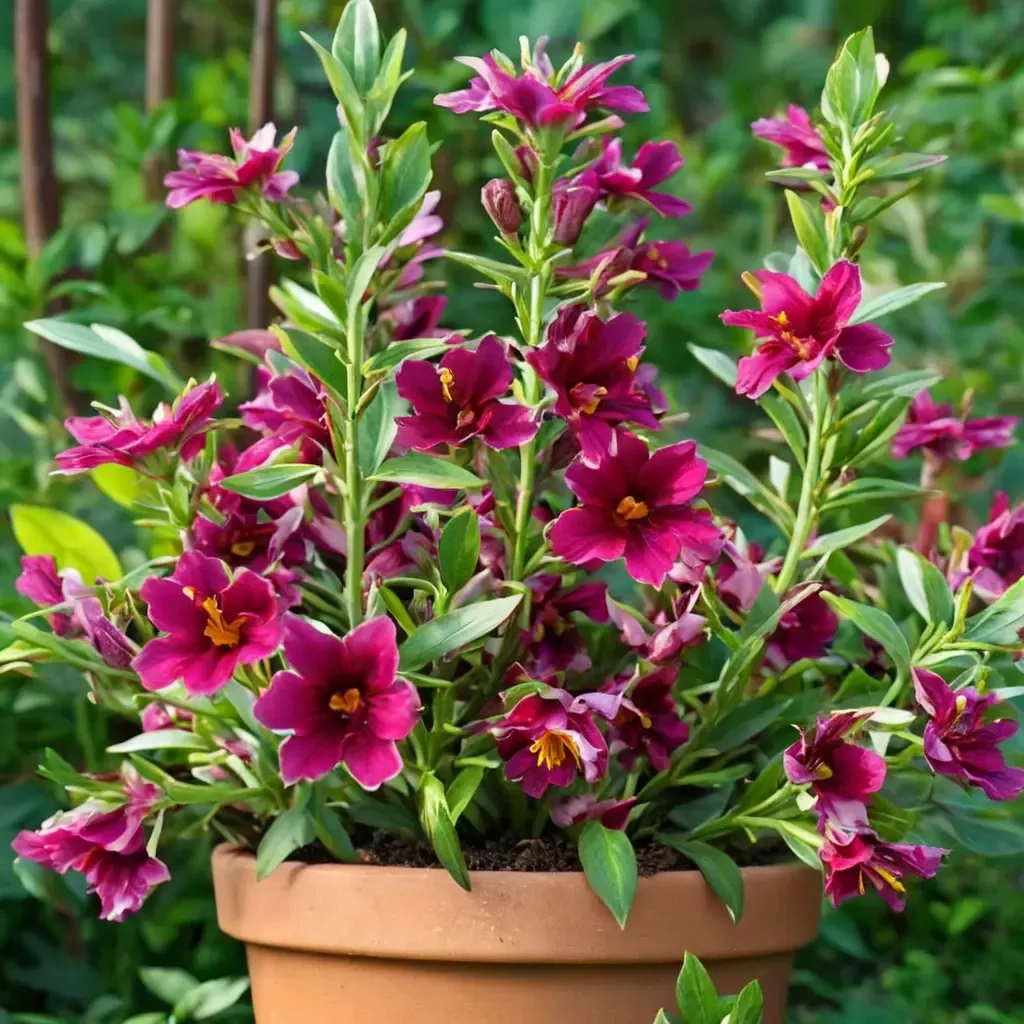
Jelly Bean Betabel Monkey Flower
Diplacus x hybrida 'Jelly Bean Betabel'
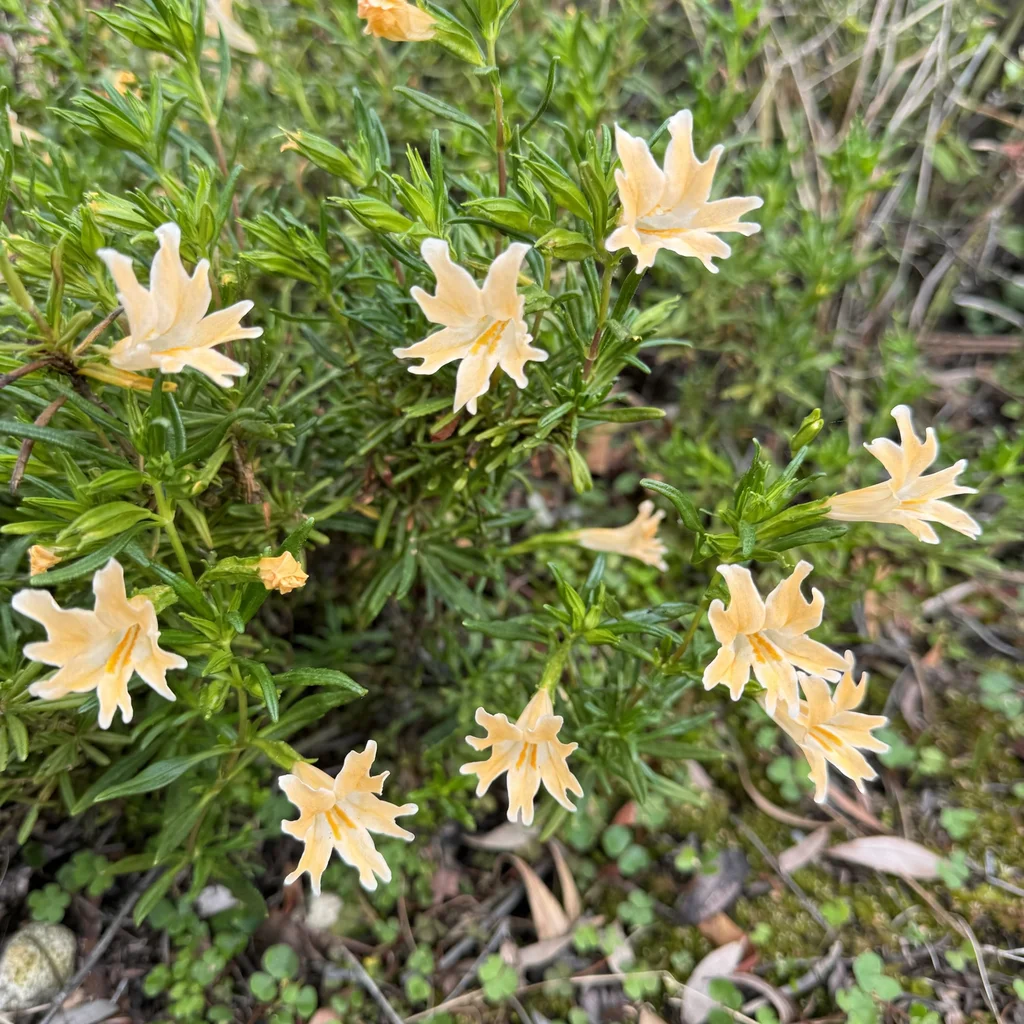
Monterey Monkeyflower
Diplacus linearis
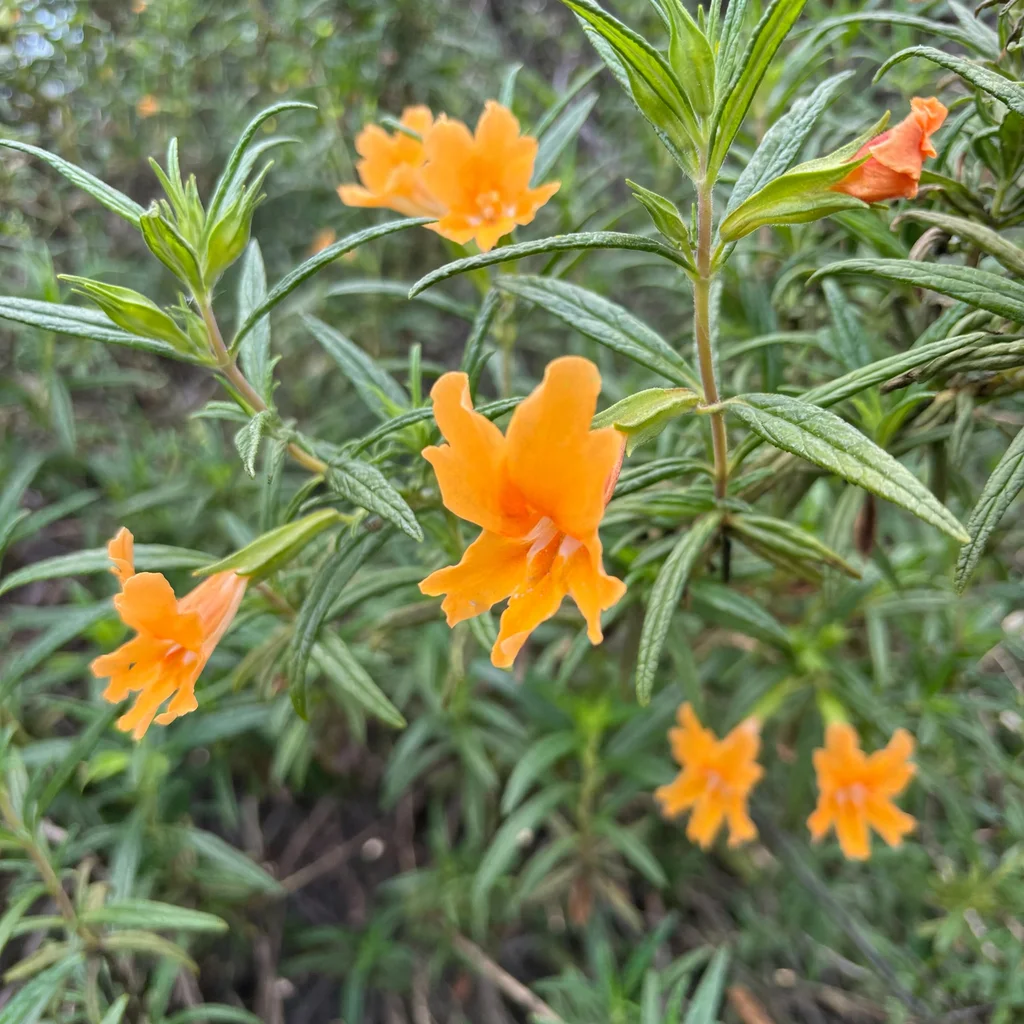
Southern Bush Monkeyflower
Diplacus longiflorus
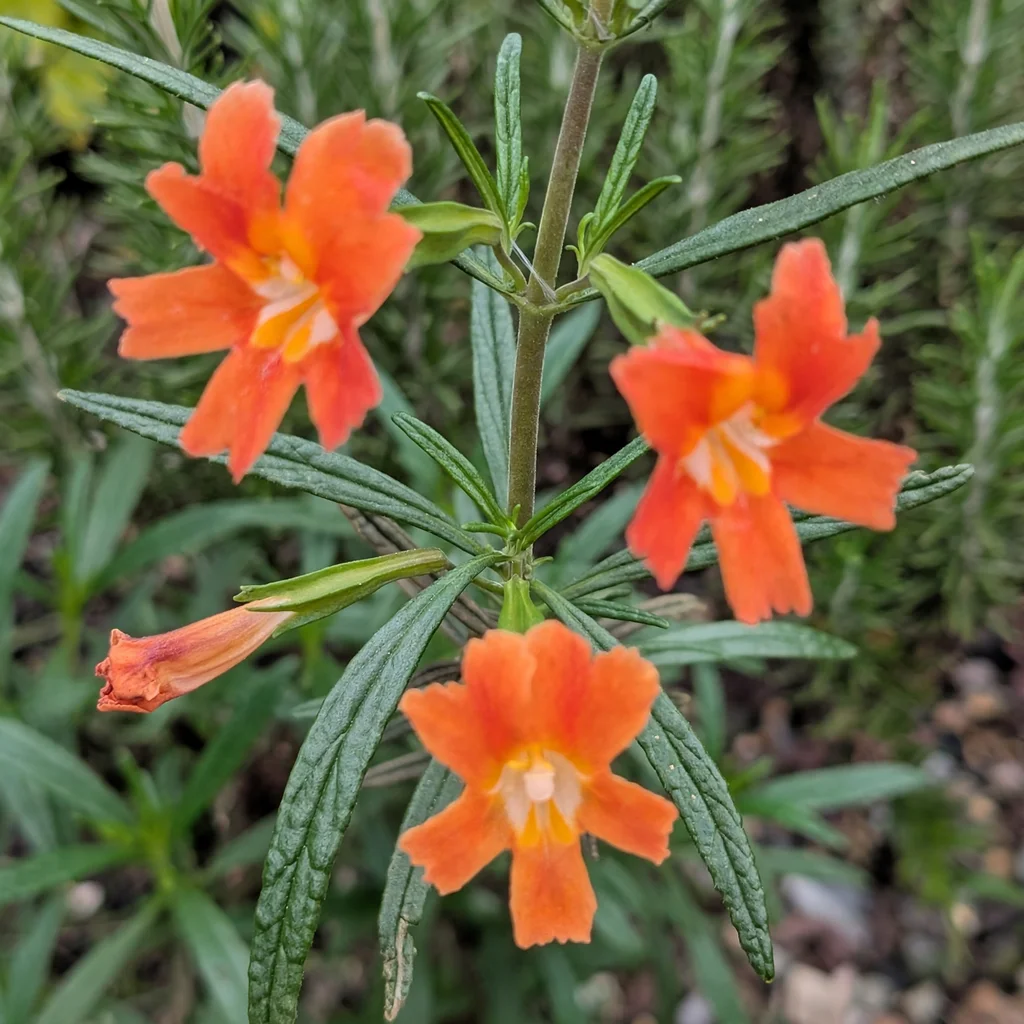
Orange Bush Monkeyflower
Diplacus x australis
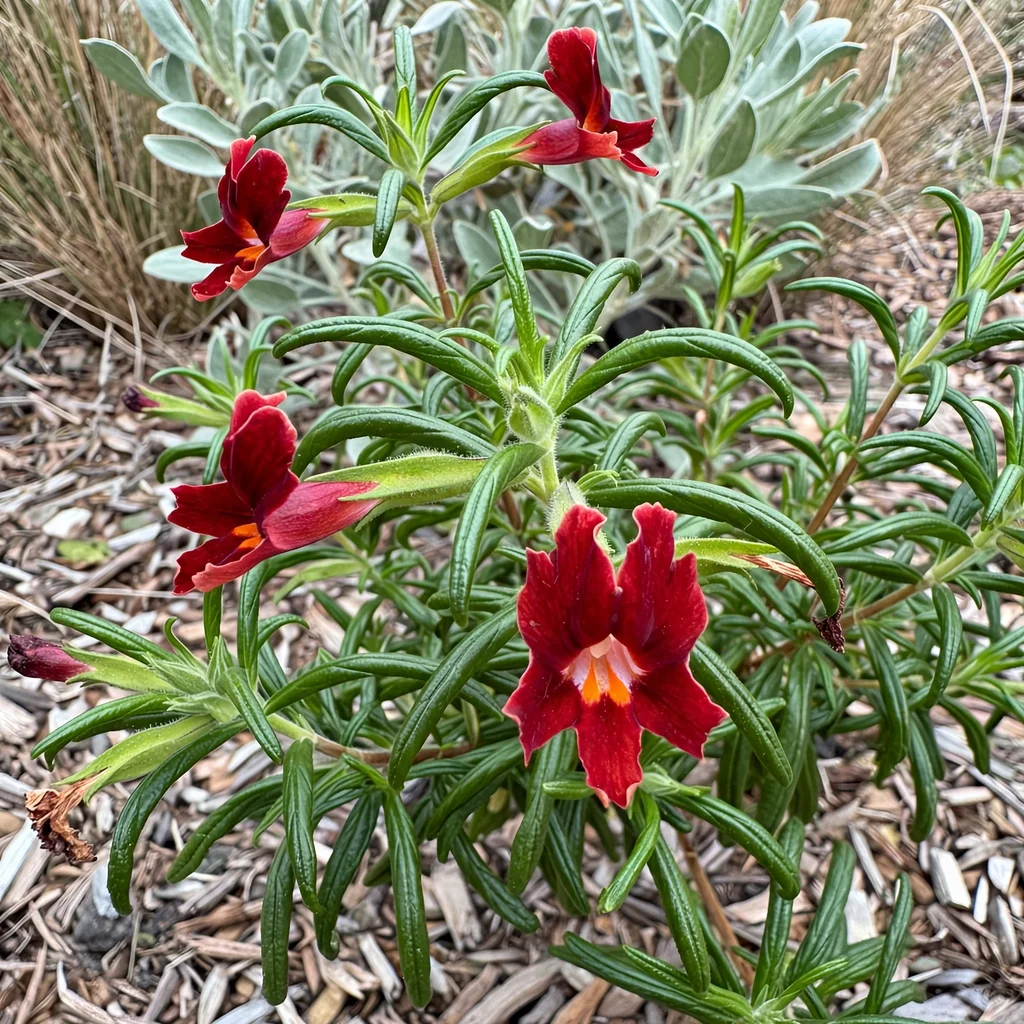
Santa Susana Bush Monkeyflower
Diplacus rutilus
Keep exploring
Explore the genus
Hardy in your zone?
Grow Large-Flowered Bush Monkeyflower with confidence
See it in a design of your actual yard, get zone-matched care reminders, and track it season by season in your garden journal.