The Story
Plant Bio
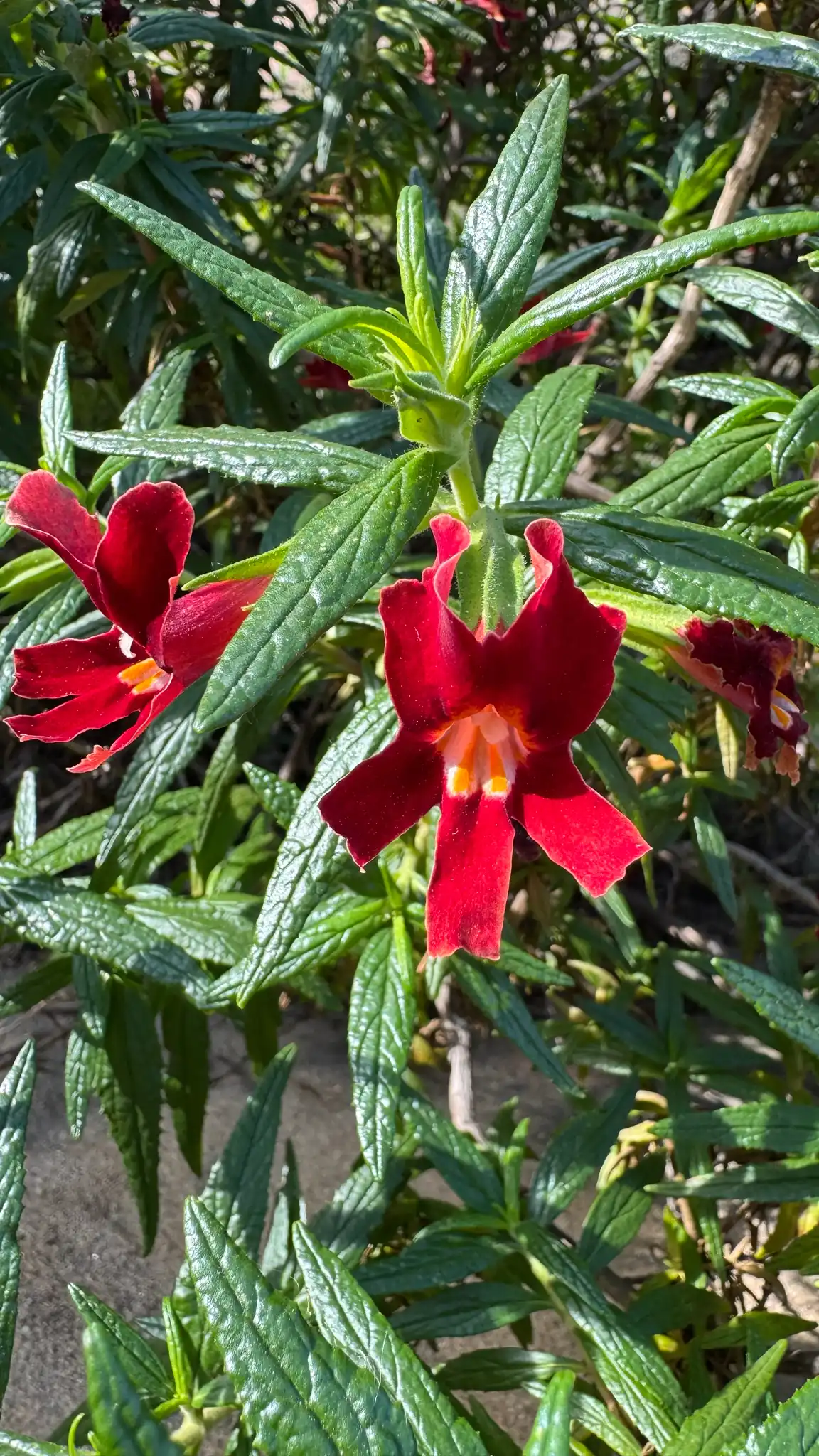
Diplacus, the bush monkeyflowers, are soft-wooded evergreen subshrubs from western North America with opposite, slightly sticky leaves and tubular two-lipped flowers. The corolla flares from a long narrow tube into a broad bilabiate limb, borne singly or paired at the leaf axils in spring.
Diplacus rutilus is the Santa Susana form, an erect subshrub to about three feet with glossy green elliptic leaves that are smooth above, densely hairy beneath, and rolled at the edge. Its flowers are brick red to red-orange with a whitish throat, the tube-throat about an inch and a half long opening to a limb over an inch across.
Uses & Benefits:
Essentials
At a Glance
Plant Type
Shrub
Height
35"
Width
28"
Light
Full Sun, Partial Sun
Zones
9, 10
Water
Low
Humidity
Average
Lifespan
Perennial
Native To
California, USA
Toxicity
Unknown
Bloom period
Spring – Early summer
In flower about 4 months of the year
Planting
How to Grow
- Plant in spring after last frost in full sun to part shade on a warm, sheltered slope.
- Set into lean, fast-draining rocky or sandy soil with the crown level with the soil surface.
- Water to establish, then taper to deep infrequent soakings; avoid wet feet in summer.
- Protect from hard frost on the warm side of a wall and avoid exposed cold pockets.
Pro Tip
Site in sun to part shade on a warm, fast-draining rocky slope and protect from hard cold; sharp drainage matters more than rich soil.
Keep It Thriving
Care Guide
Do
- Do give sharp drainage and air circulation around the crown.
- Do deadhead spent flowers to extend the spring display.
- Do shelter from hard cold in winter.
Don't
- Do not plant in heavy clay or poorly drained low spots.
- Do not overwater in summer or fertilize heavily.
- Do not cut back into old leafless wood.
Seasonal Care Calendar
| Task | Jan | Feb | Mar | Apr | May | Jun | Jul | Aug | Sep | Oct | Nov | Dec |
|---|---|---|---|---|---|---|---|---|---|---|---|---|
| Deadhead | ||||||||||||
| Pest Check | ||||||||||||
| Plant | ||||||||||||
| Prune | ||||||||||||
| Winter Prep |
Watch Out For
Pests & Diseases
Common Pests
Common Diseases
In the Garden
Landscape Uses & Companions
Landscape Uses
Companion Plants
Multiply
Propagation Methods
Good to Know
Common Questions
Santa Susana Bush Monkeyflower questions
What zones can Santa Susana Bush Monkeyflower grow in?
Santa Susana Bush Monkeyflower is hardy in USDA Zones 9–10: in that range it survives winter in the ground. Colder than Zone 9, grow it in a container you can move to shelter for the winter.
When does Santa Susana Bush Monkeyflower bloom?
Santa Susana Bush Monkeyflower typically blooms from early spring to early summer. Exact timing shifts a week or two with your zone — Sow's bloom calendar maps it to your garden.
Does Santa Susana Bush Monkeyflower need full sun?
Santa Susana Bush Monkeyflower does best in full sun to part shade. In hot climates, afternoon shade keeps blooms fresher longer.
Is Santa Susana Bush Monkeyflower drought tolerant?
Yes — once established (usually after the first full season), Santa Susana Bush Monkeyflower handles dry spells with minimal watering. Water deeply its first year to build the root system that makes that possible.
More Diplacus to compare
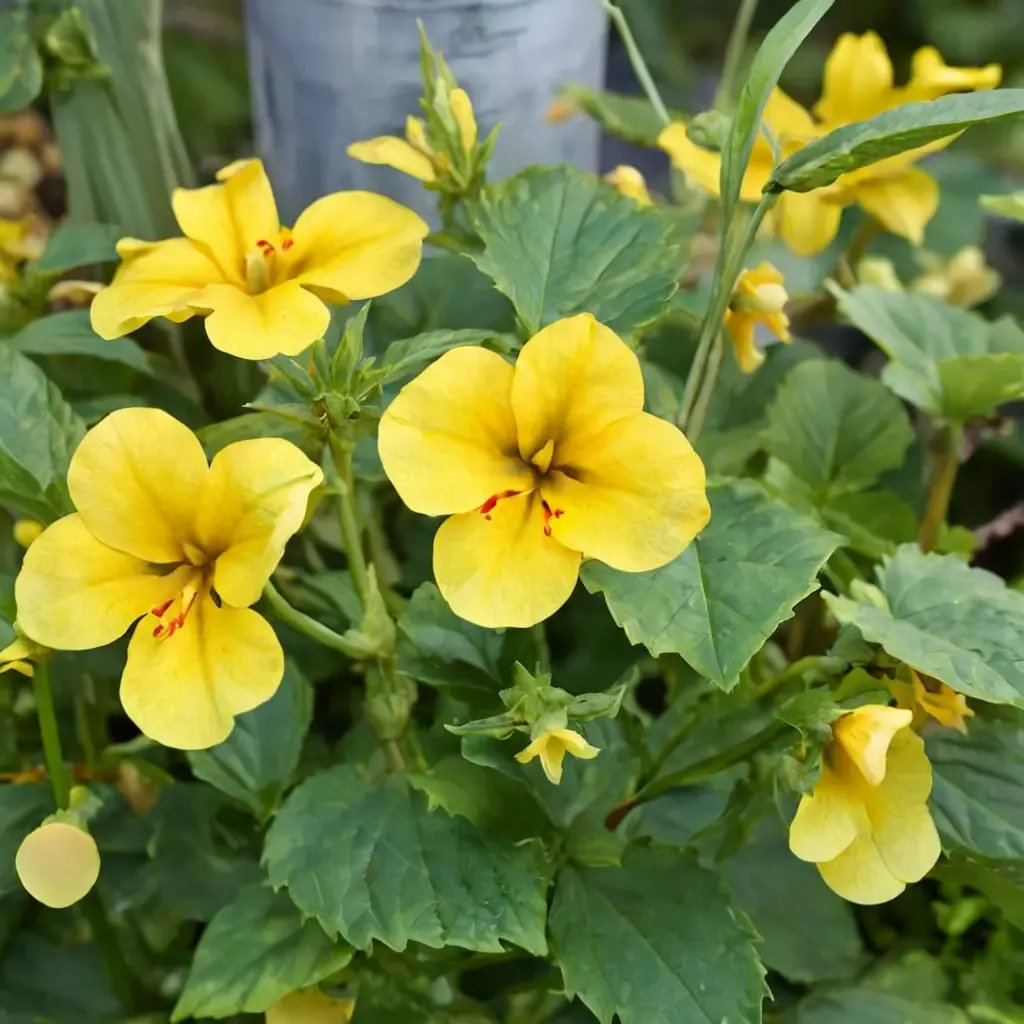
Pamela Monkey Flower
Diplacus aurantiacus 'Pamela'
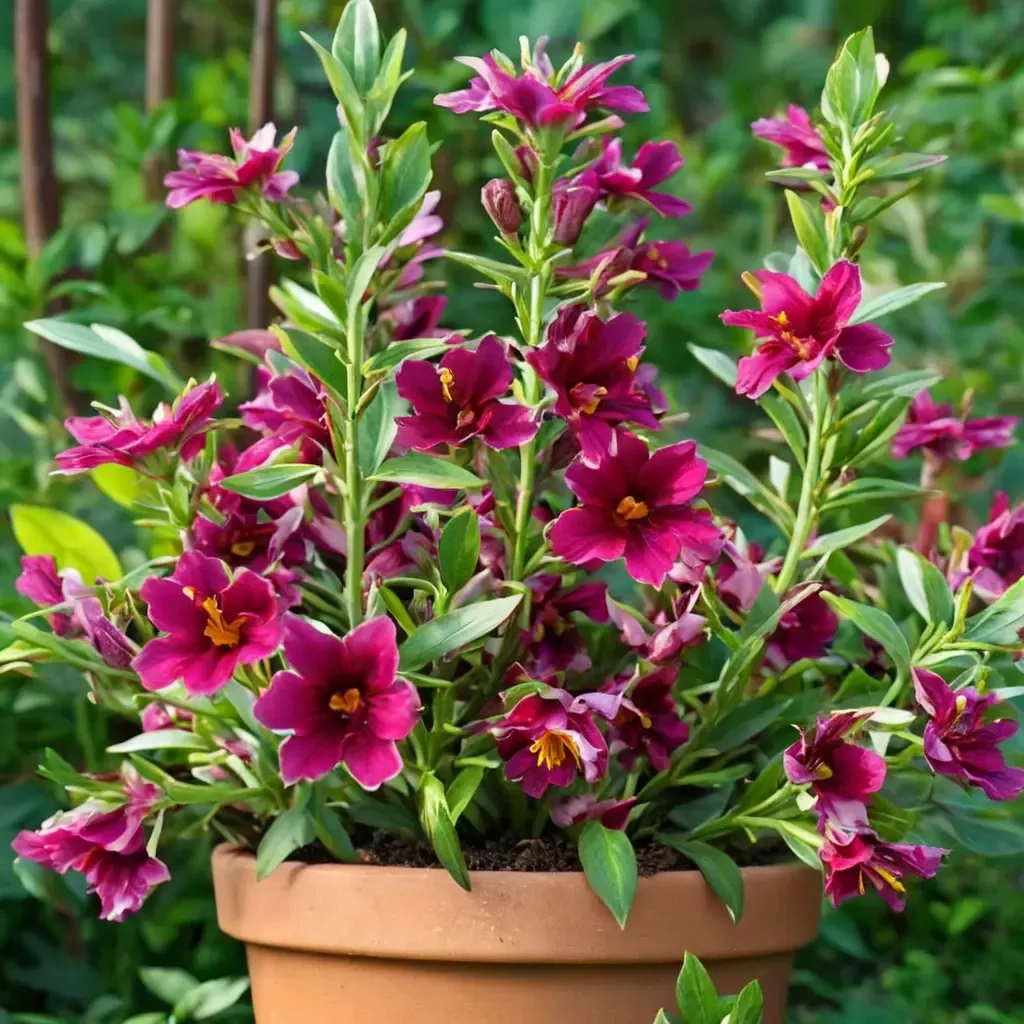
Jelly Bean Betabel Monkey Flower
Diplacus x hybrida 'Jelly Bean Betabel'
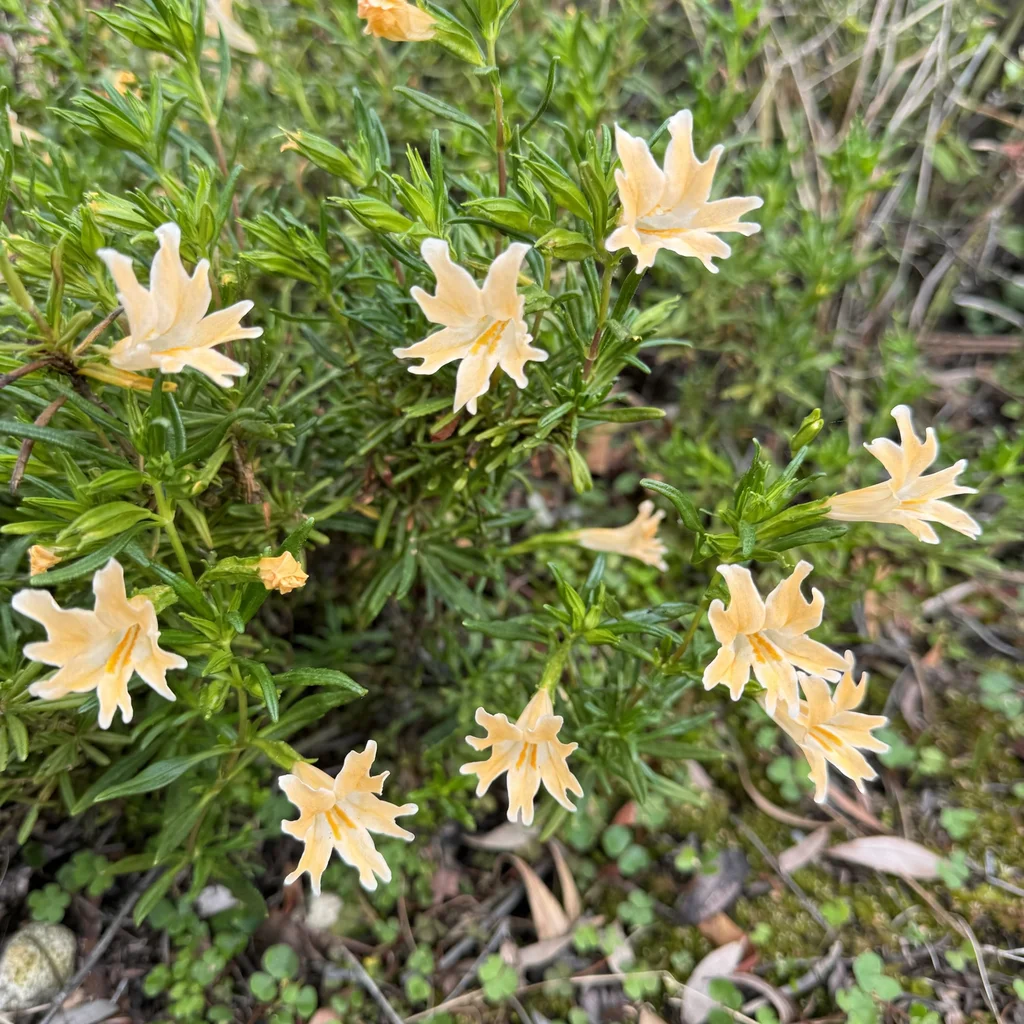
Monterey Monkeyflower
Diplacus linearis
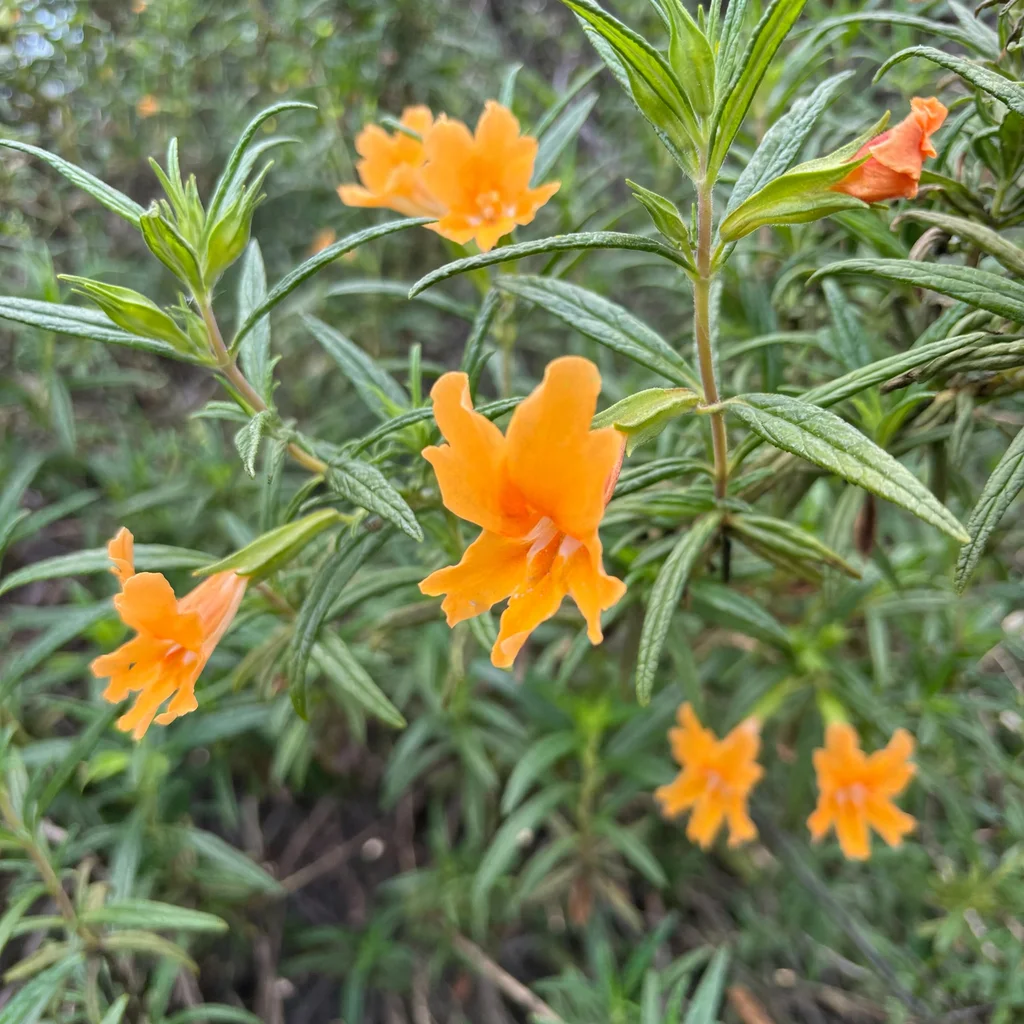
Southern Bush Monkeyflower
Diplacus longiflorus
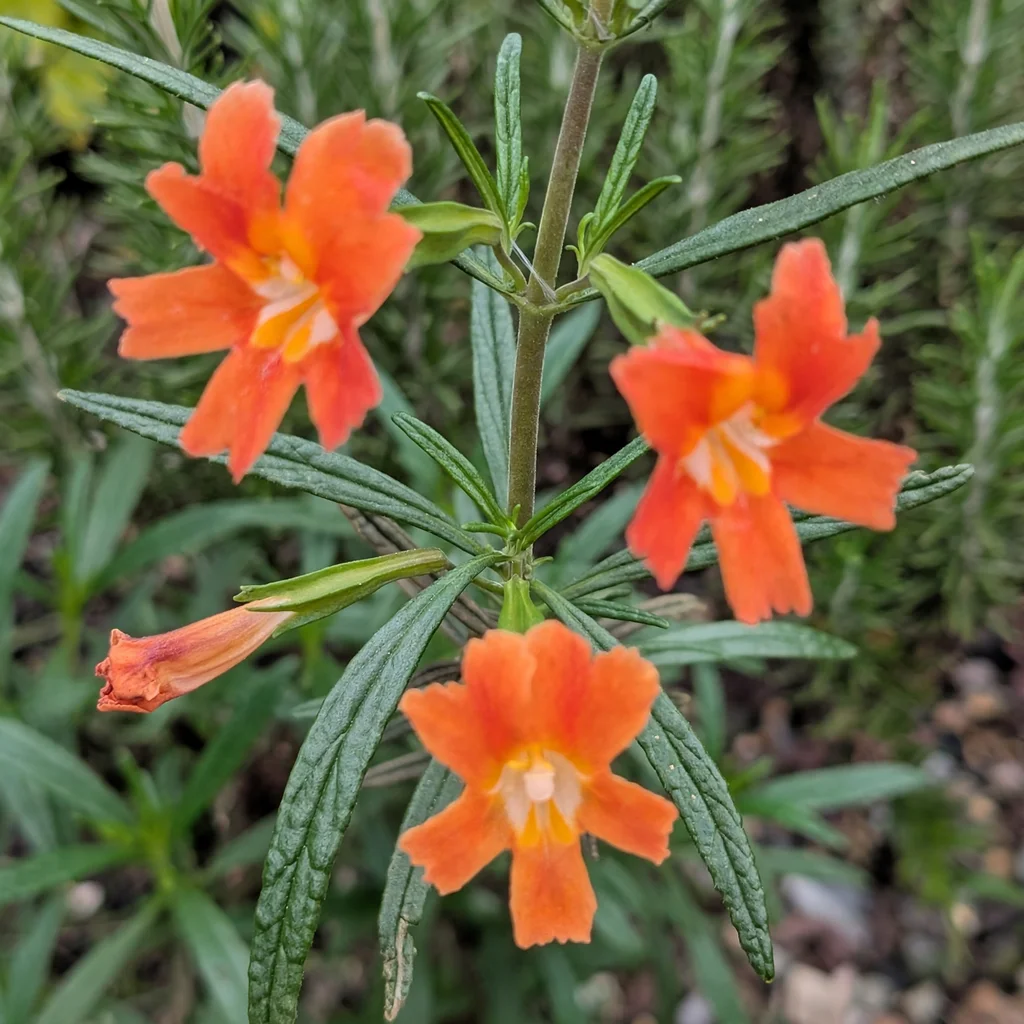
Orange Bush Monkeyflower
Diplacus x australis
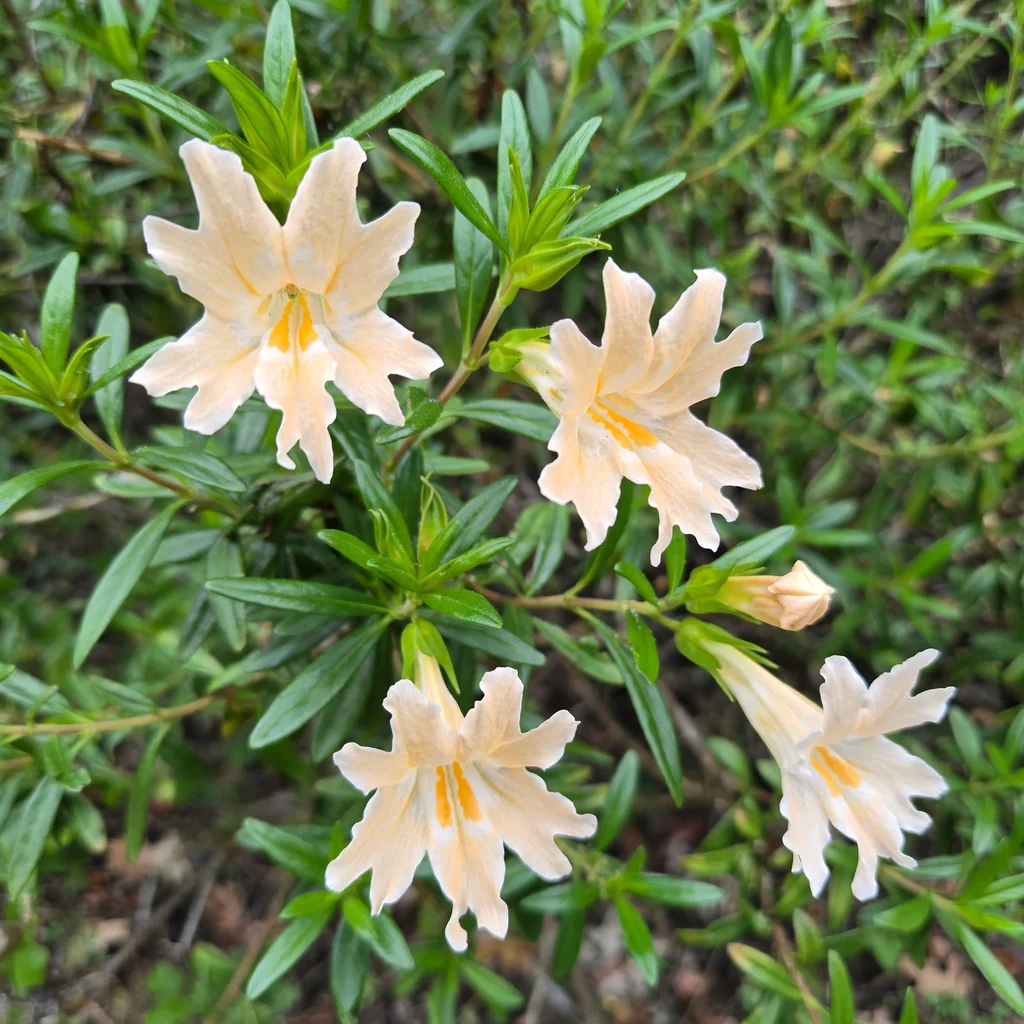
Large-Flowered Bush Monkeyflower
Diplacus grandiflorus
Keep exploring
Explore the genus
Hardy in your zone?
Grow Santa Susana Bush Monkeyflower with confidence
See it in a design of your actual yard, get zone-matched care reminders, and track it season by season in your garden journal.