The Story
Plant Bio
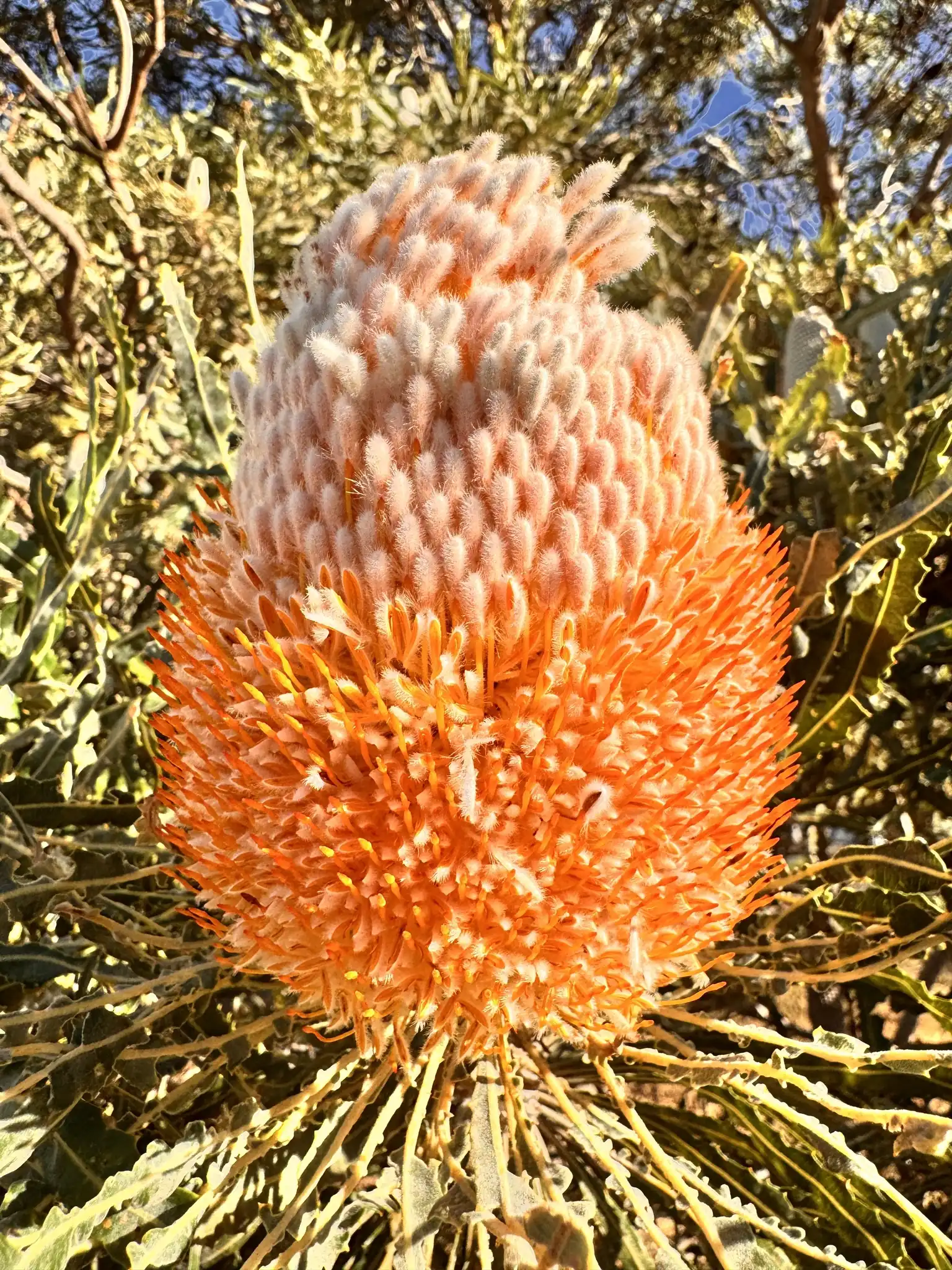
Banksia prionotes, commonly known as the acorn banksia, is an evergreen shrub or small tree native to Western Australia with an upright habit and dull green, saw-toothed foliage. It produces large terminal flower spikes that start out as cream buds resembling acorns before opening into vibrant orange blooms from late summer into winter.
The unopened cream inflorescences offer a distinct acorn-like appearance before transforming into six-inch bright orange cylindrical flower spikes. Its deeply serrated leaves provide strong, year-round architectural texture in dry, Mediterranean-style plantings.
Uses & Benefits:
Essentials
At a Glance
Plant Type
Shrub
Height
394"
Width
236"
Light
Full Sun
Zones
9, 10
Water
Low
Humidity
Low
Lifespan
Perennial
Native To
Western Australia
Toxicity
Non-toxic
Bloom period
Late summer – Winter
In flower about 7 months of the year
Planting
How to Grow
- Select a planting site in full sun with deep, light, sandy or gravelly soil.
- Dig a hole twice as wide as the root ball and avoid adding heavy rich compost or organic matter that holds moisture.
- Gently position the plant, firming the native sandy soil around the root crown without burying it deeper than it sat in its pot.
- Water deeply at planting, then water sparingly only during prolonged dry spells until established.
- Apply a light layer of coarse gravel mulch around the base, keeping it clear of the stem to prevent rot.
Pro Tip
Prune lightly into leafy green growth immediately after flowering finishes, and never cut back into old brown wood because branches lack dormant buds to regenerate.
Keep It Thriving
Care Guide
Do
- Plant in light, sharply draining sandy or gravelly soil.
- Ensure the planting site receives full sun all day.
- Prune spent flowers lightly back to leafy green shoots.
- Use low-phosphorus specialty fertilizers if feeding is necessary.
Don't
- Do not plant in heavy clay or waterlogged ground.
- Do not apply general-purpose, high-phosphorus fertilizers.
- Do not prune hard into old, leafless wood lacking dormant buds.
- Do not overwater established plants during hot summer months.
Seasonal Care Calendar
| Task | Jan | Feb | Mar | Apr | May | Jun | Jul | Aug | Sep | Oct | Nov | Dec |
|---|---|---|---|---|---|---|---|---|---|---|---|---|
| Fertilize | ||||||||||||
| Pest Check | ||||||||||||
| Prune | ||||||||||||
| Winter Prep |
Watch Out For
Pests & Diseases
Common Pests
Common Diseases
In the Garden
Landscape Uses & Companions
Landscape Uses
Companion Plants
Multiply
Propagation Methods
Good to Know
Common Questions
Acorn Banksia questions
What zones can Acorn Banksia grow in?
Acorn Banksia is hardy in USDA Zones 9–10: in that range it survives winter in the ground. Colder than Zone 9, grow it in a container you can move to shelter for the winter.
Is Acorn Banksia deer resistant?
Not reliably. Deer may browse Acorn Banksia, especially tender spring growth — plan on repellents or fencing where pressure is high.
When does Acorn Banksia bloom?
Acorn Banksia typically blooms from late summer to late winter. Exact timing shifts a week or two with your zone — Sow's bloom calendar maps it to your garden.
Does Acorn Banksia need full sun?
Acorn Banksia does best in full sun (6+ hours).
Is Acorn Banksia drought tolerant?
Yes — once established (usually after the first full season), Acorn Banksia handles dry spells with minimal watering. Water deeply its first year to build the root system that makes that possible.
More Banksia to compare
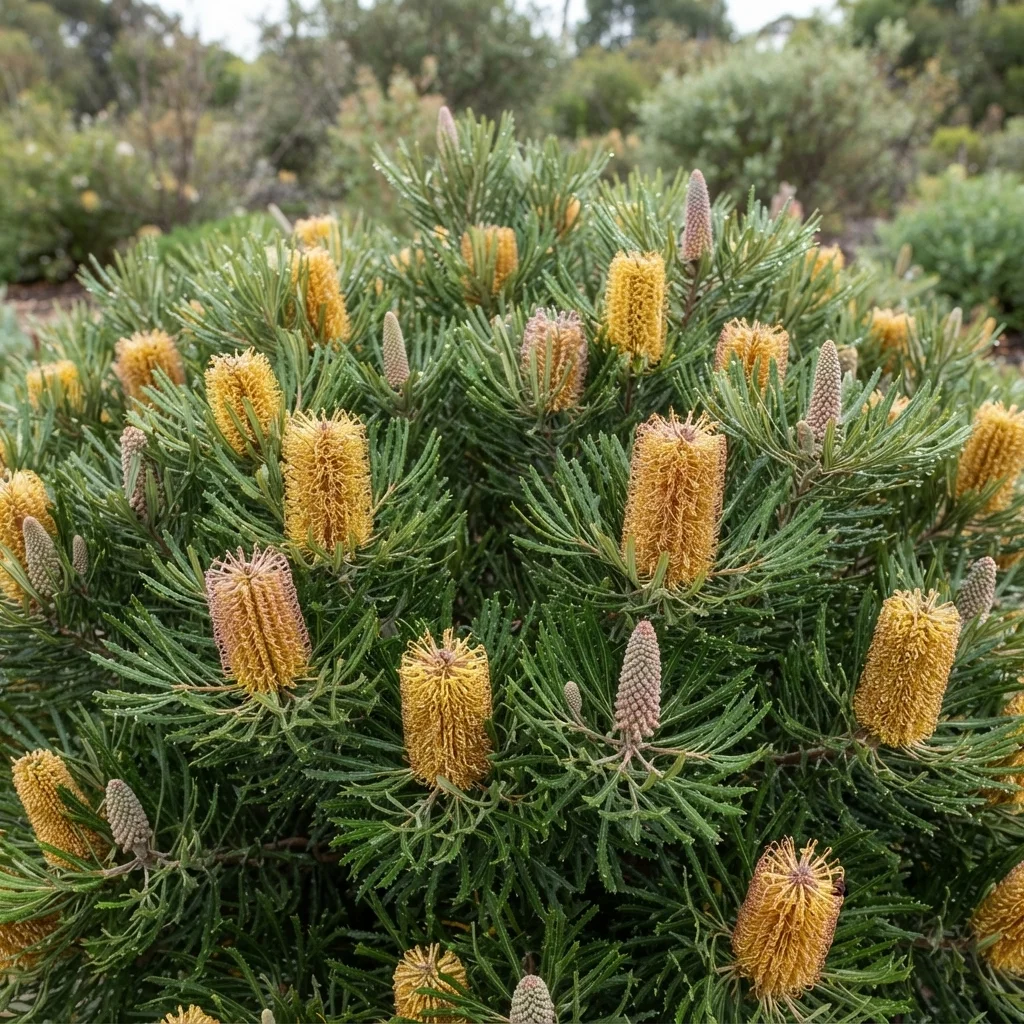
Birthday Candles Banksia
Banksia spinulosa 'Birthday Candles'
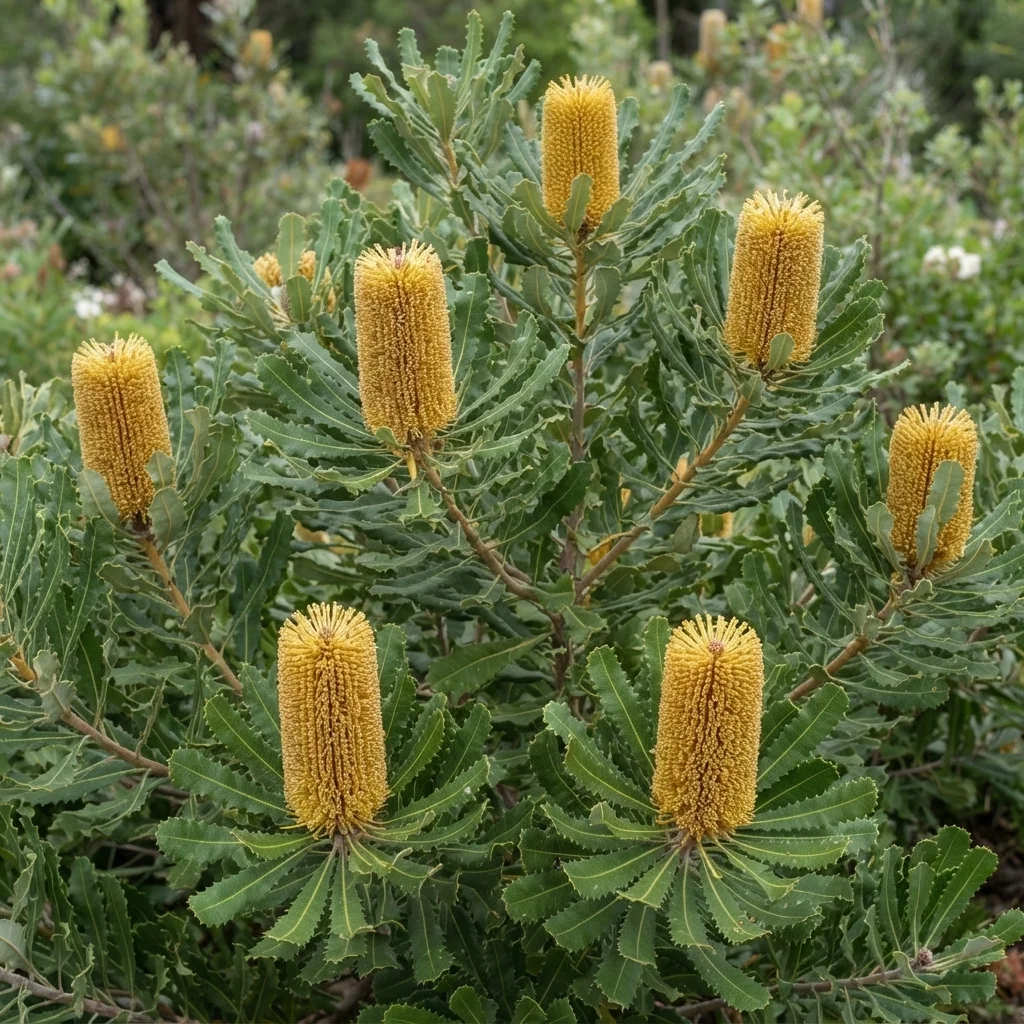
Southern Plains Banksia
Banksia media
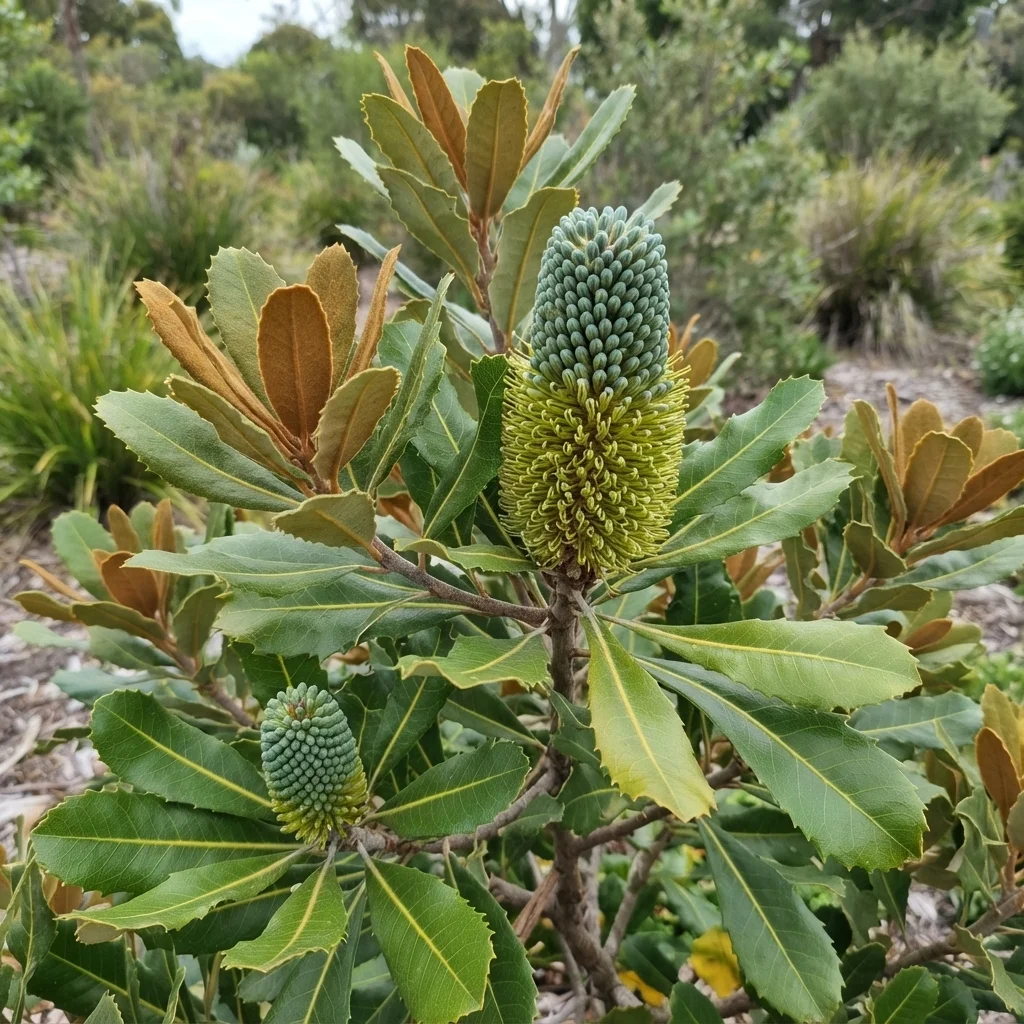
Swamp Banksia
Banksia robur
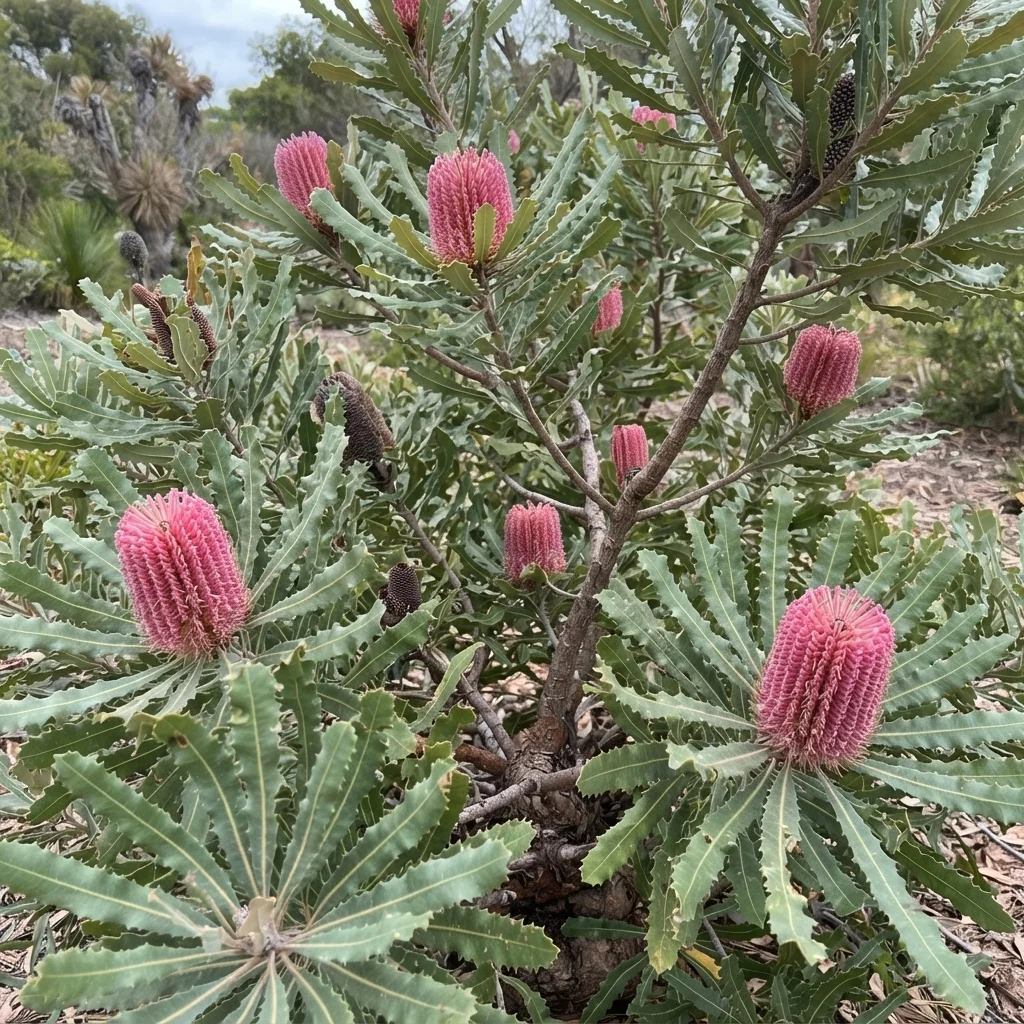
Menzies' Banksia
Banksia menziesii
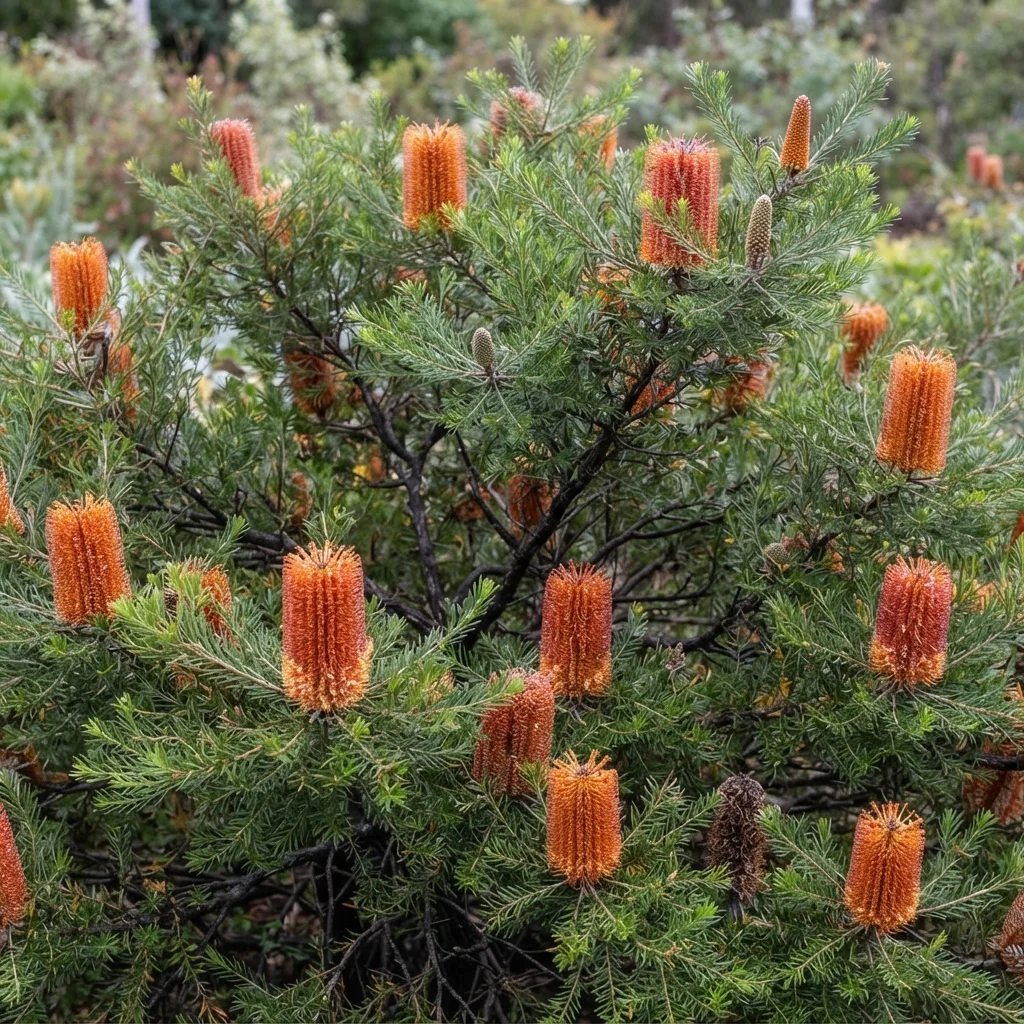
Heath Banksia
Banksia ericifolia
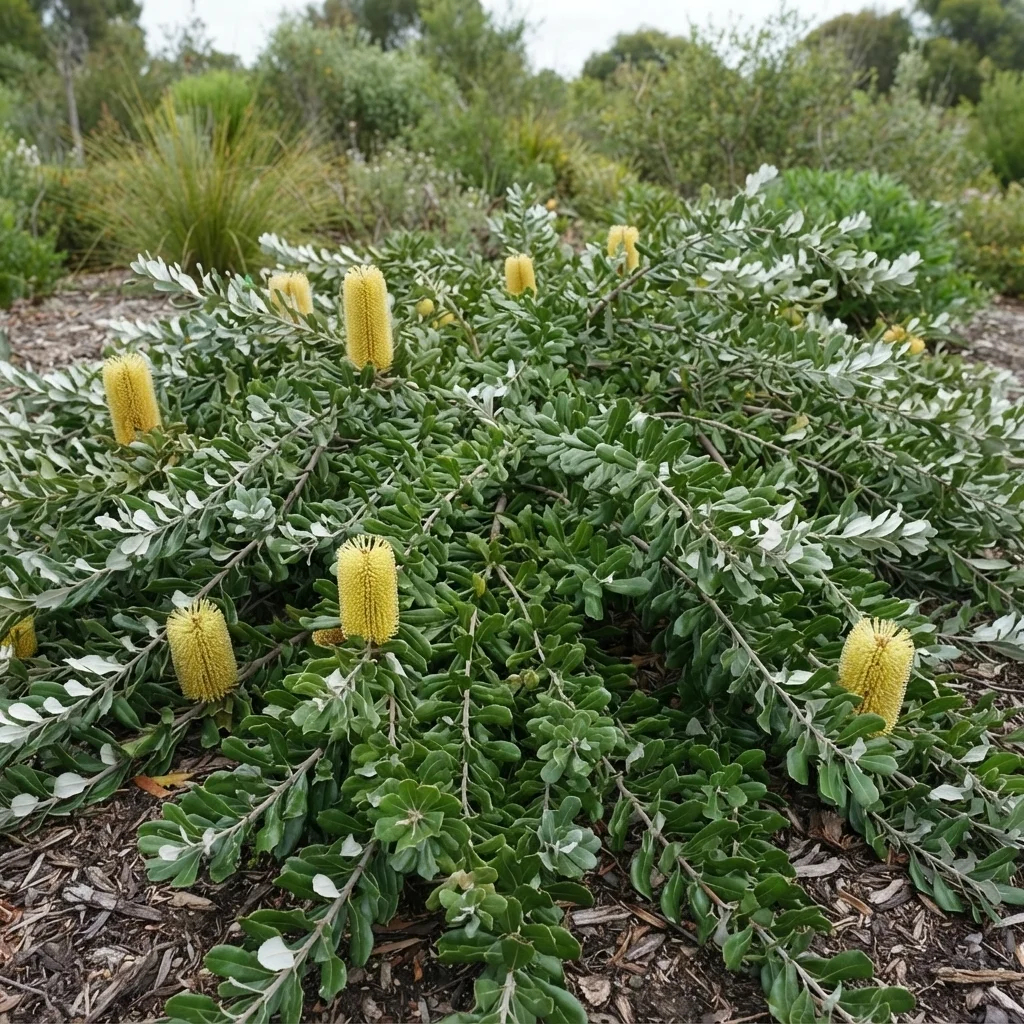
Prostrate Coast Banksia
Banksia integrifolia 'Roller Coaster'
Keep exploring
Explore the genus
Hardy in your zone?
Grow Acorn Banksia with confidence
See it in a design of your actual yard, get zone-matched care reminders, and track it season by season in your garden journal.