The Story
Plant Bio
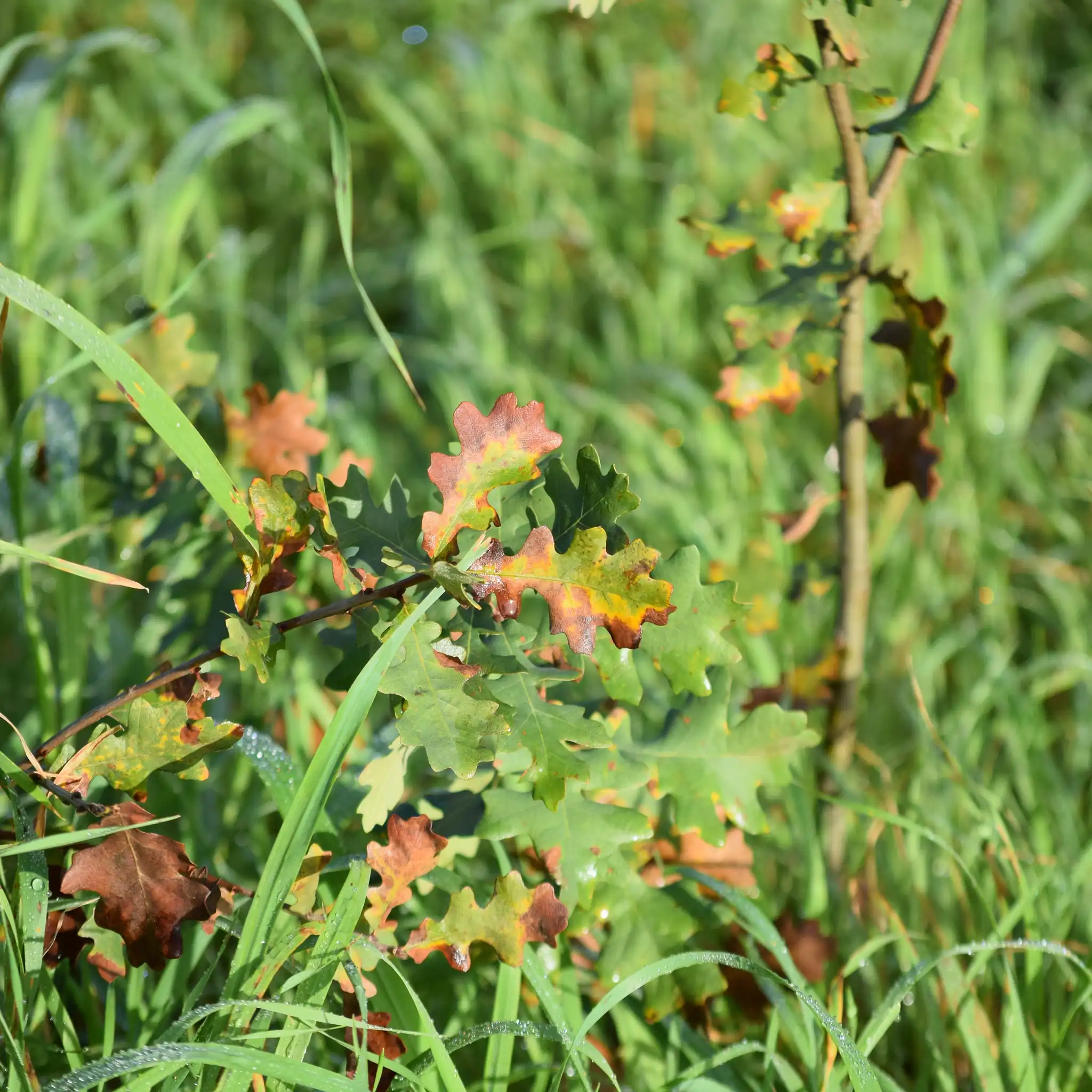
Quercus lobata is a massive deciduous oak endemic to California, forming a broad-crowned, vase-like silhouette with weeping branch tips at maturity. Its obovate leaves feature six to ten deep rounded lobes, emerging bright green in spring before darkening above with pale, puberulent undersides.
As the largest of North American oaks, it produces long, pointed acorns and yellowish-green spring catkins on deep alluvial soils. Mature specimens rely on taproots reaching subsurface water tables rather than shallow surface moisture.
Uses & Benefits:
Essentials
At a Glance
Plant Type
Tree
Height
720"
Width
720"
Light
Full Sun, Partial Sun
Zones
7, 8, 9
Water
Low to Moderate
Humidity
Low / Mediterranean
Lifespan
Perennial
Native To
California, USA
Toxicity
Mildly toxic if ingested raw
Bloom period
Spring
In flower about 3 months of the year
Planting
How to Grow
- Sow unstratified acorns immediately upon collection into deep pots or final outdoor planting locations.
- Position in full sun to light shade in a location with deep, uncompacted soil.
- Water young saplings deeply but infrequently during their first few summers to encourage downward root growth.
- Clear competing weeds and turfgrass at least five feet away from the trunk base.
Pro Tip
Avoid planting turfgrass or applying summer irrigation beneath the canopy, as surface moisture against the root crown induces fatal collar rot and Phytophthora infection.
Keep It Thriving
Care Guide
Do
- Provide deep root zones for taproot development.
- Prune dead or crossing branches exclusively during winter dormancy.
- Protect young seedlings from deer and rodent browsing with wire cages.
Don't
- Do not apply summer irrigation around the root crown of established trees.
- Do not prune mature limbs heavily or attempt top-shaping.
- Do not apply high-nitrogen fertilizers to established specimens.
Seasonal Care Calendar
| Task | Jan | Feb | Mar | Apr | May | Jun | Jul | Aug | Sep | Oct | Nov | Dec |
|---|---|---|---|---|---|---|---|---|---|---|---|---|
| Mulch | ||||||||||||
| Pest Check | ||||||||||||
| Propagate | ||||||||||||
| Prune |
Watch Out For
Pests & Diseases
Common Pests
Common Diseases
In the Garden
Landscape Uses & Companions
Landscape Uses
Multiply
Propagation Methods
Good to Know
Common Questions
Valley Oak questions
What zones can Valley Oak grow in?
Valley Oak is hardy in USDA Zones 7–9: in that range it survives winter in the ground. Colder than Zone 7, winters are too cold for it to survive outdoors. Warmer than Zone 9, winter isn't the problem: it prefers colder winters, and summer heat can shorten its life.
Is Valley Oak deer resistant?
Not reliably. Deer may browse Valley Oak, especially tender spring growth — plan on repellents or fencing where pressure is high.
When does Valley Oak bloom?
Valley Oak typically blooms in spring. Exact timing shifts a week or two with your zone — Sow's bloom calendar maps it to your garden.
Does Valley Oak need full sun?
Valley Oak does best in full sun to part shade. In hot climates, afternoon shade keeps blooms fresher longer.
Is Valley Oak drought tolerant?
Yes — once established (usually after the first full season), Valley Oak handles dry spells with minimal watering. Water deeply its first year to build the root system that makes that possible.
More Quercus to compare
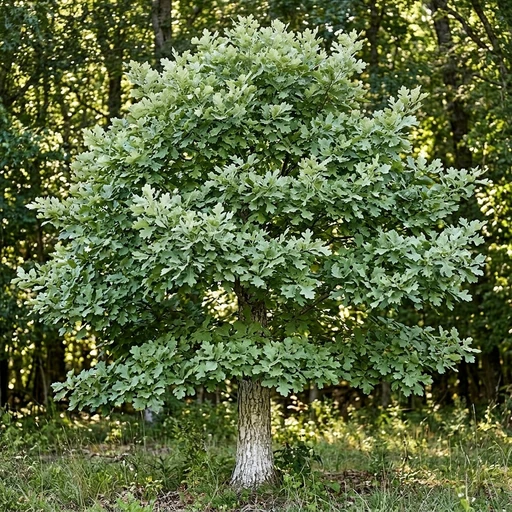
White Oak
Quercus alba
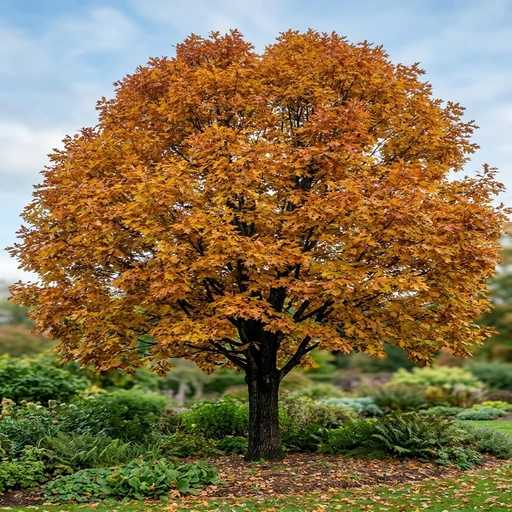
Black Oak
Quercus velutina
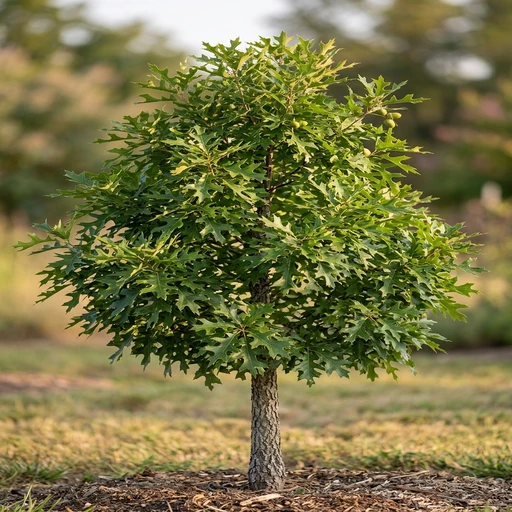
Nuttall Oak
Quercus texana
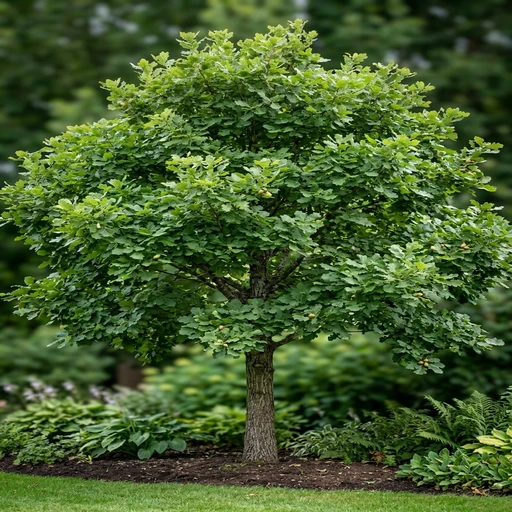
English Oak
Quercus robur
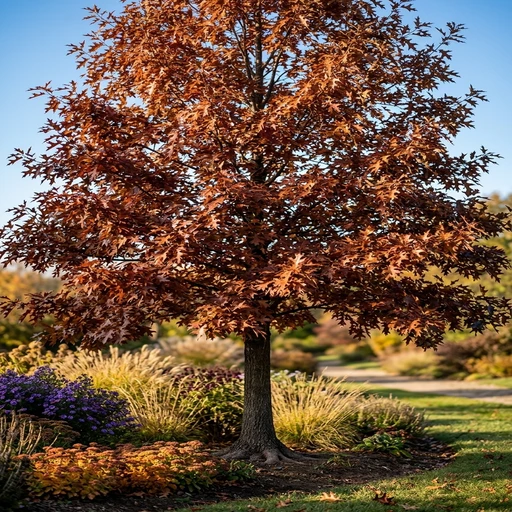
Pin Oak
Quercus palustris
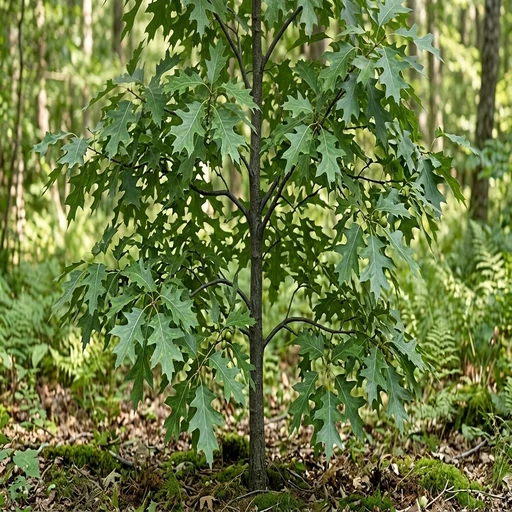
Scarlet Oak
Quercus coccinea
Keep exploring
Explore the genus
Hardy in your zone?
Grow Valley Oak with confidence
See it in a design of your actual yard, get zone-matched care reminders, and track it season by season in your garden journal.