The Story
Plant Bio
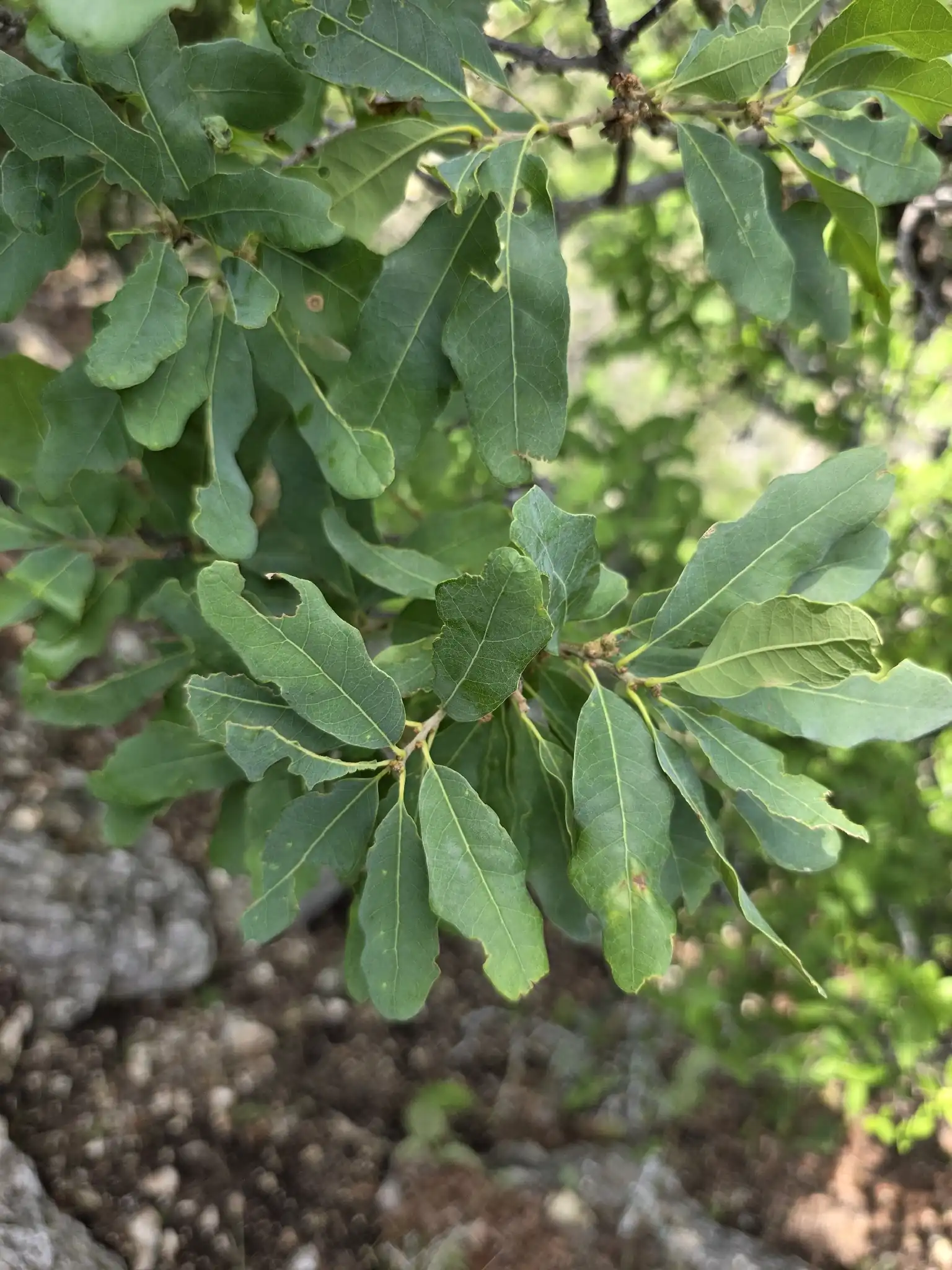
Quercus laceyi is a small to medium deciduous white oak from limestone hills, canyons and riparian woodlands in central Texas and northeastern Mexico, forming a dense crown on a short trunk to two feet across. Male catkins about two inches long shed wind-borne pollen in spring to minute female flowers, which ripen into clustered acorns about three-quarters of an inch long with a shallow cup covering one-third of the nut in a single season.
The thick alternate leaves are obovate to elliptic and blue-gray with a waxy bloom above and paler below, entire or cut into shallow wavy lobes rather than deep oak teeth. New flushes open peach-pink in spring and again in fall before hardening blue-gray for summer, and the tree drops late and stands on high-pH limestone with very low water once its taproot is down.
Uses & Benefits:
Essentials
At a Glance
Plant Type
Tree
Height
420"
Width
360"
Light
Full Sun, Partial Sun
Zones
7, 8, 9
Water
Very low
Humidity
Unknown
Lifespan
Unknown
Native To
Central Texas and northeastern Mexico
Toxicity
Not considered toxic
Bloom period
Spring
In flower about 3 months of the year
Planting
How to Grow
- Site in full sun to part shade on rocky, alkaline ground that drains fast after rain.
- Dig shallow and wide, set the root flare slightly high, and backfill with native limestone soil with no amendment pit.
- Water deeply through the first hot season to drive the taproot down, then taper to very low water.
- Hold a thin mulch ring clear of the trunk and never pile soil or mulch against the bark.
- Prune only dead or crossing limbs in full winter dormancy and leave spring and summer wood alone.
Pro Tip
Plant high with the root flare exposed on limestone rubble and withhold summer water once established; cutting in the February to June oak-wilt window or piling mulch against the trunk kills more Lacey oaks than drought does.
Keep It Thriving
Care Guide
Do
- Plant on limestone or high-pH rocky loam with sharp drainage.
- Water deeply but infrequently the first year, then cut back hard.
- Sterilize saws between cuts and paint wounds made outside the safe window.
Don't
- Do not prune February through June when sap beetles spread oak wilt.
- Do not overwater, amend with rich compost, or volcano-mulch the trunk.
- Do not plant in low ground that stays wet in winter.
Seasonal Care Calendar
| Task | Jan | Feb | Mar | Apr | May | Jun | Jul | Aug | Sep | Oct | Nov | Dec |
|---|---|---|---|---|---|---|---|---|---|---|---|---|
| Mulch | ||||||||||||
| Pest Check | ||||||||||||
| Plant | ||||||||||||
| Prune |
Watch Out For
Pests & Diseases
Common Pests
Common Diseases
In the Garden
Landscape Uses & Companions
Landscape Uses
Multiply
Propagation Methods
Good to Know
Common Questions
Lacey Oak questions
What zones can Lacey Oak grow in?
Lacey Oak is hardy in USDA Zones 7–9: in that range it survives winter in the ground. Colder than Zone 7, winters are too cold for it to survive outdoors. Warmer than Zone 9, winter isn't the problem: it prefers colder winters, and summer heat can shorten its life.
Is Lacey Oak deer resistant?
Not reliably. Deer may browse Lacey Oak, especially tender spring growth — plan on repellents or fencing where pressure is high.
When does Lacey Oak bloom?
Lacey Oak typically blooms in spring. Exact timing shifts a week or two with your zone — Sow's bloom calendar maps it to your garden.
Does Lacey Oak need full sun?
Lacey Oak does best in full sun to part shade. In hot climates, afternoon shade keeps blooms fresher longer.
Is Lacey Oak drought tolerant?
Yes — once established (usually after the first full season), Lacey Oak handles dry spells with minimal watering. Water deeply its first year to build the root system that makes that possible.
More Quercus to compare
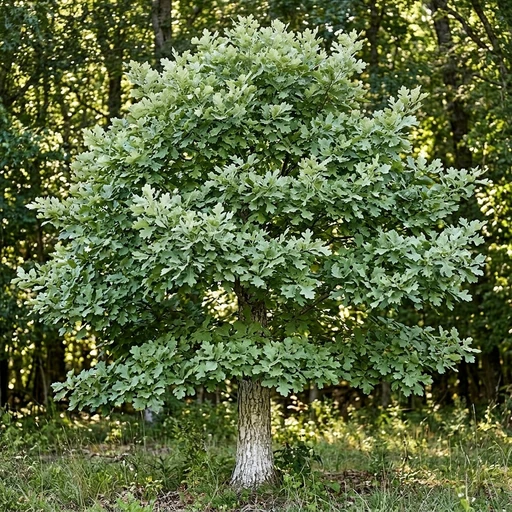
White Oak
Quercus alba
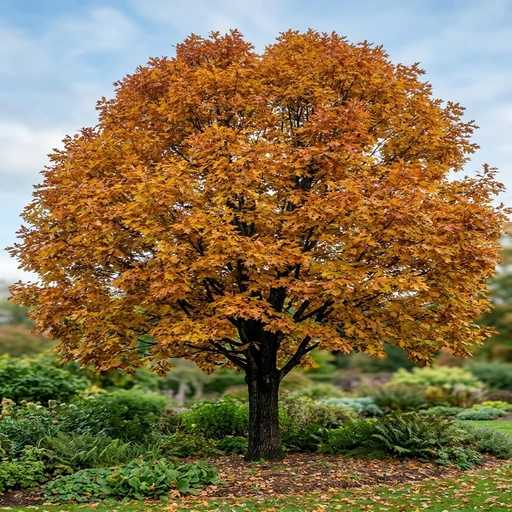
Black Oak
Quercus velutina
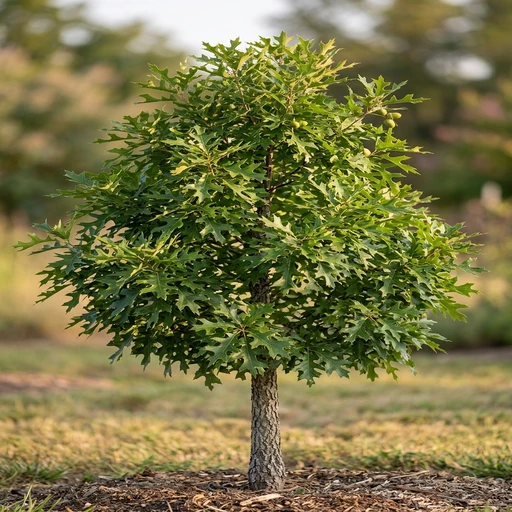
Nuttall Oak
Quercus texana
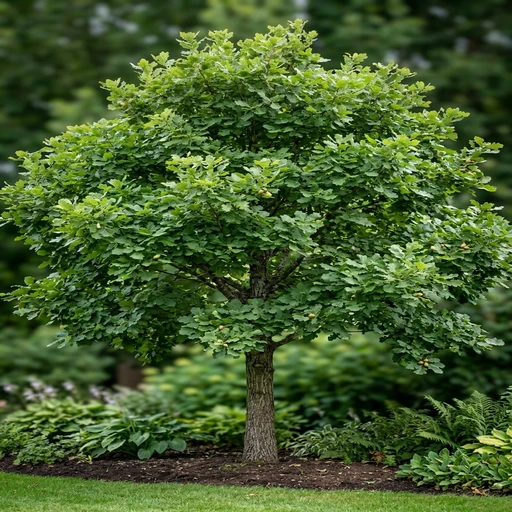
English Oak
Quercus robur
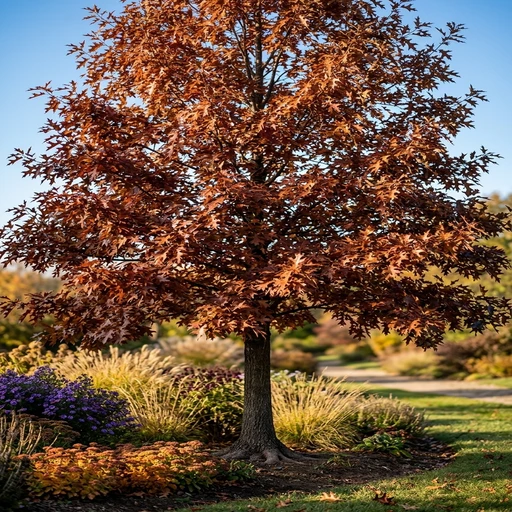
Pin Oak
Quercus palustris
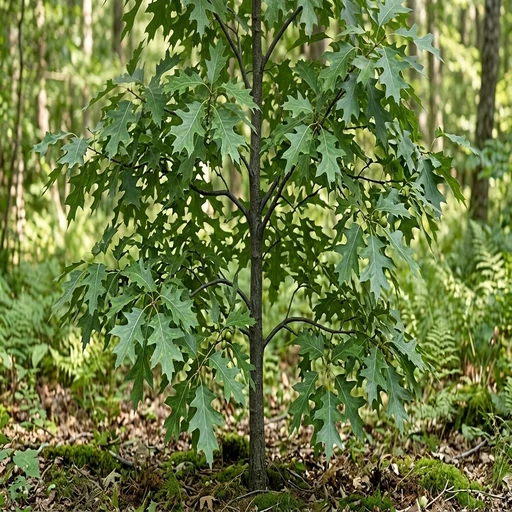
Scarlet Oak
Quercus coccinea
Keep exploring
Explore the genus
Hardy in your zone?
Grow Lacey Oak with confidence
See it in a design of your actual yard, get zone-matched care reminders, and track it season by season in your garden journal.