The Story
Plant Bio
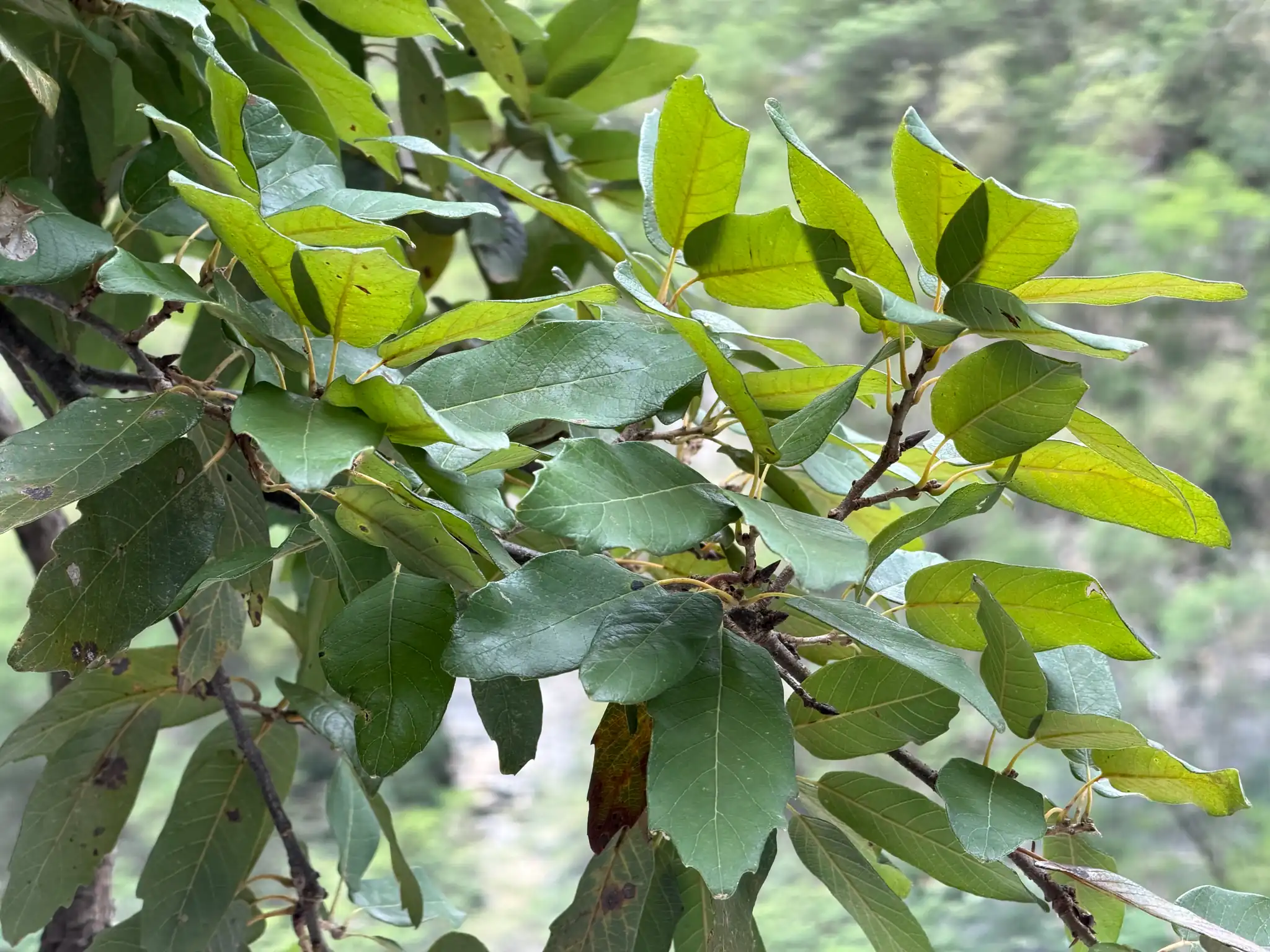
Quercus polymorpha is a medium to large subevergreen white oak from Val Verde County, Texas south through eastern Mexico to Guatemala, reaching 30 to 50 feet in gardens with a broad rounded crown at maturity. The leaves are leathery olive-green and glossy above, elliptic to ovate 2 to 4 inches long with entire or distally toothed revolute margins and a pale underside marked by raised net venation.
It holds most foliage through winter and exchanges leaves in spring without a fully bare period, so winter cover is partial rather than dense. Recognized as native in Texas only in 1992 from the Devil's River, it resists oak wilt more strongly than most oaks and differs from high-elevation Q. rugosa by smaller narrower leaves and from Q. splendens by distinct rather than connate cotyledons.
Uses & Benefits:
Essentials
At a Glance
Plant Type
Tree
Height
960"
Width
720"
Light
Full Sun, Partial Sun
Zones
7, 8, 9, 10
Water
Medium
Humidity
Unknown
Lifespan
Long-lived tree
Native To
Val Verde County, Texas to Guatemala
Toxicity
Unknown - no data
Bloom period
Spring
In flower about 3 months of the year
Planting
How to Grow
- Plant in full sun to part shade with room for a 25- to 60-foot crown.
- Dig the hole twice the pot width, set the root flare at grade, backfill with native soil and water deeply.
- Mulch 2 to 3 inches clear of the trunk and water through the first two summers, then taper to deep occasional soakings.
- Train a single leader when young and limit structural pruning to late winter.
Pro Tip
Plan for partial winter cover, not full evergreen screening; it thins and drops a portion of leaves before the spring flush.
Keep It Thriving
Care Guide
Do
- Water deeply during establishment and extended drought.
- Maintain mulch to conserve moisture.
- Prune in dormancy to build strong branch structure.
Don't
- Do not plant where the crown cannot spread to 40 feet.
- Do not shear the crown or cut back expecting dense resprout from bare wood.
- Do not keep established trees constantly wet in winter.
Seasonal Care Calendar
| Task | Jan | Feb | Mar | Apr | May | Jun | Jul | Aug | Sep | Oct | Nov | Dec |
|---|---|---|---|---|---|---|---|---|---|---|---|---|
| Mulch | ||||||||||||
| Pest Check | ||||||||||||
| Plant | ||||||||||||
| Prune |
Watch Out For
Pests & Diseases
Common Pests
Common Diseases
In the Garden
Landscape Uses & Companions
Landscape Uses
Multiply
Propagation Methods
Good to Know
Common Questions
Mexican White Oak questions
What zones can Mexican White Oak grow in?
Mexican White Oak is hardy in USDA Zones 7–10: in that range it survives winter in the ground. Colder than Zone 7, winters are too cold for it to survive outdoors.
When does Mexican White Oak bloom?
Mexican White Oak typically blooms in spring. Exact timing shifts a week or two with your zone — Sow's bloom calendar maps it to your garden.
Does Mexican White Oak need full sun?
Mexican White Oak does best in full sun to part shade. In hot climates, afternoon shade keeps blooms fresher longer.
Is Mexican White Oak drought tolerant?
Yes — once established (usually after the first full season), Mexican White Oak handles dry spells with minimal watering. Water deeply its first year to build the root system that makes that possible.
More Quercus to compare
Keep exploring
Explore the genus
Hardy in your zone?
Grow Mexican White Oak with confidence
See it in a design of your actual yard, get zone-matched care reminders, and track it season by season in your garden journal.