The Story
Plant Bio
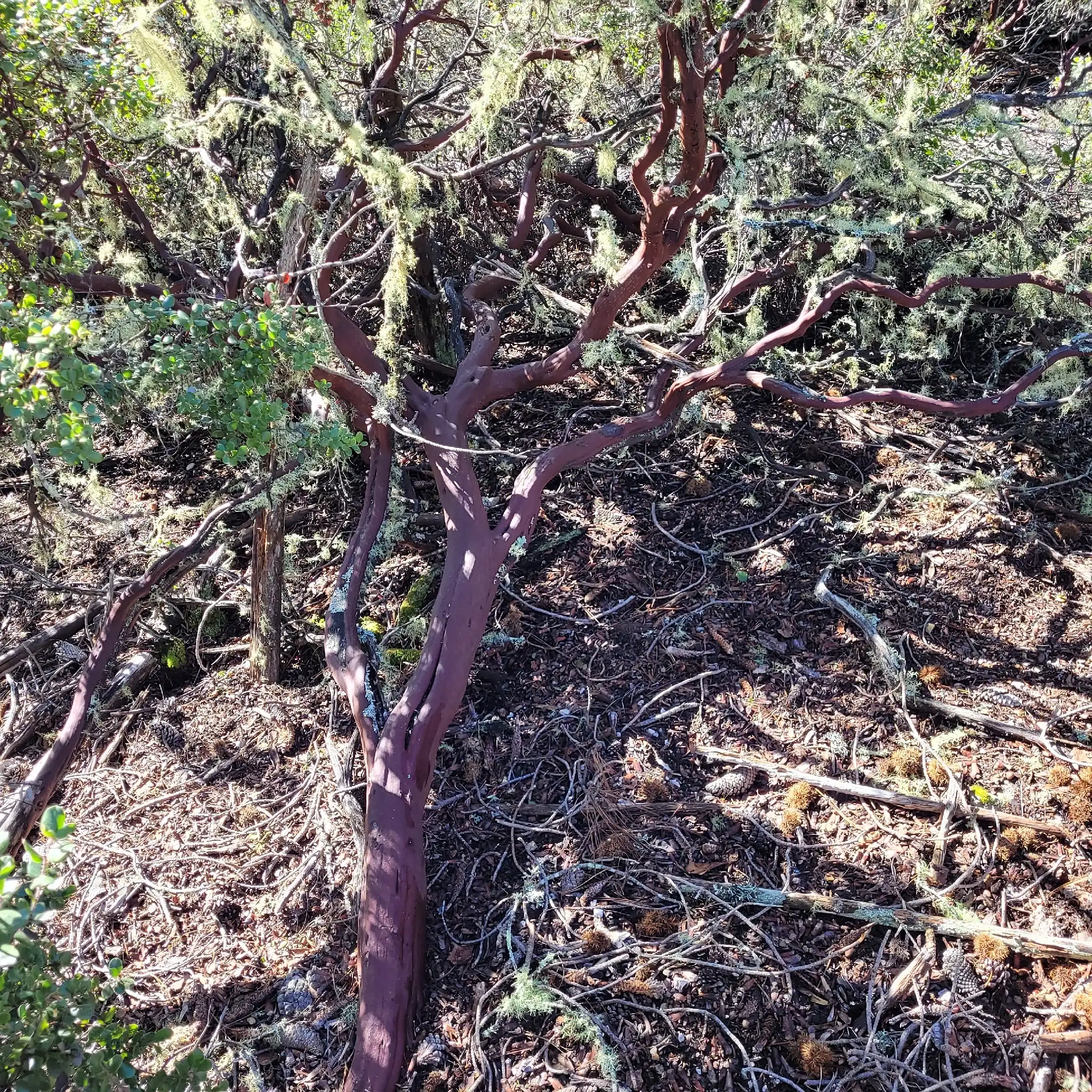
Arctostaphylos sensitiva, commonly known as glossyleaf manzanita, is an evergreen shrub native to central coastal California that grows three to six feet tall with smooth, dark red bark on mature stems. The small, orbicular leaves are dark green and highly reflective above, forming a dense canopy that bears clusters of white to pale pink urn-shaped flowers from winter into early spring.
Unlike many manzanita species, Arctostaphylos sensitiva lacks a basal burl and relies entirely on seed regeneration after disturbance. The branchlets are covered in dense, gland-tipped hairs that exudate a slight stickiness and distinguish it from closely related coastal taxa.
Uses & Benefits:
Essentials
At a Glance
Plant Type
Shrub
Height
78"
Width
78"
Light
Full Sun, Partial Sun
Zones
8, 9, 10
Water
Low
Humidity
Low to moderate coastal
Lifespan
Perennial
Native To
California (USA)
Toxicity
Non-toxic
Bloom period
Winter – Early spring
In flower about 4 months of the year
Planting
How to Grow
- Plant in lean, highly porous sandy or sandstone-derived soil with immediate drainage.
- Position in full sun to very light coastal shade with excellent air circulation.
- Deep-water weekly during the first summer to establish the root system, then phase out irrigation completely.
- Leave fallen leaf litter intact beneath the canopy to mulch roots and suppress weeds naturally.
Pro Tip
Never water established plants during the warm summer months or cut back into leafless interior wood, as the absence of a lignotuber prevents regrowth from old stems.
Keep It Thriving
Care Guide
Do
- Provide complete freedom from summer irrigation once roots are established.
- Plant in sharply draining acidic to neutral soil.
- Allow good air circulation to prevent fungal foliage issues.
Don't
- Do not cut into old, leafless wood when pruning.
- Do not apply heavy commercial high-phosphorus fertilizers.
- Do not plant in poorly drained or heavy clay soils.
Seasonal Care Calendar
| Task | Jan | Feb | Mar | Apr | May | Jun | Jul | Aug | Sep | Oct | Nov | Dec |
|---|---|---|---|---|---|---|---|---|---|---|---|---|
| Pest Check | ||||||||||||
| Plant | ||||||||||||
| Propagate | ||||||||||||
| Prune |
Watch Out For
Pests & Diseases
Common Pests
Common Diseases
In the Garden
Landscape Uses & Companions
Landscape Uses
Multiply
Propagation Methods
Good to Know
Common Questions
Glossyleaf Manzanita questions
What zones can Glossyleaf Manzanita grow in?
Glossyleaf Manzanita is hardy in USDA Zones 8–10: in that range it survives winter in the ground. Colder than Zone 8, grow it in a container you can move to shelter for the winter.
Is Glossyleaf Manzanita deer resistant?
Not reliably. Deer may browse Glossyleaf Manzanita, especially tender spring growth — plan on repellents or fencing where pressure is high.
When does Glossyleaf Manzanita bloom?
Glossyleaf Manzanita typically blooms from early winter to early spring. Exact timing shifts a week or two with your zone — Sow's bloom calendar maps it to your garden.
Does Glossyleaf Manzanita need full sun?
Glossyleaf Manzanita does best in full sun to part shade. In hot climates, afternoon shade keeps blooms fresher longer.
Is Glossyleaf Manzanita drought tolerant?
Yes — once established (usually after the first full season), Glossyleaf Manzanita handles dry spells with minimal watering. Water deeply its first year to build the root system that makes that possible.
More Arctostaphylos to compare
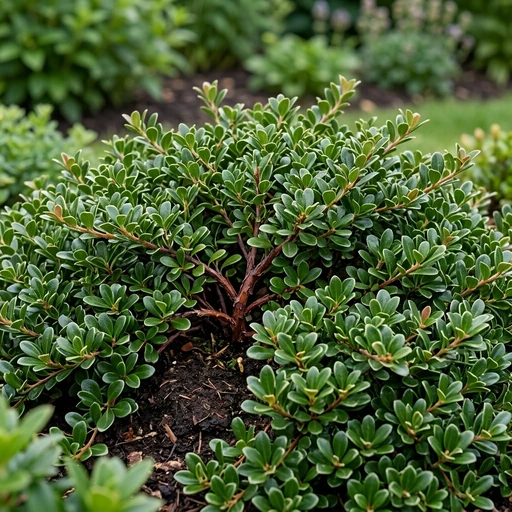
Massachusetts Common Bearberry
Arctostaphylos uva-ursi 'Massachusetts'
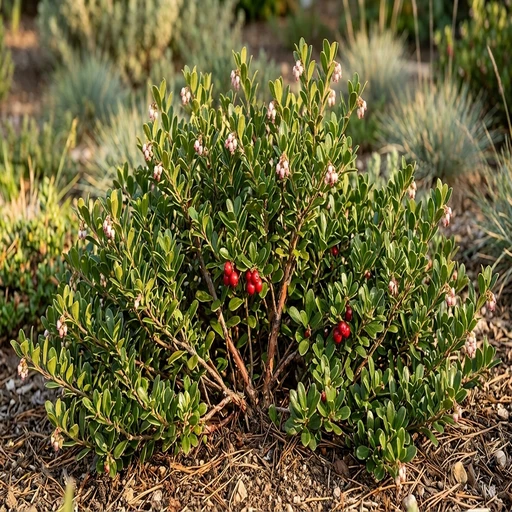
Bearberry
Arctostaphylos uva-ursi
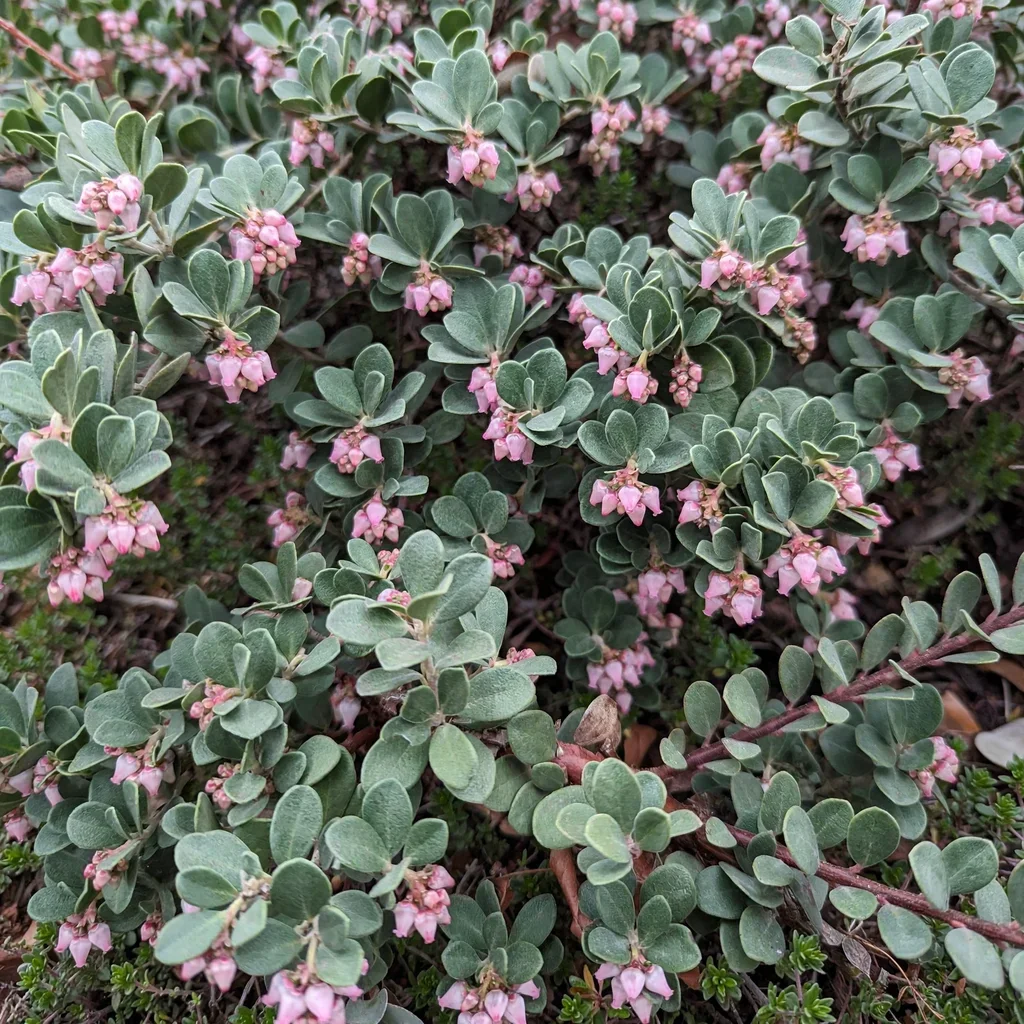
Ron Clendenen Manzanita
Arctostaphylos x media 'Ron Clendenen'
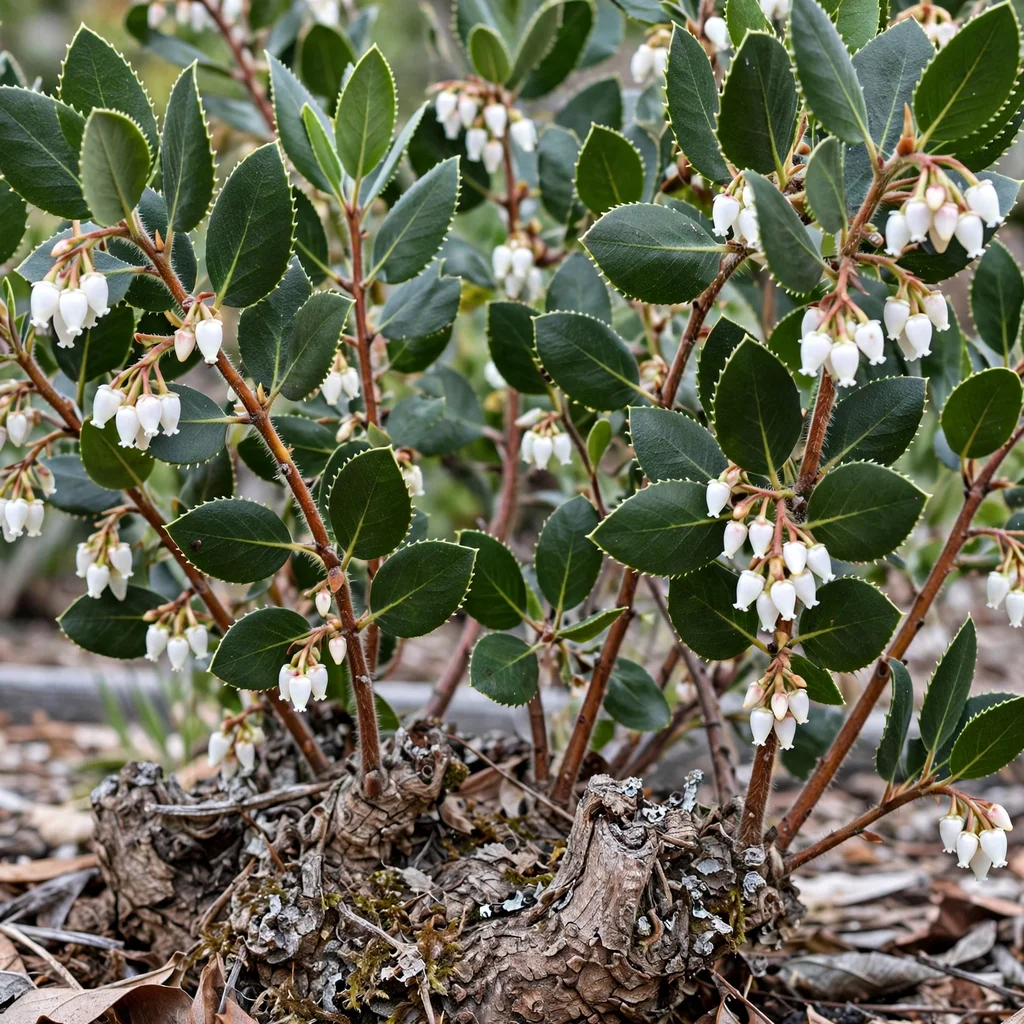
Brittleleaf Manzanita
Arctostaphylos crustacea
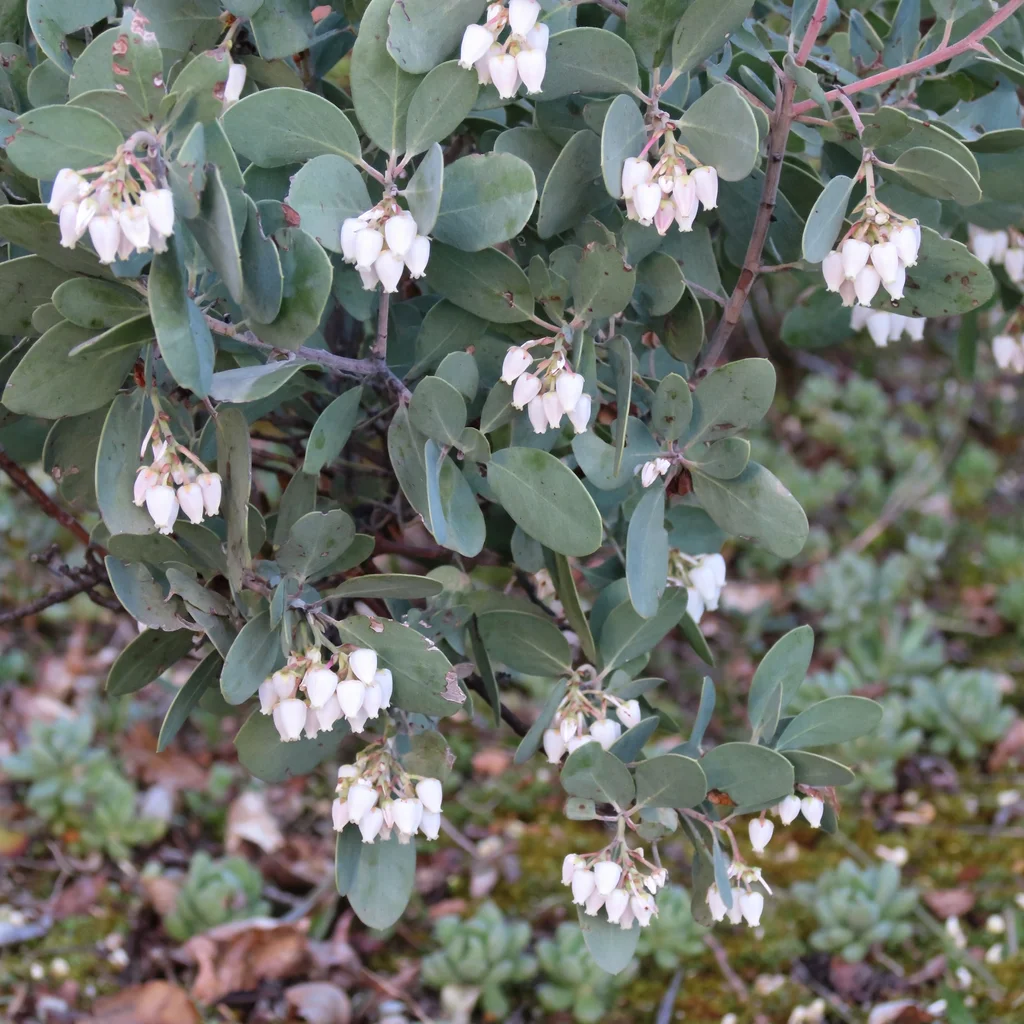
Common Manzanita
Arctostaphylos manzanita
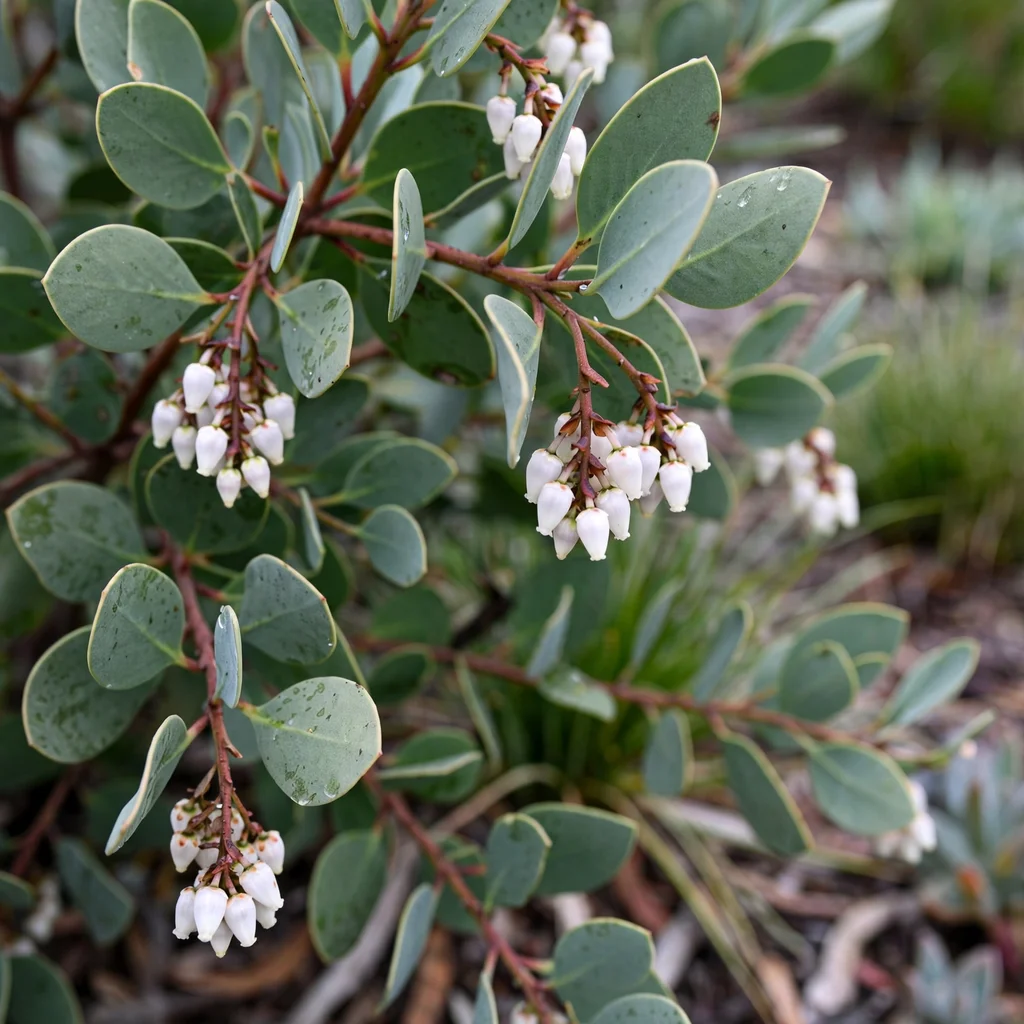
Rainbow Manzanita
Arctostaphylos rainbowensis
Keep exploring
Explore the genus
Hardy in your zone?
Grow Glossyleaf Manzanita with confidence
See it in a design of your actual yard, get zone-matched care reminders, and track it season by season in your garden journal.