The Story
Plant Bio
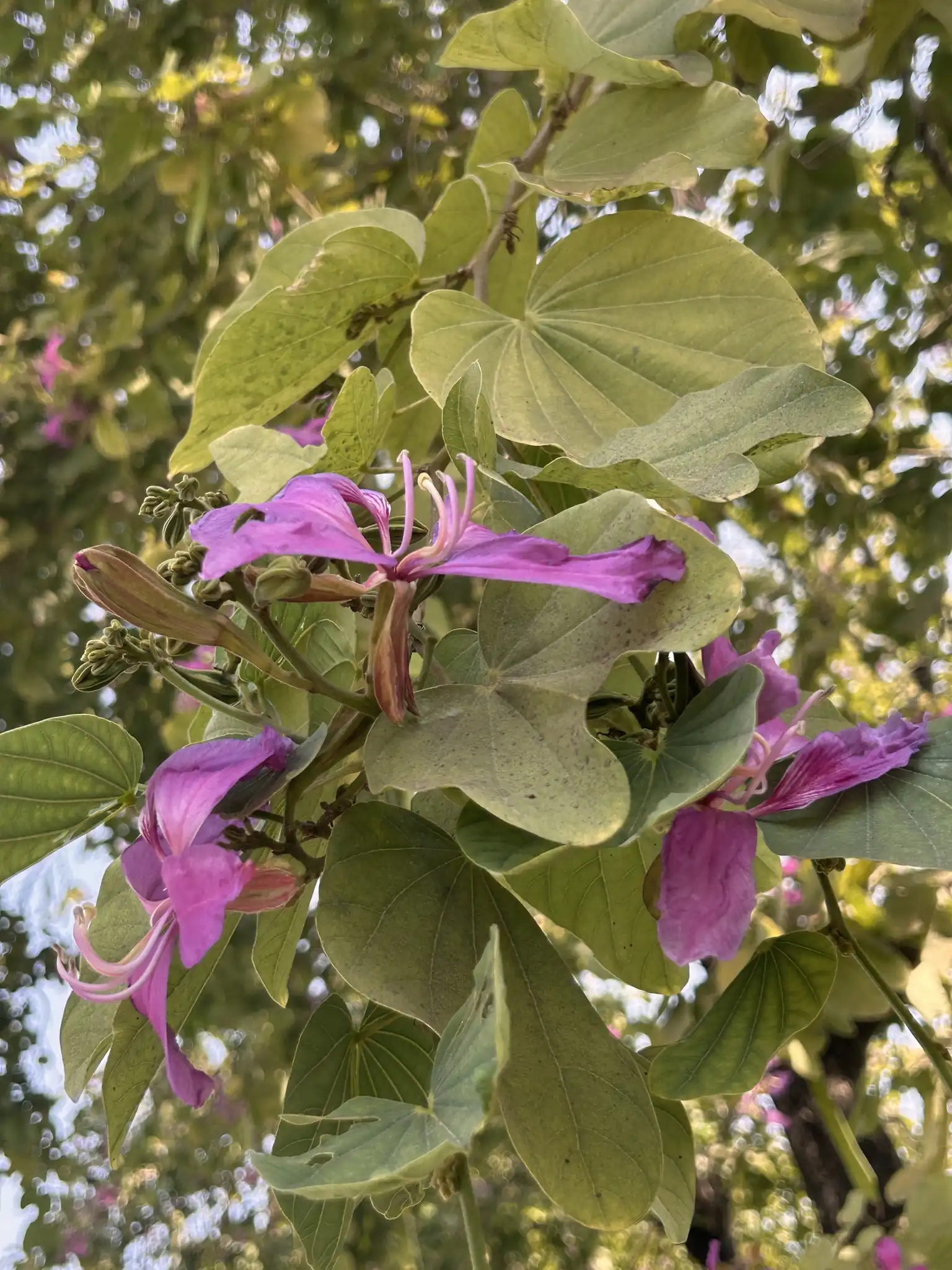
Bauhinia purpurea, the purple orchid-tree, is a fast-growing deciduous tree from India through Southeast Asia to southern China that reaches 30 to 35 feet tall and wide with a vase-shaped to rounded, moderately dense crown. Leaves are alternate, simple and rounded, 2 to 4 inches across and split halfway into two lobes like a camel's foot, green and deciduous with no fall color.
Flowers are fragrant, orchid-like and five-petaled, about five inches across in purple-pink to lavender, carried in showy terminal clusters in fall. Flat pods to twelve inches follow and drop with leaves and spent flowers, and stems carry thorns on weak, storm-breakage-prone wood.
Uses & Benefits:
Essentials
At a Glance
Plant Type
Tree
Height
420"
Width
420"
Light
Full Sun, Partial Sun
Zones
9, 10
Water
Low
Humidity
Unknown
Lifespan
Deciduous tree
Native To
India to Southeast Asia and southern China
Toxicity
Unknown - thorns present
Bloom period
Fall
In flower about 3 months of the year
Planting
How to Grow
- Plant in full sun in well-drained clay, sand or loam that is acidic to slightly alkaline, with room for a 30- to 35-foot crown.
- Set the root ball level with grade and water in, then water deeply during establishment and taper off; mature trees flower best on dry soils.
- Stake and train to one trunk when young, removing low drooping branches to build a strong framework.
- Watch for potassium deficiency if leaf margins yellow and correct with palm fertilizer only if symptoms show.
- Rake fallen leaves, flowers and 12-inch pods and pull abundant seedlings to prevent spread.
Pro Tip
Grow it hard in full sun in well-drained soil and withhold extra water once established; dry soil improves flowering and soft, overwatered growth snaps.
Keep It Thriving
Care Guide
Do
- Plant in full sun with sharp drainage and space for a wide crown
- Train to a single trunk when young for strong structure
- Keep soil on the dry side once established
- Clean up pods, flowers and seedlings promptly
Don't
- Do not overwater or plant in soggy soil
- Do not leave it unpruned as a low drooping bush
- Do not plant where frost falls below Zone 9B
- Do not plant near Florida natural areas where it seeds invasively
Seasonal Care Calendar
| Task | Jan | Feb | Mar | Apr | May | Jun | Jul | Aug | Sep | Oct | Nov | Dec |
|---|---|---|---|---|---|---|---|---|---|---|---|---|
| Fertilize | ||||||||||||
| Pest Check | ||||||||||||
| Plant | ||||||||||||
| Prune |
Watch Out For
Pests & Diseases
Common Pests
Common Diseases
In the Garden
Landscape Uses & Companions
Landscape Uses
Multiply
Propagation Methods
Good to Know
Common Questions
Purple Orchid-Tree questions
What zones can Purple Orchid-Tree grow in?
Purple Orchid-Tree is hardy in USDA Zones 9–10: in that range it survives winter in the ground. Colder than Zone 9, winters are too cold for it to survive outdoors.
Is Purple Orchid-Tree deer resistant?
Not reliably. Deer may browse Purple Orchid-Tree, especially tender spring growth — plan on repellents or fencing where pressure is high.
When does Purple Orchid-Tree bloom?
Purple Orchid-Tree typically blooms in fall. Exact timing shifts a week or two with your zone — Sow's bloom calendar maps it to your garden.
Does Purple Orchid-Tree need full sun?
Purple Orchid-Tree does best in full sun to part shade. In hot climates, afternoon shade keeps blooms fresher longer.
Is Purple Orchid-Tree drought tolerant?
Yes — once established (usually after the first full season), Purple Orchid-Tree handles dry spells with minimal watering. Water deeply its first year to build the root system that makes that possible.
More Bauhinia to compare
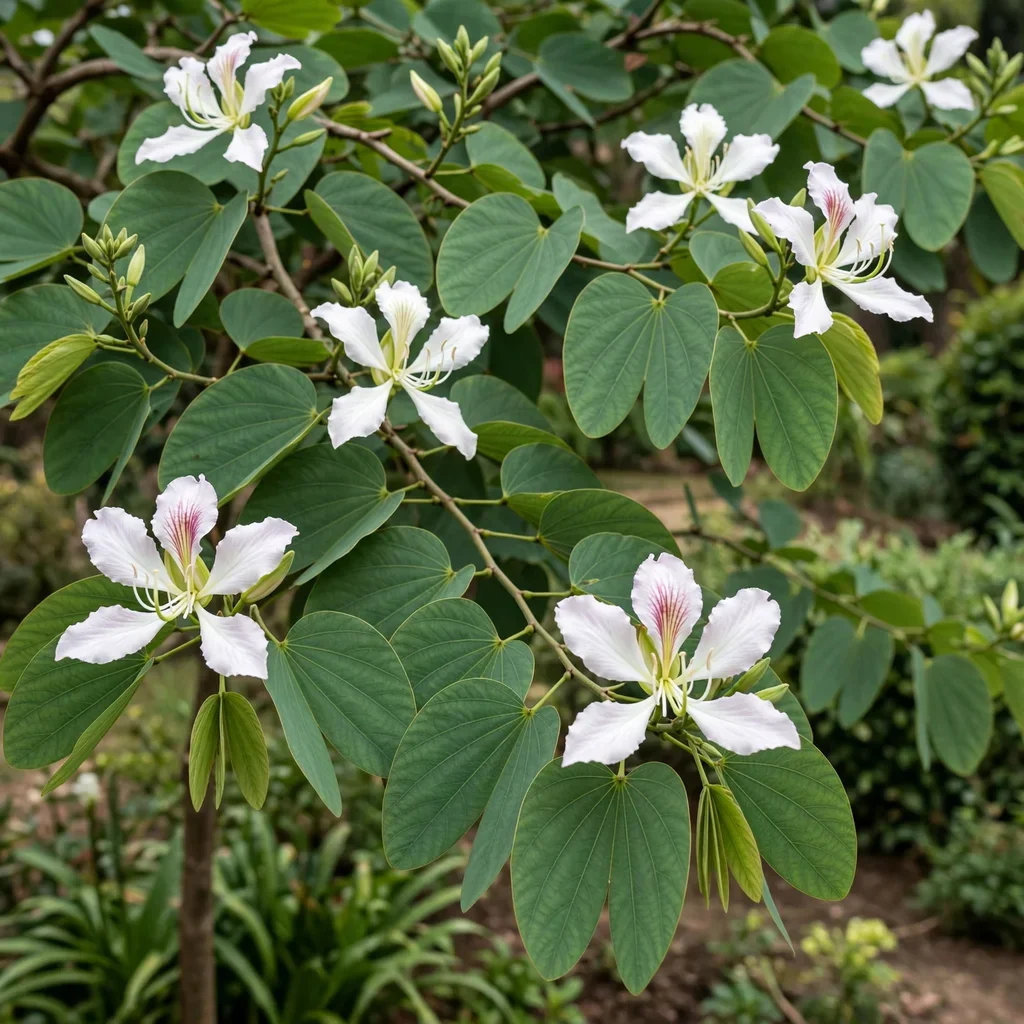
Brazilian Orchid Tree Bauhinia forficata
Bauhinia forficata
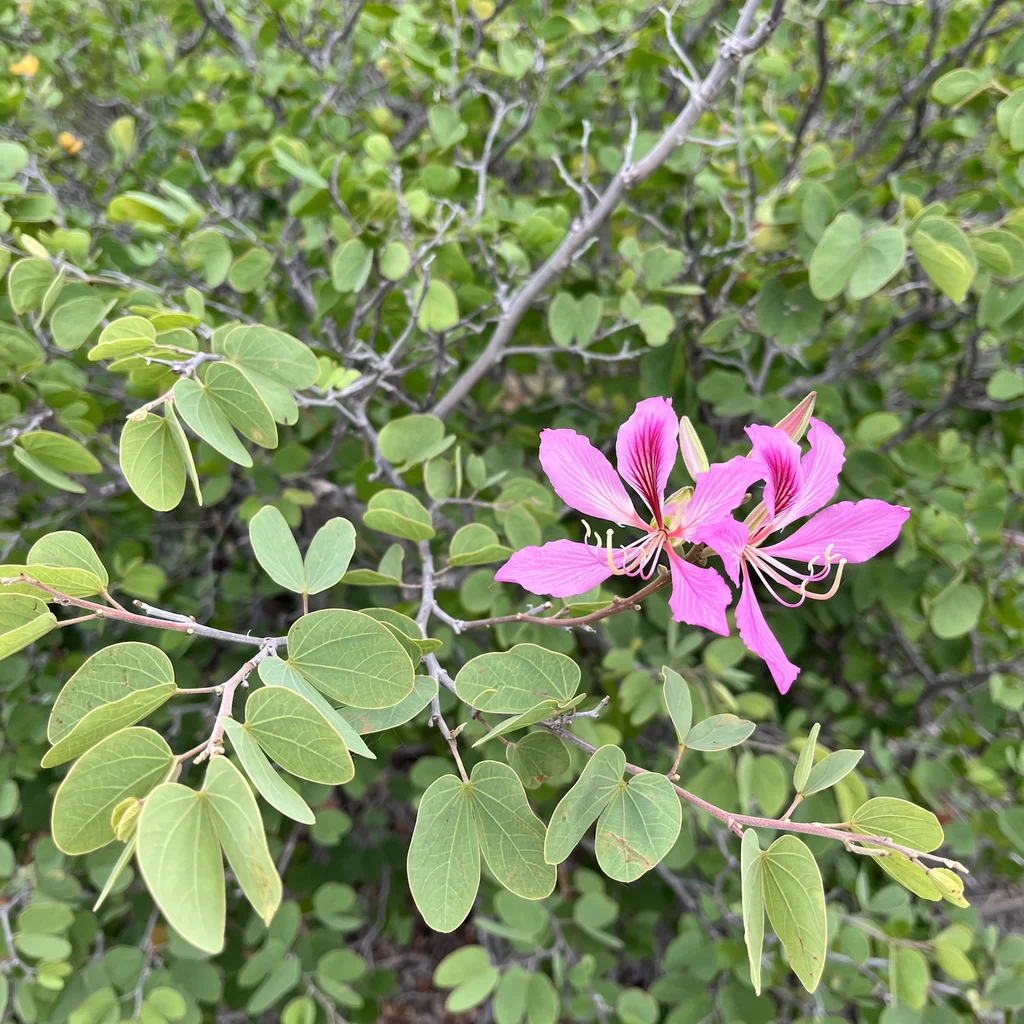
Anacacho Orchid Tree
Bauhinia lunarioides
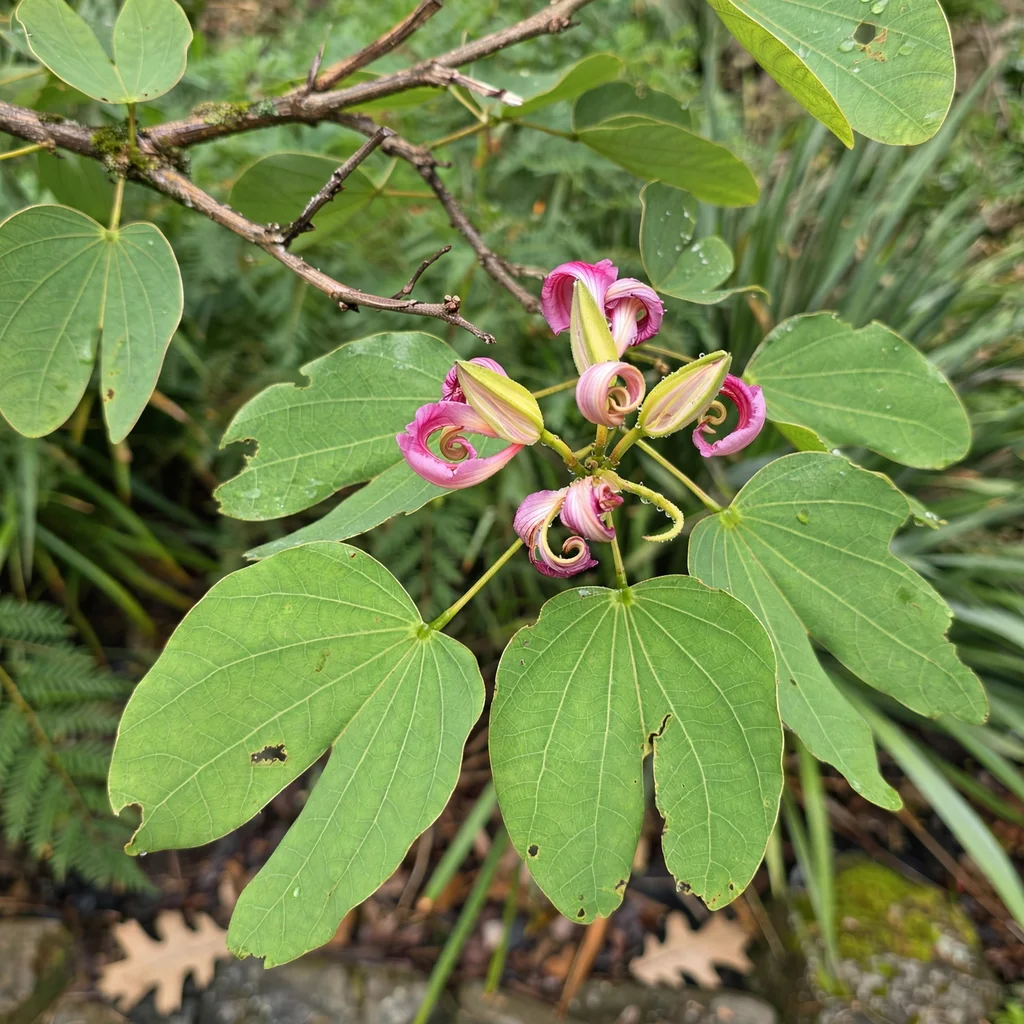
Chihuahuan Orchid Tree
Bauhinia macranthera
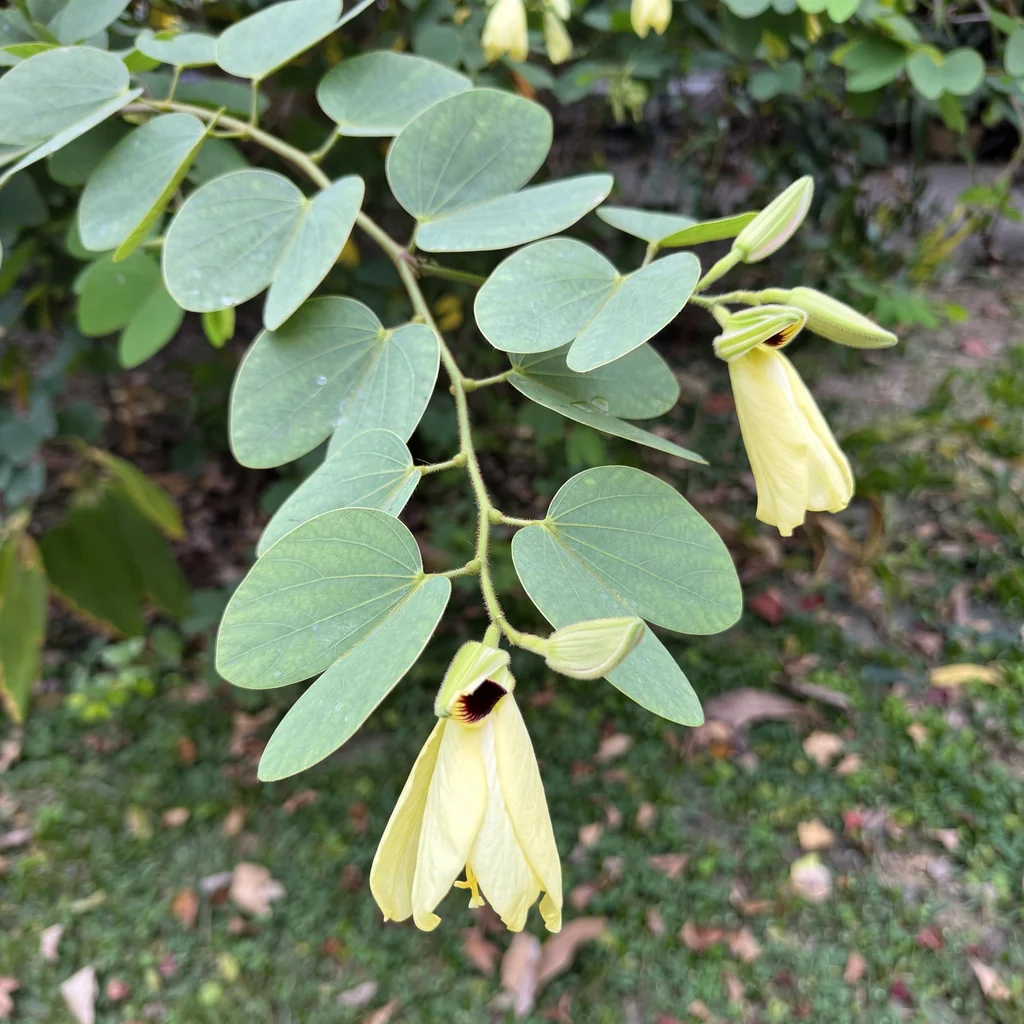
Yellow Bauhinia
Bauhinia tomentosa
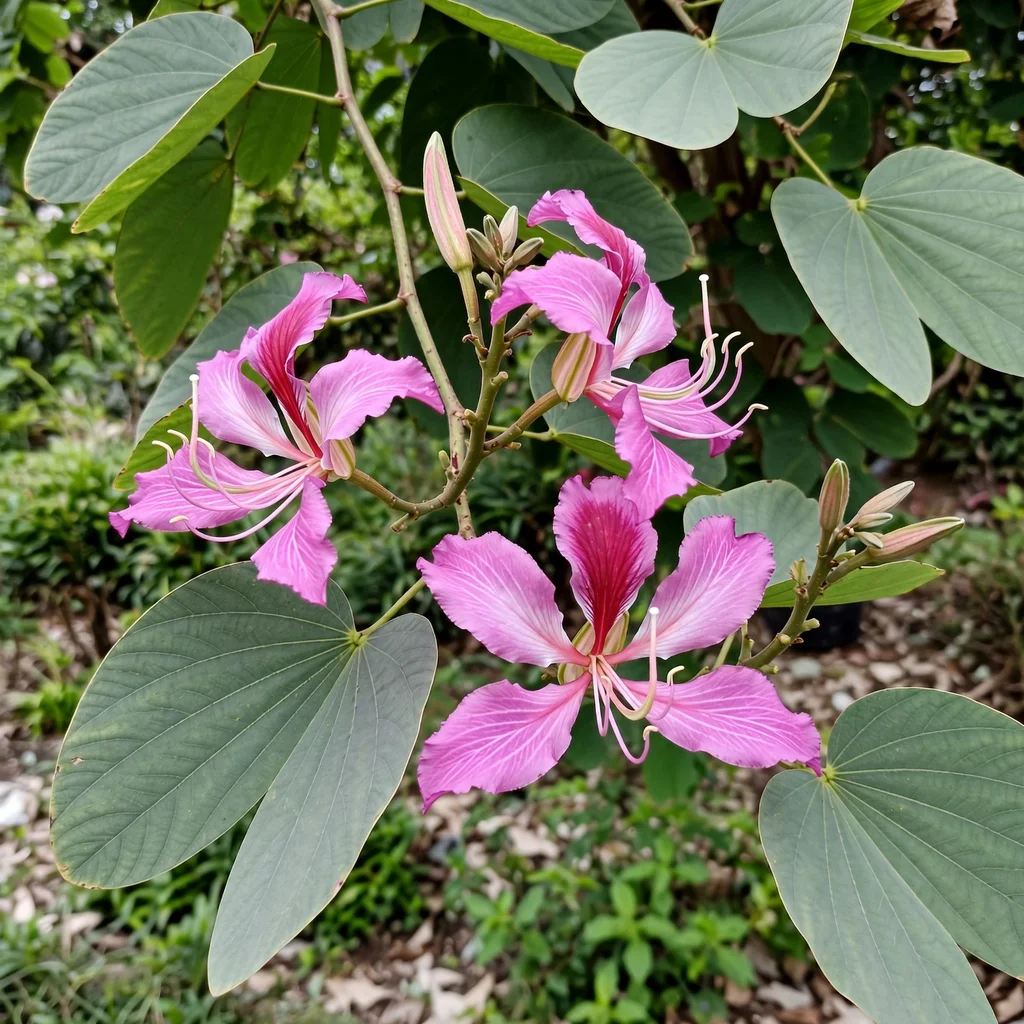
Hong Kong Orchid Tree
Bauhinia x blakeana
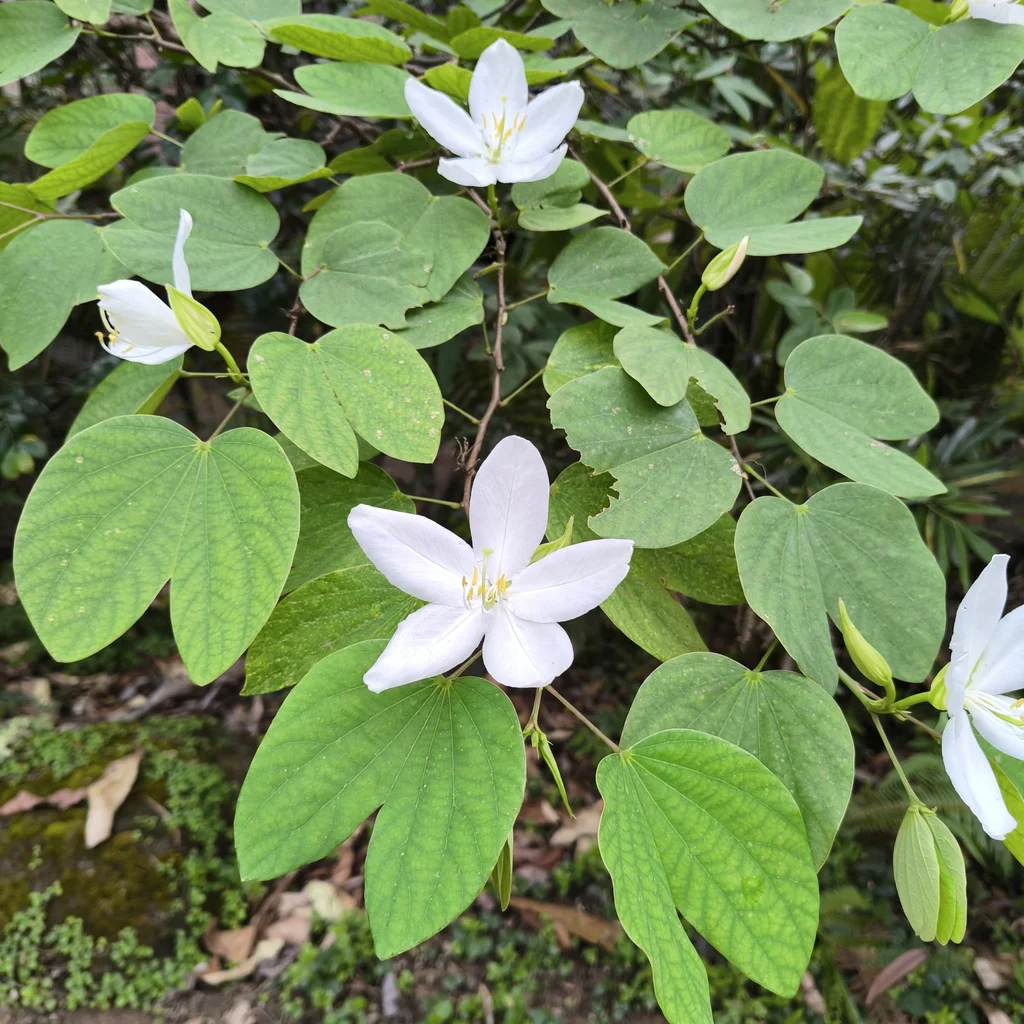
Dwarf White Orchid Tree
Bauhinia acuminata
Keep exploring
Explore the genus
Hardy in your zone?
Grow Purple Orchid-Tree with confidence
See it in a design of your actual yard, get zone-matched care reminders, and track it season by season in your garden journal.