The Story
Plant Bio
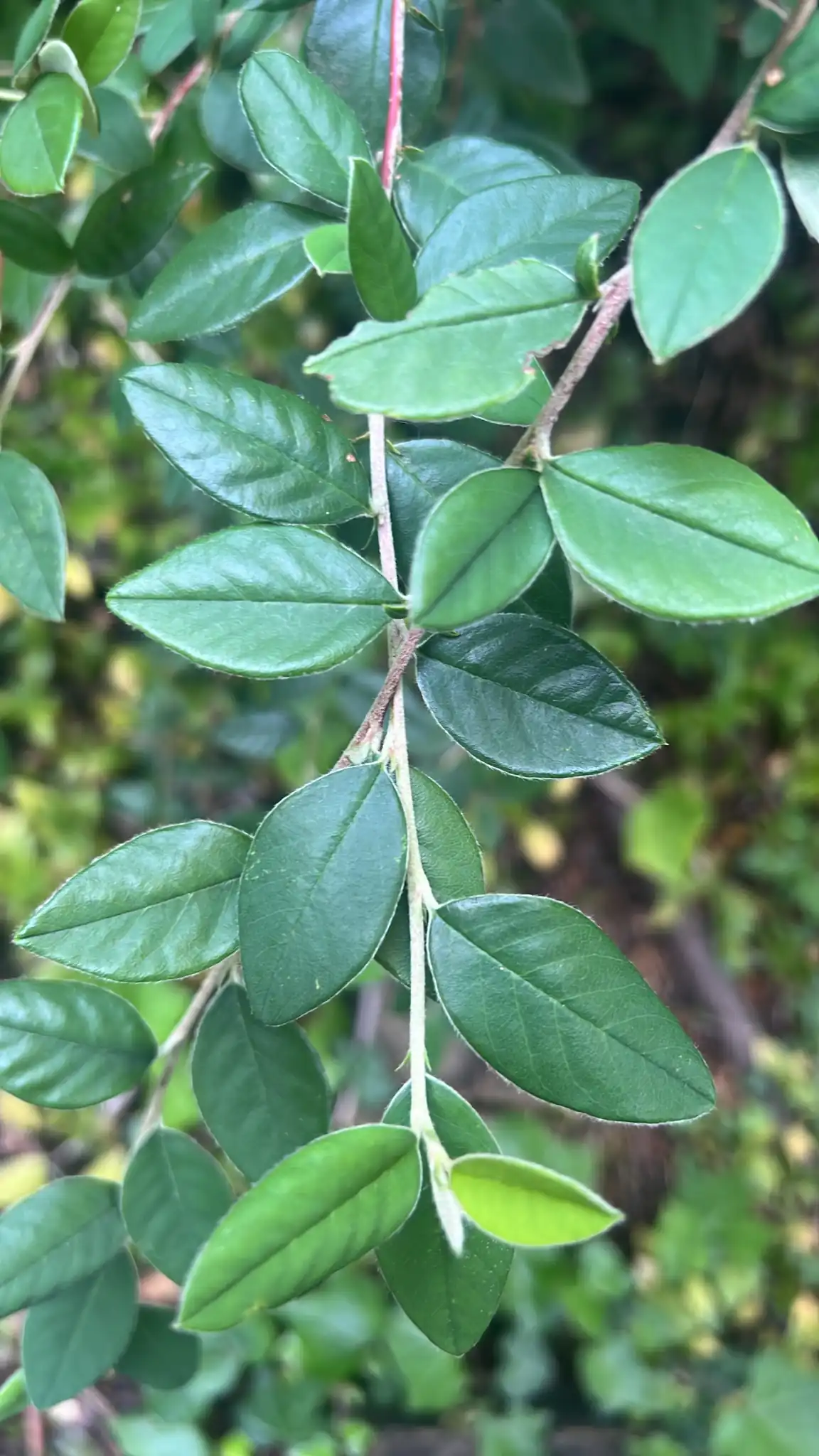
Cotoneaster glaucophyllus is an evergreen to semi-deciduous shrub in the rose family, forming a densely branched, upright to arching thicket five to eight feet tall and wide in cultivation. The small white flowers open in many-flowered axillary clusters from late spring into summer, followed by glossy red berries about a quarter inch across that hold through winter.
The elliptic leaves reach about two and one-half inches long and hold a gray-green glaucous cast from fine silvery hairs that are thickest on young growth. Against other cotoneasters it reads as the large-leaved, thicket-forming type, building a broader crown whose bird-eaten fruit explains its escape from gardens in mild-winter regions.
Uses & Benefits:
Essentials
At a Glance
Plant Type
Shrub
Height
96"
Width
96"
Light
Full Sun, Partial Sun
Zones
7, 8, 9
Water
Moderate to low
Humidity
Average
Lifespan
Woody perennial shrub
Native To
Southwest China, Vietnam
Toxicity
Toxic to humans if ingested
Bloom period
Late spring – Summer
In flower about 4 months of the year
Planting
How to Grow
- Plant in full sun to part shade in well-drained soil, giving the crown room to reach eight feet wide.
- Set the root ball level with the soil surface and backfill with native soil, firming to remove air pockets.
- Water to settle in, then keep soil evenly moist through the first season before tapering to drought-tolerant watering.
- Spread a two-inch mulch ring clear of the stems to hold moisture on rocky, sandy, or clay ground.
- Trim to size after flowering, removing crossing stems to keep the thicket open.
Pro Tip
Site in full sun for heaviest flower and fruit set, and thin crowded stems after flowering to keep air moving through the center.
Keep It Thriving
Care Guide
Do
- Give full sun for best flowering and fruiting.
- Provide well-drained soil and even moisture while establishing.
- Space plants to allow airflow and reduce leaf diseases.
Don't
- Do not plant where berries can be carried by birds into wild areas.
- Do not overhead water or crowd stems where blight pressure is high.
- Do not eat the red berries; they are poisonous to humans in quantity.
Seasonal Care Calendar
| Task | Jan | Feb | Mar | Apr | May | Jun | Jul | Aug | Sep | Oct | Nov | Dec |
|---|---|---|---|---|---|---|---|---|---|---|---|---|
| Mulch | ||||||||||||
| Pest Check | ||||||||||||
| Plant | ||||||||||||
| Prune | ||||||||||||
| Spring Cleanup |
Watch Out For
Pests & Diseases
Common Pests
Common Diseases
In the Garden
Landscape Uses & Companions
Landscape Uses
Multiply
Propagation Methods
Good to Know
Common Questions
Bright Bead Cotoneaster questions
What zones can Bright Bead Cotoneaster grow in?
Bright Bead Cotoneaster is hardy in USDA Zones 7–9: in that range it survives winter in the ground. Colder than Zone 7, grow it in a container you can move to shelter for the winter. Warmer than Zone 9, winter isn't the problem: it prefers colder winters, and summer heat can shorten its life.
When does Bright Bead Cotoneaster bloom?
Bright Bead Cotoneaster typically blooms from late spring to late summer. Exact timing shifts a week or two with your zone — Sow's bloom calendar maps it to your garden.
Does Bright Bead Cotoneaster need full sun?
Bright Bead Cotoneaster does best in full sun to part shade. In hot climates, afternoon shade keeps blooms fresher longer.
Is Bright Bead Cotoneaster drought tolerant?
Yes — once established (usually after the first full season), Bright Bead Cotoneaster handles dry spells with minimal watering. Water deeply its first year to build the root system that makes that possible.
More Cotoneaster to compare
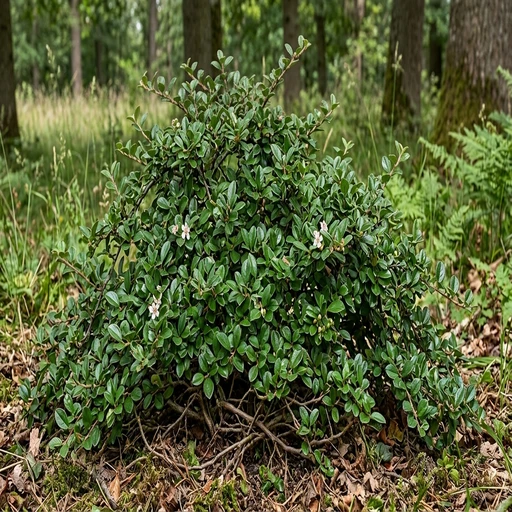
Streibs Findling Cotoneaster
Cotoneaster dammeri 'Streibs Findling'
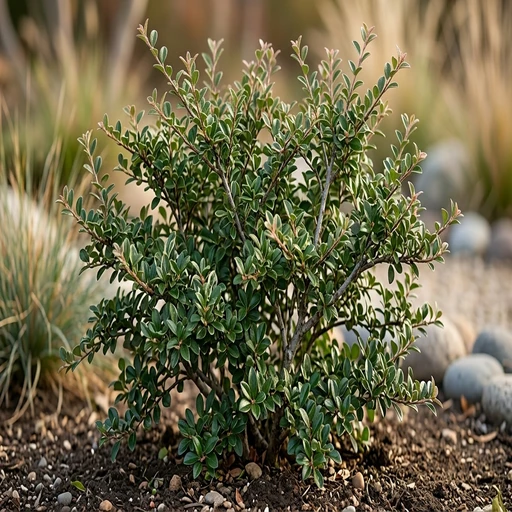
Autumn Inferno Cotoneaster
Cotoneaster salicifolius 'Autumn Inferno'
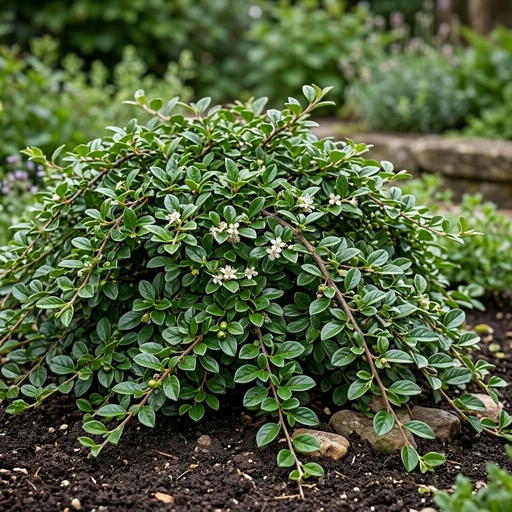
Lowfast Bearberry Cotoneaster
Cotoneaster dammeri 'Lowfast'
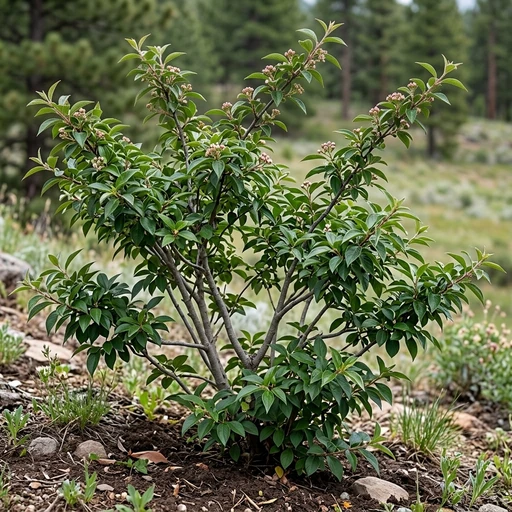
Peking Cotoneaster
Cotoneaster acutifolius
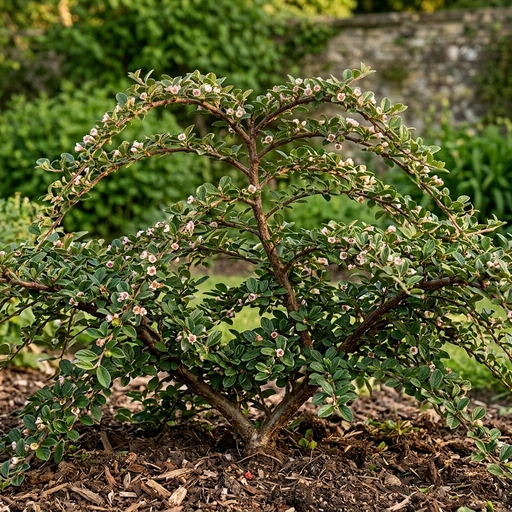
Hessei Rockspray Cotoneaster
Cotoneaster horizontalis 'Hessei'
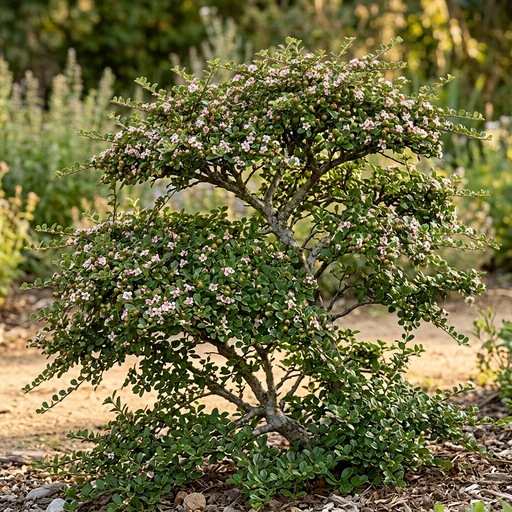
Rockspray Cotoneaster
Cotoneaster horizontalis
Keep exploring
Explore the genus
Hardy in your zone?
Grow Bright Bead Cotoneaster with confidence
See it in a design of your actual yard, get zone-matched care reminders, and track it season by season in your garden journal.