The Story
Plant Bio
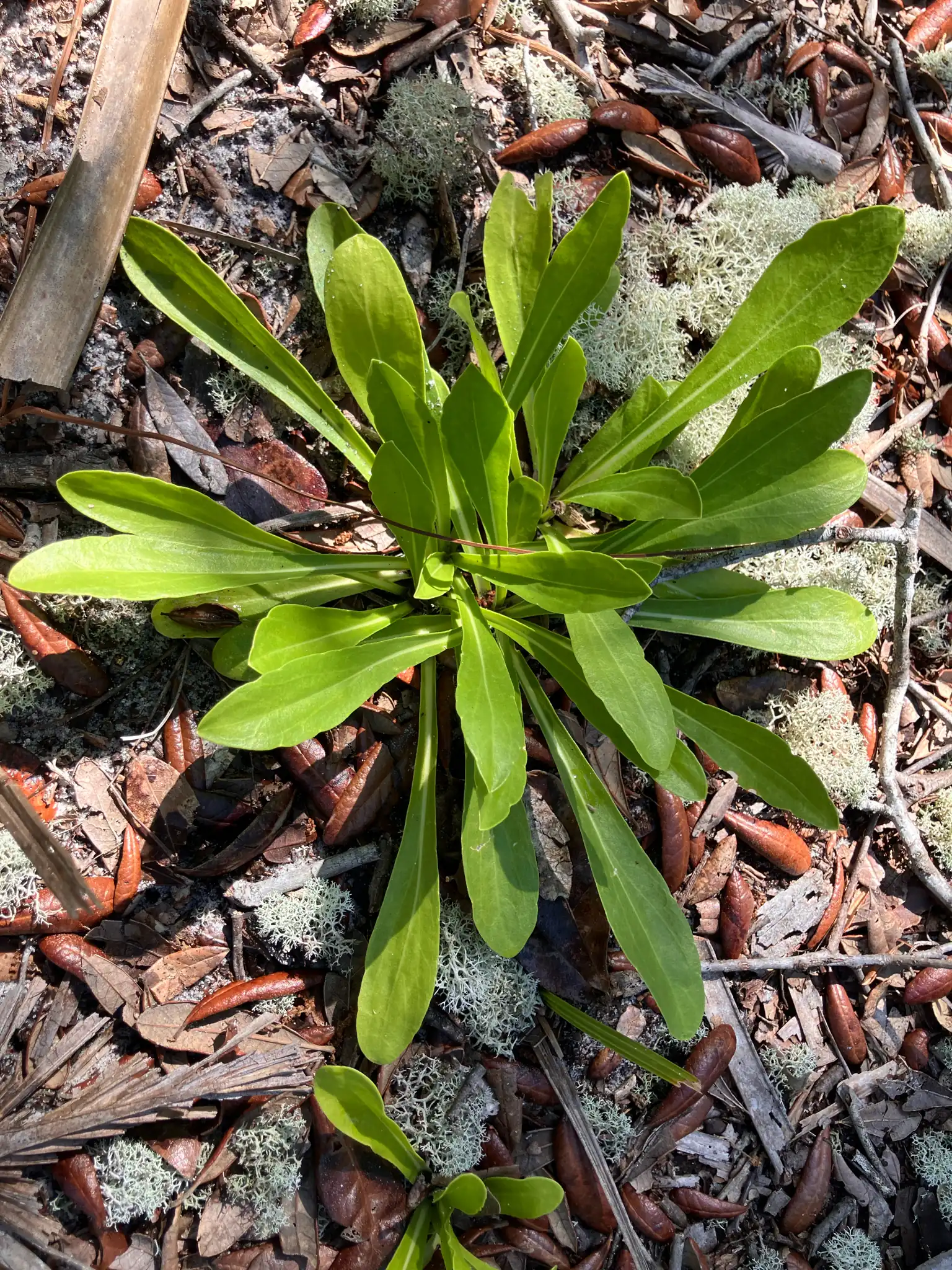
Carphephorus corymbosus, the Florida paintbrush, is a short-lived perennial herb reaching two to three feet in bloom from an overwintering basal rosette. Narrow linear basal leaves give rise to a single erect hairy stem topped by a flat-topped cluster of small heads with only tubular disk florets and no rays.
Unlike its close relatives, it packs many small pink to lavender heads into one broad corymb that opens from late summer into fall. It holds to deep sandy well-drained soils of the southeastern coastal plain and winters as a low inconspicuous rosette before sending up the flowering stem.
Uses & Benefits:
Essentials
At a Glance
Plant Type
Perennial
Height
36"
Width
12"
Light
Full Sun, Partial Sun
Zones
8, 9, 10
Water
Moderate
Humidity
Unknown
Lifespan
Short-lived perennial
Native To
Southeastern USA (FL, GA, SC)
Toxicity
Unknown - no verified data
Bloom period
Late summer – Fall
In flower about 4 months of the year
Planting
How to Grow
- Plant in full sun to light part sun in deep sandy well-drained soil, 12 inches apart.
- Water regularly to establish the rosette, then water only during extended dry spells.
- Leave spent heads through fall to ripen seed for self-sowing and pollinators.
- Cut the old flowering stem back in early spring without damaging the basal rosette.
Pro Tip
Leave the low winter rosette alone — it looks dead but is not; cut only the old flowering stem in spring and never cut into the rosette.
Keep It Thriving
Care Guide
Do
- Plant in full sun in sand or sandy loam that drains fast.
- Leave winter rosettes undisturbed and mark their location.
- Allow some heads to set seed for next year.
Don't
- Do not plant in wet ground or where salt spray or flooding occurs.
- Do not dig or discard the winter rosette as dead.
- Do not cut into the crown of the rosette when cleaning up.
Seasonal Care Calendar
| Task | Jan | Feb | Mar | Apr | May | Jun | Jul | Aug | Sep | Oct | Nov | Dec |
|---|---|---|---|---|---|---|---|---|---|---|---|---|
| Pest Check | ||||||||||||
| Plant | ||||||||||||
| Propagate | ||||||||||||
| Spring Cleanup |
Watch Out For
Pests & Diseases
Common Pests
In the Garden
Landscape Uses & Companions
Landscape Uses
Multiply
Propagation Methods
Good to Know
Common Questions
Florida Paintbrush questions
What zones can Florida Paintbrush grow in?
Florida Paintbrush is hardy in USDA Zones 8–10: in that range it survives winter in the ground. Colder than Zone 8, grow it in a container you can move to shelter for the winter, or as an annual.
When does Florida Paintbrush bloom?
Florida Paintbrush typically blooms from late summer to late fall. Exact timing shifts a week or two with your zone — Sow's bloom calendar maps it to your garden.
Does Florida Paintbrush need full sun?
Florida Paintbrush does best in full sun to part shade. In hot climates, afternoon shade keeps blooms fresher longer.
Is Florida Paintbrush drought tolerant?
Yes — once established (usually after the first full season), Florida Paintbrush handles dry spells with minimal watering. Water deeply its first year to build the root system that makes that possible.
More Carphephorus to compare
Keep exploring
Explore the genus
Hardy in your zone?
Grow Florida Paintbrush with confidence
See it in a design of your actual yard, get zone-matched care reminders, and track it season by season in your garden journal.