The Story
Plant Bio
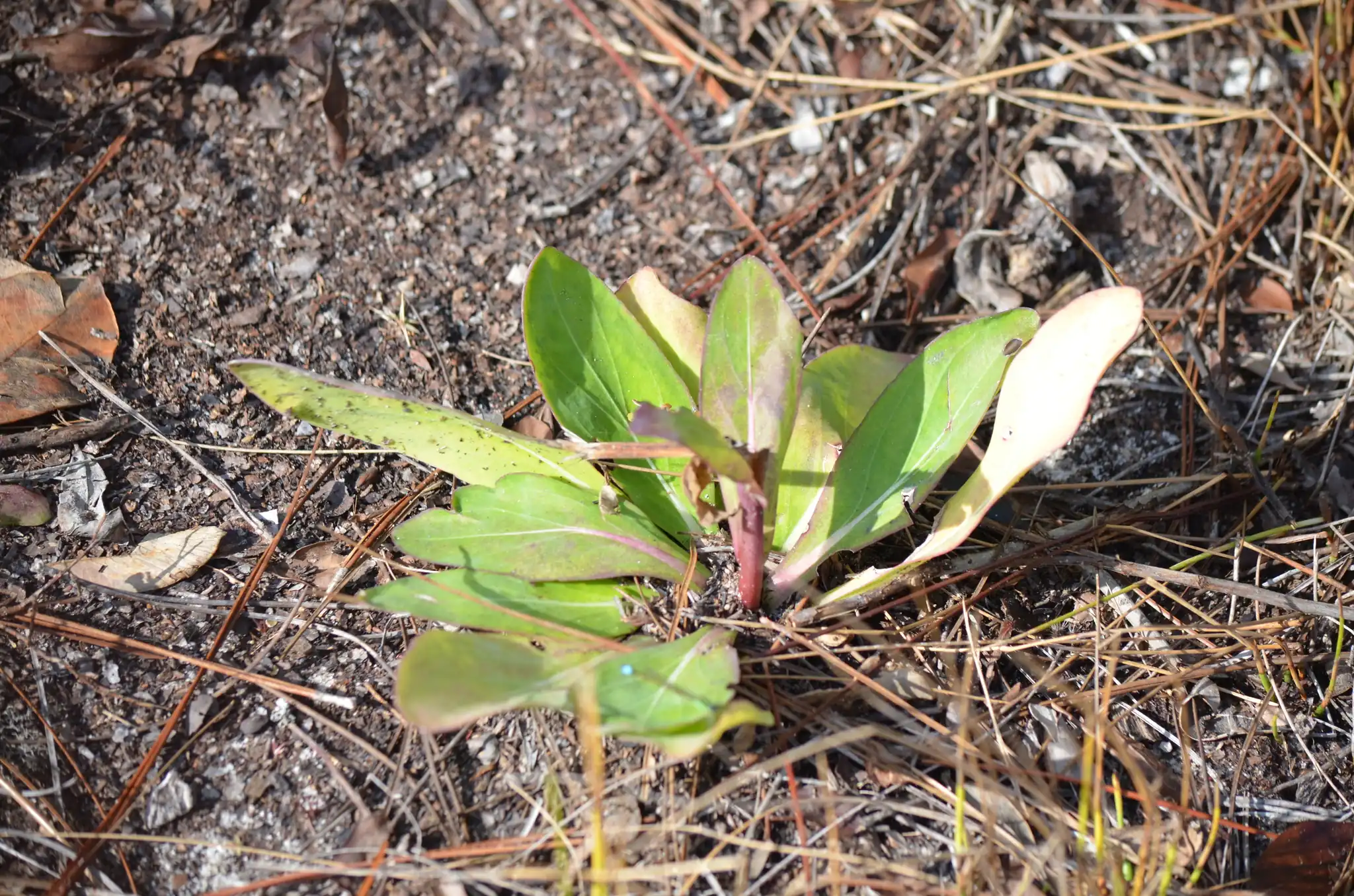
Carphephorus odoratissimus is a largely hairless herbaceous perennial of the Southeast Coastal Plain, growing as a basal rosette of straplike leaves with a tall stalk to six feet. The flat-topped cluster carries many small purple aster heads that open from summer into fall.
Crushed or drying foliage releases a strong vanilla-coumarin scent, the trait behind the names vanillaleaf and deer's-tongue. It differs from the similar Trilisa paniculata by its broader basal leaves and holds only where soil stays moist through summer yet drains freely and never ponds.
Uses & Benefits:
Essentials
At a Glance
Plant Type
Perennial
Height
71"
Width
24"
Light
Full Sun, Partial Sun
Zones
8, 9
Water
Medium
Humidity
Medium
Lifespan
Perennial
Native To
Southeastern USA
Toxicity
Contains coumarin
Bloom period
Summer – Fall
In flower about 6 months of the year
Planting
How to Grow
- Choose full sun to light shade with at least six hours of sun in moist sandy to loamy soil.
- Set plants at rosette level in spring after frost danger, spacing to allow airflow.
- Water to establish and keep evenly moist through the first summer, then water during dry spells.
- Leave the basal rosette intact through winter and cut old stalks in late winter.
- Do not plant in low ground that floods or stays saturated.
Pro Tip
Plant in full sun in moist sandy loam that drains after rain; the vanilla scent develops only as cut leaves dry, not on the living plant.
Keep It Thriving
Care Guide
Do
- Give at least six hours of sun for sturdy stalks and full bloom.
- Keep summer moisture steady in sandy loam that drains freely.
- Use a light pine-straw mulch to conserve moisture without burying the rosette.
Don't
- Do not plant where water ponds or soil stays saturated.
- Do not expect vanilla scent from live leaves in the border.
- Do not overfertilize or enrich with heavy compost; lean acid soils suit it.
Seasonal Care Calendar
| Task | Jan | Feb | Mar | Apr | May | Jun | Jul | Aug | Sep | Oct | Nov | Dec |
|---|---|---|---|---|---|---|---|---|---|---|---|---|
| Deadhead | ||||||||||||
| Mulch | ||||||||||||
| Pest Check | ||||||||||||
| Plant |
Watch Out For
Pests & Diseases
Common Pests
Common Diseases
In the Garden
Landscape Uses & Companions
Landscape Uses
Multiply
Propagation Methods
Good to Know
Common Questions
Vanillaleaf questions
What zones can Vanillaleaf grow in?
Vanillaleaf is hardy in USDA Zones 8–9: in that range it survives winter in the ground. Colder than Zone 8, grow it in a container you can move to shelter for the winter, or as an annual. Warmer than Zone 9, winter isn't the problem: it prefers colder winters, and summer heat can shorten its life.
When does Vanillaleaf bloom?
Vanillaleaf typically blooms from summer to fall. Exact timing shifts a week or two with your zone — Sow's bloom calendar maps it to your garden.
Does Vanillaleaf need full sun?
Vanillaleaf does best in full sun to part shade. In hot climates, afternoon shade keeps blooms fresher longer.
Is Vanillaleaf drought tolerant?
Yes — once established (usually after the first full season), Vanillaleaf handles dry spells with minimal watering. Water deeply its first year to build the root system that makes that possible.
More Carphephorus to compare
Keep exploring
Explore the genus
Hardy in your zone?
Grow Vanillaleaf with confidence
See it in a design of your actual yard, get zone-matched care reminders, and track it season by season in your garden journal.