The Story
Plant Bio
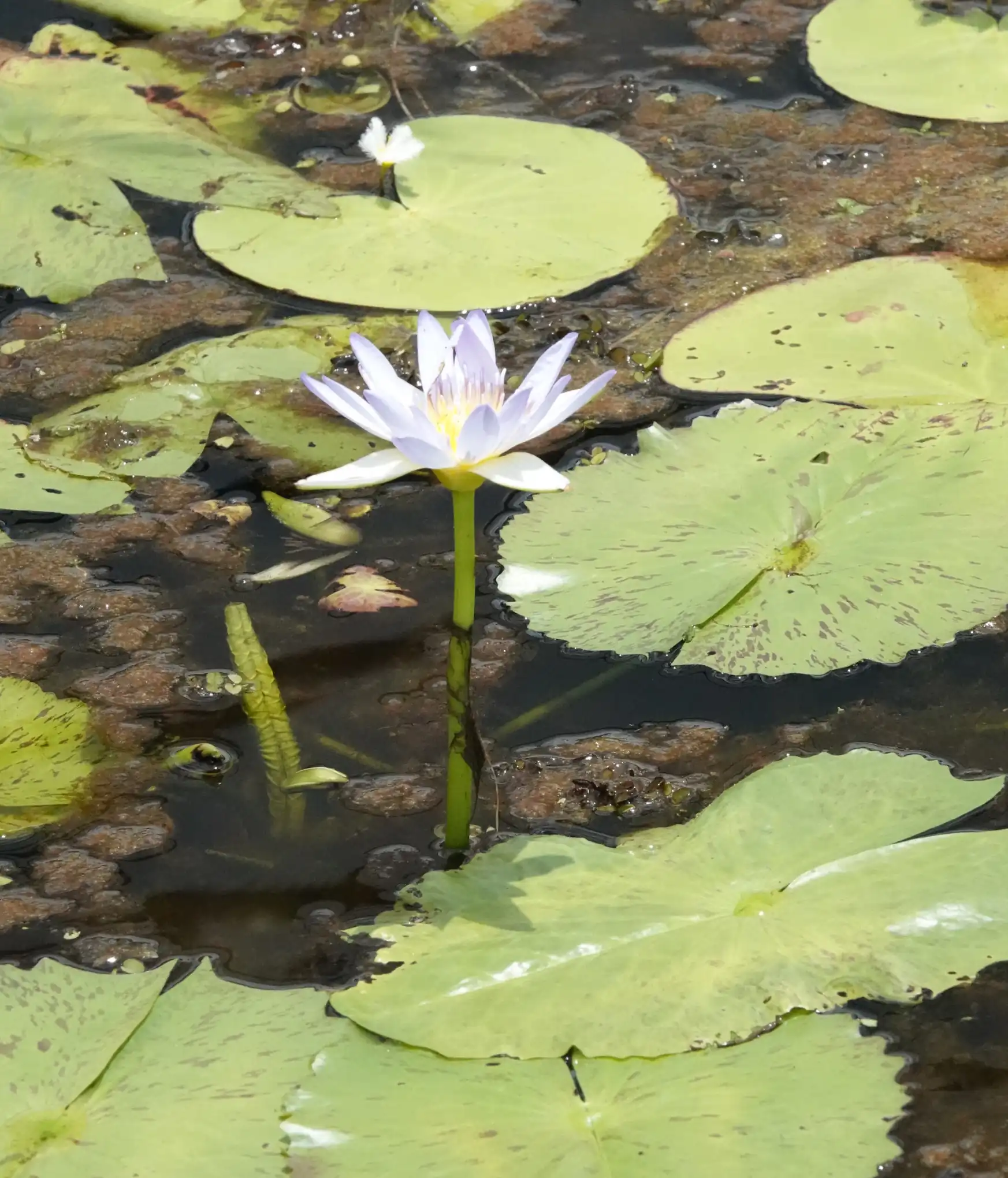
Nymphaea nouchali is a day-blooming tender tropical water lily featuring floating oval leaves up to nine inches long that emerge with a purplish flush before turning green. Star-shaped blue or purplish blossoms with bright yellow centers rise on stiff stems up to twelve inches above the water surface from summer into fall.
Native across tropical Africa, Asia, and northern Australia, this tender aquatic hydrogeophyte produces flowers held well clear of the foliage rather than resting directly on the water surface. The plants thrive in warm, standing water under continuous sun and go dormant if conditions drop below freezing.
Uses & Benefits:
Essentials
At a Glance
Plant Type
Aquatic
Height
12"
Width
118"
Light
Full Sun
Zones
10
Water
Aquatic / Continuous Submersion
Humidity
High
Lifespan
Perennial
Native To
Africa, Asia, Northern Australia
Toxicity
Non-toxic
Bloom period
Summer – Fall
In flower about 6 months of the year
Planting
How to Grow
- Pot the tuber at a 45-degree angle in a dedicated aquatic basket filled with heavy clay loam, keeping the crown visible at the surface.
- Press two to three aquatic-safe fertilizer tablets deep into the mud around the root zone.
- Submerge the basket into a sunny pond or container so the top of the pot sits 6 to 18 inches below the water surface.
- Trim off yellowed leaves and spent flower stalks near the rhizome throughout the growing season to maintain water quality.
Pro Tip
Plant the tuber in heavy, unamended topsoil or clay packed firmly into an aquatic container, avoiding potting soils containing perlite or organic matter that float and leach nutrients into the water to fuel algae.
Keep It Thriving
Care Guide
Do
- Plant in heavy clay or topsoil packed tightly into aquatic baskets.
- Provide at least 5 hours of direct sunlight daily for robust flower production.
- Push aquatic fertilizer tablets deep into the mud monthly during active growth.
Don't
- Do not use light potting mixes containing perlite, vermiculite, or loose organic compost.
- Do not allow the tuber or container mud to freeze solid during winter.
- Do not slice into old, hard, leafless crown tissue when dividing or trimming.
Seasonal Care Calendar
| Task | Jan | Feb | Mar | Apr | May | Jun | Jul | Aug | Sep | Oct | Nov | Dec |
|---|---|---|---|---|---|---|---|---|---|---|---|---|
| Fertilize | ||||||||||||
| Plant | ||||||||||||
| Prune | ||||||||||||
| Winter Prep |
Watch Out For
Pests & Diseases
Common Pests
Common Diseases
In the Garden
Landscape Uses & Companions
Landscape Uses
Multiply
Propagation Methods
Good to Know
Common Questions
Blue Lotus questions
What zones can Blue Lotus grow in?
Blue Lotus is hardy in USDA Zone 10: in that range it survives winter in the ground. Colder than Zone 10, grow it in a container you can move to shelter for the winter, or as an annual.
Is Blue Lotus deer resistant?
Not reliably. Deer may browse Blue Lotus, especially tender spring growth — plan on repellents or fencing where pressure is high.
When does Blue Lotus bloom?
Blue Lotus typically blooms from summer to fall. Exact timing shifts a week or two with your zone — Sow's bloom calendar maps it to your garden.
Does Blue Lotus need full sun?
Blue Lotus does best in full sun (6+ hours).
More Nymphaea to compare
Keep exploring
Explore the genus
Hardy in your zone?
Grow Blue Lotus with confidence
See it in a design of your actual yard, get zone-matched care reminders, and track it season by season in your garden journal.