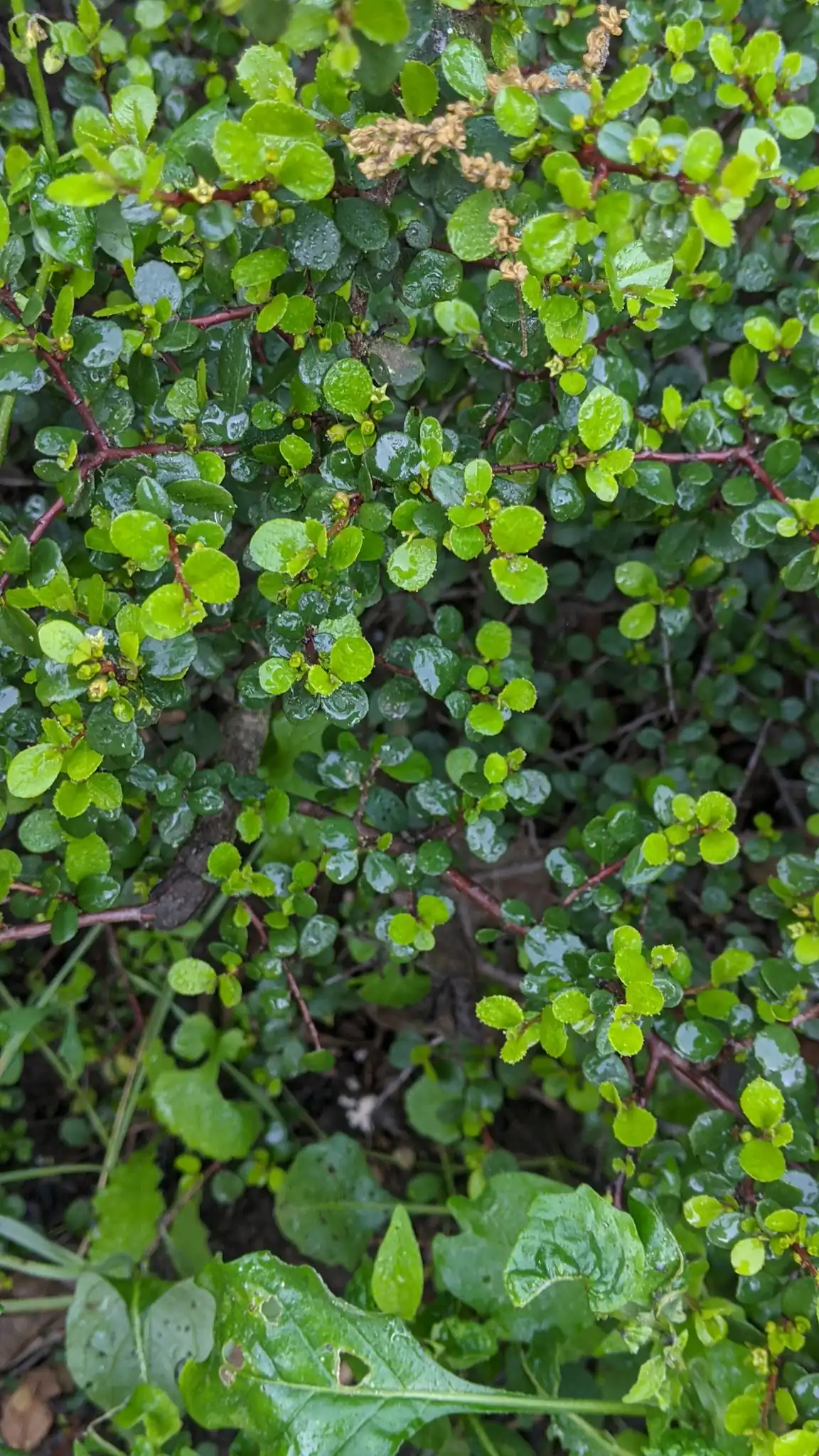
The Story
Plant Bio
Rhamnus crocea, commonly known as redberry buckthorn, is a dense, rigid evergreen shrub native to California and northern Mexico. It produces short, stiff branchlets tipped with spine-like points and leathery, glossy green leaves with yellowish undersides.
In spring, tiny cream-green flowers develop in leaf axils, followed on female plants by bright red berries that feed resident songbirds. The shrub acts as a primary larval host plant for the Hermes copper butterfly and excels in lean, water-wise landscapes.
Uses & Benefits:
Essentials
At a Glance
Plant Type
Shrub
Height
144"
Width
94"
Light
Full Sun, Partial Sun
Zones
8, 9, 10
Water
Low
Humidity
Low to Moderate
Lifespan
Perennial
Native To
California to Northern Mexico
Toxicity
Toxic if ingested
Bloom period
Spring
In flower about 3 months of the year
Planting
How to Grow
- Choose a site in full sun or light shade with sandy, loamy, or clay soil that drains quickly.
- Dig a planting hole twice as wide as the root container and place the root crown slightly elevated above the surrounding grade.
- Water lightly at planting and supply water sparingly during the first summer to build root depth.
- Taper irrigation off completely once established, relying entirely on natural rainfall.
- Prune lightly in late winter or after fruiting to remove dead or crossing stems, avoiding deep cuts into old wood.
Pro Tip
Plant in sharply drained, mineral-rich soil and eliminate summer watering once established to avoid Phytophthora root rot. Because redberry buckthorn is dioecious, set out multiple plants in proximity if berry production is desired.
Keep It Thriving
Care Guide
Do
- Provide coarse or well-draining mineral soil to keep root crowns dry.
- Plant in full sun to foster dense growth and heavy fruit production.
- Allow soil to dry out completely between occasional irrigation sessions during the initial establishment period.
Don't
- Do not overwater or plant in low areas subject to standing winter water.
- Do not apply high-nitrogen fertilizers, which cause weak and excessive growth.
- Do not prune aggressively into old bare wood, which recovers poorly.
Seasonal Care Calendar
| Task | Jan | Feb | Mar | Apr | May | Jun | Jul | Aug | Sep | Oct | Nov | Dec |
|---|---|---|---|---|---|---|---|---|---|---|---|---|
| Pest Check | ||||||||||||
| Plant | ||||||||||||
| Propagate | ||||||||||||
| Prune |
Watch Out For
Pests & Diseases
Common Pests
Common Diseases
In the Garden
Landscape Uses & Companions
Landscape Uses
Companion Plants
Multiply
Propagation Methods
Good to Know
Common Questions
Redberry Buckthorn questions
What zones can Redberry Buckthorn grow in?
Redberry Buckthorn is hardy in USDA Zones 8–10: in that range it survives winter in the ground. Colder than Zone 8, grow it in a container you can move to shelter for the winter.
When does Redberry Buckthorn bloom?
Redberry Buckthorn typically blooms in spring. Exact timing shifts a week or two with your zone — Sow's bloom calendar maps it to your garden.
Does Redberry Buckthorn need full sun?
Redberry Buckthorn does best in full sun to part shade. In hot climates, afternoon shade keeps blooms fresher longer.
Is Redberry Buckthorn drought tolerant?
Yes — once established (usually after the first full season), Redberry Buckthorn handles dry spells with minimal watering. Water deeply its first year to build the root system that makes that possible.
More Rhamnus to compare
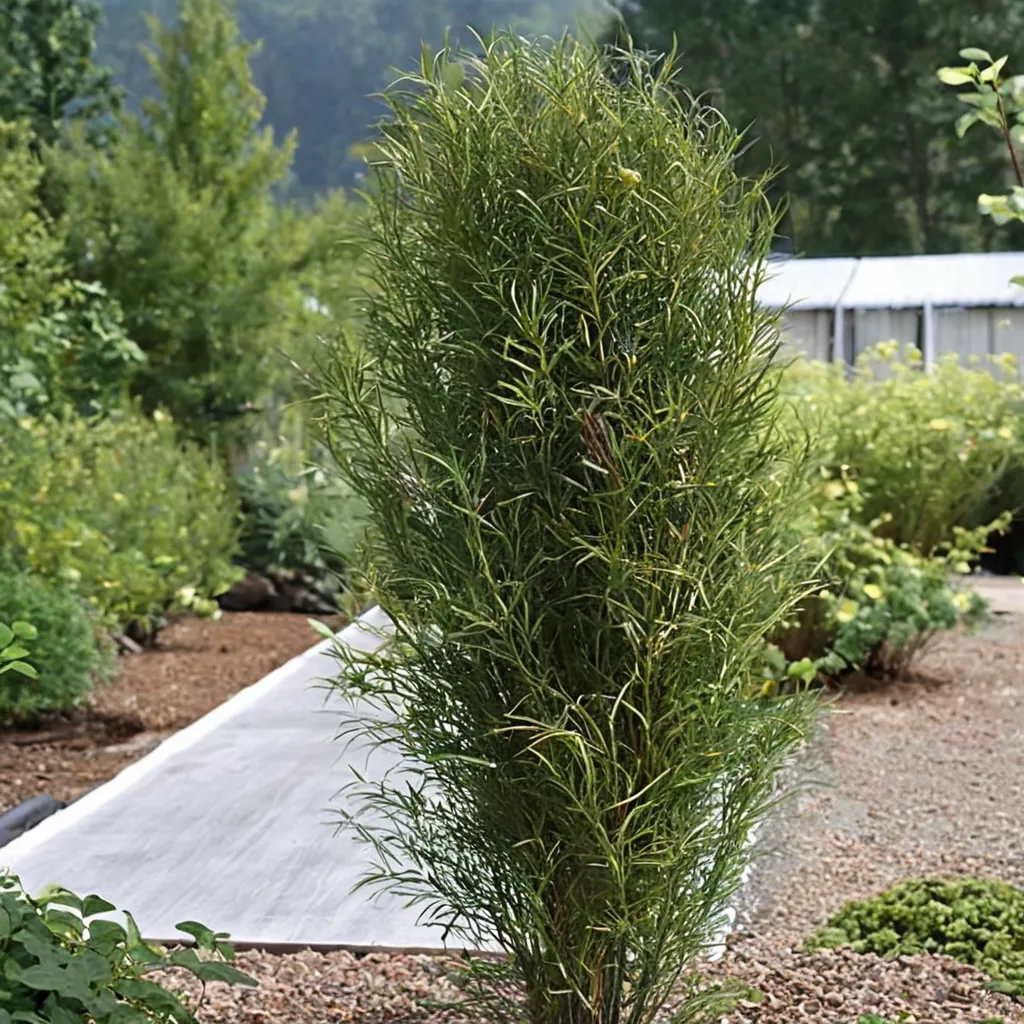
Fine Line Buckthorn
Rhamnus frangula 'Fine Line'
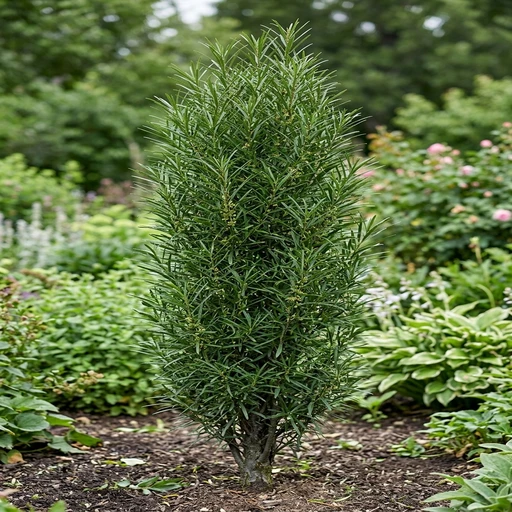
Ron Williams Fine Line Buckthorn
Rhamnus frangula 'Ron Williams'
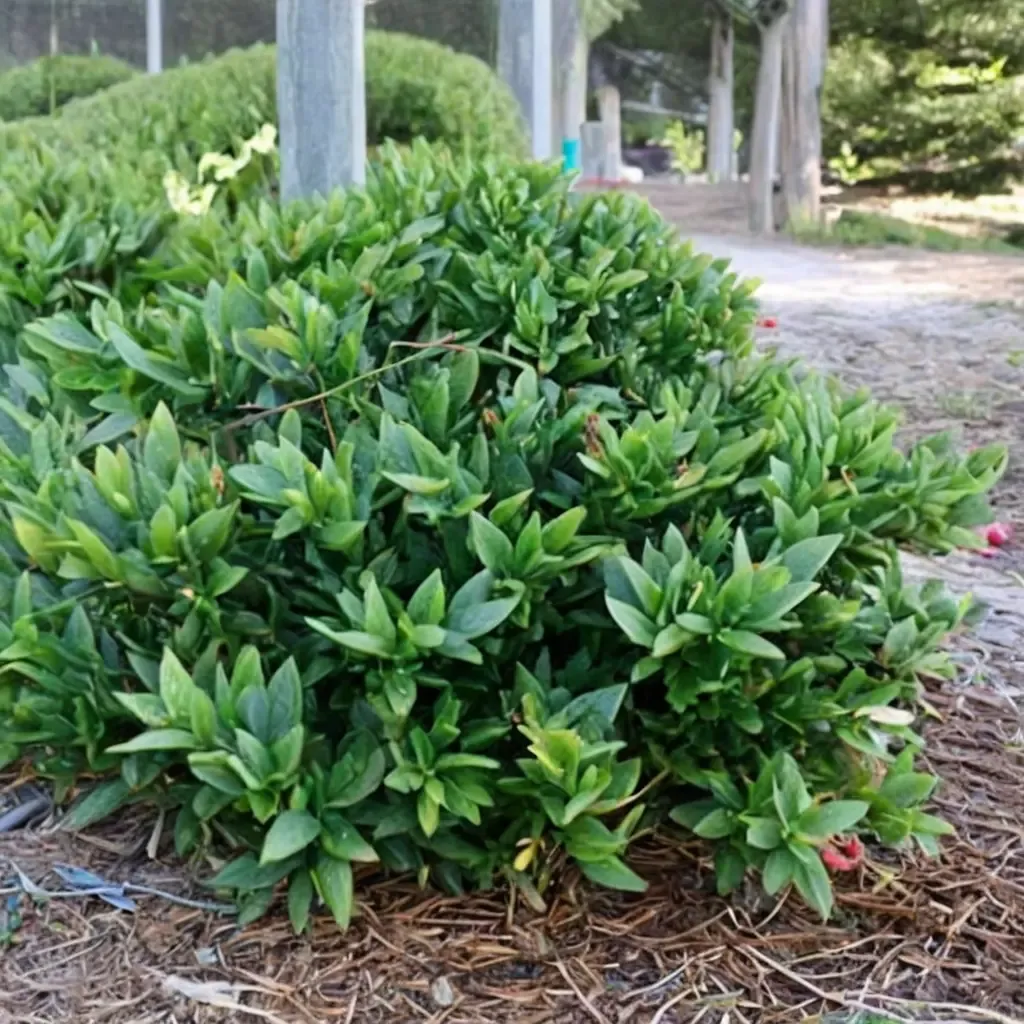
San Bruno Coffeeberry
Rhamnus californica 'Mound San Bruno'
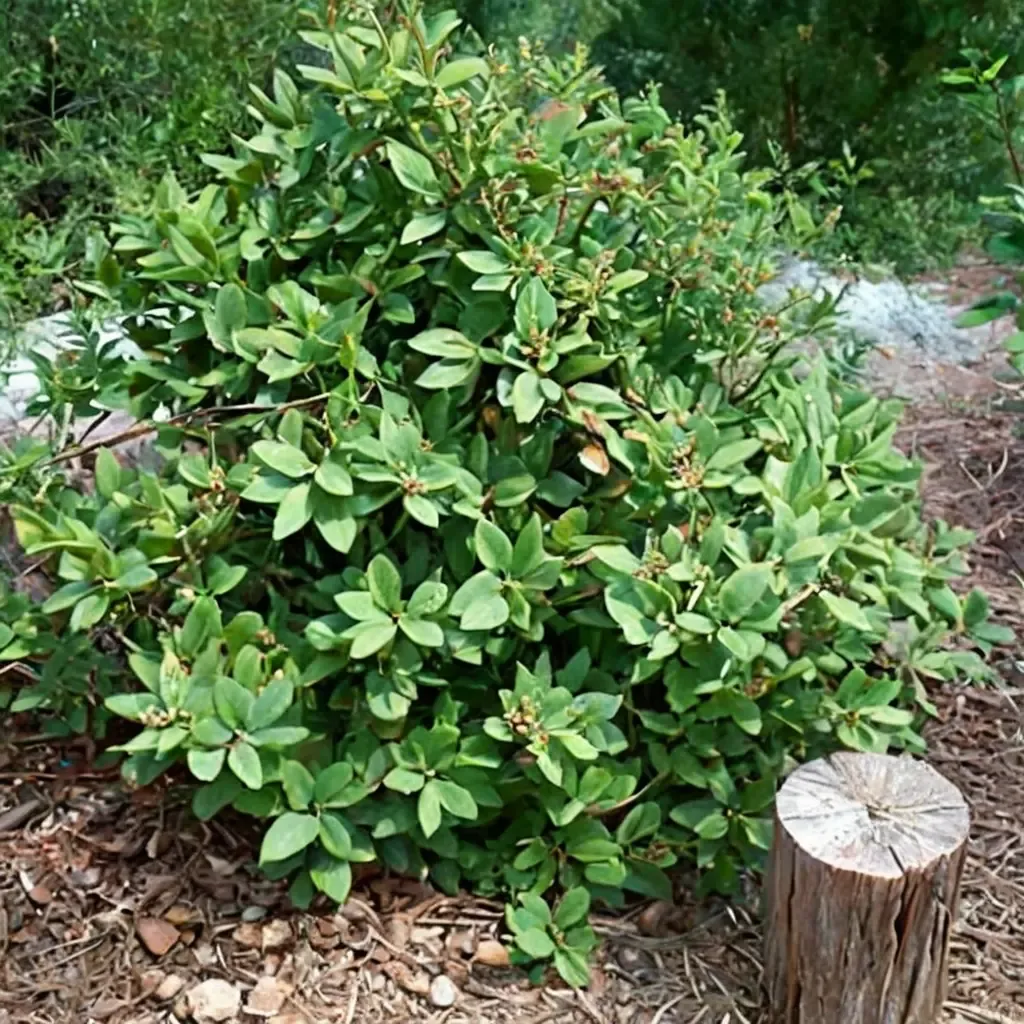
Eve Case Coffeeberry
Rhamnus californica 'Eve Case'
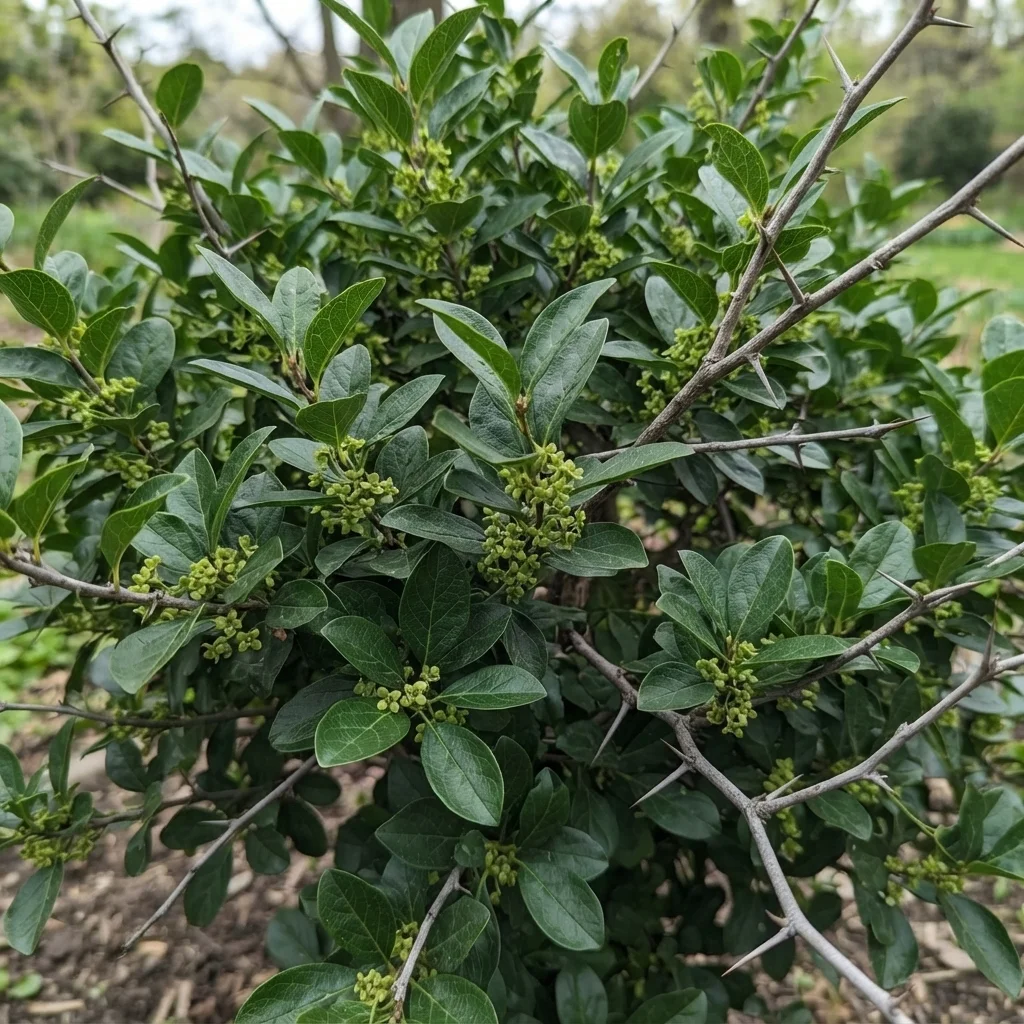
Common Buckthorn
Rhamnus cathartica
Keep exploring
Explore the genus
Hardy in your zone?
Grow Redberry Buckthorn with confidence
See it in a design of your actual yard, get zone-matched care reminders, and track it season by season in your garden journal.