
The Story
Plant Bio
Epiphyllum chrysocardium is a spineless epiphytic cactus from the rainforest and cloud forest of Chiapas and Tabasco, where it anchors on tree limbs at 1600 to 1800 meters and trails its stems in humid shade. In cultivation it builds a much-branched clump to three feet tall and six feet wide, with pale green flattened cladodes that store water and photosynthesize in place of true leaves.
The cladodes reach 12 to 24 inches long and are cut into rounded zig-zag lobes that read as fern fronds, entirely without spines. Established plants open nocturnal funnel flowers 8 to 10 inches across in creamy white, with a dense crown of golden-yellow stamens that accounts for the golden-heart name.
Uses & Benefits:
Essentials
At a Glance
Plant Type
Cactus Succulent
Height
35"
Width
72"
Light
Partial Sun, Shade
Zones
10
Water
Medium - water when top half dry
Humidity
High - needs humidity, mist in dry air
Lifespan
Long-lived perennial
Native To
Mexico - Chiapas, Tabasco
Toxicity
Unknown - conflicting reports
Bloom period
Spring – Fall
In flower about 9 months of the year
Planting
How to Grow
- Site in bright indirect light or light shade with eastern exposure and protection from full midday sun.
- Pot in very well-drained epiphytic mix of bark and perlite, or mount on a plaque or slatted basket.
- Water with room-temperature water when the top 2 inches dry, about weekly, never leaving the pot waterlogged; mist in dry air to hold humidity.
- Move indoors before nights reach 35F; hardy only to 30F in zones 10a-13b.
- Prune only to remove damaged or spent stems; repot sparingly when root-bound.
Pro Tip
Grow it as a rainforest epiphyte, not a desert cactus: open bark-perlite mix, bright shade with no midday sun, and steady humidity — waterlogging, full sun, and exposure below 35F stop growth and prevent flowering.
Keep It Thriving
Care Guide
Do
- Water when the top half of the mix dries and empty the saucer so roots never stand in water.
- Provide bright shade and high humidity with misting in dry indoor air.
- Check lobe joints monthly for mealybugs and scale and treat at first sign.
Don't
- Do not plant in heavy garden soil or desert cactus sand that holds water around the roots.
- Do not give full midday sun; scorched cladodes bleach and collapse.
- Do not expose below 35F; cold marks cladodes with brown spots and kills stem tips.
- Do not cut hard back each year; remove only damaged or spent stems.
Seasonal Care Calendar
| Task | Jan | Feb | Mar | Apr | May | Jun | Jul | Aug | Sep | Oct | Nov | Dec |
|---|---|---|---|---|---|---|---|---|---|---|---|---|
| Pest Check | ||||||||||||
| Propagate | ||||||||||||
| Prune | ||||||||||||
| Winter Prep |
Watch Out For
Pests & Diseases
Common Pests
Common Diseases
In the Garden
Landscape Uses & Companions
Landscape Uses
Multiply
Propagation Methods
Good to Know
Common Questions
Fern Leaf Cactus questions
What zones can Fern Leaf Cactus grow in?
Fern Leaf Cactus is hardy in USDA Zone 10: in that range it survives winter in the ground. Colder than Zone 10, grow it in a container you can move to shelter for the winter, or as an annual.
When does Fern Leaf Cactus bloom?
Fern Leaf Cactus typically blooms from spring to fall. Exact timing shifts a week or two with your zone — Sow's bloom calendar maps it to your garden.
Does Fern Leaf Cactus need full sun?
Fern Leaf Cactus does best in part shade.
More Epiphyllum to compare
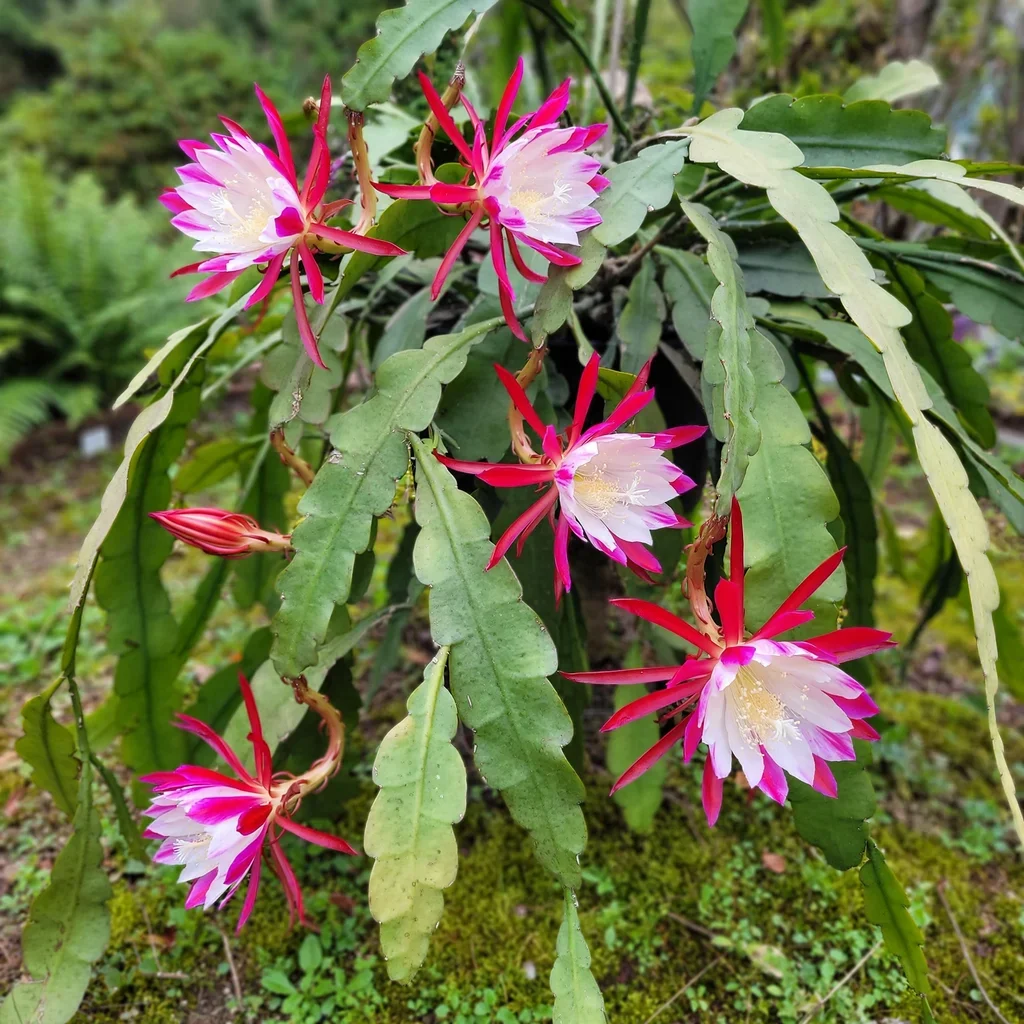
'Clown' Orchid Cactus
Epiphyllum x hybrida 'Clown'
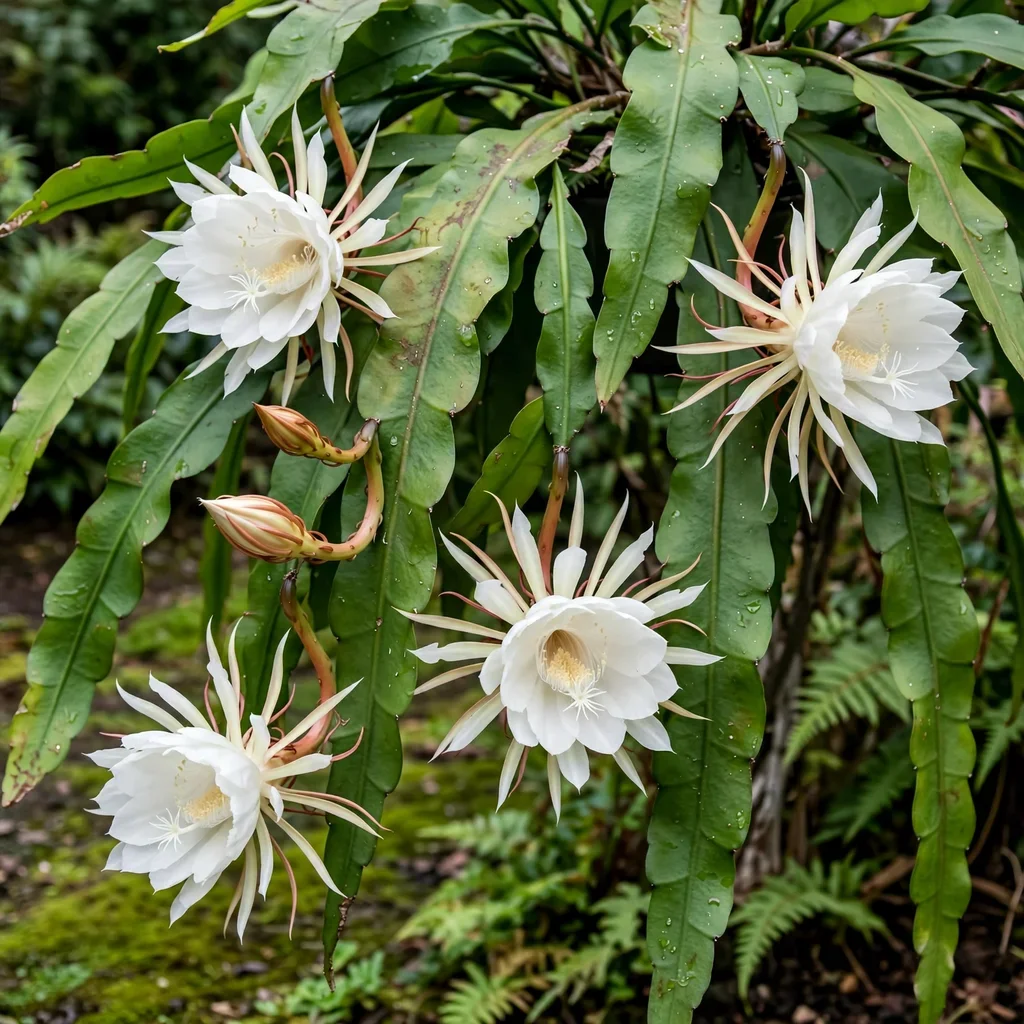
Queen of the Night
Epiphyllum oxypetalum
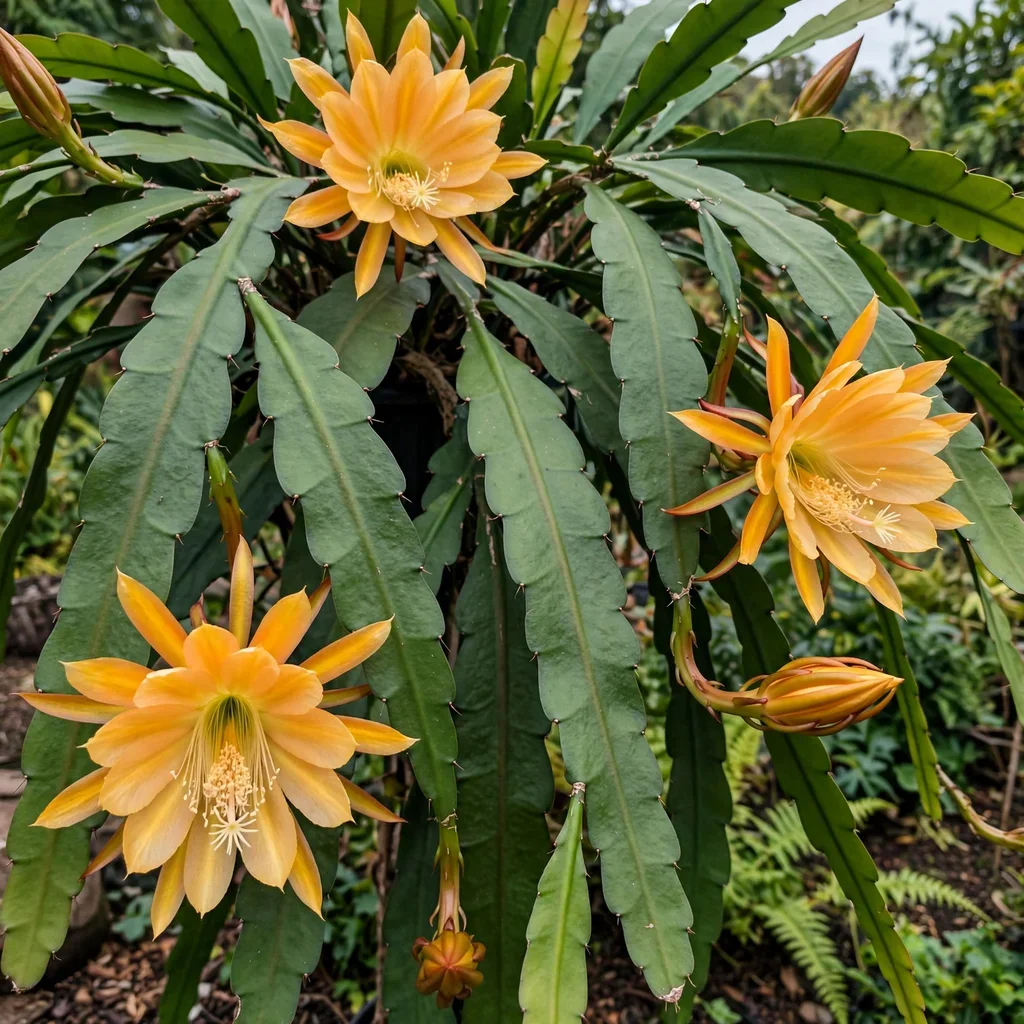
King Midas Orchid Cactus
Epiphyllum x hybrida 'King Midas'
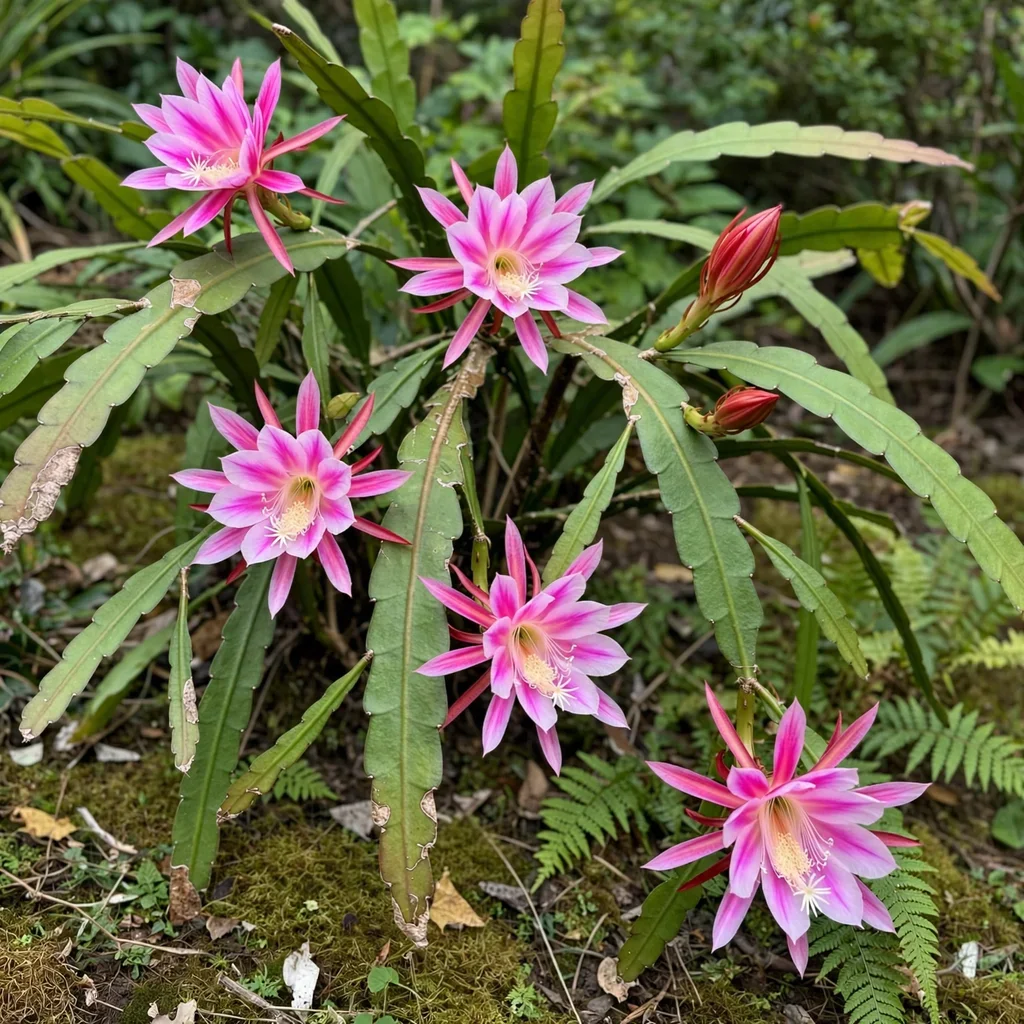
Raspberry Delight Orchid Cactus
Epiphyllum x hybrida 'Raspberry Delight'
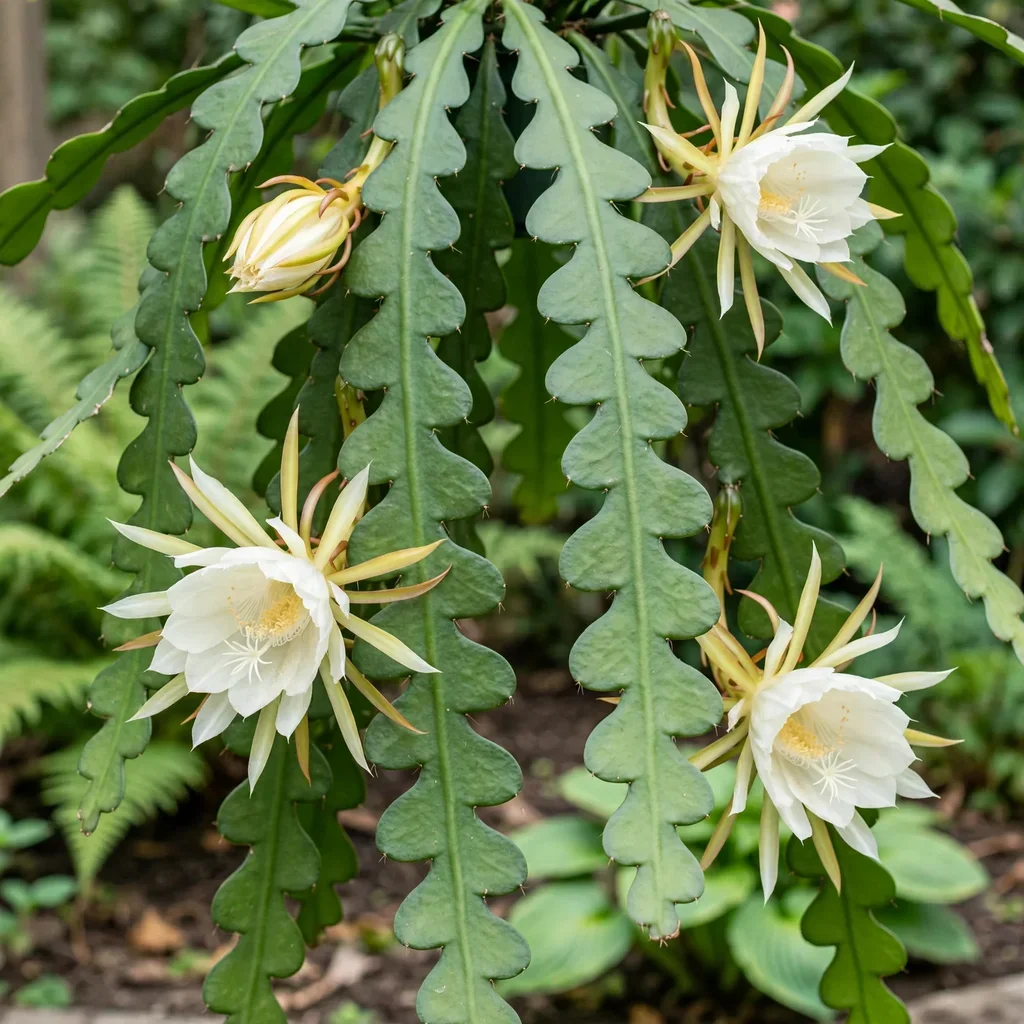
Ric Rac Cactus Fishbone Cactus
Epiphyllum anguliger
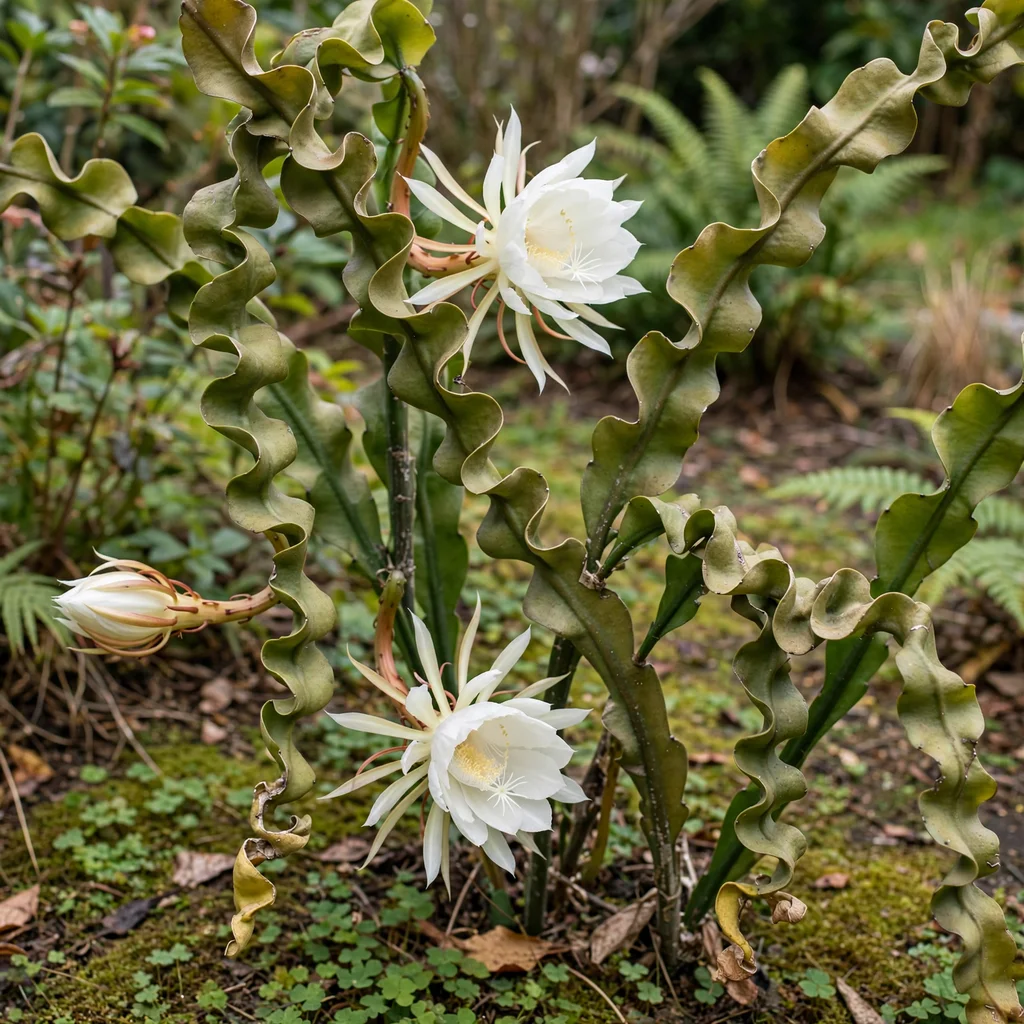
Curly Locks
Epiphyllum guatemalense
Keep exploring
Explore the genus
Hardy in your zone?
Grow Fern Leaf Cactus with confidence
See it in a design of your actual yard, get zone-matched care reminders, and track it season by season in your garden journal.