The Story
Plant Bio
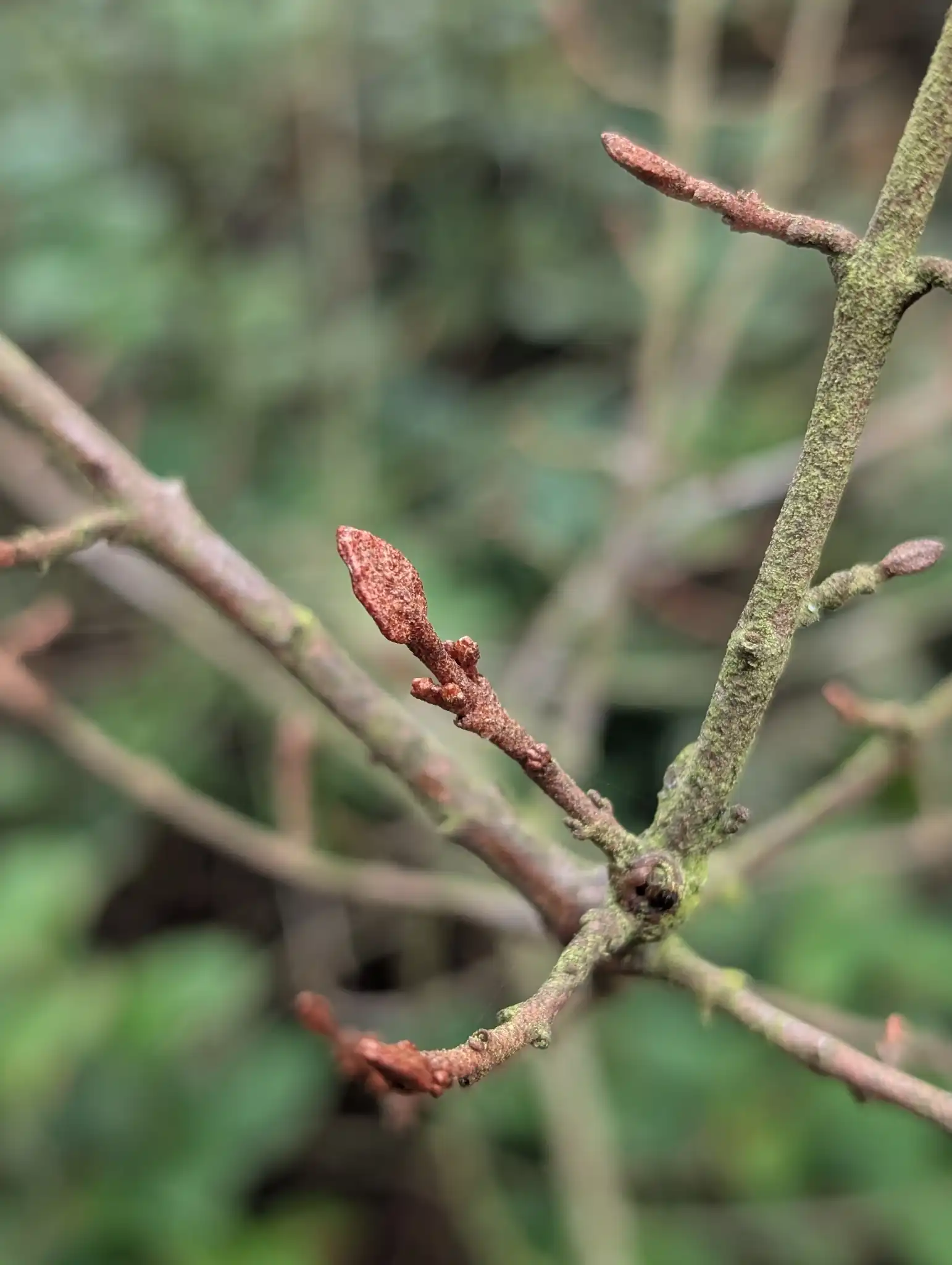
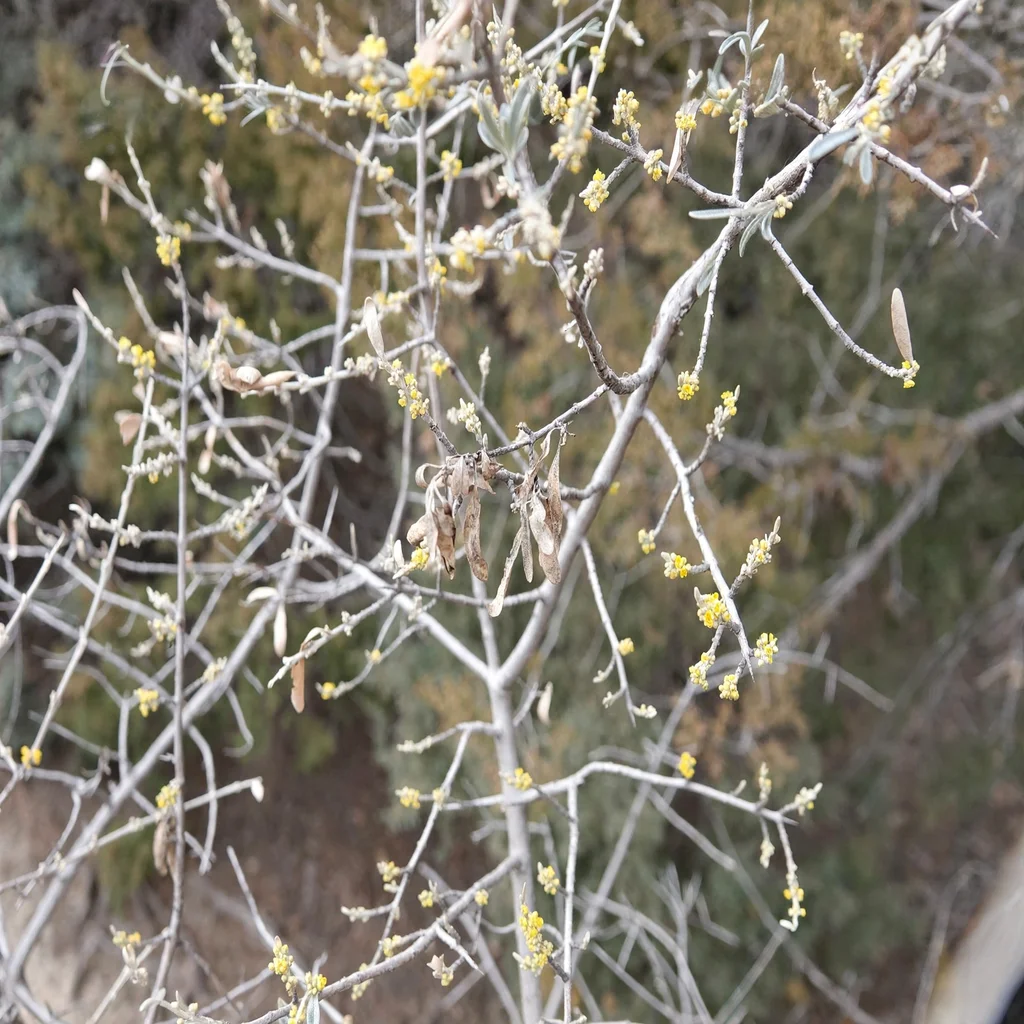
Shepherdia canadensis is a multi-stemmed, deciduous North American shrub growing three to thirteen feet tall with scruffy brown scales on its young stems. In mid-spring, inconspicuous yellow axillary flowers lacking petals bloom prior to leaf emergence.
Silvery leaf undersides dotted with distinct rust-brown scales distinguish this species across its native woodland and riverbank habitats. Nitrogen-fixing root nodules allow it to establish successfully on dry, highly alkaline, and nutrient-depleted mineral soils.
Uses & Benefits:
Essentials
At a Glance
Plant Type
Shrub
Height
157"
Width
157"
Light
Full Sun, Partial Sun
Zones
4, 5, 6, 7
Water
Low
Humidity
Moderate
Lifespan
Perennial
Native To
North America
Toxicity
Non-toxic
Bloom period
Mid spring – Early summer
In flower about 3 months of the year
Planting
How to Grow
- Select an open site in full sun or partial shade with sharply draining, light mineral soil.
- Space multiple plants four to six feet apart to encourage cross-pollination between sexes.
- Water thoroughly upon planting until roots establish, after which artificial irrigation is rarely needed.
- Avoid adding nitrogen fertilizers or heavy organic amendments to the planting hole.
Pro Tip
Plant both male and female specimens close together, as isolated female shrubs will fail to set fruit without a male pollinator nearby.
Keep It Thriving
Care Guide
Do
- Provide loose, gravelly, or sandy soil with excellent drainage.
- Ensure both male and female plants are present for berry set.
Don't
- Do not plant in heavy, poorly drained clay soils prone to waterlogging.
- Do not apply nitrogen fertilizers, which degrade the plant's natural root symbiosis.
- Avoid hard pruning into old, leafless wood that lacks active buds.
Seasonal Care Calendar
| Task | Jan | Feb | Mar | Apr | May | Jun | Jul | Aug | Sep | Oct | Nov | Dec |
|---|---|---|---|---|---|---|---|---|---|---|---|---|
| Mulch | ||||||||||||
| Pest Check | ||||||||||||
| Plant | ||||||||||||
| Prune |
Watch Out For
Pests & Diseases
Common Pests
Common Diseases
In the Garden
Landscape Uses & Companions
Landscape Uses
Multiply
Propagation Methods
Good to Know
Common Questions
Canada Buffaloberry questions
What zones can Canada Buffaloberry grow in?
Canada Buffaloberry is hardy in USDA Zones 4–7: in that range it survives winter in the ground. Warmer than Zone 7, winter isn't the problem: it prefers colder winters, and summer heat can shorten its life.
Is Canada Buffaloberry deer resistant?
Not reliably. Deer may browse Canada Buffaloberry, especially tender spring growth — plan on repellents or fencing where pressure is high.
When does Canada Buffaloberry bloom?
Canada Buffaloberry typically blooms from mid-spring to early summer. Exact timing shifts a week or two with your zone — Sow's bloom calendar maps it to your garden.
Does Canada Buffaloberry need full sun?
Canada Buffaloberry does best in full sun to part shade. In hot climates, afternoon shade keeps blooms fresher longer.
Is Canada Buffaloberry drought tolerant?
Yes — once established (usually after the first full season), Canada Buffaloberry handles dry spells with minimal watering. Water deeply its first year to build the root system that makes that possible.
More Shepherdia to compare
Keep exploring
Explore the genus
Hardy in your zone?
Grow Canada Buffaloberry with confidence
See it in a design of your actual yard, get zone-matched care reminders, and track it season by season in your garden journal.