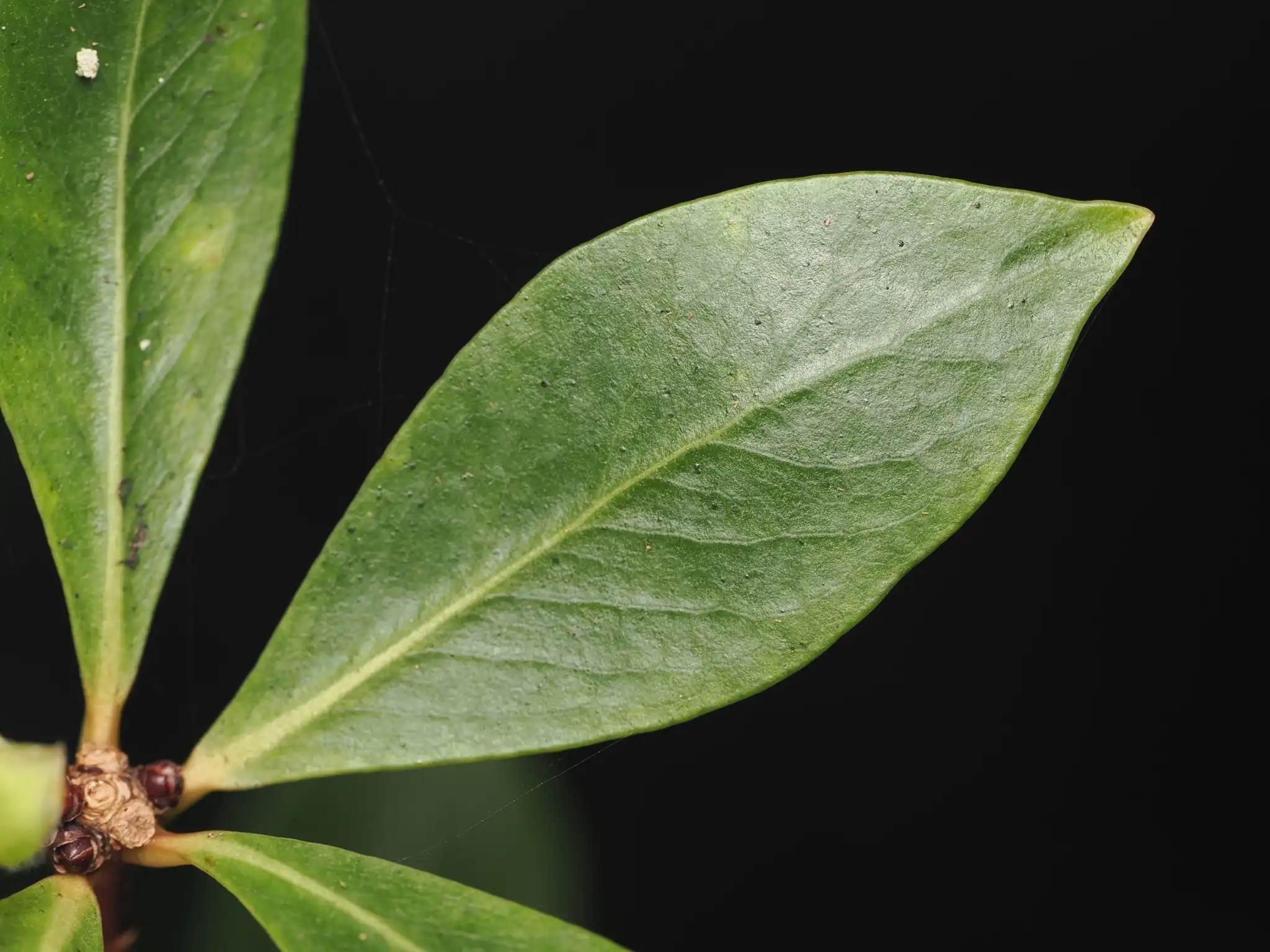
The Story
Plant Bio
Pittosporum cornifolium is an evergreen epiphytic shrub native to New Zealand, forming an open structure with leathery, dark green leaves arranged in terminal whorls. In late winter to early spring, it produces clusters of fragrant, light red to yellow flowers followed by woody capsules that split to reveal seeds wrapped in sticky orange pulp.
Unlike standard garden shrubs, this species naturally grows attached to tree trunks or rocky ledges, giving it a lax, spreading habit and an absolute requirement for aeration around its root zone. Its shiny foliage and small terminal flower clusters make it a distinctive specimen for container culture and raised rockeries.
Uses & Benefits:
Essentials
At a Glance
Plant Type
Shrub
Height
79"
Width
48"
Light
Full Sun, Partial Sun
Zones
9, 10
Water
Low to moderate
Humidity
Moderate to high
Lifespan
Perennial
Native To
New Zealand
Toxicity
Non-toxic
Bloom period
Late winter – Early spring
In flower about 2 months of the year
Planting
How to Grow
- Select a planting site in partial shade to full sun protected from severe freezing winds and intense, baking afternoon heat.
- Prepare a loose, organic substrate rich in coarse bark chips, perlite, or gravel to mirror natural epiphytic root aeration.
- Position the shrub so the root crown sits slightly elevated above the surrounding soil level to prevent water pooling.
- Water moderately during active growth, allowing the upper layer of soil to dry out between applications.
Pro Tip
Plant in coarse, bark-rich potting media or an elevated rockery; burying the root crown in heavy garden soil induces rapid root rot.
Keep It Thriving
Care Guide
Do
- Provide sharp drainage using loose, bark-rich substrates or raised beds.
- Protect plants from severe freezing winds in marginal microclimates.
- Tip-prune light growth after flowering to encourage branching.
Don't
- Do not plant deeply into heavy or compacted garden clay.
- Do not cut severely back into old, leafless wood.
- Do not allow pots to sit in standing water.
Seasonal Care Calendar
| Task | Jan | Feb | Mar | Apr | May | Jun | Jul | Aug | Sep | Oct | Nov | Dec |
|---|---|---|---|---|---|---|---|---|---|---|---|---|
| Fertilize | ||||||||||||
| Pest Check | ||||||||||||
| Prune | ||||||||||||
| Winter Prep |
Watch Out For
Pests & Diseases
Common Pests
Common Diseases
In the Garden
Landscape Uses & Companions
Landscape Uses
Multiply
Propagation Methods
Good to Know
Common Questions
Cornel-Leaved Pittosporum questions
What zones can Cornel-Leaved Pittosporum grow in?
Cornel-Leaved Pittosporum is hardy in USDA Zones 9–10: in that range it survives winter in the ground. Colder than Zone 9, grow it in a container you can move to shelter for the winter.
Is Cornel-Leaved Pittosporum deer resistant?
Not reliably. Deer may browse Cornel-Leaved Pittosporum, especially tender spring growth — plan on repellents or fencing where pressure is high.
When does Cornel-Leaved Pittosporum bloom?
Cornel-Leaved Pittosporum typically blooms from late winter to early spring. Exact timing shifts a week or two with your zone — Sow's bloom calendar maps it to your garden.
Does Cornel-Leaved Pittosporum need full sun?
Cornel-Leaved Pittosporum does best in full sun to part shade. In hot climates, afternoon shade keeps blooms fresher longer.
Is Cornel-Leaved Pittosporum drought tolerant?
Yes — once established (usually after the first full season), Cornel-Leaved Pittosporum handles dry spells with minimal watering. Water deeply its first year to build the root system that makes that possible.
More Pittosporum to compare
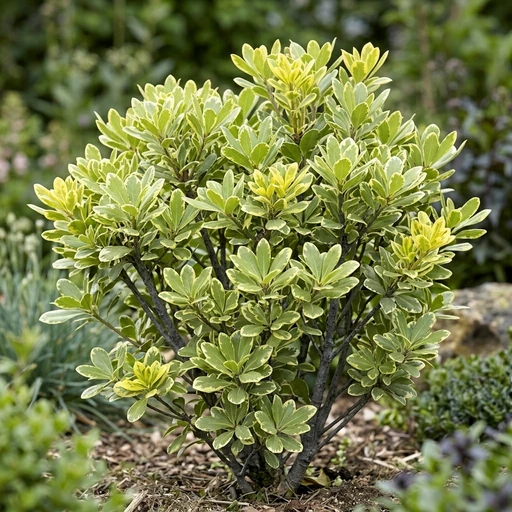
Mojo Pittosporum
Pittosporum tobira 'Mojo'
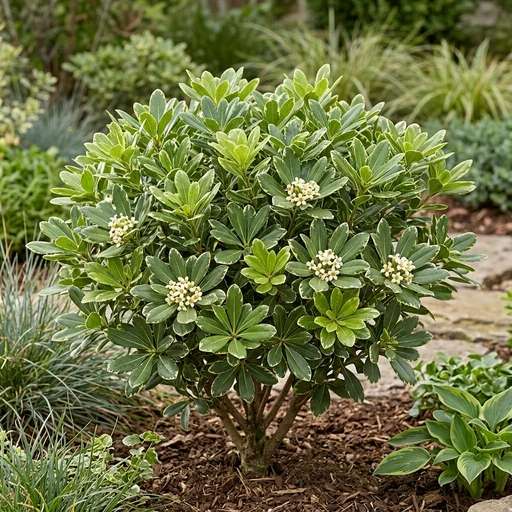
Wheeler's Dwarf Pittosporum
Pittosporum tobira 'Wheeler's Dwarf'
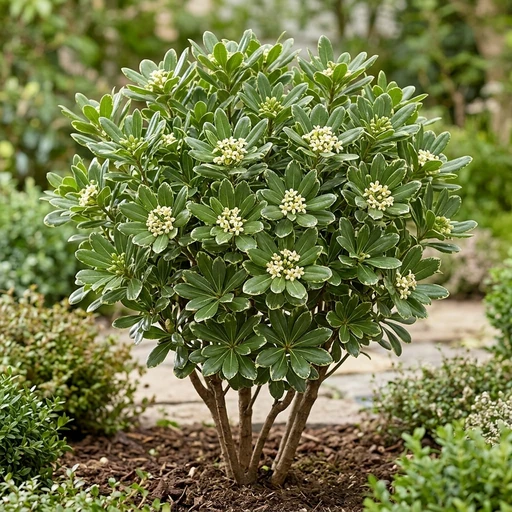
Japanese Pittosporum
Pittosporum tobira
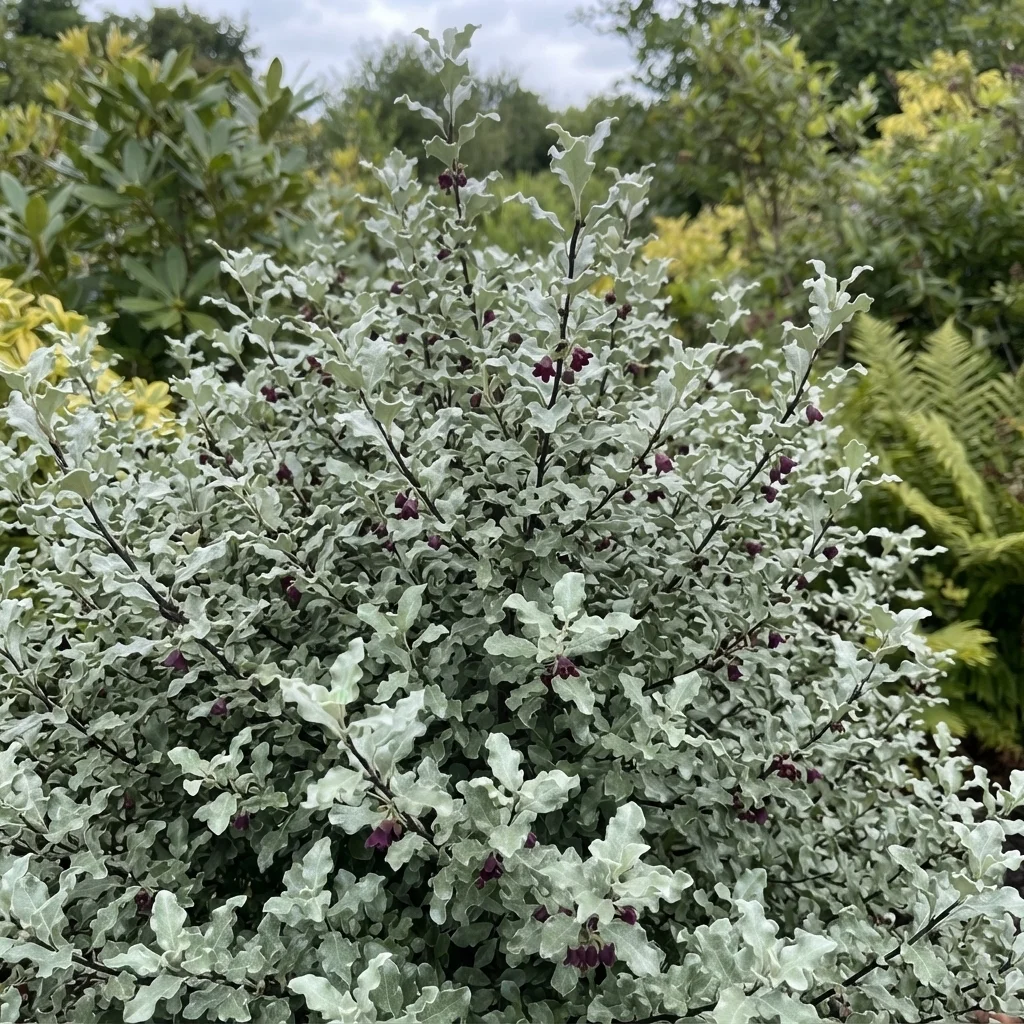
James Stirling Kohuhu
Pittosporum tenuifolium 'James Stirling'
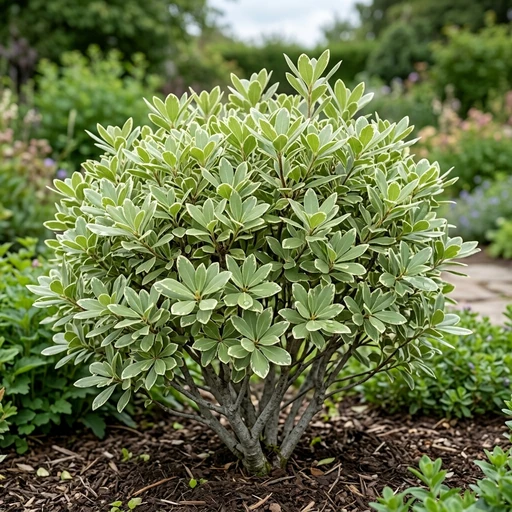
Variegated Japanese Pittosporum
Pittosporum tobira 'Variegatum'
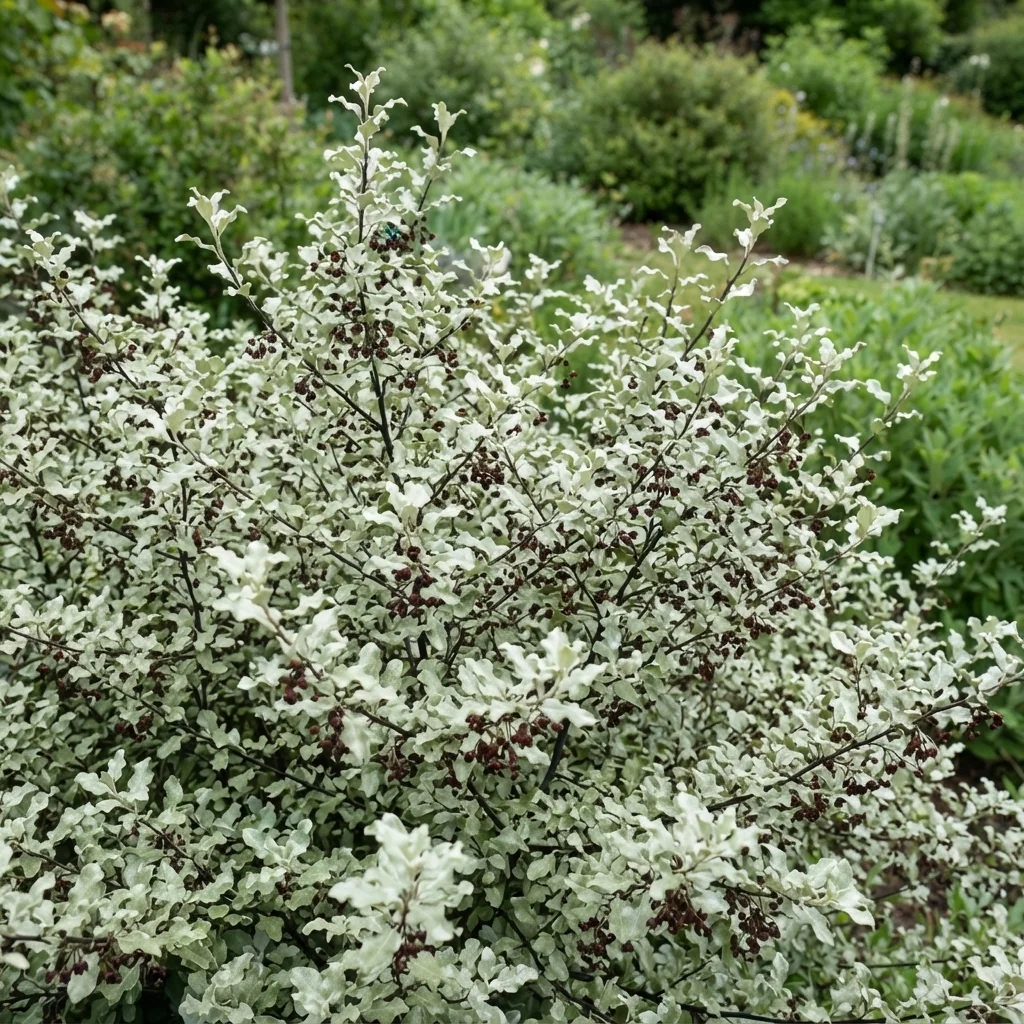
Silver Sheen Kohuhu
Pittosporum tenuifolium 'Silver Sheen'
Keep exploring
Explore the genus
Hardy in your zone?
Grow Cornel-Leaved Pittosporum with confidence
See it in a design of your actual yard, get zone-matched care reminders, and track it season by season in your garden journal.