The Story
Plant Bio
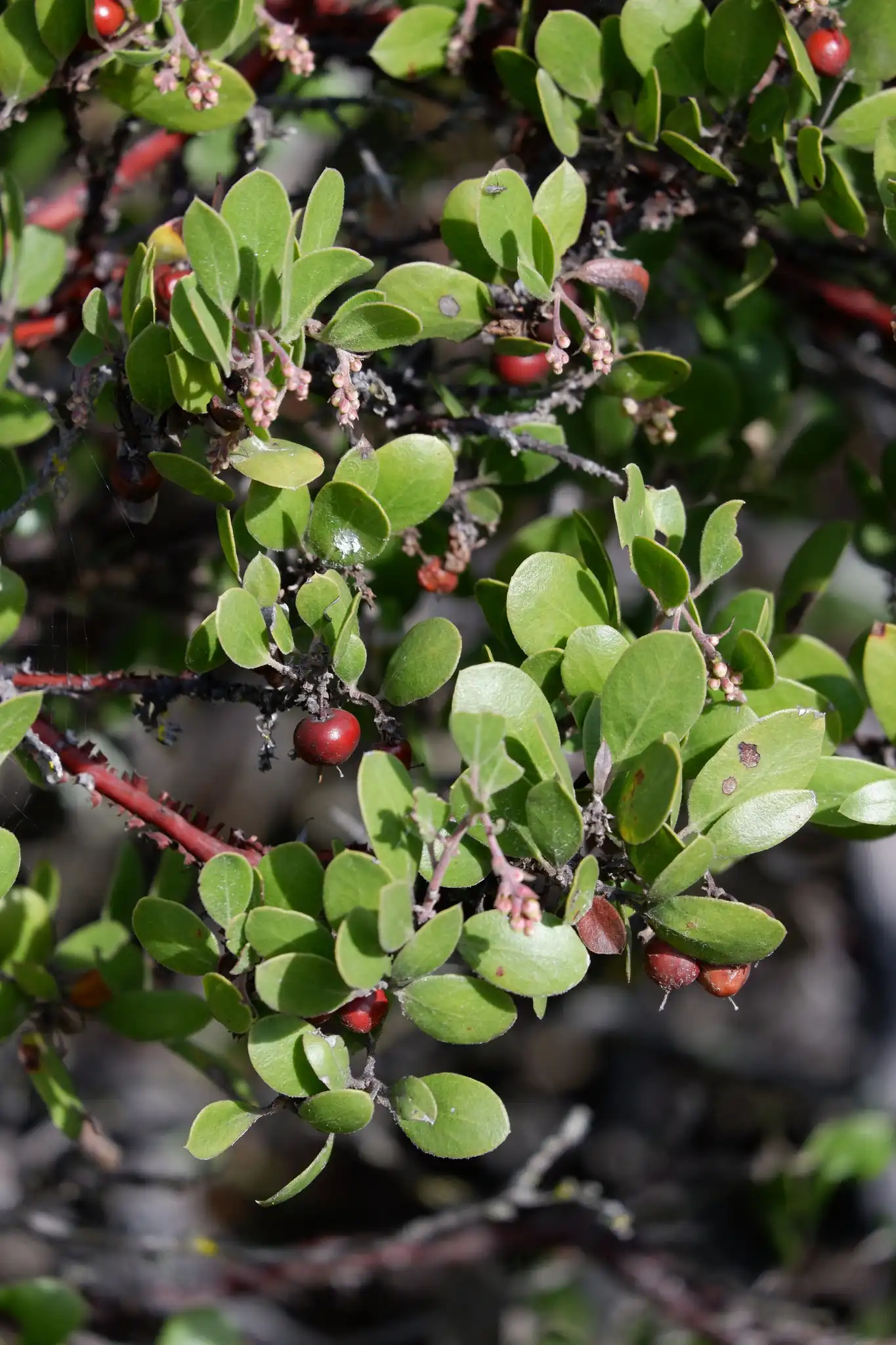
Arctostaphylos rudis, the sand mesa manzanita, is a perennial evergreen shrub forming a dense rounded crown 3 to 7 feet tall and wide, with 1 to 3 cm broadly oval hairy sage-green leaves on purplish stems. The display comes from urn-shaped racemes of pink to white to blush-pink flowers in fall through spring, followed by small drupes that birds eat.
This species is distinguished by peeling maroon to shaggy mahogany bark and persistent hairy foliage selected in nurseries for black-spot resistance. It is rare in the wild in southwest San Luis Obispo and northwest Santa Barbara counties, yet it is easy in gardens given sand or sandstone, fast to medium drainage at pH 5.0 to 7.0, and very low summer water.
Uses & Benefits:
Essentials
At a Glance
Plant Type
Shrub
Height
84"
Width
84"
Light
Full Sun, Partial Sun
Zones
9, 10
Water
Very Low
Humidity
Salt tolerant, prefers dry coastal air
Lifespan
Long-lived evergreen shrub
Native To
California, USA
Toxicity
Unknown
Bloom period
Fall – Spring
In flower about 9 months of the year
Planting
How to Grow
- Plant in fall in full sun to part sun in sand or sandstone with fast to medium drainage and pH 5.0 to 7.0.
- Set the rootball level with the soil and backfill with native sand without water-holding amendments.
- Water deeply at planting to settle the soil, then taper to very low water, at most twice per month in summer once established.
- Keep mulch pulled back from the crown and avoid overhead watering and subfreezing winds.
Pro Tip
Plant in fall with the rains in fast-draining sand and limit summer water to twice a month once established; never cut back into old leafless wood, which does not resprout.
Keep It Thriving
Care Guide
Do
- Plant in fall with seasonal rains in fast-draining sand
- Give full sun to part sun in a coastal mild spot
- Limit summer irrigation to twice a month at most once established
Don't
- Do not overwater in summer or plant in clay or wet soil
- Do not cut back into old leafless wood
- Do not fertilize heavily or enrich with moisture-holding compost
Seasonal Care Calendar
| Task | Jan | Feb | Mar | Apr | May | Jun | Jul | Aug | Sep | Oct | Nov | Dec |
|---|---|---|---|---|---|---|---|---|---|---|---|---|
| Pest Check | ||||||||||||
| Plant | ||||||||||||
| Propagate | ||||||||||||
| Prune |
Watch Out For
Pests & Diseases
Common Pests
Common Diseases
In the Garden
Landscape Uses & Companions
Landscape Uses
Multiply
Propagation Methods
Good to Know
Common Questions
Sand Mesa Manzanita questions
What zones can Sand Mesa Manzanita grow in?
Sand Mesa Manzanita is hardy in USDA Zones 9–10: in that range it survives winter in the ground. Colder than Zone 9, grow it in a container you can move to shelter for the winter.
Is Sand Mesa Manzanita deer resistant?
Not reliably. Deer may browse Sand Mesa Manzanita, especially tender spring growth — plan on repellents or fencing where pressure is high.
When does Sand Mesa Manzanita bloom?
Sand Mesa Manzanita typically blooms from fall to spring. Exact timing shifts a week or two with your zone — Sow's bloom calendar maps it to your garden.
Does Sand Mesa Manzanita need full sun?
Sand Mesa Manzanita does best in full sun to part shade. In hot climates, afternoon shade keeps blooms fresher longer.
Is Sand Mesa Manzanita drought tolerant?
Yes — once established (usually after the first full season), Sand Mesa Manzanita handles dry spells with minimal watering. Water deeply its first year to build the root system that makes that possible.
More Arctostaphylos to compare
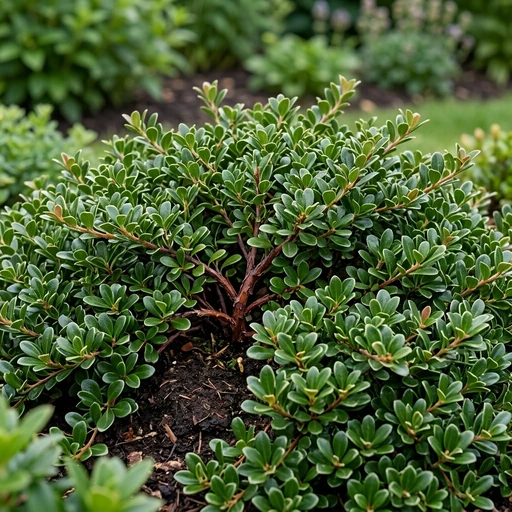
Massachusetts Common Bearberry
Arctostaphylos uva-ursi 'Massachusetts'
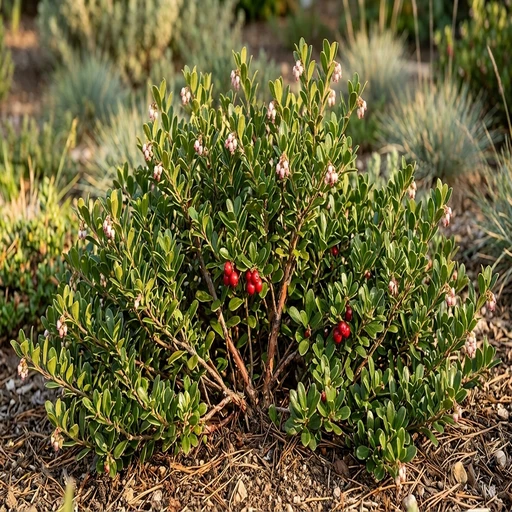
Bearberry
Arctostaphylos uva-ursi
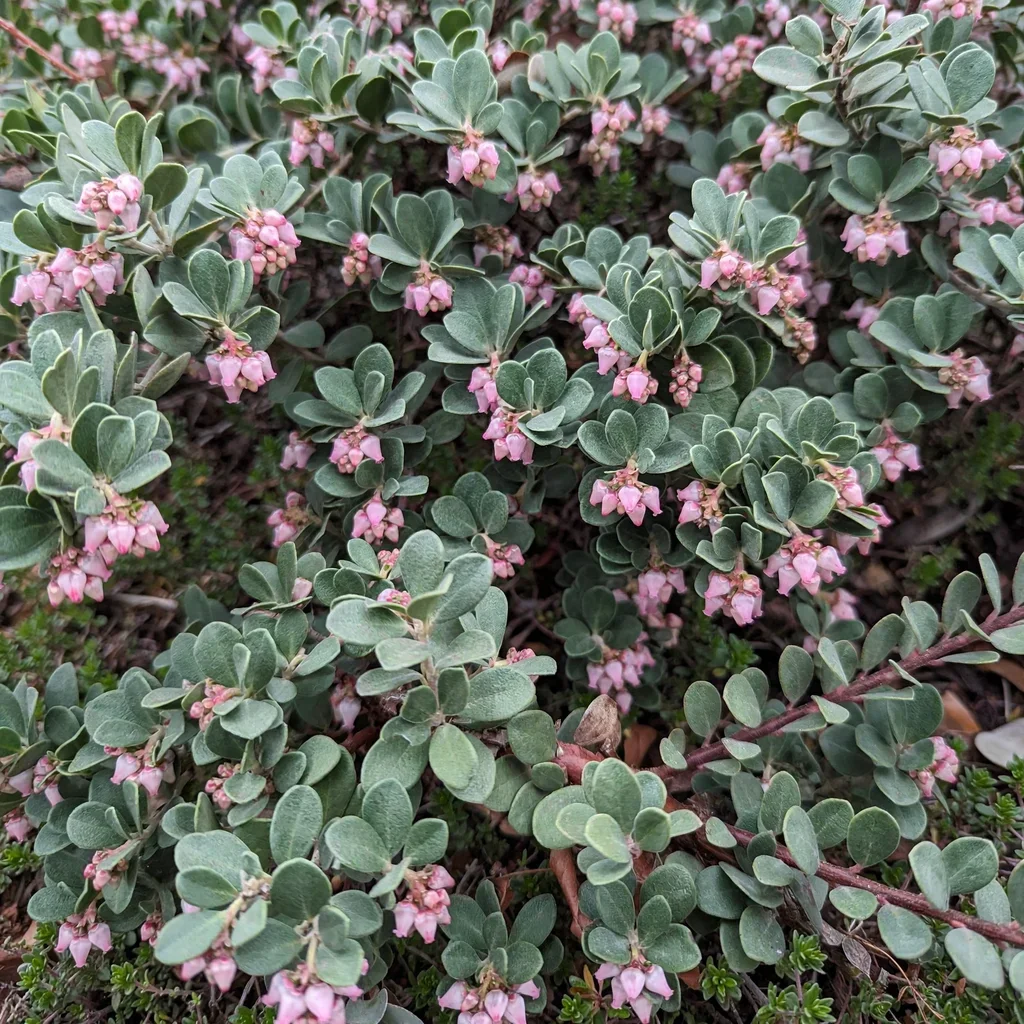
Ron Clendenen Manzanita
Arctostaphylos x media 'Ron Clendenen'
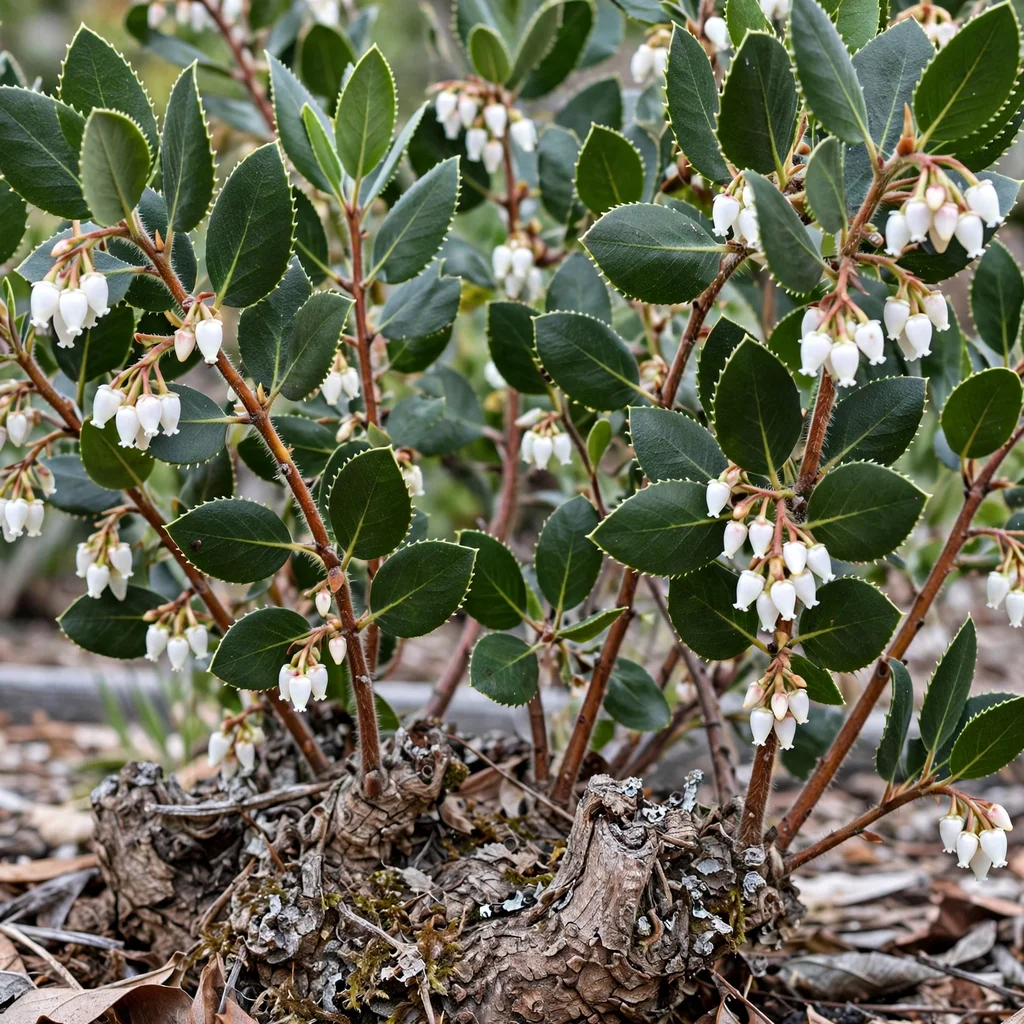
Brittleleaf Manzanita
Arctostaphylos crustacea
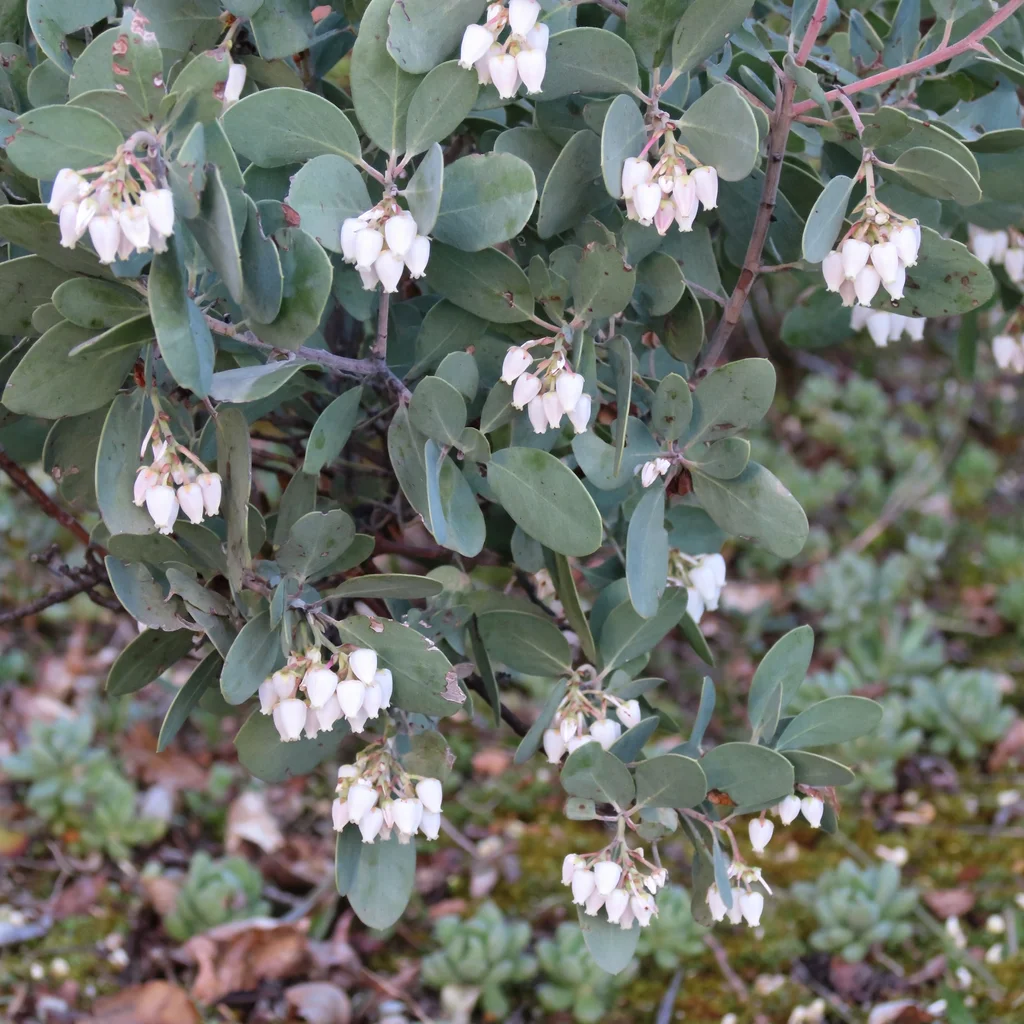
Common Manzanita
Arctostaphylos manzanita
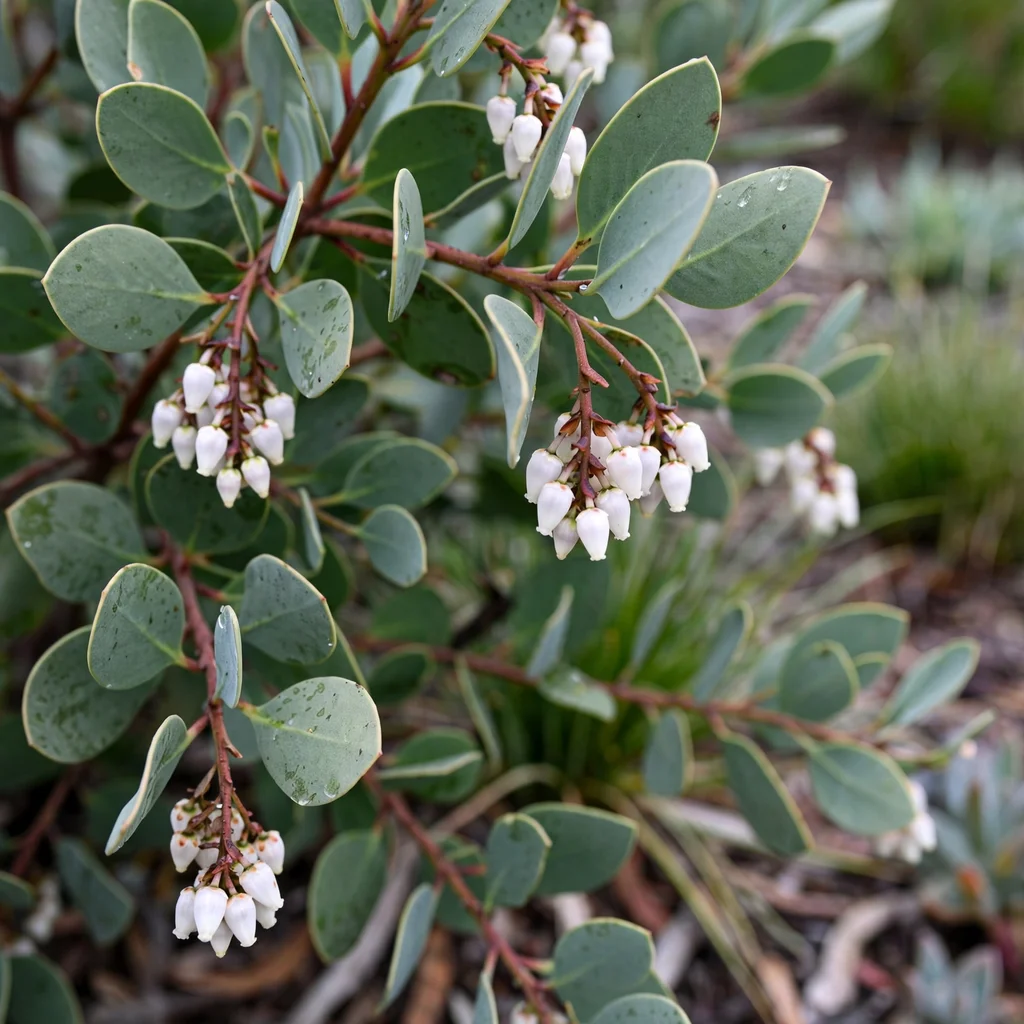
Rainbow Manzanita
Arctostaphylos rainbowensis
Keep exploring
Explore the genus
Hardy in your zone?
Grow Sand Mesa Manzanita with confidence
See it in a design of your actual yard, get zone-matched care reminders, and track it season by season in your garden journal.