The Story
Plant Bio
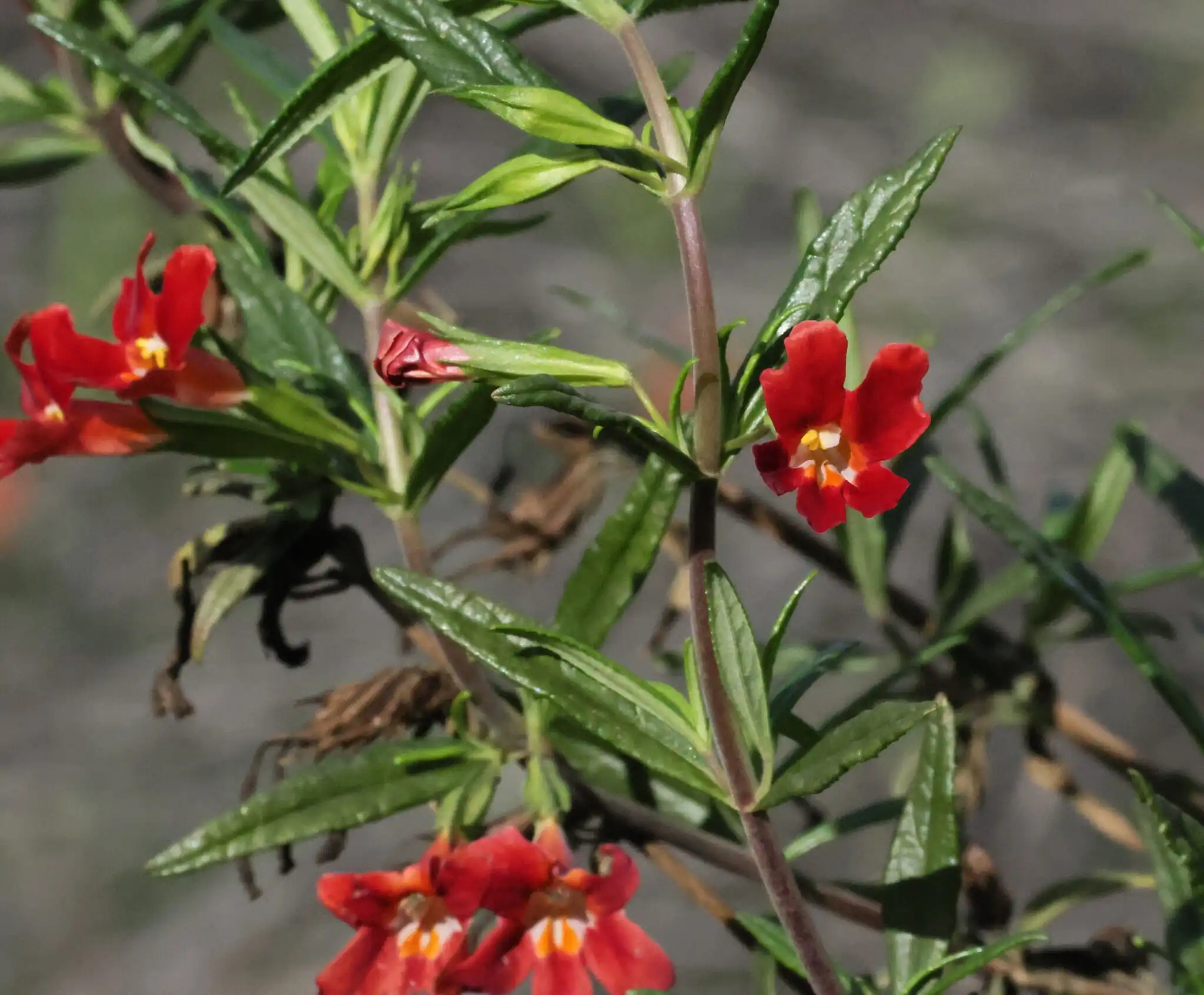
Diplacus puniceus is an evergreen subshrub native to dry slopes, chaparral, and coastal sage scrub of Southern California and Baja California. It grows two to five feet tall with slender, multi-branching stems and narrow, glossy dark green leaves that exude a sticky resin.
Unlike yellow or orange species in the genus, it produces tubular, two-lipped blossoms in shades of brick-red, crimson, and deep maroon through spring and summer. The flowers feature a broad corolla flared at the mouth, forming a primary nectar source for hummingbirds.
Uses & Benefits:
Essentials
At a Glance
Plant Type
Shrub
Height
60"
Width
60"
Light
Full Sun, Partial Sun
Zones
9, 10
Water
Low
Humidity
Low to Moderate
Lifespan
Perennial
Native To
California and Northwest Mexico
Toxicity
Non-toxic
Bloom period
Spring – Summer
In flower about 6 months of the year
Planting
How to Grow
- Select a planting site in full sun near the coast or partial shade in hotter inland areas.
- Ensure soil is coarse, sandy, or loamy with fast drainage to prevent water retention around roots.
- Water deep once at planting, then irrigate sparingly until the root system establishes.
- Cease routine summer watering once established to prevent soil-borne root rot pathogens.
Pro Tip
Prune stem tips lightly right after the main spring flower flush, taking care never to cut back into old leafless wood which lacks dormant buds to resprout.
Keep It Thriving
Care Guide
Do
- Provide fast-draining soil mixes or plant on elevated slopes.
- Pinch back active stem tips after spring flowering to maintain dense foliage.
- Allow the soil to dry completely between light waterings during initial establishment.
Don't
- Do not overwater during warm summer months.
- Do not prune hard into old bare wood.
- Do not apply high-nitrogen fertilizers that create weak, leggy stems.
Seasonal Care Calendar
| Task | Jan | Feb | Mar | Apr | May | Jun | Jul | Aug | Sep | Oct | Nov | Dec |
|---|---|---|---|---|---|---|---|---|---|---|---|---|
| Pest Check | ||||||||||||
| Plant | ||||||||||||
| Propagate | ||||||||||||
| Prune |
Watch Out For
Pests & Diseases
Common Pests
Common Diseases
In the Garden
Landscape Uses & Companions
Landscape Uses
Multiply
Propagation Methods
Good to Know
Common Questions
Red Bush Monkeyflower questions
What zones can Red Bush Monkeyflower grow in?
Red Bush Monkeyflower is hardy in USDA Zones 9–10: in that range it survives winter in the ground. Colder than Zone 9, grow it in a container you can move to shelter for the winter.
Is Red Bush Monkeyflower deer resistant?
Yes — Red Bush Monkeyflower is rated deer-resistant. Deer typically pass it over, though extreme hunger can override any plant's defenses.
When does Red Bush Monkeyflower bloom?
Red Bush Monkeyflower typically blooms from spring to summer. Exact timing shifts a week or two with your zone — Sow's bloom calendar maps it to your garden.
Does Red Bush Monkeyflower need full sun?
Red Bush Monkeyflower does best in full sun to part shade. In hot climates, afternoon shade keeps blooms fresher longer.
Is Red Bush Monkeyflower drought tolerant?
Yes — once established (usually after the first full season), Red Bush Monkeyflower handles dry spells with minimal watering. Water deeply its first year to build the root system that makes that possible.
More Diplacus to compare
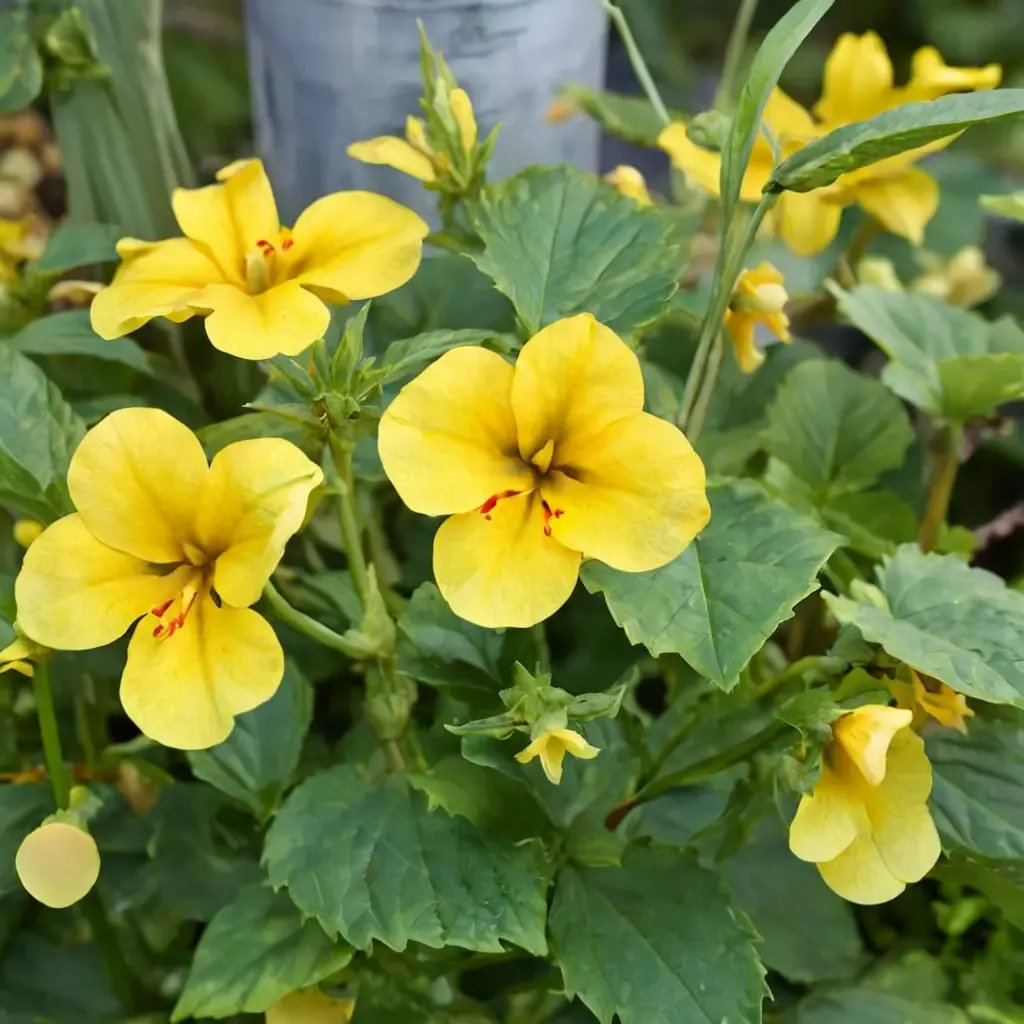
Pamela Monkey Flower
Diplacus aurantiacus 'Pamela'
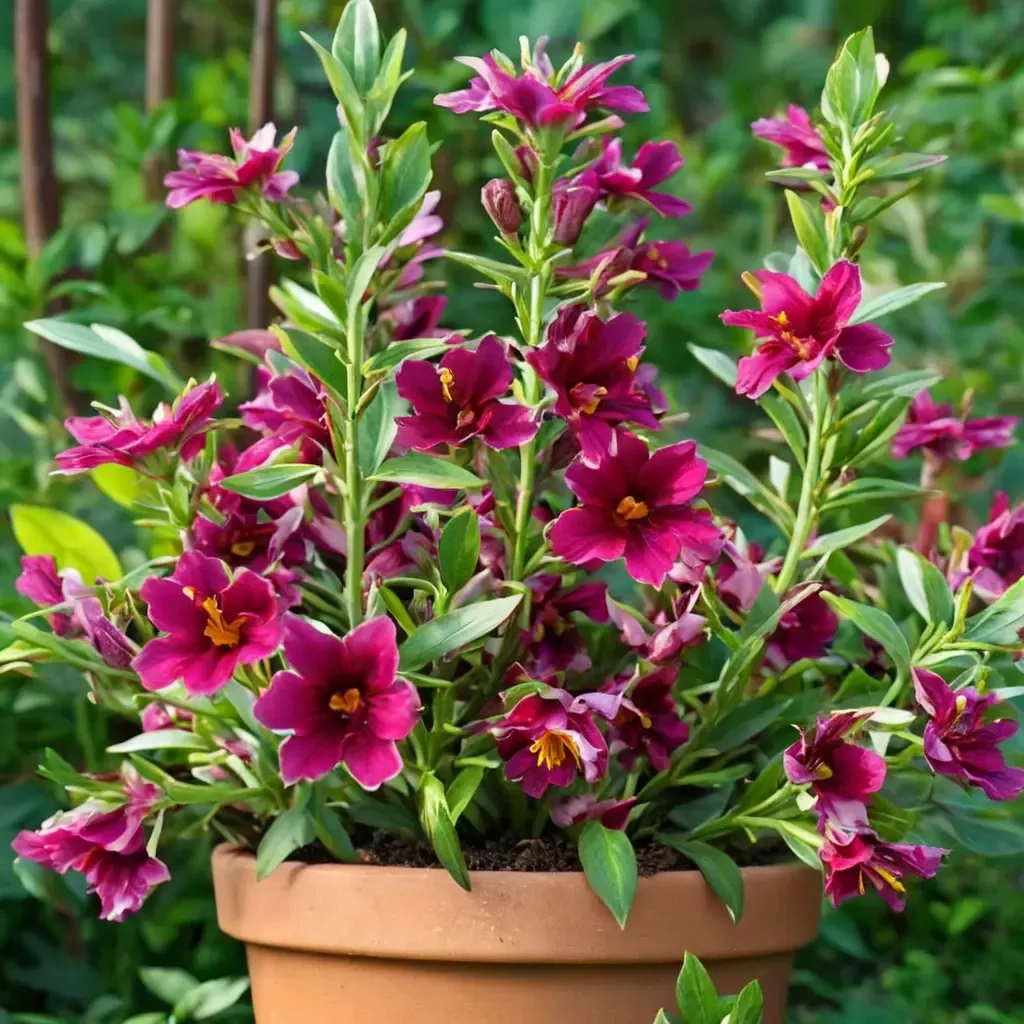
Jelly Bean Betabel Monkey Flower
Diplacus x hybrida 'Jelly Bean Betabel'
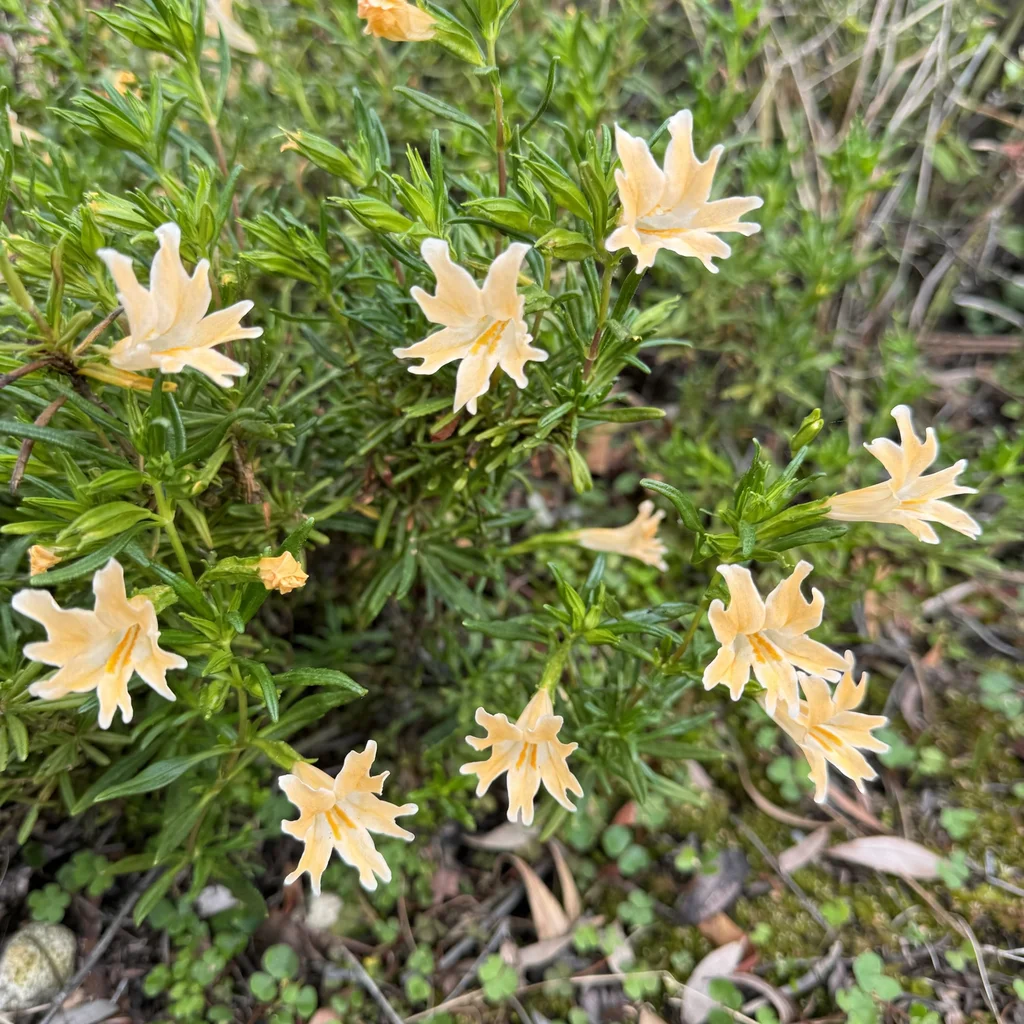
Monterey Monkeyflower
Diplacus linearis
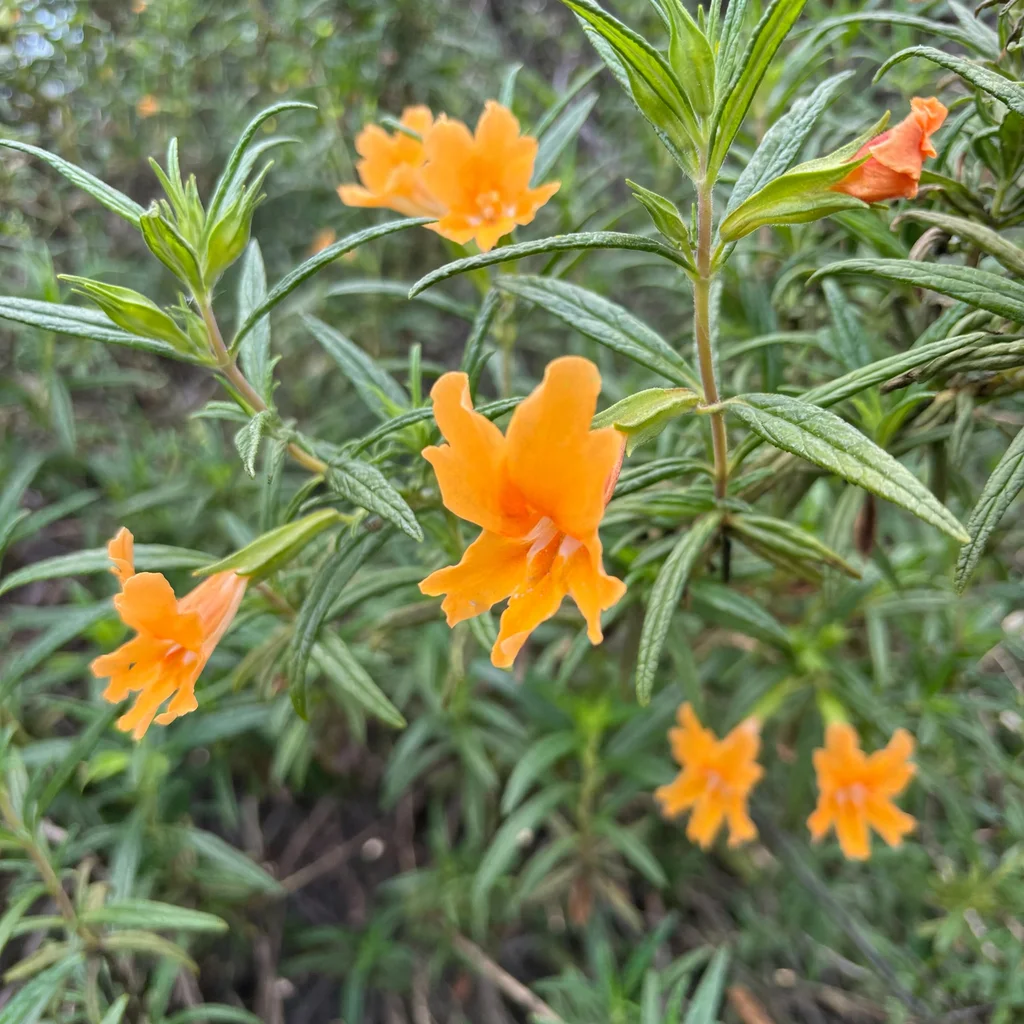
Southern Bush Monkeyflower
Diplacus longiflorus
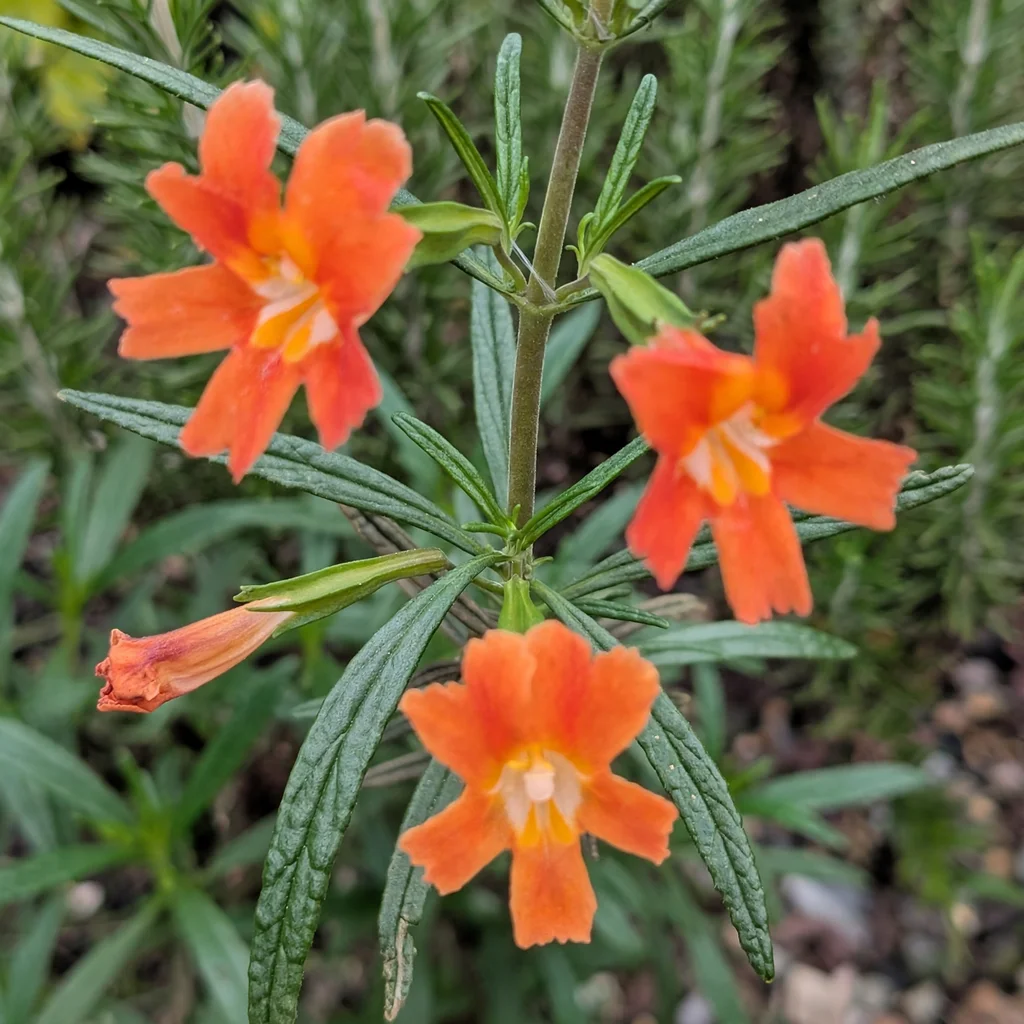
Orange Bush Monkeyflower
Diplacus x australis
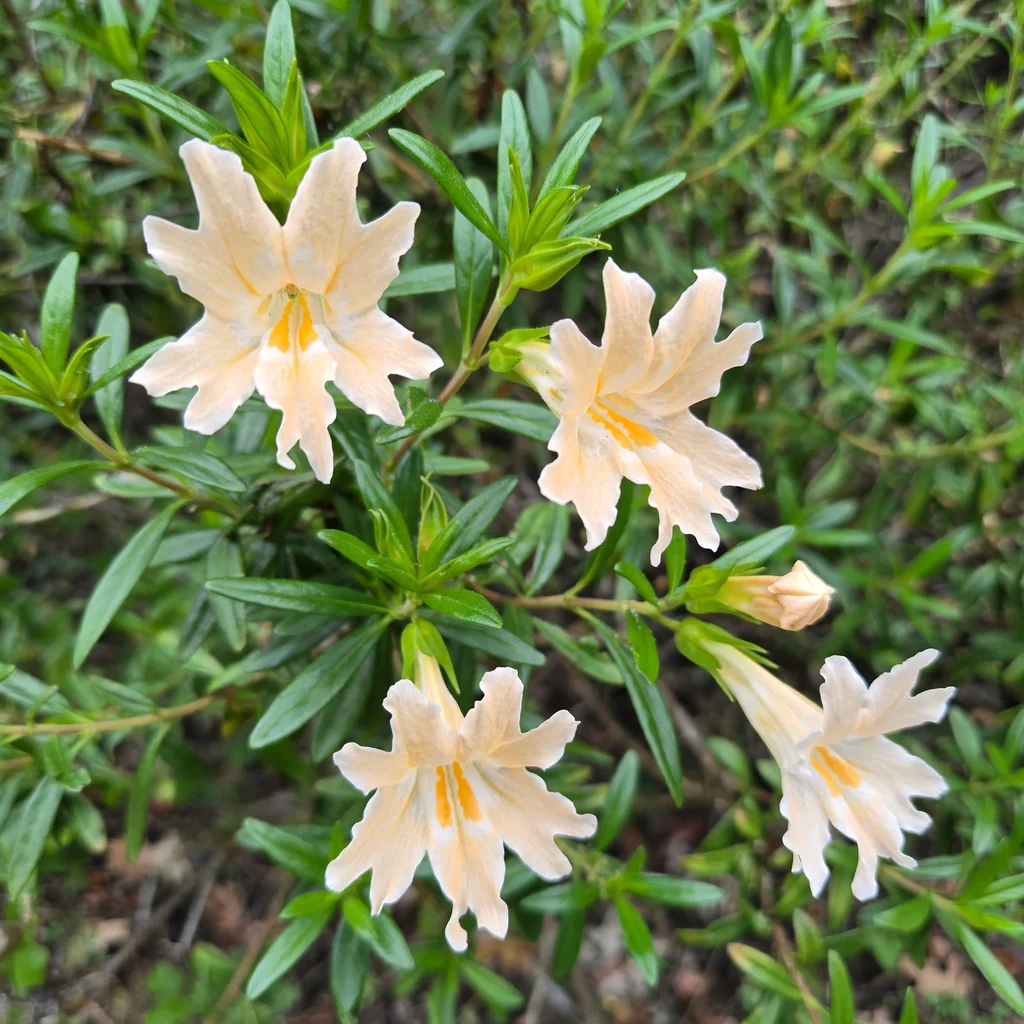
Large-Flowered Bush Monkeyflower
Diplacus grandiflorus
Keep exploring
Explore the genus
Hardy in your zone?
Grow Red Bush Monkeyflower with confidence
See it in a design of your actual yard, get zone-matched care reminders, and track it season by season in your garden journal.