The Story
Plant Bio
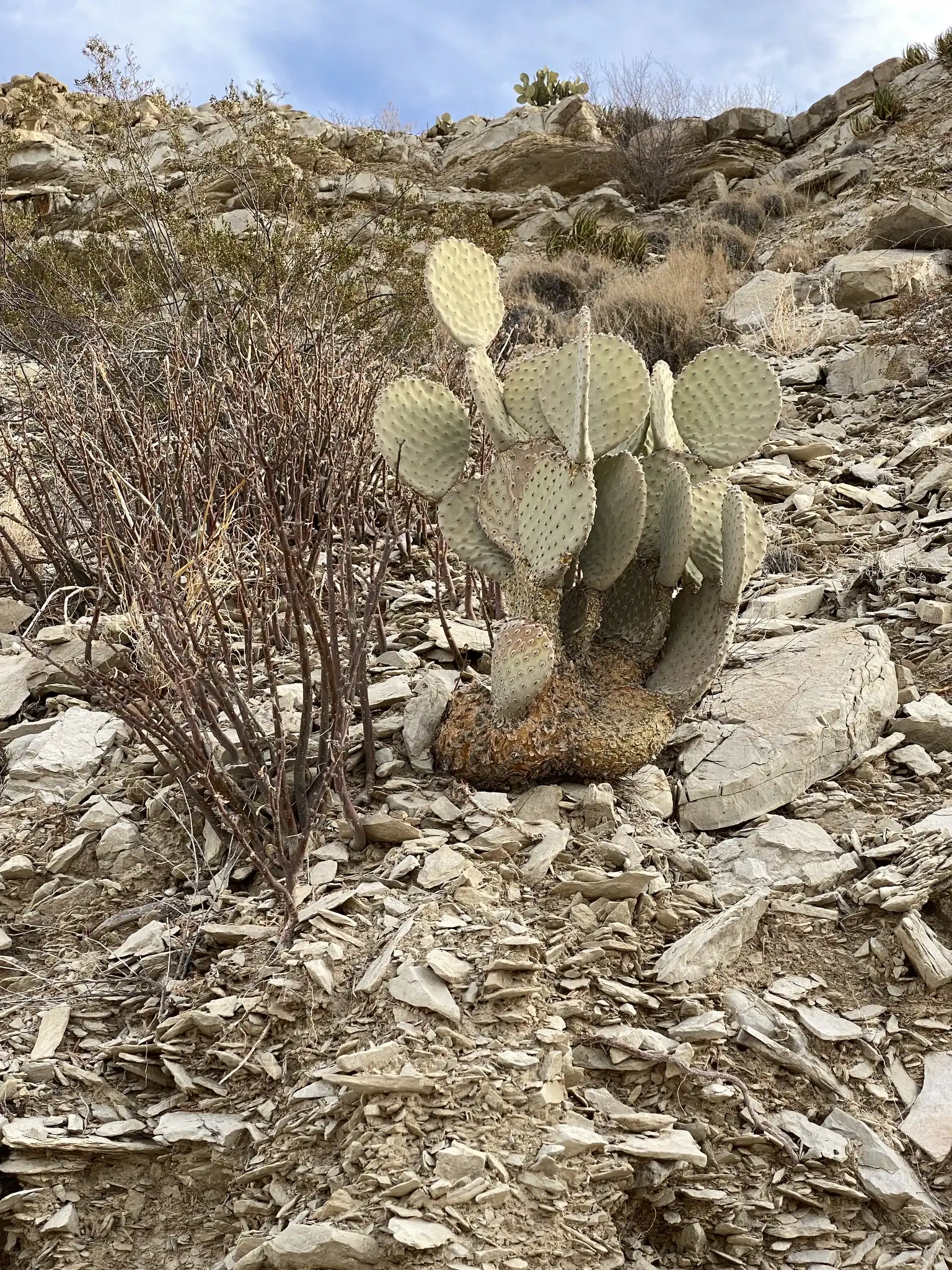
Opuntia rufida is a multi-branched shrubby prickly pear from the Chihuahuan Desert of southwest Texas and northeast Mexico, forming an upright trunk with many flat circular pads to five feet tall and wide. The pads are dull gray-green to blue-green and carry no long spines, storing water through heat and drought on rocky limestone slopes from 1500 to 4000 feet.
What distinguishes it is the dense covering of rust-red to cinnamon-brown glochids in each areole, barbed bristles that detach at a touch and drift airborne to irritate skin and eyes. The cup-shaped flowers open brilliant yellow at the pad tips and age through orange to red-orange, so yellow, orange and red flowers three to four inches across stand open on the same plant at once.
Uses & Benefits:
Essentials
At a Glance
Plant Type
Cactus Succulent
Height
60"
Width
72"
Light
Full Sun, Partial Sun
Zones
8, 9, 10
Water
Low
Humidity
Low
Lifespan
Perennial
Native To
Texas, Northeastern Mexico
Toxicity
Non-toxic but glochids irritate skin and eyes
Bloom period
Spring – Summer
In flower about 6 months of the year
Planting
How to Grow
- Set plants in full sun to light part shade in dry, very well-drained rocky or sandy soil with the base above winter wet.
- Water deeply then leave to dry completely; established plants need very little water and chronic wet rots roots.
- Give heat and low humidity with open air flow and keep pads dry in winter.
- Handle only with tongs, heavy gloves and eye protection; cold hardy to about 15F in zones 8-11.
Pro Tip
Blind means spineless, not harmless — handle only with tongs plus gloves and eye protection, because the rust-red glochids detach airborne at a touch.
Keep It Thriving
Care Guide
Do
- Grow in full sun with sharp drainage
- Allow soil to dry between waterings
- Check pad joints in summer for white cottony scale
Don't
- Do not overwater or plant in clay that holds winter wet
- Do not touch pads barehanded or rub eyes when working
- Do not grow in humid, poorly ventilated spots
Seasonal Care Calendar
| Task | Jan | Feb | Mar | Apr | May | Jun | Jul | Aug | Sep | Oct | Nov | Dec |
|---|---|---|---|---|---|---|---|---|---|---|---|---|
| Pest Check | ||||||||||||
| Plant | ||||||||||||
| Spring Cleanup | ||||||||||||
| Winter Prep |
Watch Out For
Pests & Diseases
Common Pests
Common Diseases
In the Garden
Landscape Uses & Companions
Landscape Uses
Multiply
Propagation Methods
Good to Know
Common Questions
Blind Prickly Pear questions
What zones can Blind Prickly Pear grow in?
Blind Prickly Pear is hardy in USDA Zones 8–10: in that range it survives winter in the ground. Colder than Zone 8, grow it in a container you can move to shelter for the winter, or as an annual.
When does Blind Prickly Pear bloom?
Blind Prickly Pear typically blooms from spring to summer. Exact timing shifts a week or two with your zone — Sow's bloom calendar maps it to your garden.
Does Blind Prickly Pear need full sun?
Blind Prickly Pear does best in full sun to part shade. In hot climates, afternoon shade keeps blooms fresher longer.
Is Blind Prickly Pear drought tolerant?
Yes — once established (usually after the first full season), Blind Prickly Pear handles dry spells with minimal watering. Water deeply its first year to build the root system that makes that possible.
More Opuntia to compare
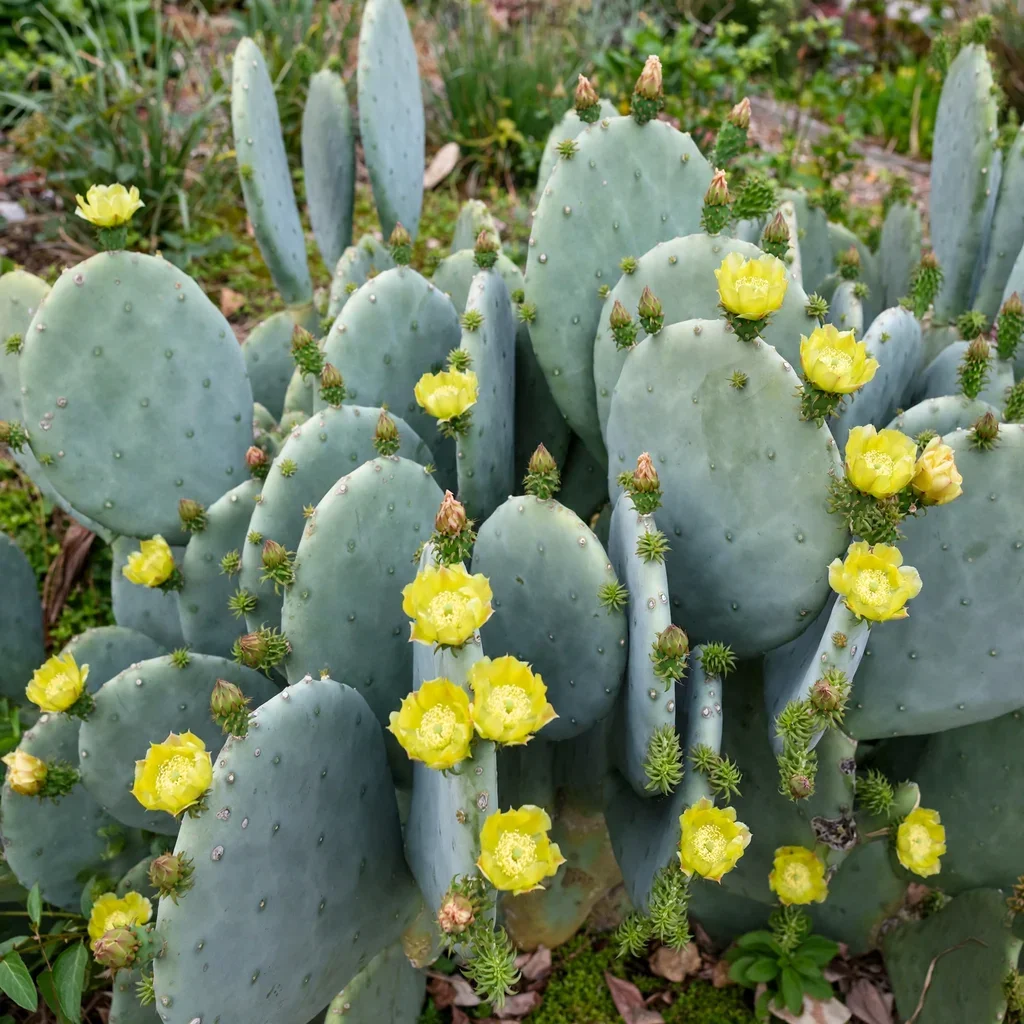
Spineless Prickly Pear
Opuntia cacanapa 'Ellisiana'
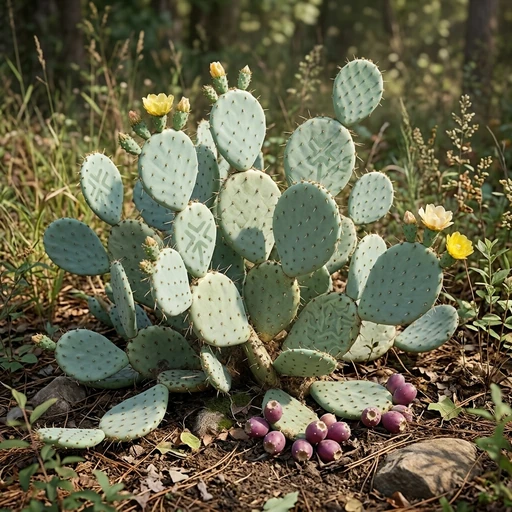
Prickly Pear Cactus
Opuntia humifusa
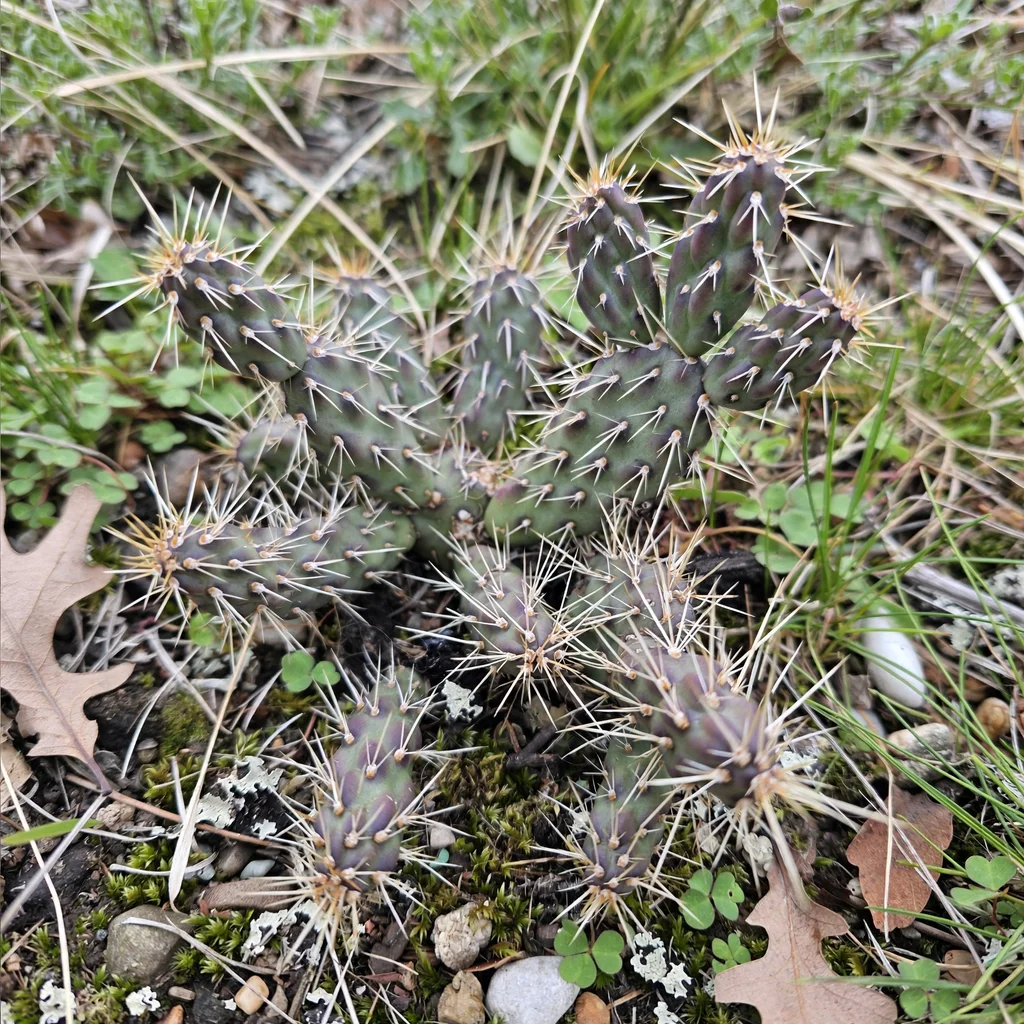
Brittle Prickly Pear
Opuntia fragilis
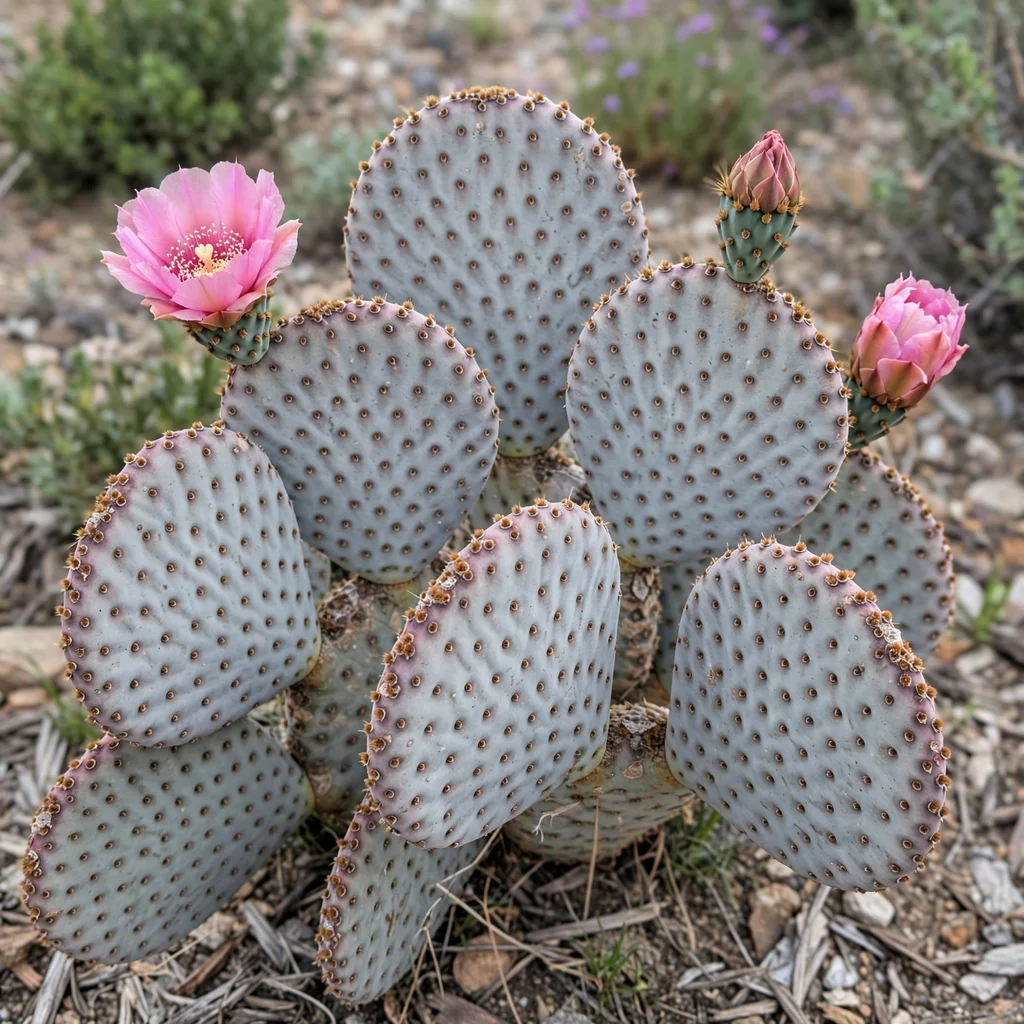
Beavertail Cactus
Opuntia basilaris
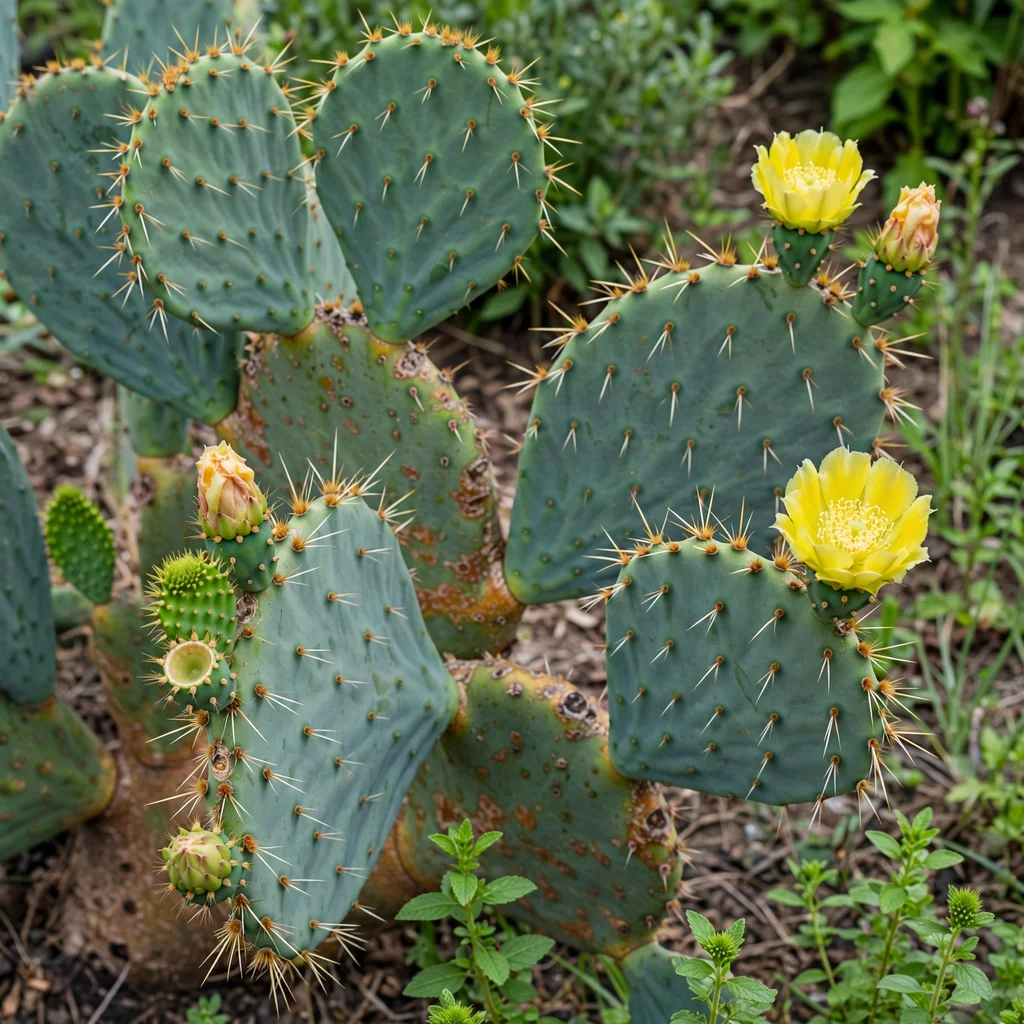
Old Mexico Prickly Pear
Opuntia gomei
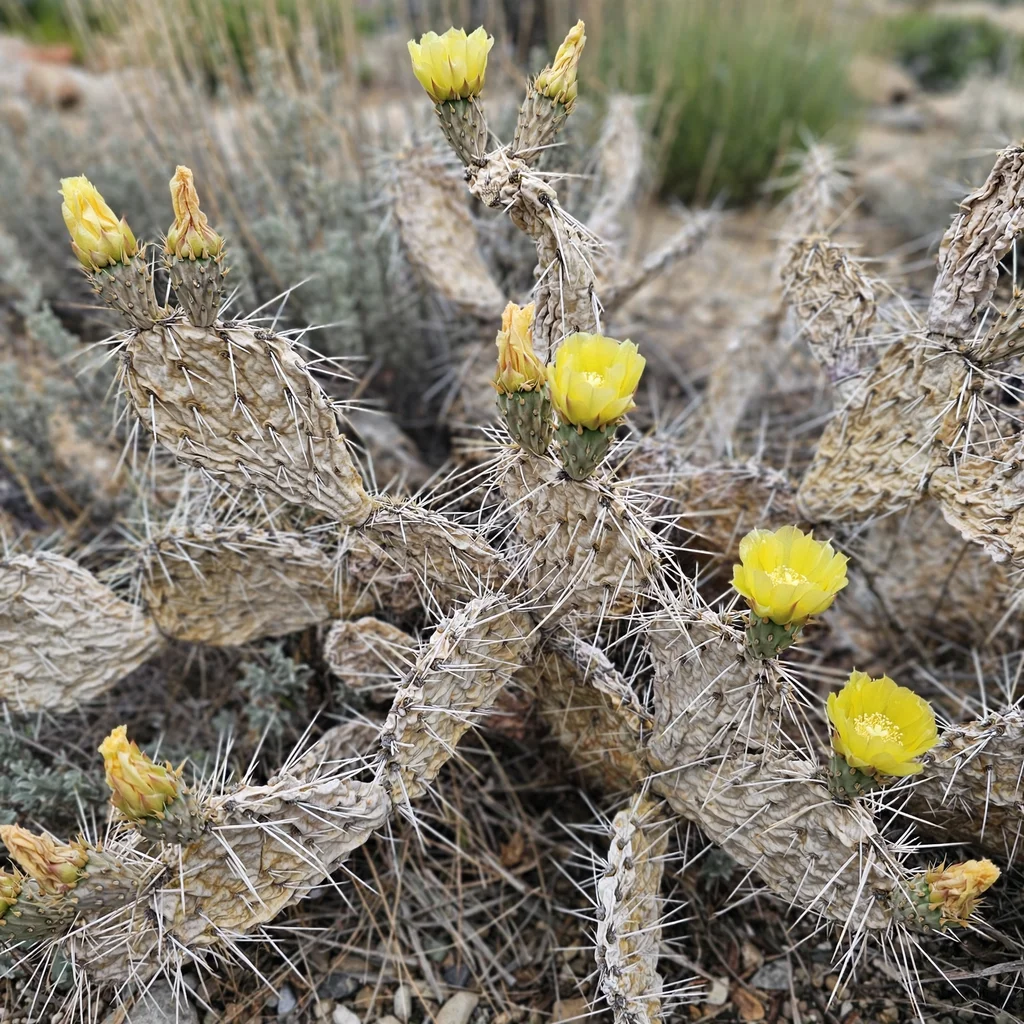
Plains Pricklypear
Opuntia polyacantha
Keep exploring
Explore the genus
Hardy in your zone?
Grow Blind Prickly Pear with confidence
See it in a design of your actual yard, get zone-matched care reminders, and track it season by season in your garden journal.