The Story
Plant Bio
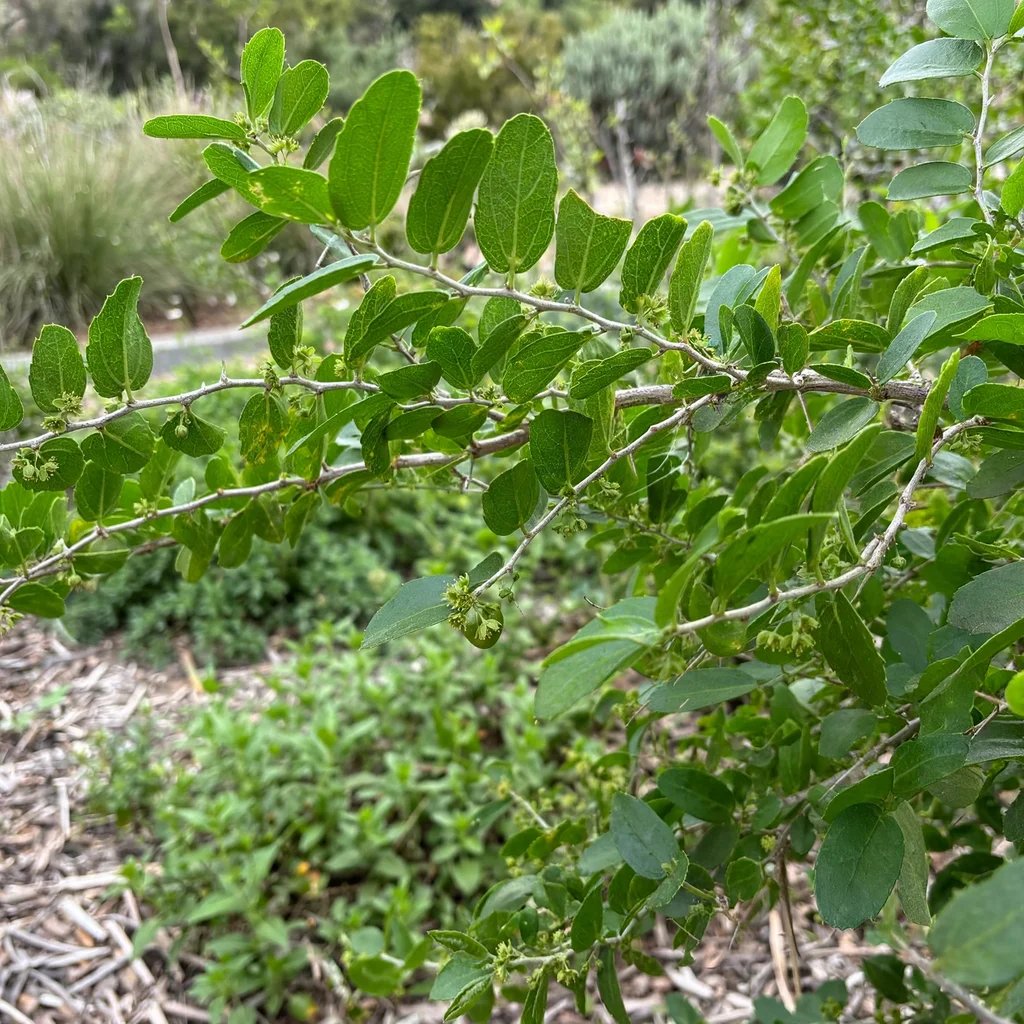
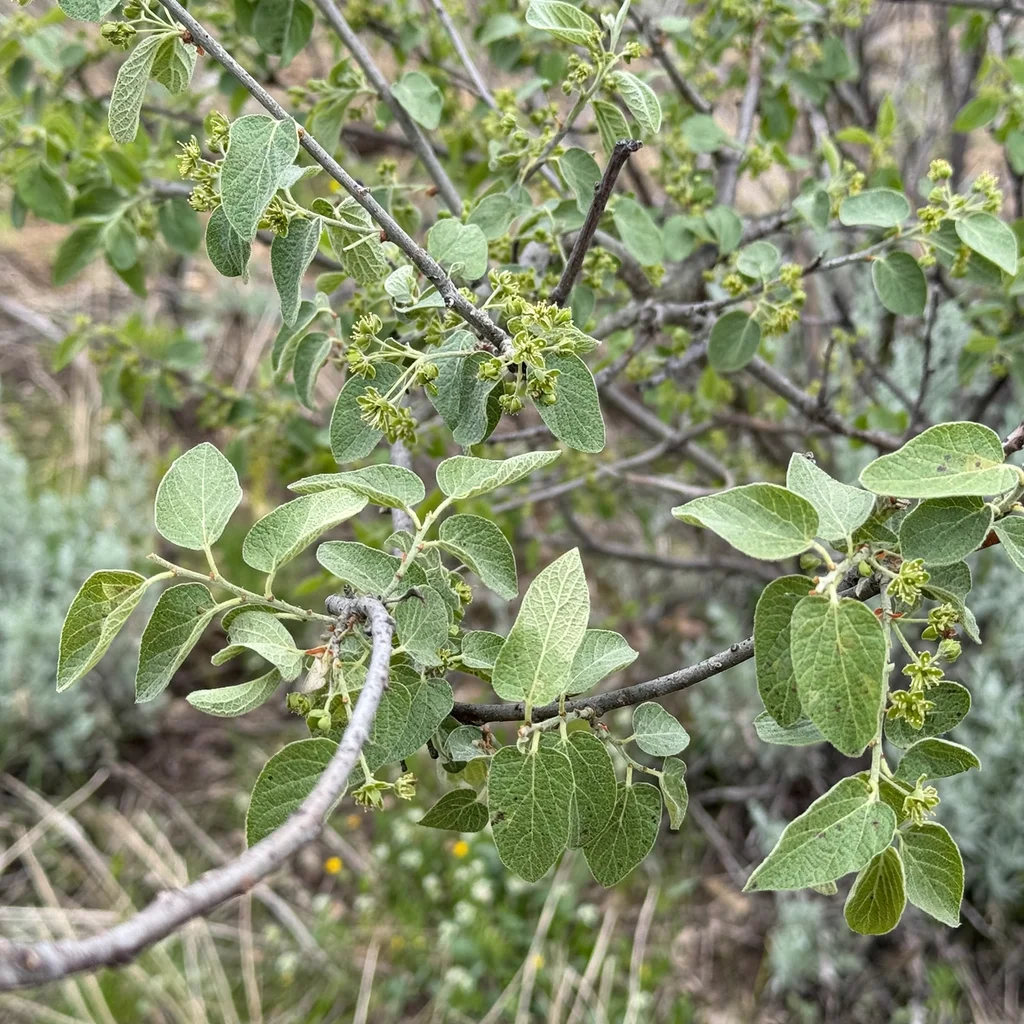
Celtis pallida, the desert hackberry, is a densely branched thorny shrub to small tree reaching eight to twelve feet tall with whitish-gray branches and a rounded to pyramidal crown. Its small ovate to elliptic leaves are leathery, rough and dark green with three prominent veins from the base, semi-evergreen to deciduous and entire to toothed toward the tip.
It is the only Celtis in the United States armed with sharp single or paired spines three to twenty-five millimeters long, valued for impenetrable cover rather than flowers. Very small greenish-white to greenish-yellow flowers in axillary clusters bloom in spring and again with summer rains, followed by pea-size orange-yellow to red sweet drupes that persist into winter; nursery stock is sold under both Celtis pallida and Celtis ehrenbergiana for the same plant.
Uses & Benefits:
Essentials
At a Glance
Plant Type
Shrub
Height
120"
Width
108"
Light
Full Sun
Zones
7, 8, 9, 10
Water
Very low
Humidity
Low
Lifespan
Long-lived shrub
Native To
Southwestern USA to central Argentina
Toxicity
Non-toxic; sharp thorns
Bloom period
Spring – Summer
In flower about 6 months of the year
Planting
How to Grow
- Plant in full sun in well-drained rocky or sandy alkaline soil, spacing eight to ten feet for cover.
- Dig hole same depth as container and twice as wide, backfill with native soil and water in.
- Water deeply weekly the first summer, then taper to natural rainfall except in extended drought.
- Mulch with gravel, not bark, keeping mulch pulled back from the stems.
Pro Tip
Plant in full sun in well-drained rocky or sandy alkaline soil and withhold water once established; prune only to remove dead wood and wear heavy gloves around the spines.
Keep It Thriving
Care Guide
Do
- Give full sun and sharp drainage in washes, slopes or berms.
- Allow soil to dry between waterings.
- Leave fall fruit for birds through winter.
Don't
- Do not overwater or plant in soggy clay.
- Do not shear into formal shapes; remove only dead or crossing wood.
- Do not plant next to walkways where spines catch passersby.
Seasonal Care Calendar
| Task | Jan | Feb | Mar | Apr | May | Jun | Jul | Aug | Sep | Oct | Nov | Dec |
|---|---|---|---|---|---|---|---|---|---|---|---|---|
| Harvest | ||||||||||||
| Mulch | ||||||||||||
| Pest Check | ||||||||||||
| Plant | ||||||||||||
| Prune |
Watch Out For
Pests & Diseases
Common Pests
Common Diseases
In the Garden
Landscape Uses & Companions
Landscape Uses
Multiply
Propagation Methods
Good to Know
Common Questions
Desert Hackberry questions
What zones can Desert Hackberry grow in?
Desert Hackberry is hardy in USDA Zones 7–10: in that range it survives winter in the ground. Colder than Zone 7, grow it in a container you can move to shelter for the winter.
Is Desert Hackberry deer resistant?
Not reliably. Deer may browse Desert Hackberry, especially tender spring growth — plan on repellents or fencing where pressure is high.
When does Desert Hackberry bloom?
Desert Hackberry typically blooms from spring to summer. Exact timing shifts a week or two with your zone — Sow's bloom calendar maps it to your garden.
Does Desert Hackberry need full sun?
Desert Hackberry does best in full sun (6+ hours).
Is Desert Hackberry drought tolerant?
Yes — once established (usually after the first full season), Desert Hackberry handles dry spells with minimal watering. Water deeply its first year to build the root system that makes that possible.
More Celtis to compare
Keep exploring
Explore the genus
Hardy in your zone?
Grow Desert Hackberry with confidence
See it in a design of your actual yard, get zone-matched care reminders, and track it season by season in your garden journal.