The Story
Plant Bio
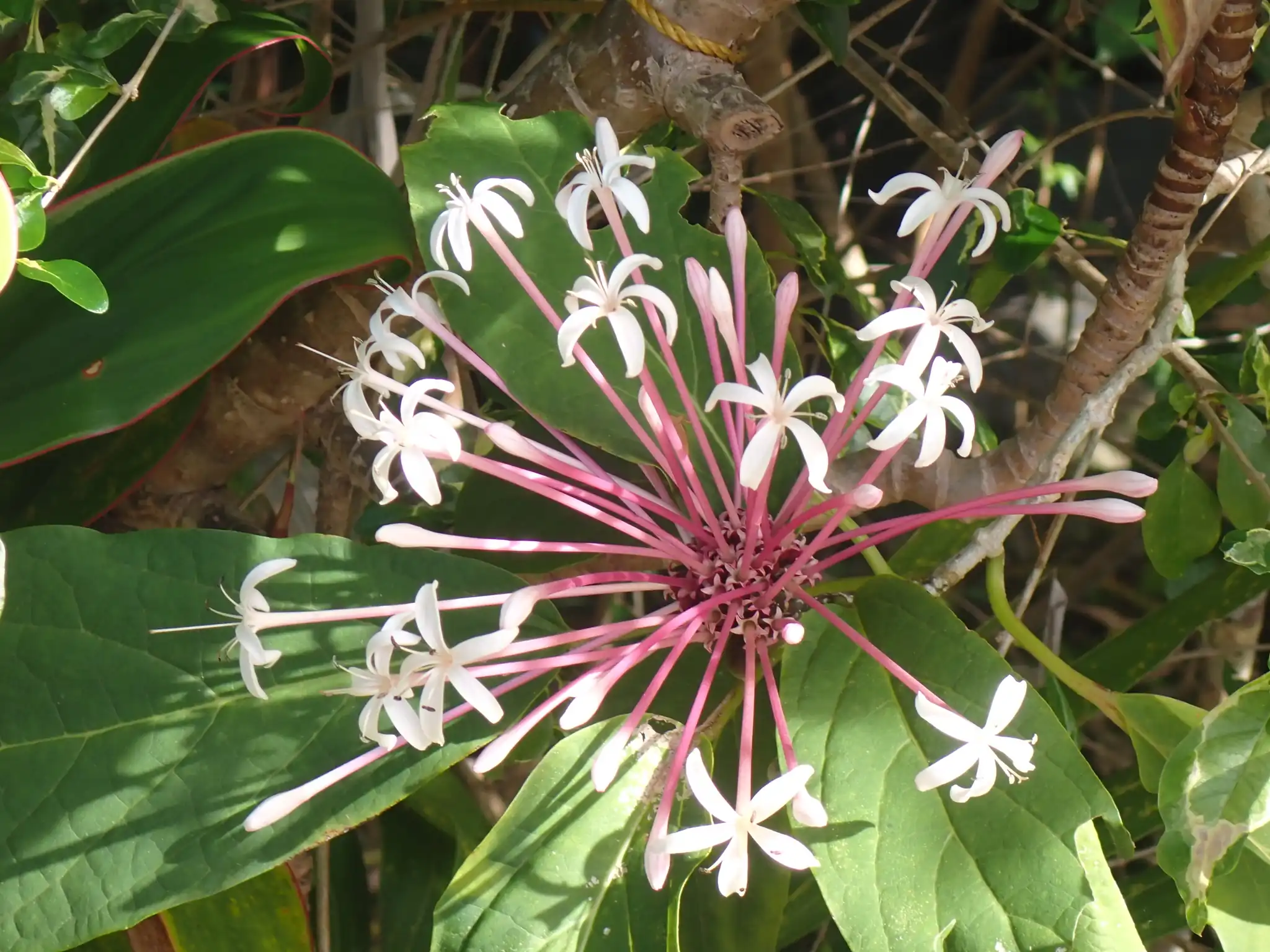
Clerodendrum quadriloculare, known as starburst bush, is a fast-growing tropical shrub reaching fifteen feet in height with striking deep purple foliage undersides. From late winter into early spring, terminal clusters up to twelve inches across open with tubular pink buds that split into recurved white lobes.
The intense foliage bicoloration features dark green uppersides flushed with purple set against rich glossy violet undersides that persist year-round in frost-free climates. It spreads aggressively through underground root suckers, quickly developing into a dense multi-stemmed colony or living screen if unmanaged.
Uses & Benefits:
Essentials
At a Glance
Plant Type
Shrub
Height
180"
Width
180"
Light
Full Sun, Partial Sun
Zones
9, 10
Water
Moderate
Humidity
High
Lifespan
Perennial
Native To
Philippines, Papua New Guinea
Toxicity
Non-toxic
Bloom period
Winter – Early spring
In flower about 4 months of the year
Planting
How to Grow
- Choose a full sun site with moist, well-draining soil and ample room for a wide crown.
- Dig a planting hole twice as wide as the root ball and set the plant at its original nursery depth.
- Backfill with native soil, press firmly, and water thoroughly to eliminate air pockets.
- Apply a three-inch layer of organic mulch around the base, keeping it clear of the main stem.
- Sever emerging root suckers below soil level regularly to restrict spread to desired boundaries.
Pro Tip
Prune strictly after the spring bloom finishes, as late-season trimming removes the shoot tips carrying next winter's flower clusters.
Keep It Thriving
Care Guide
Do
- Plant in full sun to maximize flower production and keep the canopy compact.
- Water regularly during the first growing season until root establishment.
- Prune immediately after flowering concludes in late spring.
- Mow or dig out unwanted root suckers promptly to control colony expansion.
Don't
- Do not prune in late summer or fall, which strips away future flower buds.
- Do not plant near delicate garden beds where spreading root suckers can overtake smaller plants.
- Do not leave foliage exposed to heavy freezing temperatures without overhead frost protection.
- Do not overwater established plants growing in heavy, saturated soils.
Seasonal Care Calendar
| Task | Jan | Feb | Mar | Apr | May | Jun | Jul | Aug | Sep | Oct | Nov | Dec |
|---|---|---|---|---|---|---|---|---|---|---|---|---|
| Fertilize | ||||||||||||
| Pest Check | ||||||||||||
| Prune | ||||||||||||
| Spring Cleanup |
Watch Out For
Pests & Diseases
Common Pests
Common Diseases
In the Garden
Landscape Uses & Companions
Landscape Uses
Multiply
Propagation Methods
Good to Know
Common Questions
Starburst Bush questions
What zones can Starburst Bush grow in?
Starburst Bush is hardy in USDA Zones 9–10: in that range it survives winter in the ground. Colder than Zone 9, grow it in a container you can move to shelter for the winter.
When does Starburst Bush bloom?
Starburst Bush typically blooms from early winter to early spring. Exact timing shifts a week or two with your zone — Sow's bloom calendar maps it to your garden.
Does Starburst Bush need full sun?
Starburst Bush does best in full sun to part shade. In hot climates, afternoon shade keeps blooms fresher longer.
Is Starburst Bush drought tolerant?
Yes — once established (usually after the first full season), Starburst Bush handles dry spells with minimal watering. Water deeply its first year to build the root system that makes that possible.
More Clerodendrum to compare
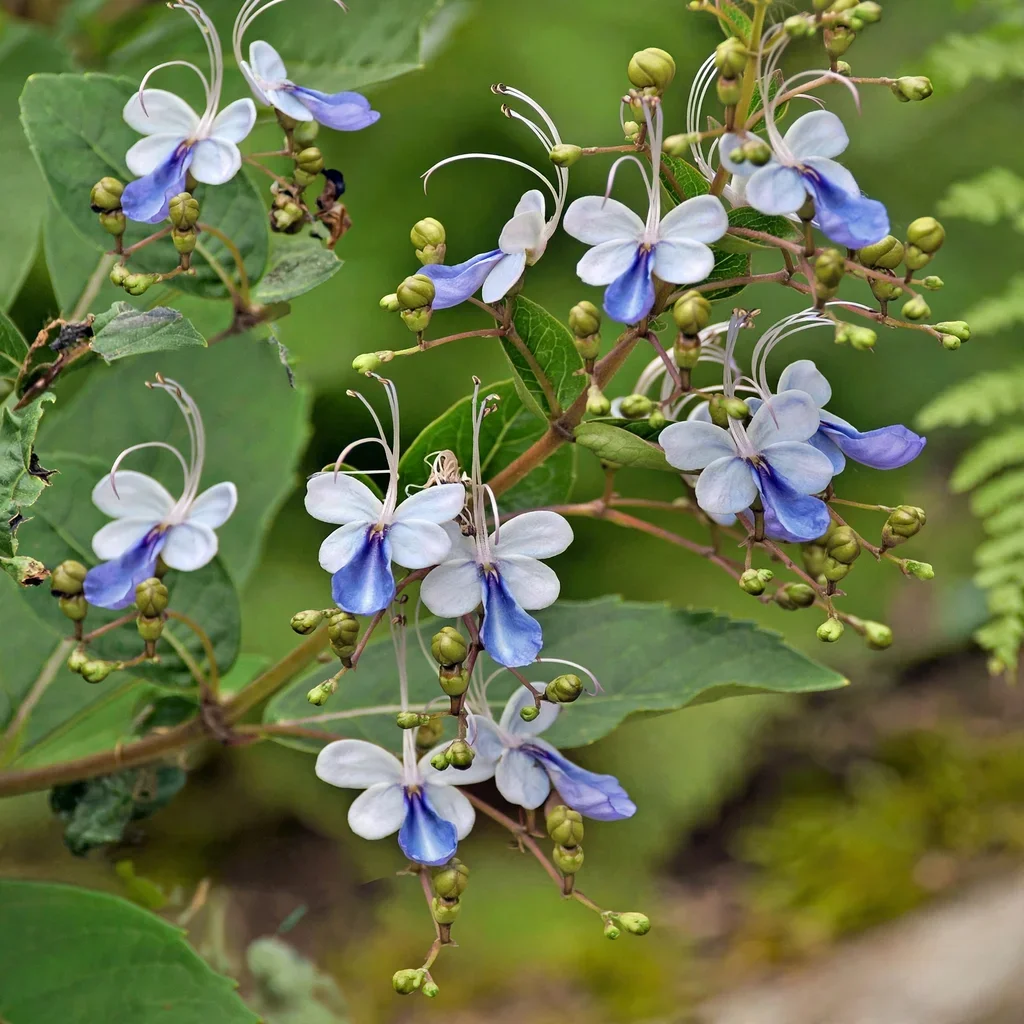
Blue Butterfly Bush
Clerodendrum ugandense
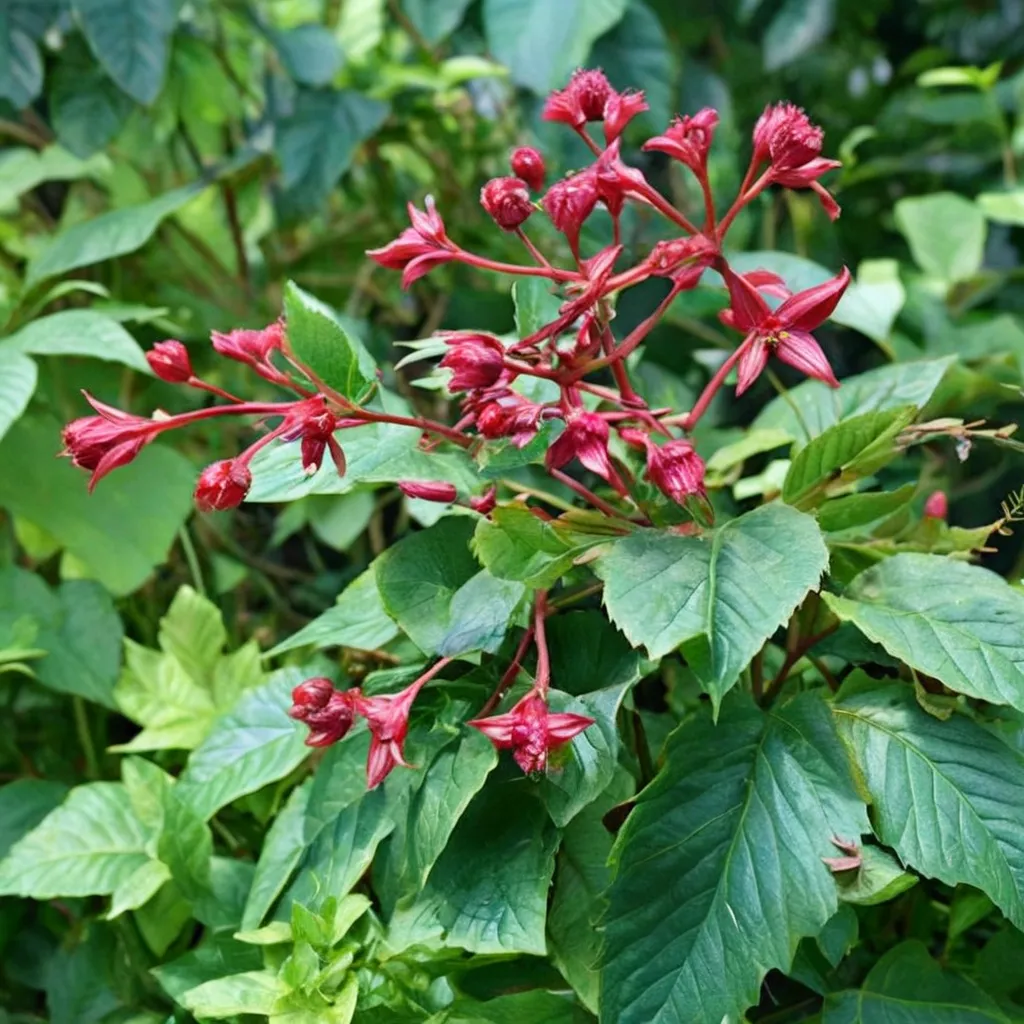
Rose Glory Bower
Clerodendrum speciosissimum 'Arkansas Hardy'
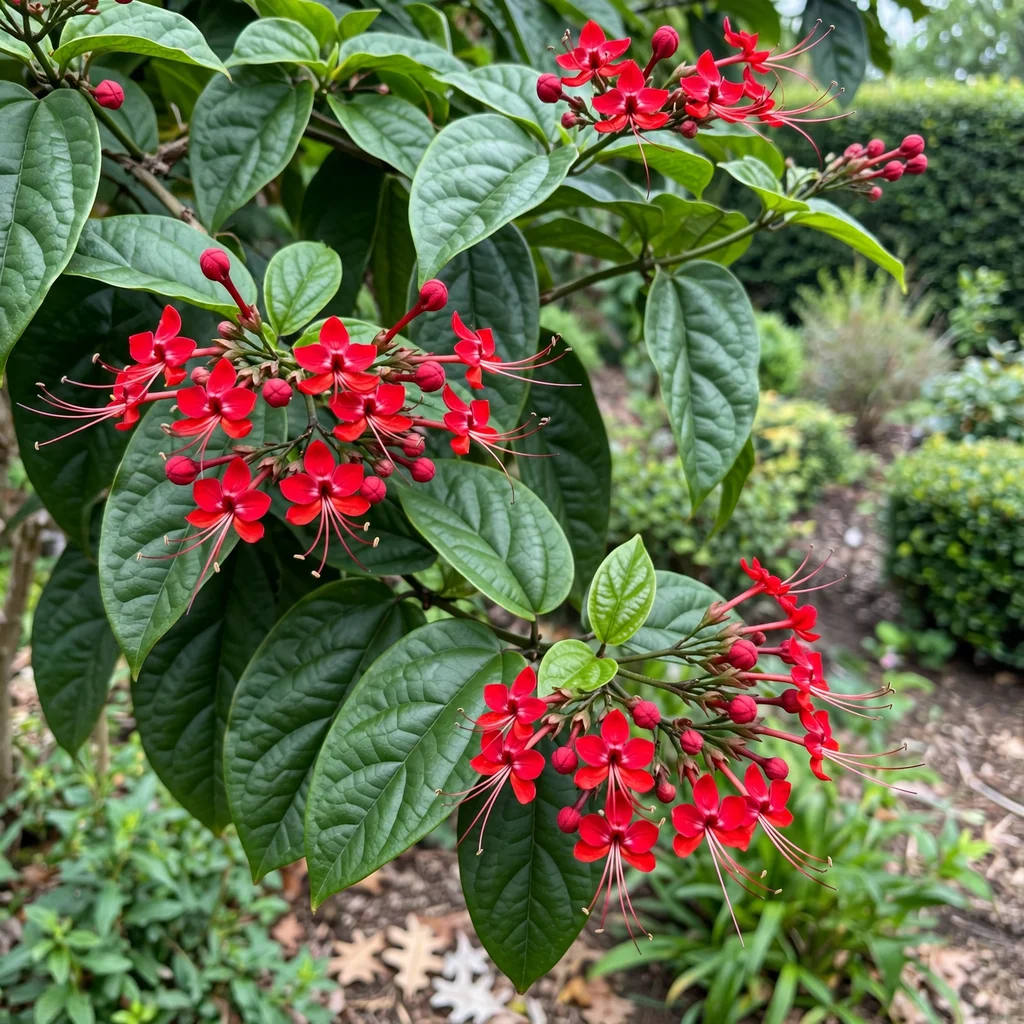
Flaming Glorybower
Clerodendrum splendens
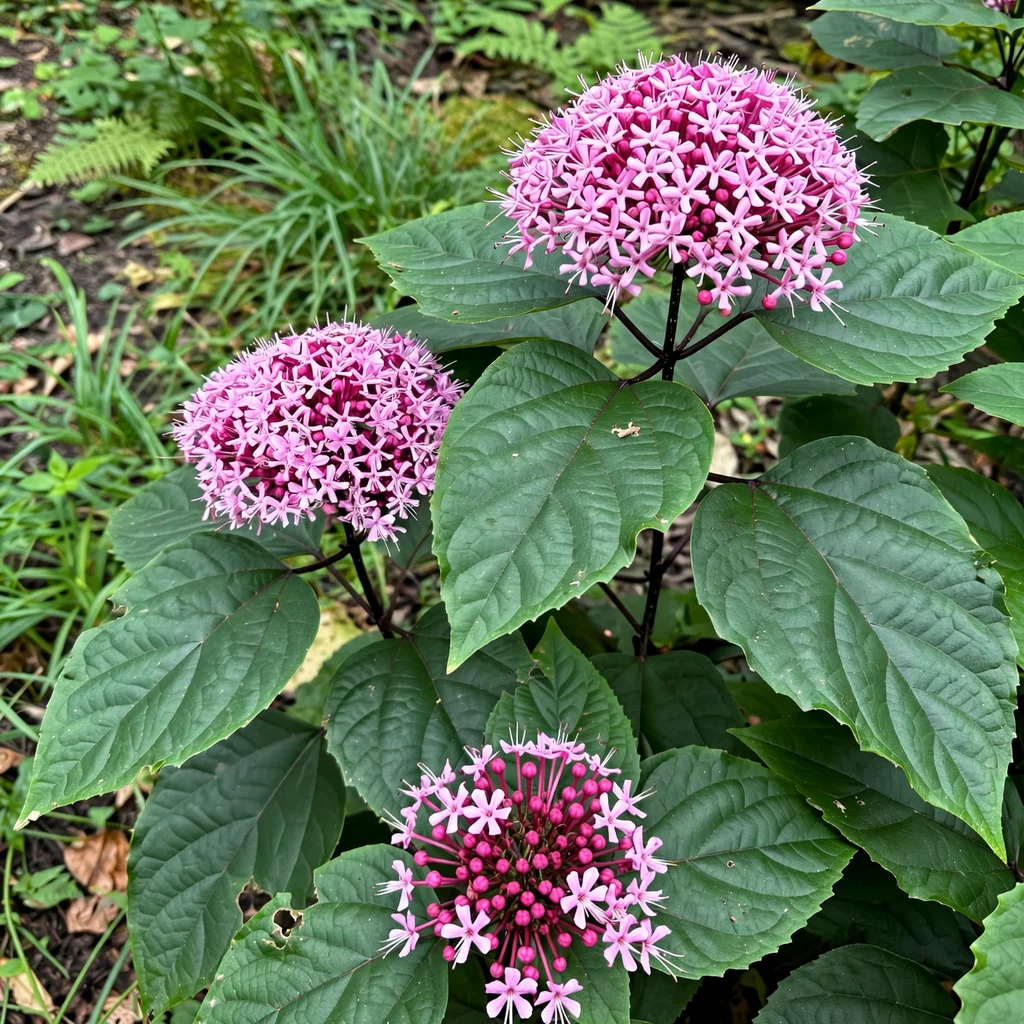
Rose Glorybower
Clerodendrum bungei
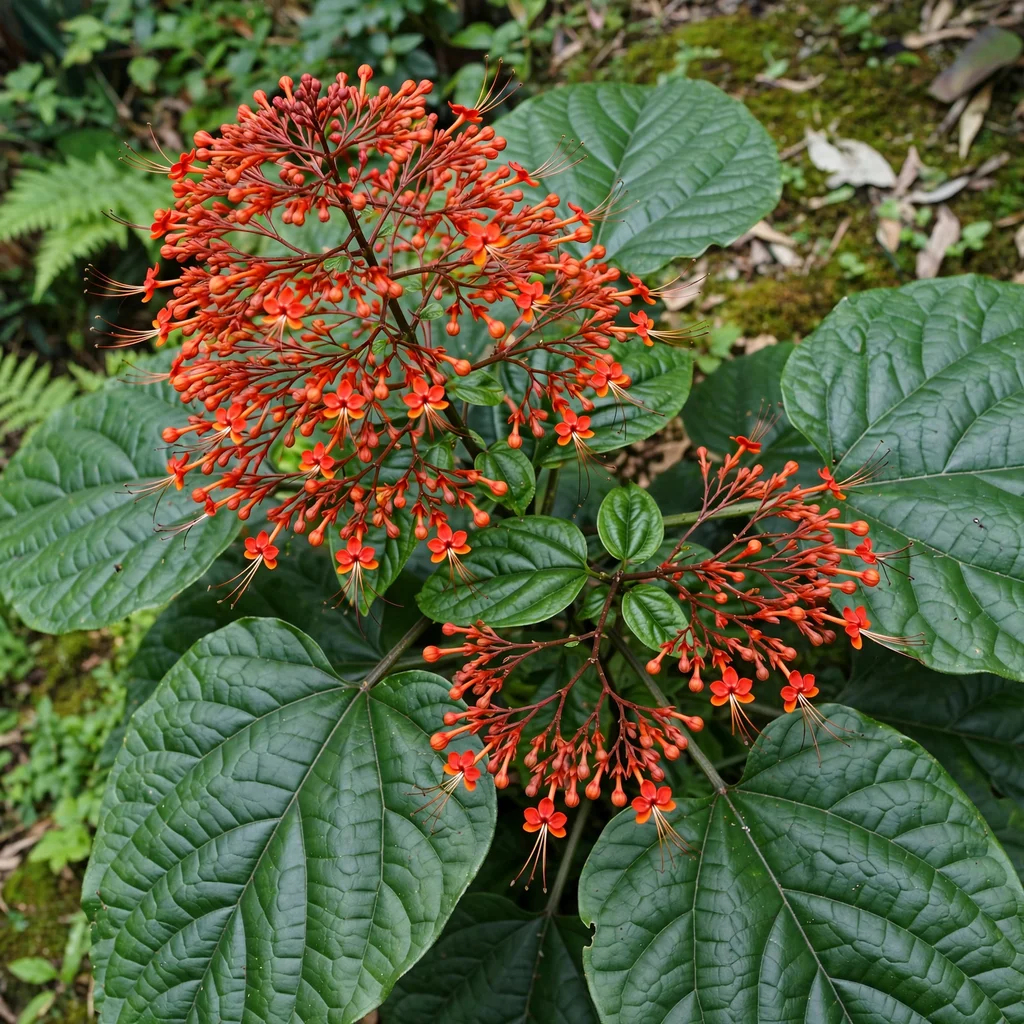
Pagoda Flower
Clerodendrum paniculatum
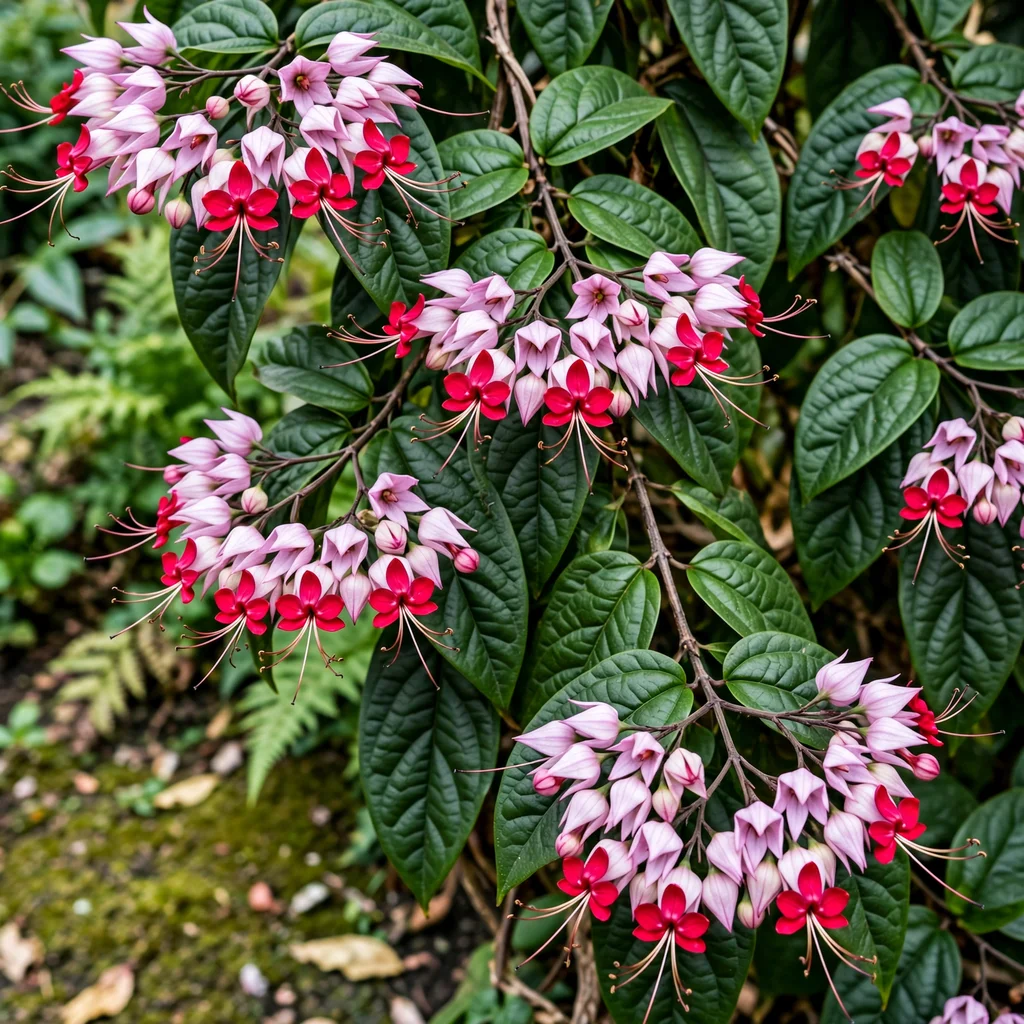
Red Bleeding Heart
Clerodendrum speciosum
Keep exploring
Explore the genus
Hardy in your zone?
Grow Starburst Bush with confidence
See it in a design of your actual yard, get zone-matched care reminders, and track it season by season in your garden journal.