The Story
Plant Bio
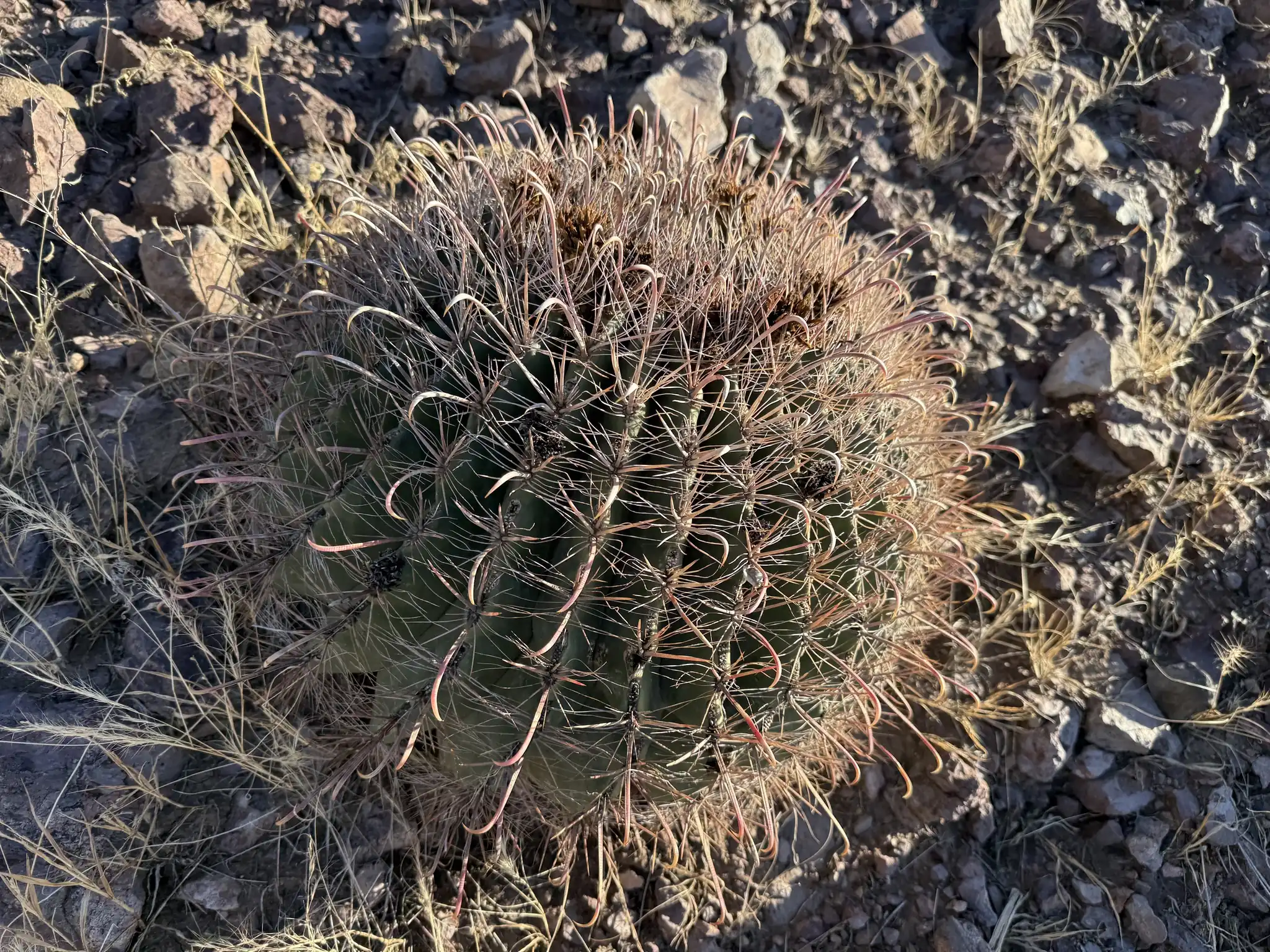
Ferocactus wislizeni is a solitary, unbranched barrel to short-columnar cactus with 20 to 30 ribs and no leaves, photosynthesis carried out by the dark to blue-green stem. Areoles along the ribs bear stout hooked central spines to 4 inches long plus smaller radials that emerge red to pink and age gray to straw, often banded.
This species is distinguished by its single heavy fishhook central spine that snags skin and clothing, and by old plants that lean south and may turn procumbent with accordion-like expansion and contraction. It blooms only in late summer to fall, with a ring of yellow to reddish-orange cups around the stem apex followed by yellow fleshy fruit.
Uses & Benefits:
Essentials
At a Glance
Plant Type
Cactus Succulent
Height
72"
Width
24"
Light
Full Sun
Zones
8, 9, 10
Water
Very low
Humidity
Low - needs dry air
Lifespan
Long-lived perennial, decades
Native To
Southern Arizona, New Mexico, El Paso Texas and northern Mexico
Toxicity
Toxic if ingested
Bloom period
Late summer – Fall
In flower about 4 months of the year
Planting
How to Grow
- Plant in spring in full all-day sun in rocky or gravelly fast-draining soil, at the same depth it grew in the pot.
- Keep the marked south side facing south and leave space away from paths, play areas, and pets for the fishhook spines.
- Water in once to settle, then withhold water; established plants need no supplemental water except an occasional deep soak in the hottest months.
- Do not fertilize and do not mulch against the stem; keep gravel clear of the base to keep the crown dry.
- Give it dry winter soil and arid air; do not protect with rich soil or frequent irrigation.
Pro Tip
Plant in spring at the original depth with the nursery south-face still facing south, and never rotate the plant afterward.
Keep It Thriving
Care Guide
Do
- Do give full sun and sharp drainage with neutral to alkaline soil.
- Do use heavy leather gloves and tongs when handling.
- Do leave the plant alone once established; neglect is safer than extra water.
- Do buy nursery-propagated stock; wild collection is restricted in Arizona and New Mexico.
Don't
- Do not overwater or plant in clay or low spots where water stands.
- Do not plant deep or pile soil or mulch against the stem.
- Do not prune or shear; remove only dead or rotted tissue with a sterilized blade.
- Do not cut open the pulp for water; it is acidic and causes nausea and diarrhea.
Seasonal Care Calendar
| Task | Jan | Feb | Mar | Apr | May | Jun | Jul | Aug | Sep | Oct | Nov | Dec |
|---|---|---|---|---|---|---|---|---|---|---|---|---|
| Pest Check | ||||||||||||
| Plant | ||||||||||||
| Propagate | ||||||||||||
| Winter Prep |
Watch Out For
Pests & Diseases
Common Pests
Common Diseases
In the Garden
Landscape Uses & Companions
Landscape Uses
Multiply
Propagation Methods
Good to Know
Common Questions
Fishhook Barrel Cactus questions
What zones can Fishhook Barrel Cactus grow in?
Fishhook Barrel Cactus is hardy in USDA Zones 8–10: in that range it survives winter in the ground. Colder than Zone 8, grow it in a container you can move to shelter for the winter, or as an annual.
Is Fishhook Barrel Cactus deer resistant?
Not reliably. Deer may browse Fishhook Barrel Cactus, especially tender spring growth — plan on repellents or fencing where pressure is high.
When does Fishhook Barrel Cactus bloom?
Fishhook Barrel Cactus typically blooms from late summer to late fall. Exact timing shifts a week or two with your zone — Sow's bloom calendar maps it to your garden.
Does Fishhook Barrel Cactus need full sun?
Fishhook Barrel Cactus does best in full sun (6+ hours).
Is Fishhook Barrel Cactus drought tolerant?
Yes — once established (usually after the first full season), Fishhook Barrel Cactus handles dry spells with minimal watering. Water deeply its first year to build the root system that makes that possible.
More Ferocactus to compare
Keep exploring
Explore the genus
Hardy in your zone?
Grow Fishhook Barrel Cactus with confidence
See it in a design of your actual yard, get zone-matched care reminders, and track it season by season in your garden journal.