
The Story
Plant Bio
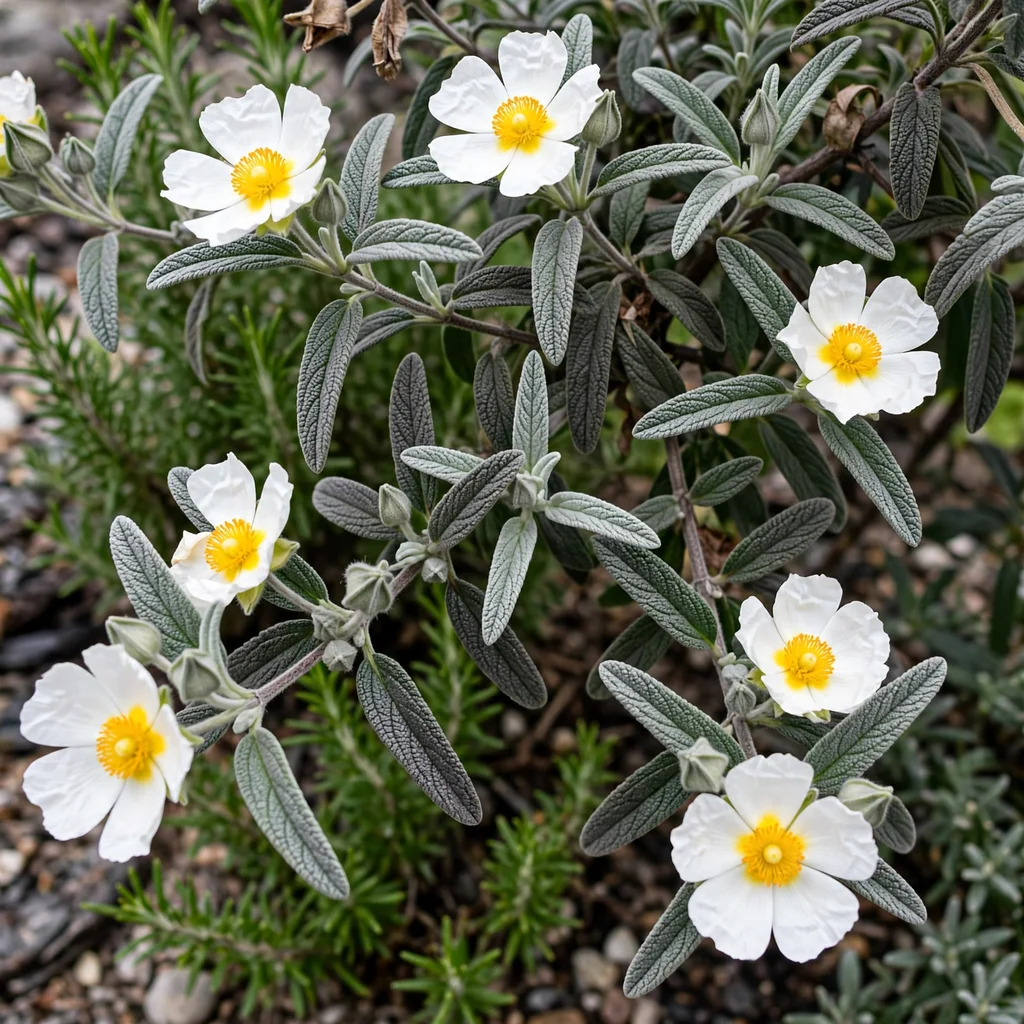
Cistus, the rockroses, are evergreen shrubs of the western Mediterranean with opposite leaves coated in aromatic resin that slows water loss in heat. Flowers are five-petalled bowls of tissue-thin petals that open for one day and drop, with buds opening in succession to extend bloom for weeks.
Cistus x crispatus is a garden hybrid between Cistus crispus and Cistus creticus that forms a low sprawling mound of rippled gray-green evergreen leaves. Its pink to purplish-pink bowls measure about two and a half inches across and open from late spring into summer.
Uses & Benefits:
Essentials
At a Glance
Plant Type
Shrub
Height
18"
Width
36"
Light
Full Sun
Zones
7, 8, 9, 10
Water
Low
Humidity
Tolerant of salt air
Lifespan
Woody perennial, short-lived where wet
Native To
Garden hybrid of Western Mediterranean parents
Toxicity
Unknown - no data reported
Bloom period
Late spring – Summer
In flower about 4 months of the year
Planting
How to Grow
- Plant in full sun in sharply drained, lean to average soil; dig the hole no deeper than the pot and twice as wide.
- Set the crown level and backfill without rich amendment; water deeply once to settle.
- Water regularly the first summer to root, then taper to little or no supplemental water.
- Tip-prune lightly after flowering; never cut into old leafless wood.
Pro Tip
Set it in lean, fast-draining soil and withhold summer water once established; winter wet and cutting back into old leafless wood are what kill it.
Keep It Thriving
Care Guide
Do
- Plant in full sun with air movement and fast drainage.
- Use gravel mulch to keep the crown dry.
- Remove spent flowers to keep the mound tidy.
Don't
- Do not plant in heavy clay or low wet ground.
- Do not overwater in summer or feed heavily.
- Do not shear into old bare wood.
Seasonal Care Calendar
| Task | Jan | Feb | Mar | Apr | May | Jun | Jul | Aug | Sep | Oct | Nov | Dec |
|---|---|---|---|---|---|---|---|---|---|---|---|---|
| Deadhead | ||||||||||||
| Mulch | ||||||||||||
| Pest Check | ||||||||||||
| Plant | ||||||||||||
| Prune |
Watch Out For
Pests & Diseases
Common Pests
Common Diseases
In the Garden
Landscape Uses & Companions
Landscape Uses
Multiply
Propagation Methods
Good to Know
Common Questions
Warley Rose questions
What zones can Warley Rose grow in?
Warley Rose is hardy in USDA Zones 7–10: in that range it survives winter in the ground. Colder than Zone 7, grow it in a container you can move to shelter for the winter.
Is Warley Rose deer resistant?
Yes — Warley Rose is rated deer-resistant. Deer typically pass it over, though extreme hunger can override any plant's defenses.
When does Warley Rose bloom?
Warley Rose typically blooms from late spring to late summer. Exact timing shifts a week or two with your zone — Sow's bloom calendar maps it to your garden.
Does Warley Rose need full sun?
Warley Rose does best in full sun (6+ hours).
Is Warley Rose drought tolerant?
Yes — once established (usually after the first full season), Warley Rose handles dry spells with minimal watering. Water deeply its first year to build the root system that makes that possible.
More Cistus to compare
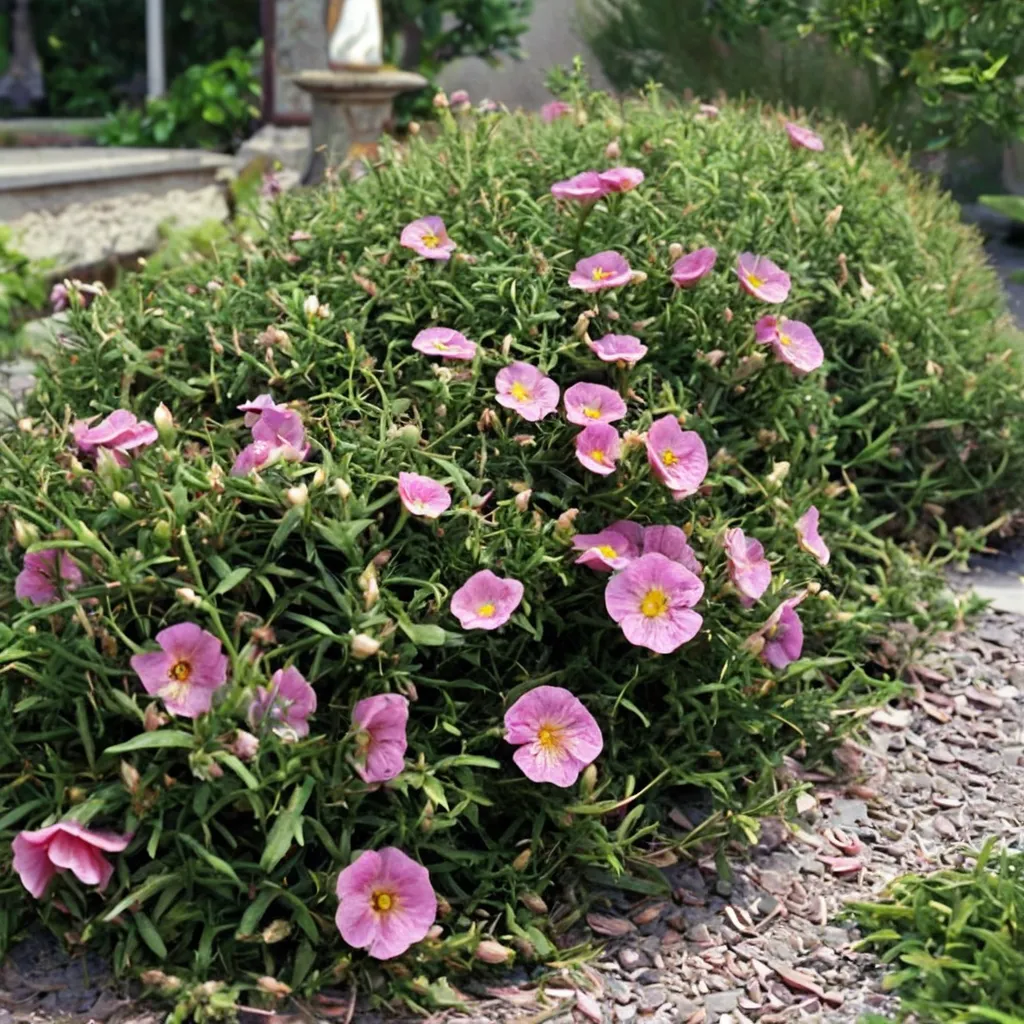
Orchid Rockrose
Cistus x purpureus
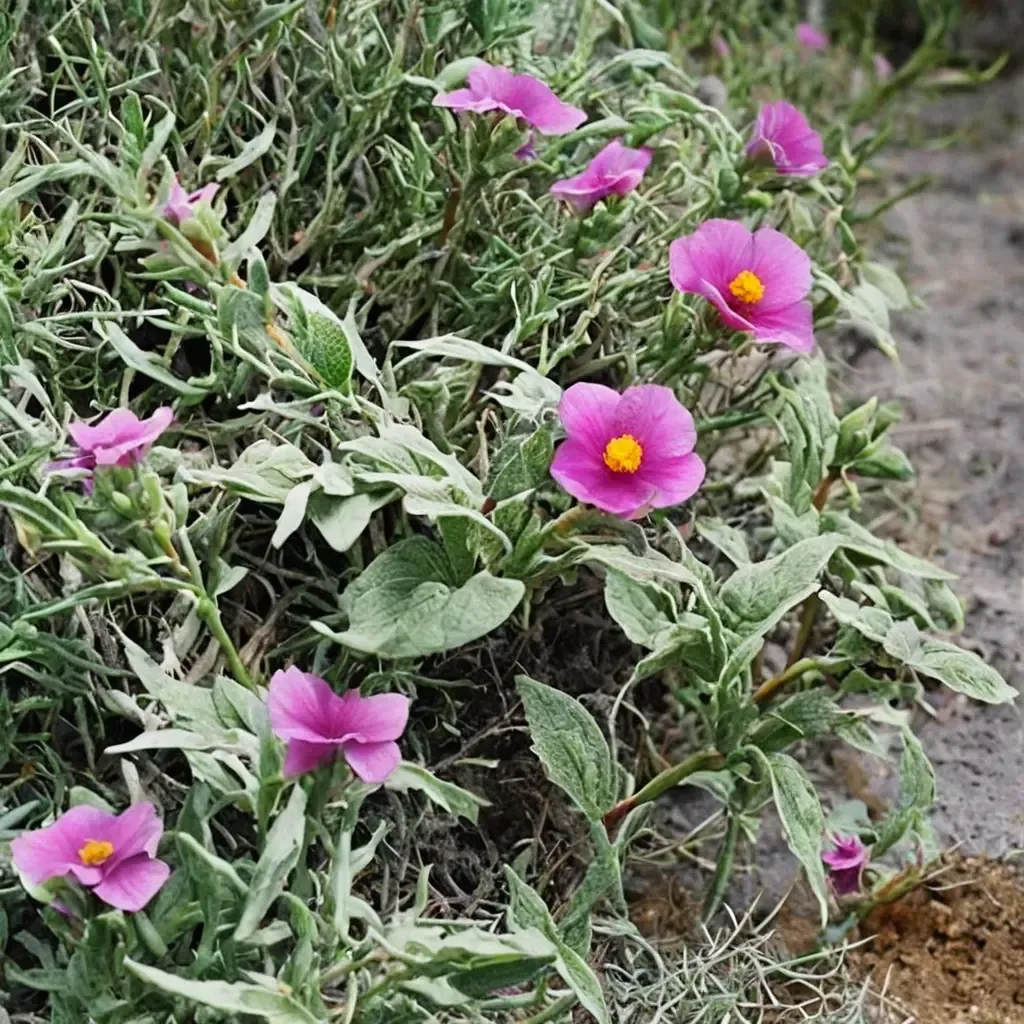
Hoary Rockrose
Cistus incanus
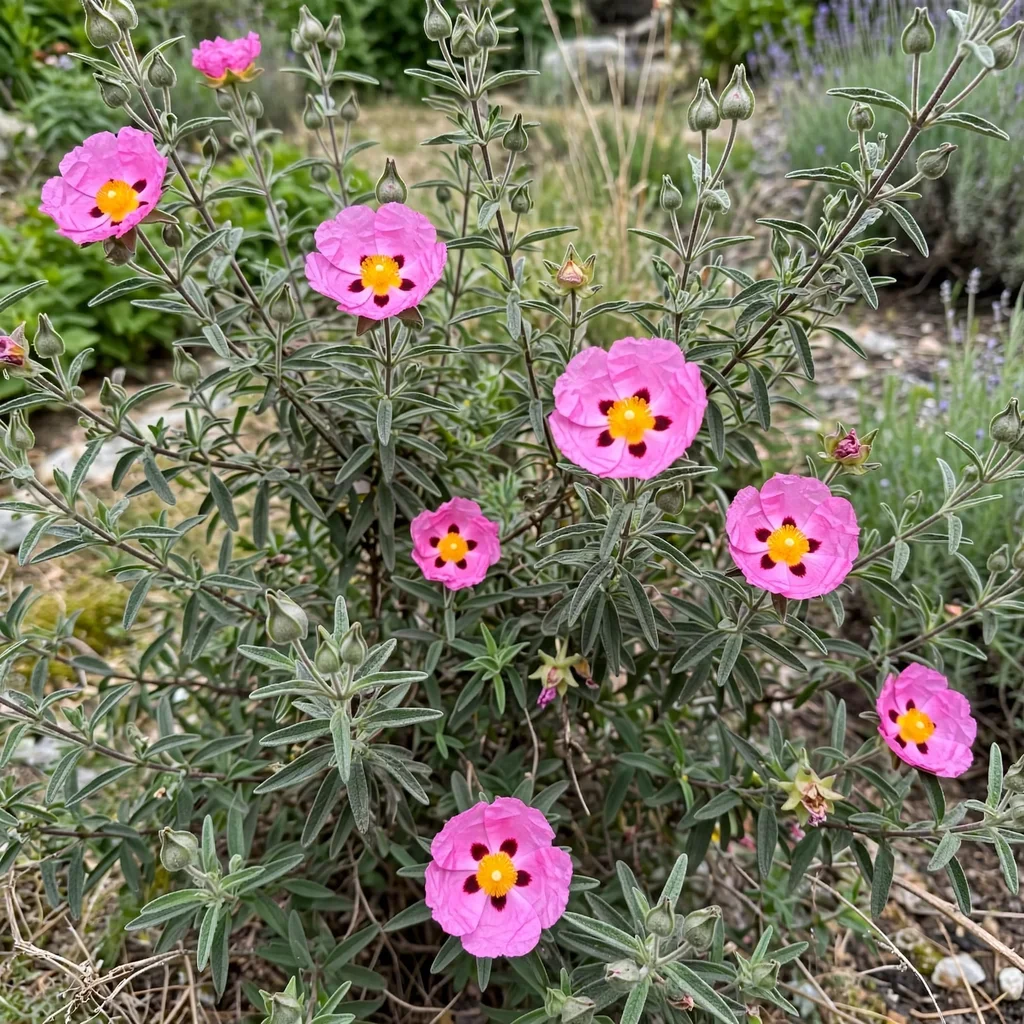
Victor Reiter Rockrose
Cistus x purpureus 'Victor Reiter'
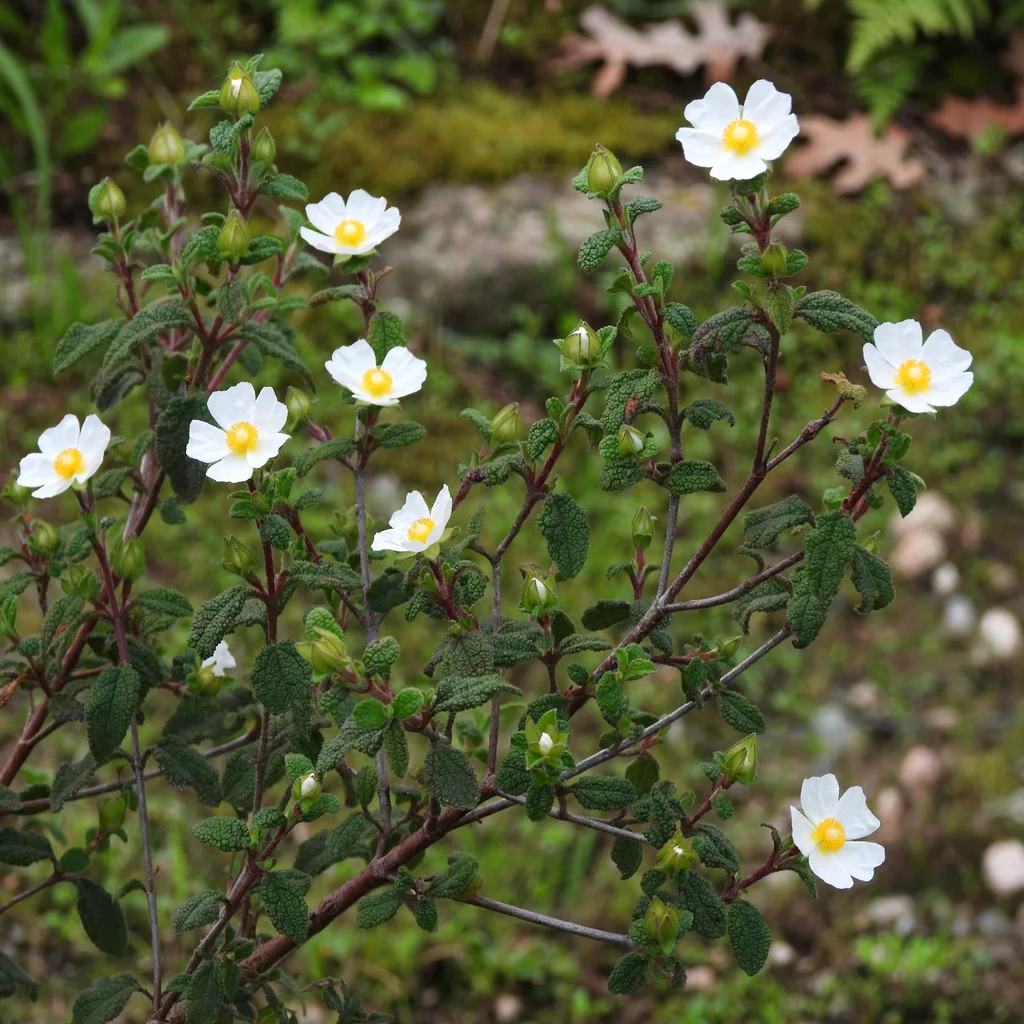
Sage-Leaved Rock-Rose
Cistus salviifolius
Rockrose
Cistus x pauranthus

Dwarf Pink Rockrose
Cistus x skanbergii
Keep exploring
Explore the genus
Hardy in your zone?
Grow Warley Rose with confidence
See it in a design of your actual yard, get zone-matched care reminders, and track it season by season in your garden journal.