The Story
Plant Bio
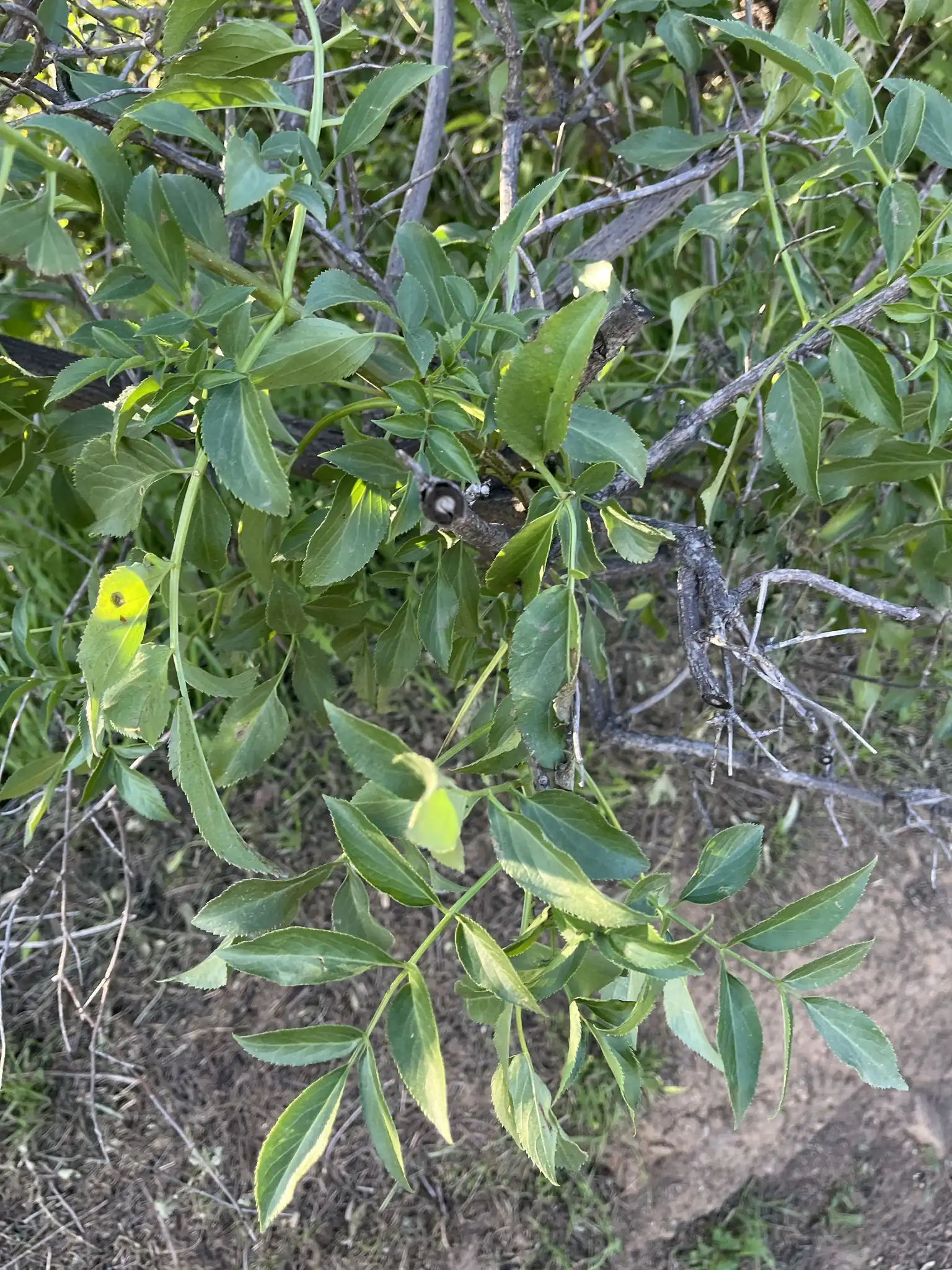
Sambucus mexicana is a large, fast-growing deciduous shrub or small tree native to open flats, canyons, and stream banks across the southwestern United States and Mexico. It forms a multi-stemmed upright frame with pinnately compound green leaves and large flat-topped clusters of creamy-white flowers.
This western elderberry produces dense clusters of dark blue berries covered in a white powdery bloom, setting it apart from eastern relatives. It tolerates arid summer conditions once established and serves as an important floral nectar and fruit resource for native wildlife.
Uses & Benefits:
Essentials
At a Glance
Plant Type
Shrub
Height
315"
Width
315"
Light
Full Sun, Partial Sun
Zones
4, 5, 6, 7, 8, 9
Water
Low to Moderate
Humidity
Moderate
Lifespan
Perennial
Native To
North America
Toxicity
Toxic if Raw
Bloom period
Spring – Summer
In flower about 6 months of the year
Planting
How to Grow
- Select a planting site in full sun or light shade with well-draining soil.
- Dig a planting hole twice as wide as the root ball and equal in depth.
- Position the plant so the root collar aligns with the surrounding soil level, then backfill and tamp firmly.
- Water thoroughly at planting and maintain deep moisture weekly during the first growing season until established.
Pro Tip
Prune lightly in late winter to remove dead wood and shape the canopy; cutting heavily into old bare structural wood reduces flowering and leads to weak, uneven regrowth.
Keep It Thriving
Care Guide
Do
- Water regularly during the first year to build a deep root system.
- Prune in late winter to clear out dead or crowded inner branches.
- Cook berries before consumption to neutralize toxic cyanogenic glycosides.
Don't
- Do not prune hard into old, leafless wooden trunks unless rejuvenating an overgrown clump.
- Do not overwater established plants in clay soils to avoid root rot.
- Do not ingest raw or unripe berries, leaves, or stems.
Seasonal Care Calendar
| Task | Jan | Feb | Mar | Apr | May | Jun | Jul | Aug | Sep | Oct | Nov | Dec |
|---|---|---|---|---|---|---|---|---|---|---|---|---|
| Harvest | ||||||||||||
| Pest Check | ||||||||||||
| Prune | ||||||||||||
| Spring Cleanup |
Watch Out For
Pests & Diseases
Common Pests
Common Diseases
In the Garden
Landscape Uses & Companions
Landscape Uses
Companion Plants
Multiply
Propagation Methods
Good to Know
Common Questions
Blue Elderberry questions
What zones can Blue Elderberry grow in?
Blue Elderberry is hardy in USDA Zones 4–9: in that range it survives winter in the ground. Warmer than Zone 9, winter isn't the problem: it prefers colder winters, and summer heat can shorten its life.
Is Blue Elderberry deer resistant?
Not reliably. Deer may browse Blue Elderberry, especially tender spring growth — plan on repellents or fencing where pressure is high.
When does Blue Elderberry bloom?
Blue Elderberry typically blooms from spring to summer. Exact timing shifts a week or two with your zone — Sow's bloom calendar maps it to your garden.
Does Blue Elderberry need full sun?
Blue Elderberry does best in full sun to part shade. In hot climates, afternoon shade keeps blooms fresher longer.
Is Blue Elderberry drought tolerant?
Yes — once established (usually after the first full season), Blue Elderberry handles dry spells with minimal watering. Water deeply its first year to build the root system that makes that possible.
More Sambucus to compare
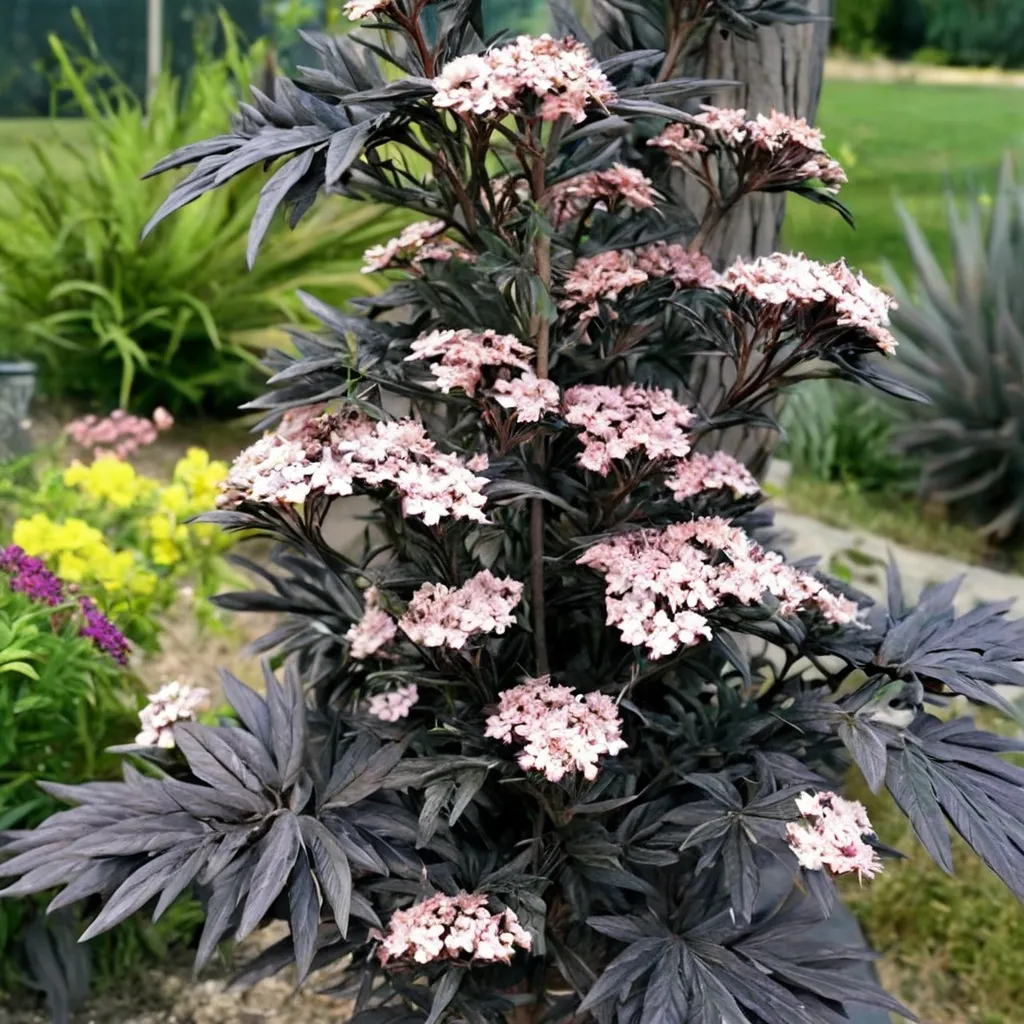
Laced Up Elderberry
Sambucus nigra 'Laced Up'
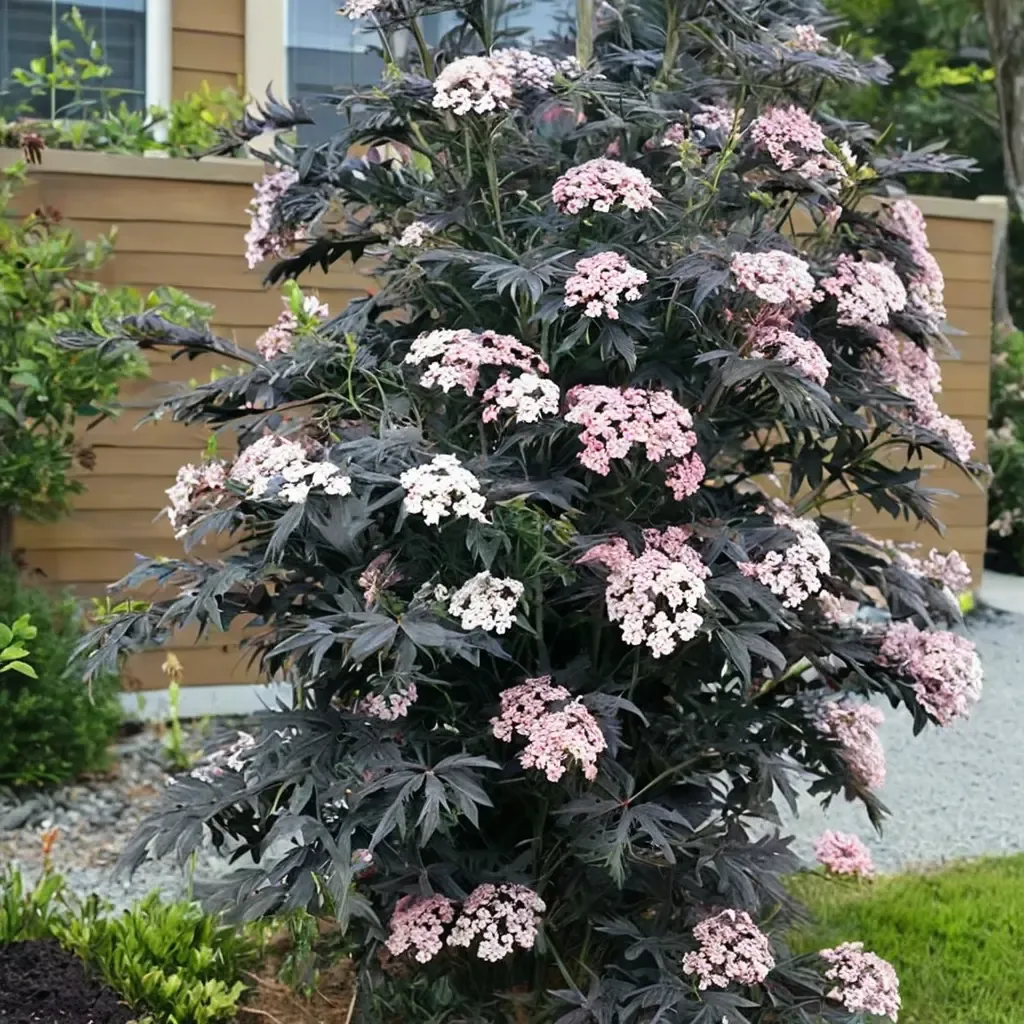
Black Lace Elderberry
Sambucus nigra 'Black Lace'
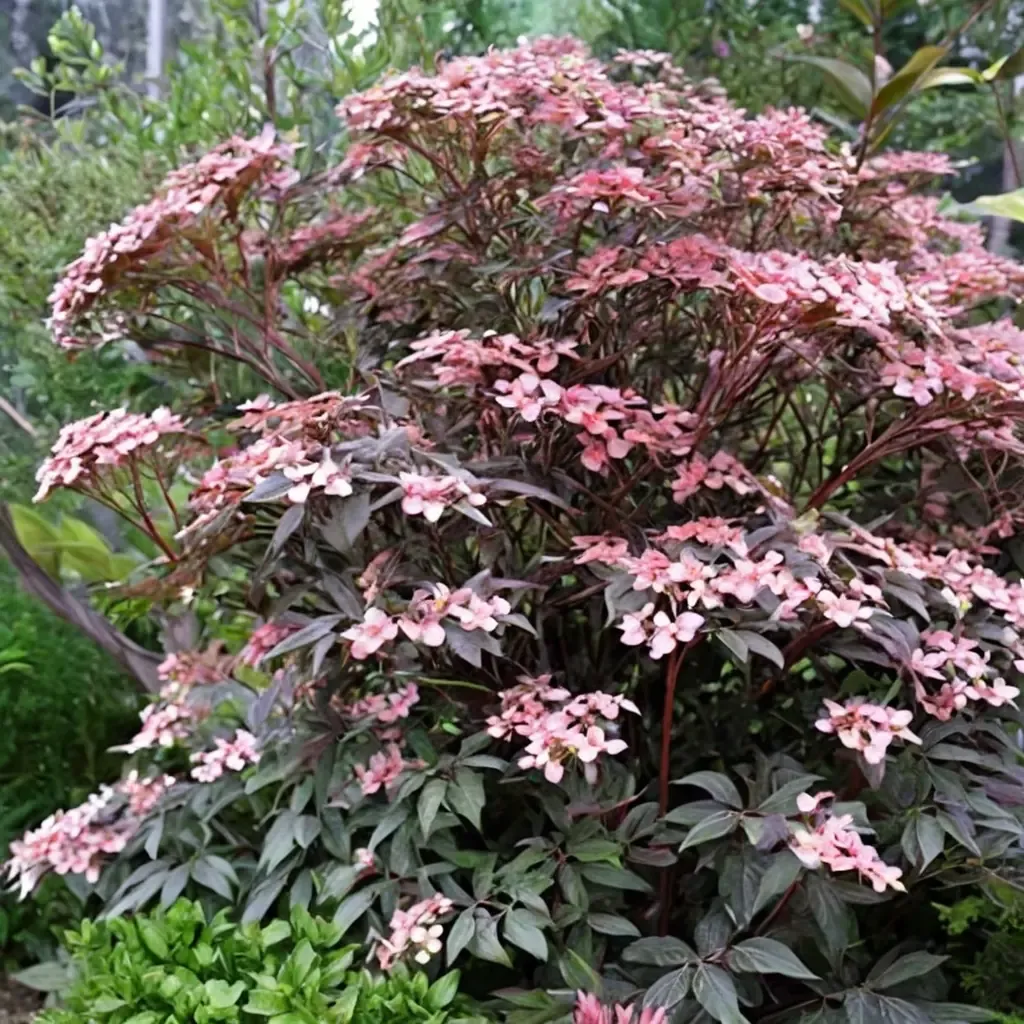
Thundercloud Elderberry
Sambucus nigra 'Thundercloud'
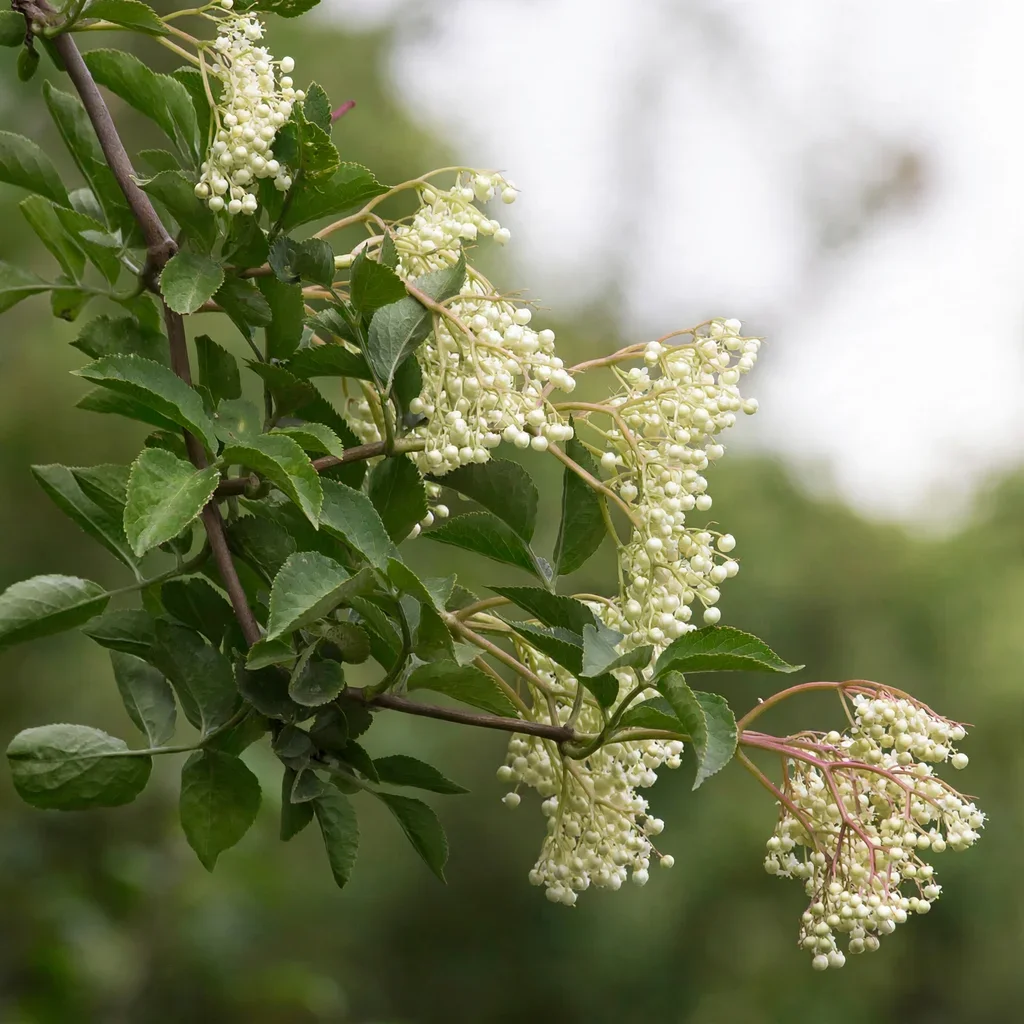
Korsor Black Elderberry
Sambucus nigra 'Korsor'
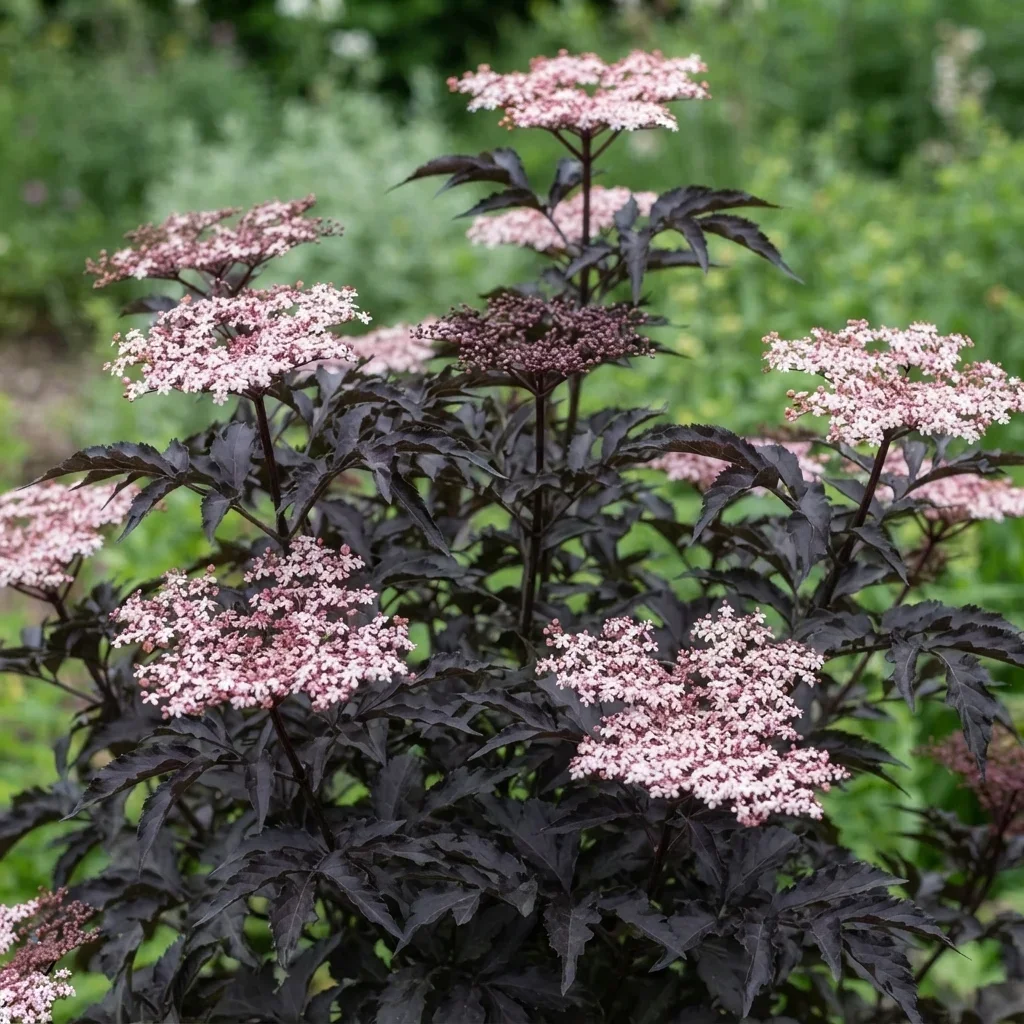
Black Tower Elderberry
Sambucus nigra 'Black Tower'
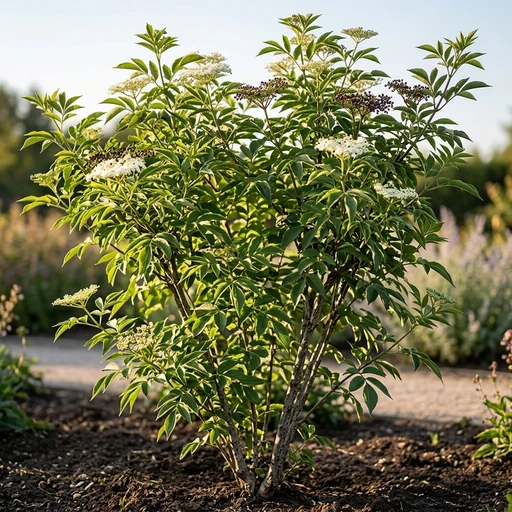
American Elderberry
Sambucus canadensis
Keep exploring
Explore the genus
Grow Blue Elderberry with confidence
See it in a design of your actual yard, get zone-matched care reminders, and track it season by season in your garden journal.