The Story
Plant Bio
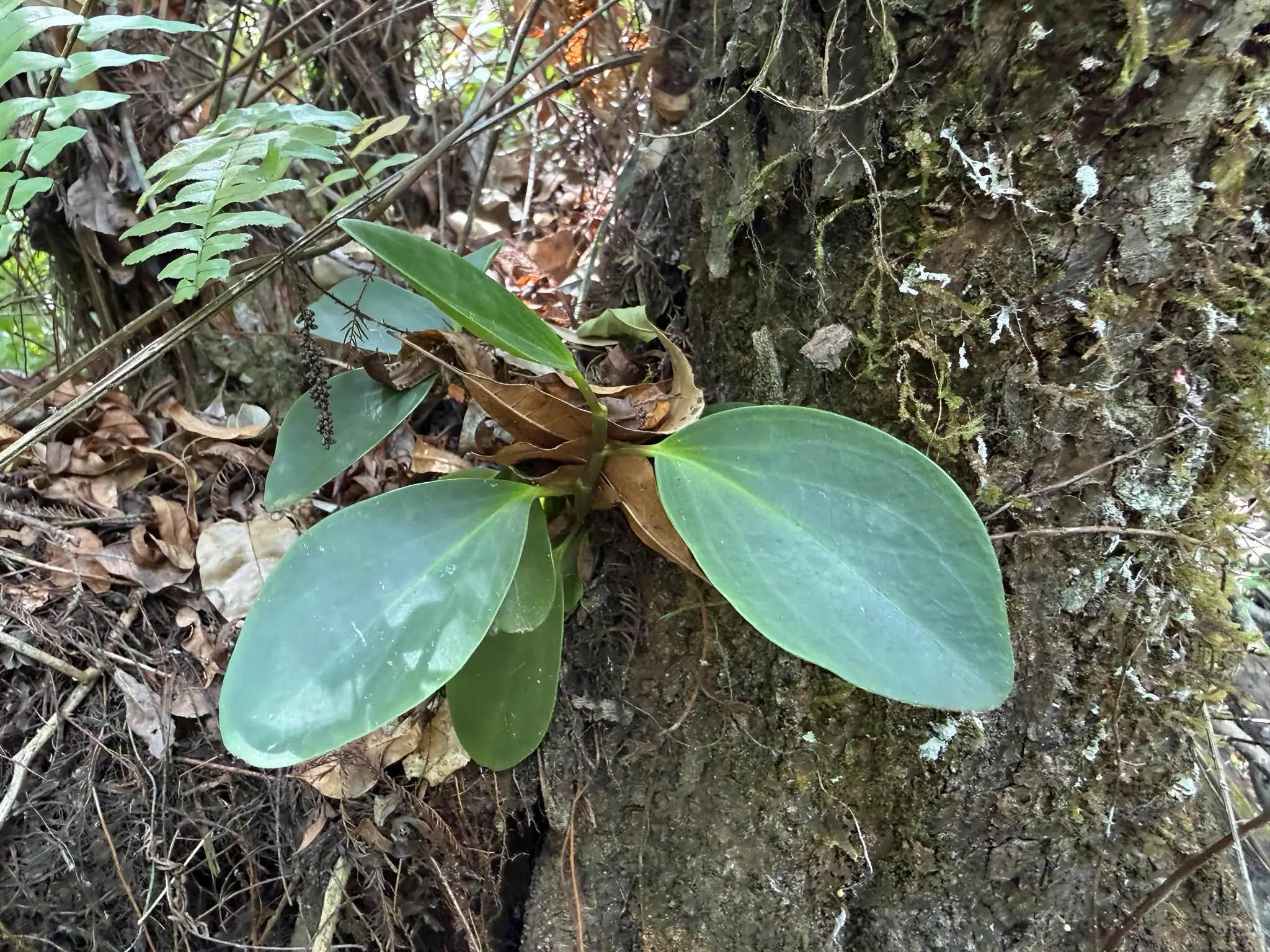
Peperomia obtusifolia is a bushy, multi-stemmed tropical perennial native to southern Florida, Mexico, and Central America. It forms a compact mound up to two feet tall with thick, waxy leaves that store moisture within semi-succulent tissues.
The species features thick, spoon-shaped leaves with blunt tips that emerge with bright green or pink-tinged stems. Inconspicuous, greenish-white flowers packed along narrow upright spikes appear in warm weather, though plants rarely flower when grown indoors.
Uses & Benefits:
Essentials
At a Glance
Plant Type
Tropical
Height
24"
Width
18"
Light
Partial Sun, Shade
Zones
10
Water
Low to moderate
Humidity
Moderate
Lifespan
Perennial
Native To
Florida, Mexico, Caribbean, Tropical America
Toxicity
Non-toxic
Bloom period
Spring – Summer
In flower about 6 months of the year
Planting
How to Grow
- Select a pot with functional drainage holes and fill it with a loose, peat-based potting mix.
- Position the plant in a location that receives bright, indirect light, avoiding harsh direct afternoon sun.
- Water thoroughly only when the upper half of the potting medium feels dry to the touch.
- Apply a balanced liquid houseplant fertilizer diluted to half strength monthly during spring and summer.
Pro Tip
Allow the top half of the potting soil to dry out completely between waterings; keeping the medium continuously saturated triggers rapid basal stem rot.
Keep It Thriving
Care Guide
Do
- Provide bright indirect light to preserve foliage density and stem strength.
- Ensure potting containers have free-draining bottom holes.
- Allow soil to dry out significantly between watering applications.
Don't
- Do not leave containers sitting in saucers of standing water.
- Avoid cutting back into old, leafless stem tissue where dormant buds fail to regenerate.
- Do not expose plants to freezing temperatures or cold exterior drafts.
Seasonal Care Calendar
| Task | Jan | Feb | Mar | Apr | May | Jun | Jul | Aug | Sep | Oct | Nov | Dec |
|---|---|---|---|---|---|---|---|---|---|---|---|---|
| Fertilize | ||||||||||||
| Pest Check | ||||||||||||
| Propagate | ||||||||||||
| Prune |
Watch Out For
Pests & Diseases
Common Pests
Common Diseases
In the Garden
Landscape Uses & Companions
Landscape Uses
Multiply
Propagation Methods
Good to Know
Common Questions
Baby Rubber Plant questions
What zones can Baby Rubber Plant grow in?
Baby Rubber Plant is hardy in USDA Zone 10: in that range it survives winter in the ground. Colder than Zone 10, grow it in a container you can move to shelter for the winter, or as an annual.
When does Baby Rubber Plant bloom?
Baby Rubber Plant typically blooms from spring to summer. Exact timing shifts a week or two with your zone — Sow's bloom calendar maps it to your garden.
Does Baby Rubber Plant need full sun?
Baby Rubber Plant does best in part shade.
Is Baby Rubber Plant drought tolerant?
Yes — once established (usually after the first full season), Baby Rubber Plant handles dry spells with minimal watering. Water deeply its first year to build the root system that makes that possible.
More Peperomia to compare
Keep exploring
Explore the genus
Hardy in your zone?
Grow Baby Rubber Plant with confidence
See it in a design of your actual yard, get zone-matched care reminders, and track it season by season in your garden journal.