The Story
Plant Bio
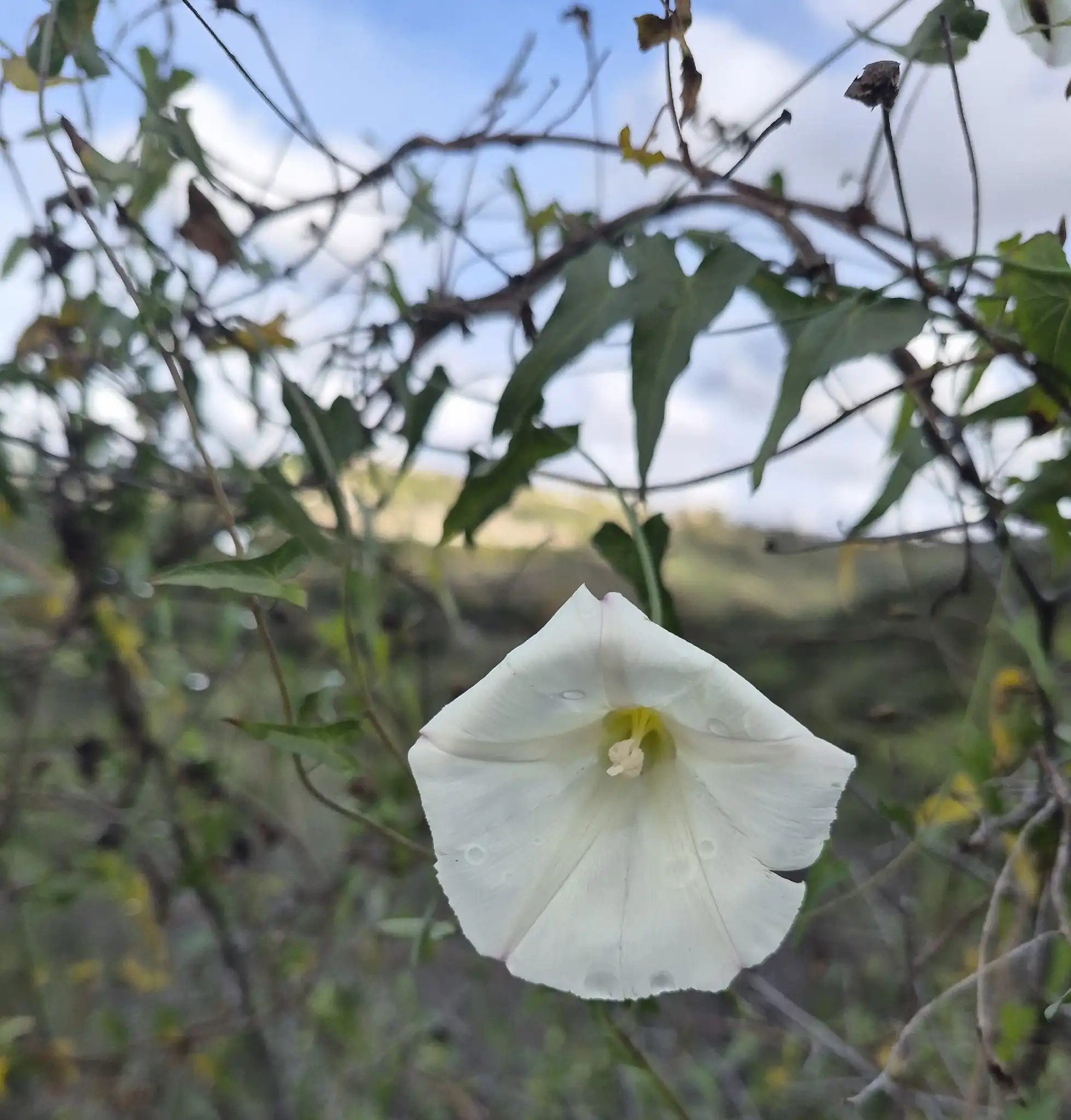
Calystegia macrostegia is an evergreen to drought-deciduous twining vine native to coastal bluffs and offshore islands of southern California and Baja California. It forms a woody base from which coiling stems climb up to thirty feet, bearing arrow-shaped green leaves and pleated, trumpet-shaped white to pale pink flowers.
Unlike tender annual morning glories, this species arises from a persistent woody caudex that allows it to survive summer drought by dropping foliage and resprouting after rain. Two large leafy bracts enclose the base of each flower bloom, distinguishing it from related wild bindweeds.
Uses & Benefits:
Essentials
At a Glance
Plant Type
Vine
Height
354"
Width
118"
Light
Full Sun, Partial Sun
Zones
8, 9, 10
Water
Low
Humidity
Low to moderate
Lifespan
Perennial
Native To
North America (California, Baja California)
Toxicity
Non-toxic (ingestion of large quantities may cause mild stomach upset)
Bloom period
Winter – Summer
In flower about 9 months of the year
Planting
How to Grow
- Plant in a location receiving full sun near the coast or partial shade in hot inland climates.
- Ensure soil is free-draining, such as sandy loam or rocky soil, to prevent crown rot.
- Install a trellis, fence, or arbor at planting time to support the twining stems.
- Water regularly during the first growing season to establish the root system, then reduce frequency once established.
- Prune back hard annually in late winter to encourage vigorous new flowering stems.
Pro Tip
Prune stems back heavily in late winter before new growth starts; leaving old vines unpruned creates an unsightly tangled layer of dead wood that suppresses fresh flowering shoots.
Keep It Thriving
Care Guide
Do
- Plant in well-drained soil that dries out between waterings.
- Prune annually in late winter down near the woody root crown.
- Provide a strong support structure for the twining shoots.
Don't
- Do not overwater in summer, which causes root rot and crown failure.
- Do not apply heavy doses of nitrogen fertilizer, as this promotes excessive leaf growth at the expense of bloom density.
- Do not panic if leaves drop during dry inland summers, as it is a natural drought response.
Seasonal Care Calendar
| Task | Jan | Feb | Mar | Apr | May | Jun | Jul | Aug | Sep | Oct | Nov | Dec |
|---|---|---|---|---|---|---|---|---|---|---|---|---|
| Fertilize | ||||||||||||
| Mulch | ||||||||||||
| Pest Check | ||||||||||||
| Prune |
Watch Out For
Pests & Diseases
Common Pests
Common Diseases
In the Garden
Landscape Uses & Companions
Landscape Uses
Multiply
Propagation Methods
Good to Know
Common Questions
Island Morning Glory questions
What zones can Island Morning Glory grow in?
Island Morning Glory is hardy in USDA Zones 8–10: in that range it survives winter in the ground. Colder than Zone 8, grow it in a container you can move to shelter for the winter, or as an annual.
When does Island Morning Glory bloom?
Island Morning Glory typically blooms from winter to summer. Exact timing shifts a week or two with your zone — Sow's bloom calendar maps it to your garden.
Does Island Morning Glory need full sun?
Island Morning Glory does best in full sun to part shade. In hot climates, afternoon shade keeps blooms fresher longer.
Is Island Morning Glory drought tolerant?
Yes — once established (usually after the first full season), Island Morning Glory handles dry spells with minimal watering. Water deeply its first year to build the root system that makes that possible.
More Calystegia to compare
Keep exploring
Explore the genus
Hardy in your zone?
Grow Island Morning Glory with confidence
See it in a design of your actual yard, get zone-matched care reminders, and track it season by season in your garden journal.