The Story
Plant Bio
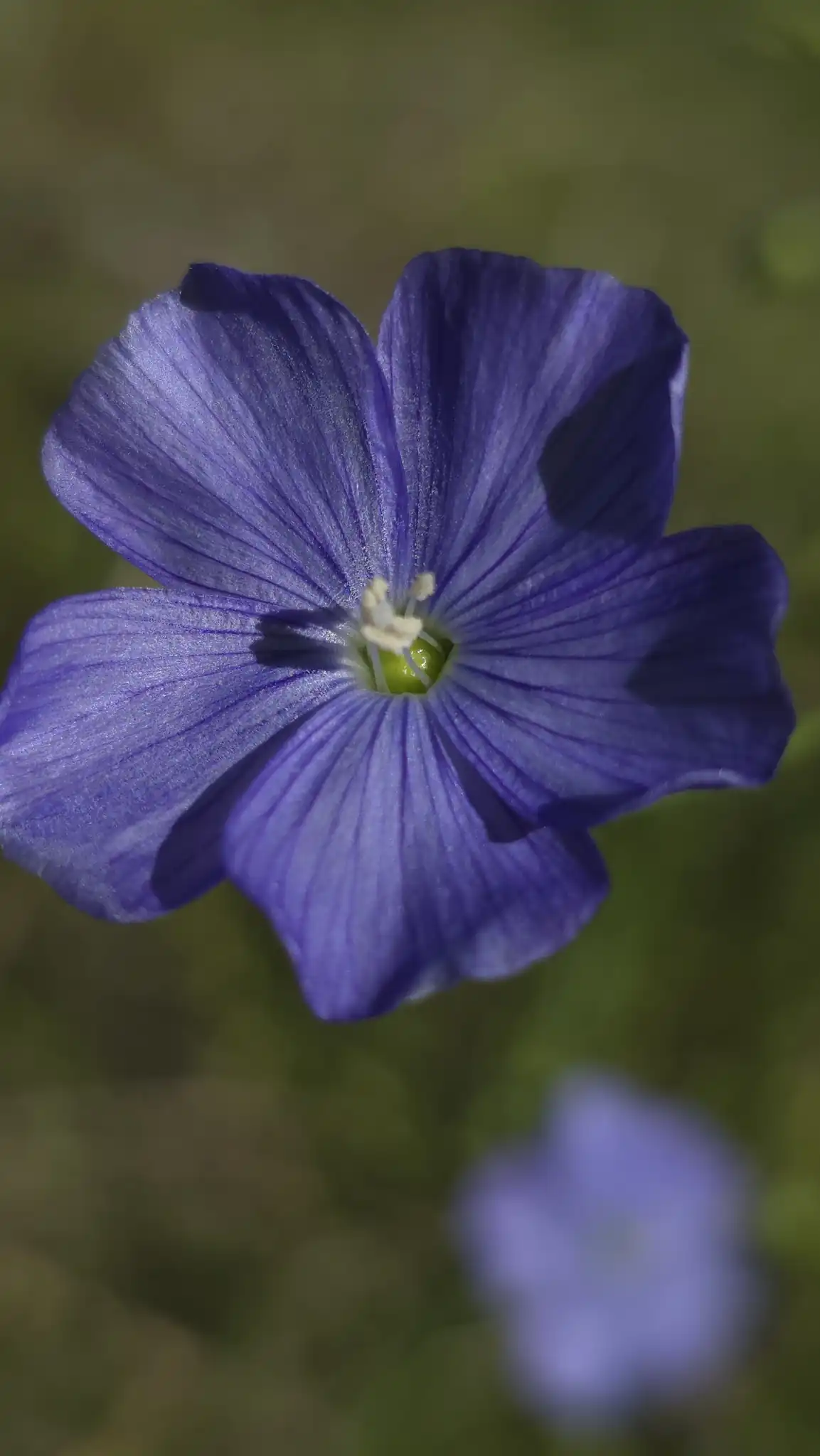
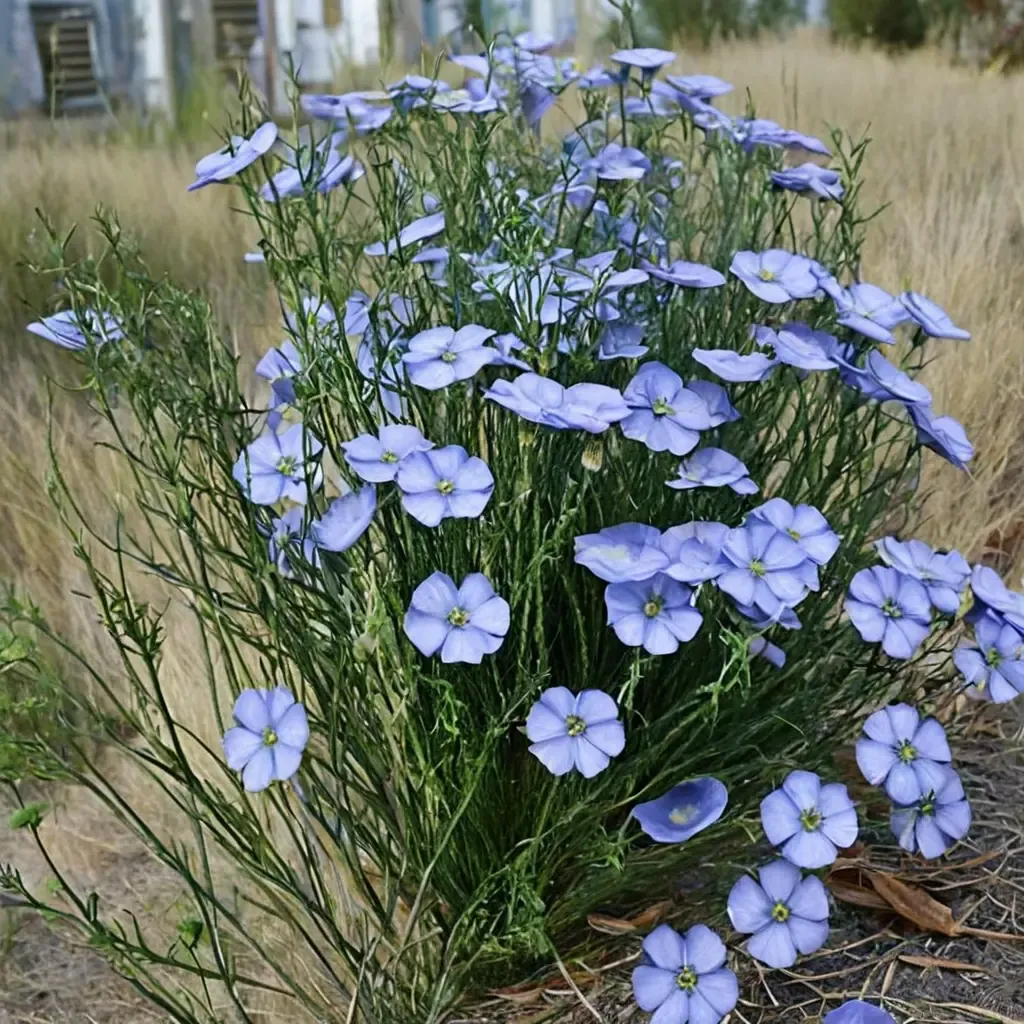
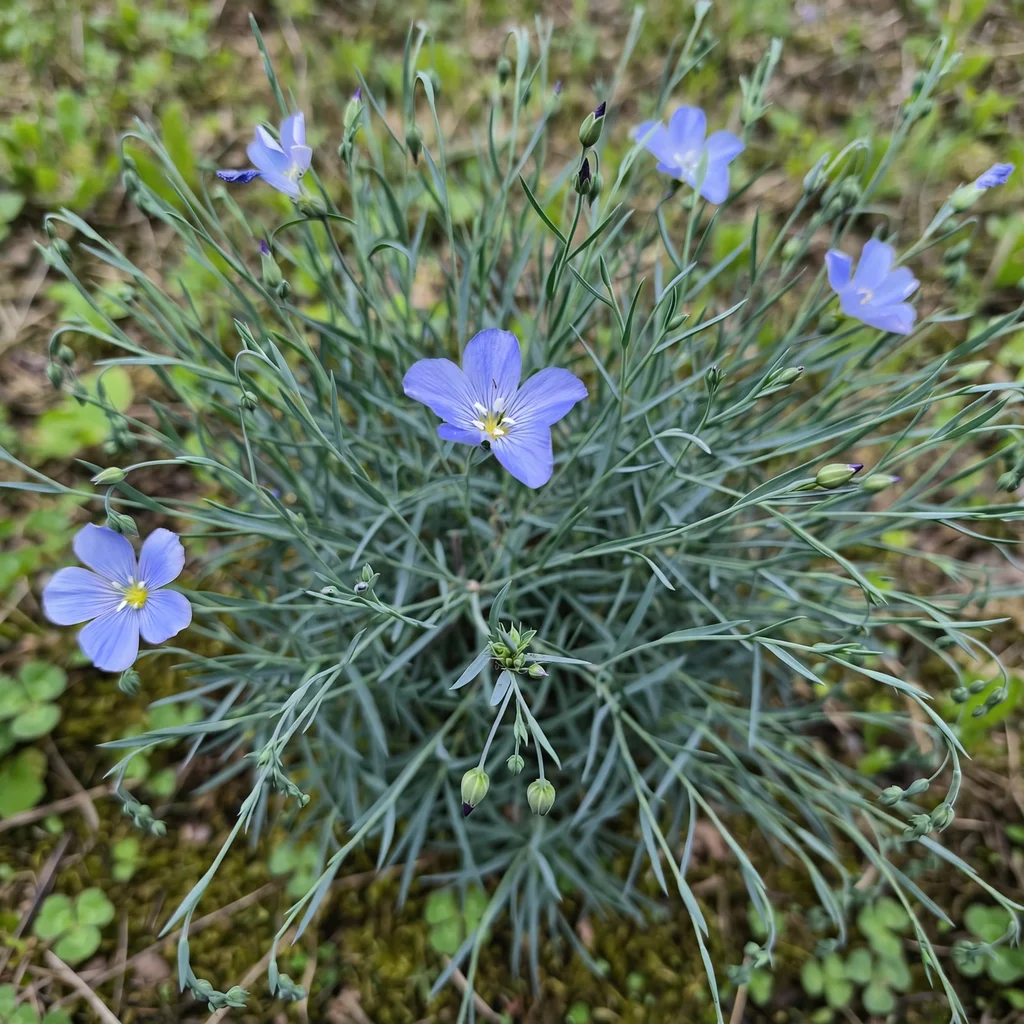
Linum marginale, commonly known as native flax, is a slender clumping perennial herb reaching up to three feet tall with fine, hairless blue-green foliage. Clear sky-blue to dark blue star-shaped flowers with darker veins open on slender pedicels through spring and summer.
This upright species develops a woody base, producing delicate five-petaled blue blossoms atop unbranched stems. Stems often die back naturally after seed-set in late summer before reshooting from the base in cooler weather.
Uses & Benefits:
Essentials
At a Glance
Plant Type
Perennial
Height
39"
Width
12"
Light
Full Sun, Partial Sun
Zones
8, 9, 10
Water
Low
Humidity
Low to Moderate
Lifespan
Perennial
Native To
Australia
Toxicity
Toxic to livestock if ingested in large quantities
Bloom period
Spring – Summer
In flower about 6 months of the year
Planting
How to Grow
- Select a planting site in full sun or light shade with well-drained soil ranging from sandy loam to light clay.
- Space plants 8 to 16 inches apart to ensure sufficient air movement around the slender foliage.
- Water during establishment, after which plants tolerate prolonged dry spells and moderate frosts.
- Cut spent flower stems back to near the crown in late fall after seed set completes.
Pro Tip
Prune stems back hard to ground level or near the base in late fall to prevent rust fungus and force dense, fresh spring shoots.
Keep It Thriving
Care Guide
Do
- Prune stems hard after seed production to maintain a dense clump.
- Provide bright sunlight and excellent soil drainage.
- Space plants at least 8 to 16 inches apart for good airflow.
Don't
- Do not leave old woody stems on the plant past winter.
- Do not over-fertilize with nitrogen-heavy plant foods.
- Do not plant in heavily shaded or continuously waterlogged sites.
Seasonal Care Calendar
| Task | Jan | Feb | Mar | Apr | May | Jun | Jul | Aug | Sep | Oct | Nov | Dec |
|---|---|---|---|---|---|---|---|---|---|---|---|---|
| Fertilize | ||||||||||||
| Pest Check | ||||||||||||
| Propagate | ||||||||||||
| Prune |
Watch Out For
Pests & Diseases
Common Pests
Common Diseases
In the Garden
Landscape Uses & Companions
Landscape Uses
Multiply
Propagation Methods
Good to Know
Common Questions
Native Flax questions
What zones can Native Flax grow in?
Native Flax is hardy in USDA Zones 8–10: in that range it survives winter in the ground. Colder than Zone 8, grow it in a container you can move to shelter for the winter, or as an annual.
When does Native Flax bloom?
Native Flax typically blooms from spring to summer. Exact timing shifts a week or two with your zone — Sow's bloom calendar maps it to your garden.
Does Native Flax need full sun?
Native Flax does best in full sun to part shade. In hot climates, afternoon shade keeps blooms fresher longer.
Is Native Flax drought tolerant?
Yes — once established (usually after the first full season), Native Flax handles dry spells with minimal watering. Water deeply its first year to build the root system that makes that possible.
More Linum to compare
Keep exploring
Explore the genus
Hardy in your zone?
Grow Native Flax with confidence
See it in a design of your actual yard, get zone-matched care reminders, and track it season by season in your garden journal.