
The Story
Plant Bio
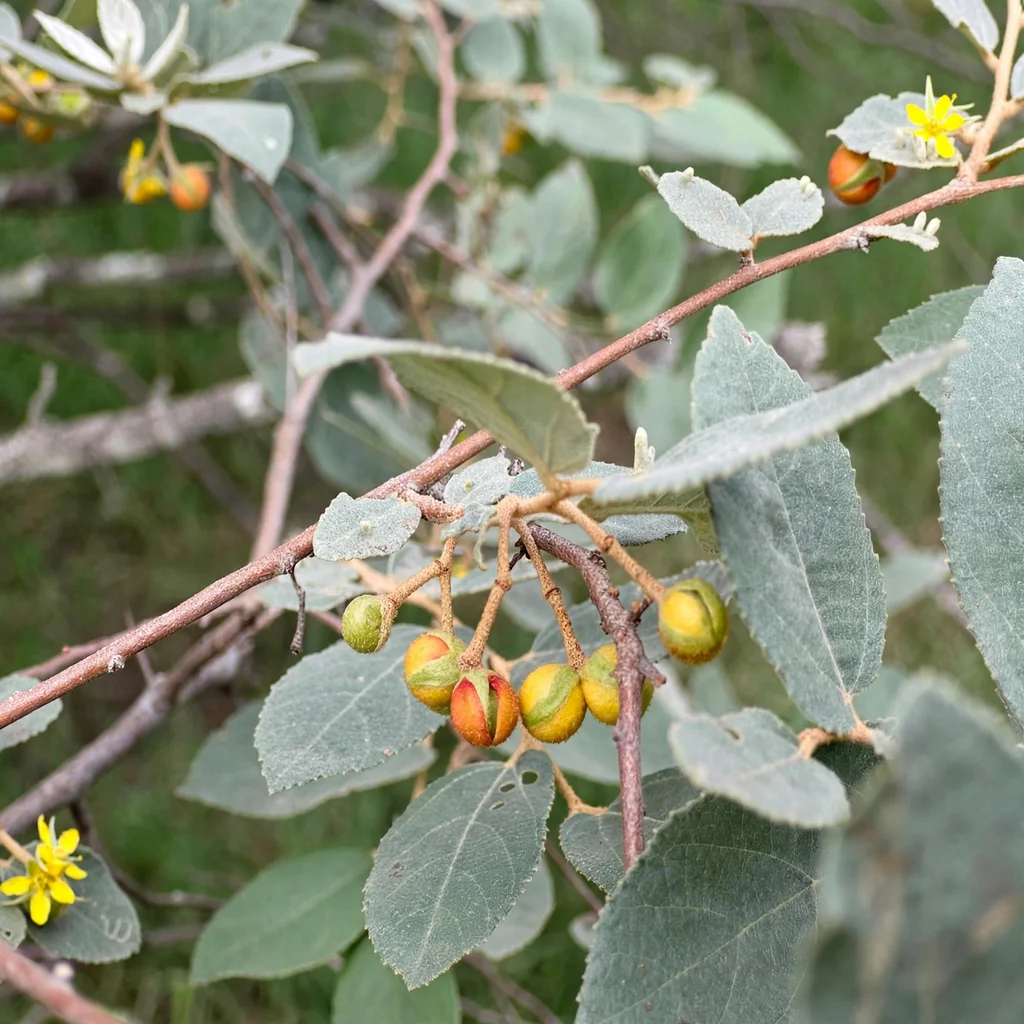
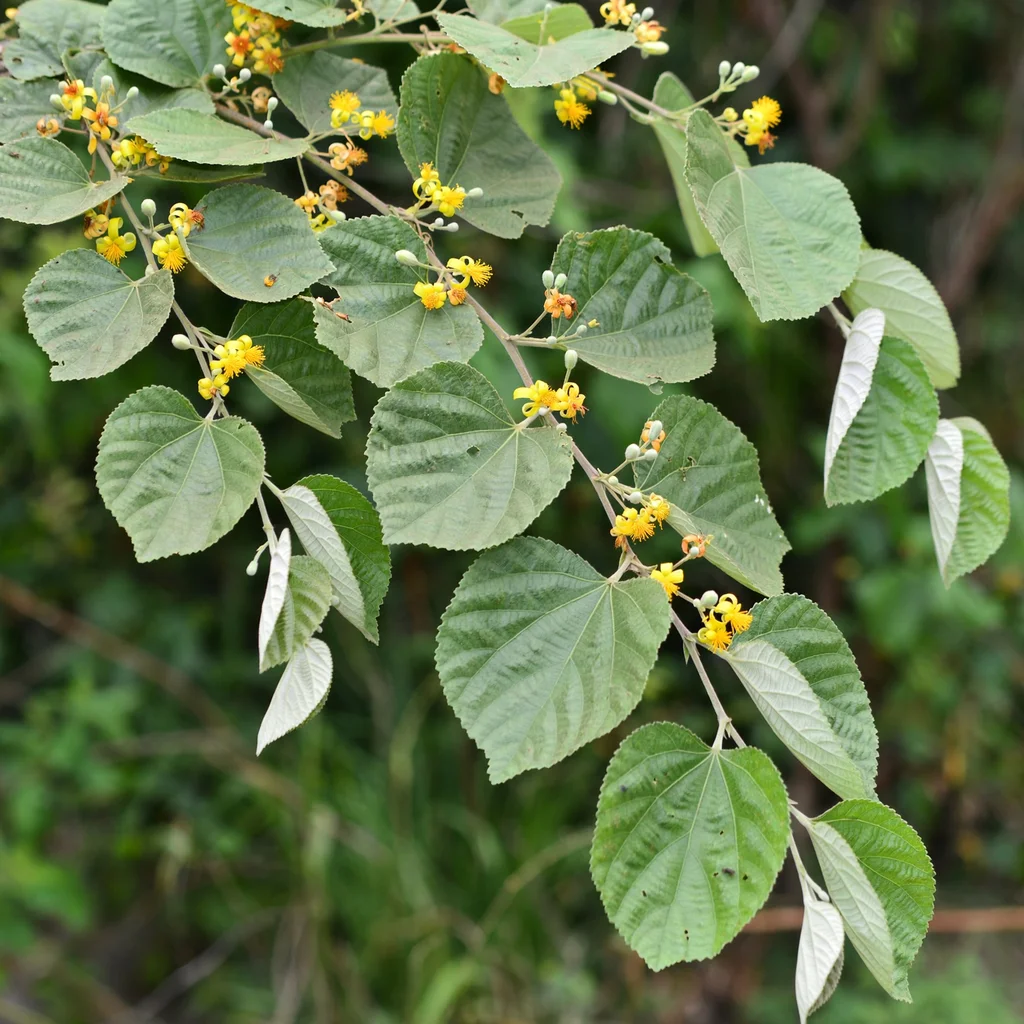
Grewia caffra is a scrambling multi-stemmed shrub to small tree with older stems squared in cross section and simple alternate oblong-ovate leaves with toothed margins and stellate hairs. It holds medium-dark green foliage in frost-free climates and builds a dense branching framework that leans on nearby structure for support.
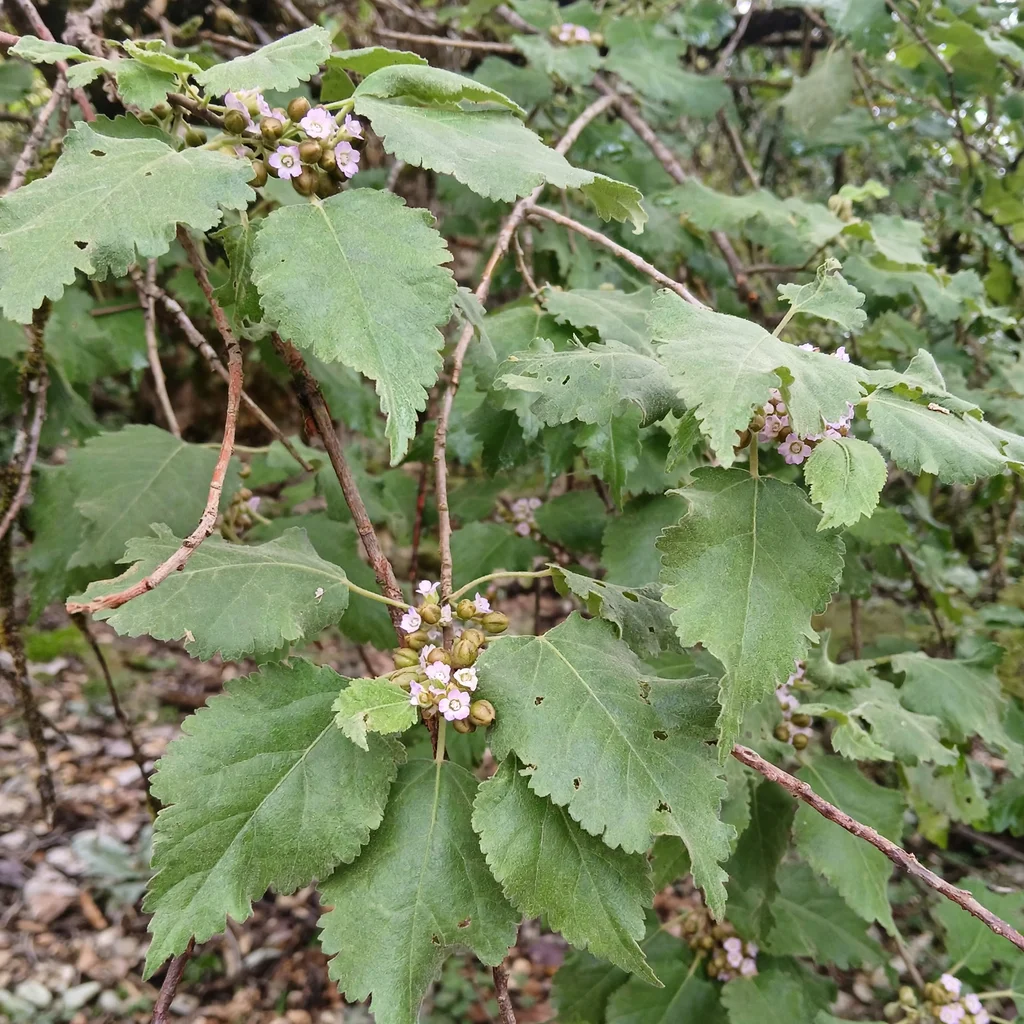
The wild species opens small yellow star-like flowers with five recurved petals backed by shorter green sepals in loose axillary clusters from summer into fall. Stock sold in the United States as Lavender Starflower opens lavender-pink stars with a yellow center and is the lavender-flowered Grewia occidentalis, a distinction that matters because the epithet caffra is now retired as Grewia afra.
Uses & Benefits:
Essentials
At a Glance
Plant Type
Shrub
Height
120"
Width
120"
Light
Full Sun, Partial Sun
Zones
9, 10
Water
Low
Humidity
Average
Lifespan
Long-lived shrub
Native To
Eastern Southern Africa
Toxicity
Non-toxic - fruit edible
Bloom period
Spring – Autumn
In flower about 9 months of the year
Planting
How to Grow
- Set plants in full sun to part shade after last frost in a sheltered spot.
- Dig a hole twice the container width in well-drained sandy loam and set the crown level with the soil.
- Water deeply at planting, then water sparingly once established and let soil dry between waterings.
- Mulch lightly and prune lightly after flowering to keep a dense screen habit.
Pro Tip
Prune lightly after flowering to shape the screen and keep flower wood for next season; wood cut back into old leafless stems resprouts slowly.
Keep It Thriving
Care Guide
Do
- Plant in full sun to part shade in well-drained sandy loam
- Water deeply to establish, then allow soil to dry between waterings
- Prune lightly after flowering to maintain screen density
Don't
- Do not plant in soggy or poorly drained soil
- Do not cut hard into old bare wood
- Do not over-fertilize; one light spring feeding is enough
Seasonal Care Calendar
| Task | Jan | Feb | Mar | Apr | May | Jun | Jul | Aug | Sep | Oct | Nov | Dec |
|---|---|---|---|---|---|---|---|---|---|---|---|---|
| Fertilize | ||||||||||||
| Pest Check | ||||||||||||
| Plant | ||||||||||||
| Prune | ||||||||||||
| Winter Prep |
Watch Out For
Pests & Diseases
Common Pests
In the Garden
Landscape Uses & Companions
Landscape Uses
Companion Plants
Multiply
Propagation Methods
Good to Know
Common Questions
Lavender Starflower questions
What zones can Lavender Starflower grow in?
Lavender Starflower is hardy in USDA Zones 9–10: in that range it survives winter in the ground. Colder than Zone 9, grow it in a container you can move to shelter for the winter.
When does Lavender Starflower bloom?
Lavender Starflower typically blooms from spring to fall. Exact timing shifts a week or two with your zone — Sow's bloom calendar maps it to your garden.
Does Lavender Starflower need full sun?
Lavender Starflower does best in full sun to part shade. In hot climates, afternoon shade keeps blooms fresher longer.
Is Lavender Starflower drought tolerant?
Yes — once established (usually after the first full season), Lavender Starflower handles dry spells with minimal watering. Water deeply its first year to build the root system that makes that possible.
More Grewia to compare
Keep exploring
Explore the genus
Hardy in your zone?
Grow Lavender Starflower with confidence
See it in a design of your actual yard, get zone-matched care reminders, and track it season by season in your garden journal.