
The Story
Plant Bio
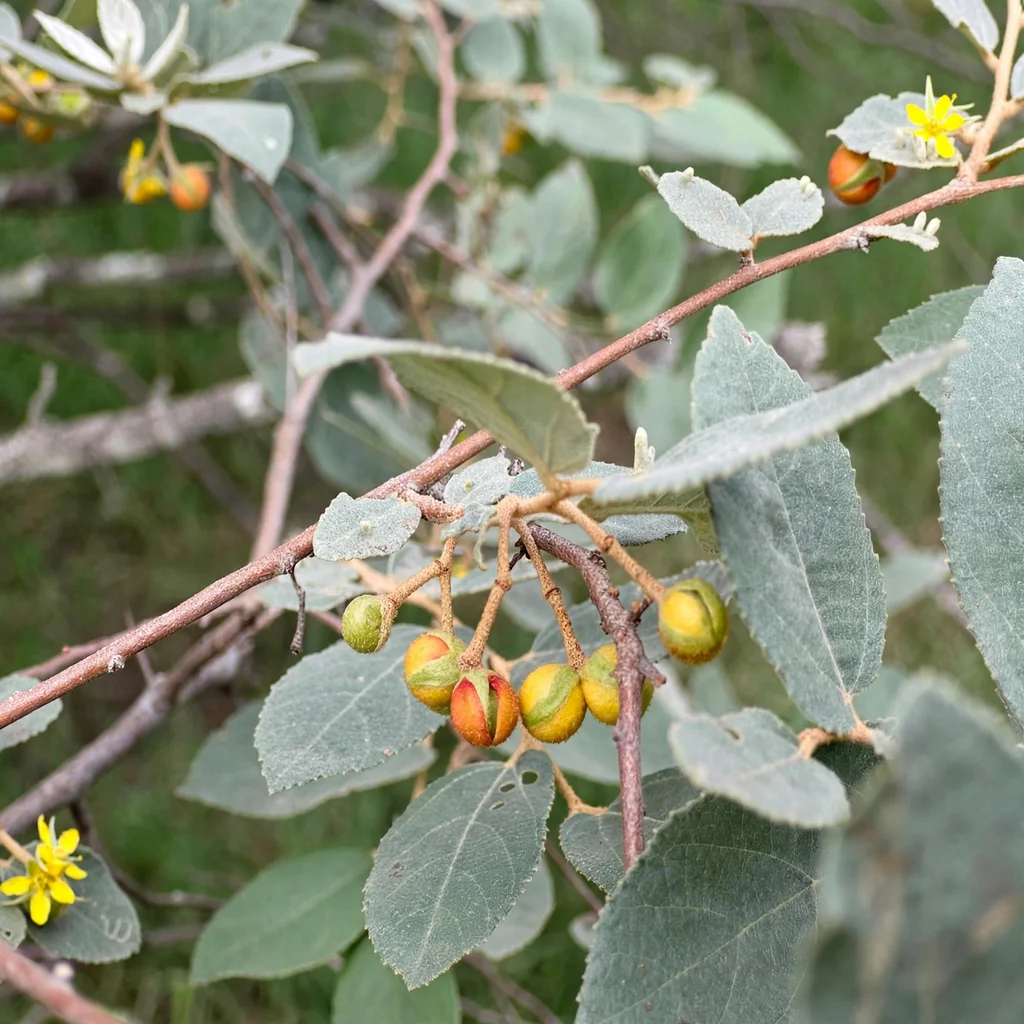
Grewia latifolia is a multi-stemmed, drought-deciduous shrub reaching three to six feet tall with downward-arching stems arising from a thick woody rootstock. The broad, serrated leaves are rough to the touch above and softly downy beneath, framing small yellow to burnt-orange flower clusters produced from summer into fall.
The species produces small, double-lobed succulent fruits that turn brown and brittle when mature and are readily consumed by native birds. It drops its leaves during prolonged dry or cold periods as an adaptive survival mechanism rather than a sign of dieback.
Uses & Benefits:
Essentials
At a Glance
Plant Type
Shrub
Height
79"
Width
79"
Light
Full Sun, Partial Sun
Zones
9, 10
Water
Low
Humidity
High
Lifespan
Perennial
Native To
Australia
Toxicity
Non-toxic
Bloom period
Summer – Autumn
In flower about 6 months of the year
Planting
How to Grow
- Sow seeds in a porous, sand-based germination mix and maintain warm temperatures.
- Transplant seedlings into well-drained clay loam or sandy soil in full sun to partial shade.
- Water moderately during initial root establishment, allowing soil to dry between waterings.
- Withhold excess water once established to prevent root decline and allow natural dry-season cycles.
Pro Tip
Avoid shearing into a rigid formal shape; removing individual old stems near the rootstock maintains its multi-stemmed arching habit without causing patchy growth.
Keep It Thriving
Care Guide
Do
- Plant in sharply draining soil to prevent root issues during wet periods.
- Allow the plant to experience natural seasonal dry spells.
- Prune minimally, removing only dead or crossing stems at the base.
Don't
- Do not over-water or allow water to pool around the root zone.
- Do not attempt to hedge or shear aggressively into tight formal shapes.
- Do not over-fertilize with high-nitrogen synthetic feeds.
Seasonal Care Calendar
| Task | Jan | Feb | Mar | Apr | May | Jun | Jul | Aug | Sep | Oct | Nov | Dec |
|---|---|---|---|---|---|---|---|---|---|---|---|---|
| Fertilize | ||||||||||||
| Pest Check | ||||||||||||
| Propagate | ||||||||||||
| Prune |
Watch Out For
Pests & Diseases
Common Pests
Common Diseases
In the Garden
Landscape Uses & Companions
Landscape Uses
Companion Plants
Multiply
Propagation Methods
Good to Know
Common Questions
Emu Berry questions
What zones can Emu Berry grow in?
Emu Berry is hardy in USDA Zones 9–10: in that range it survives winter in the ground. Colder than Zone 9, grow it in a container you can move to shelter for the winter.
When does Emu Berry bloom?
Emu Berry typically blooms from summer to fall. Exact timing shifts a week or two with your zone — Sow's bloom calendar maps it to your garden.
Does Emu Berry need full sun?
Emu Berry does best in full sun to part shade. In hot climates, afternoon shade keeps blooms fresher longer.
Is Emu Berry drought tolerant?
Yes — once established (usually after the first full season), Emu Berry handles dry spells with minimal watering. Water deeply its first year to build the root system that makes that possible.
More Grewia to compare
Keep exploring
Explore the genus
Hardy in your zone?
Grow Emu Berry with confidence
See it in a design of your actual yard, get zone-matched care reminders, and track it season by season in your garden journal.